
A Game of Rhônes – Act Two: The Razor’s Edge
Numquam ponenda est pluralitas sine necessitate.
Plurality must never be posited without necessity.
—William of Ockham
The Venerable Beginner
On the evening of 8 October, seventeen of us sat down at Baldwins for A Game of Rhônes: five courses and seven wines in the company of the Avignon popes. In Act One we followed the papacy to the Rhône, drank two whites, and met John XXII, the formidable old man in the papal chair. Now the first of his awkward customers takes his seat at the table.
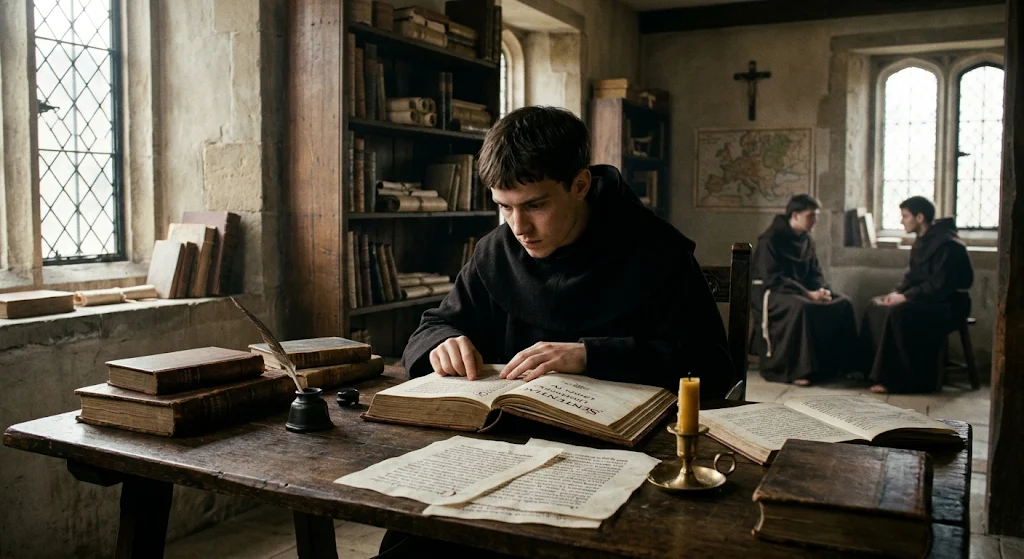
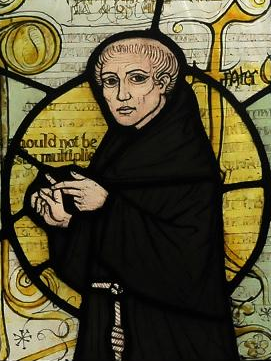
William was born in the village of Ockham, in Surrey, in 1287 or 1288, and given to the Franciscans as a boy. At Oxford he lectured on the Sentences of Peter Lombard, the standard textbook of medieval theology, but he never took up the master’s chair. Trouble arrived first. Suspicion of his views, and opposition from fellow scholars and friars such as Walter Chatton, kept him from the final licence needed to become a regent Master of Theology, and left him with a nickname he never shook off: Venerabilis Inceptor, the Venerable Beginner. In 1323 he was called before his own order at Bristol to defend his views, and by then charges against him had reached the papal court. In May 1324 he was summoned to Avignon. He never saw England again.
Four Years in Babylon
Avignon was not quite the prison of legend. A commission of theologians picked over his writings, but he was largely free to work, and his views were never formally condemned as heretical. The real danger lay elsewhere.
The Franciscans held that Christ and his apostles had owned nothing, neither singly nor in common, and that a friar should live the same way. In 1323 John XXII declared that belief heretical. So here was a friar who believed Christ owned nothing, summoned to the court of a pope who had ruled that he did. In 1327 the head of the order, Michael of Cesena, arrived in Avignon to answer for the Franciscans, and he asked Ockham to study the pope’s rulings. Ockham did, and concluded that the pope was himself a heretic, and had in effect forfeited the papacy.
It was not a conclusion one could safely hold in Avignon. On the night of 26 May 1328, Ockham, Michael, and a handful of other friars slipped out of the city. By one account they made for the coast at Aigues-Mortes, on the edge of the Camargue, near where the Rhône meets the sea, and a ship carried them to the Emperor, Louis of Bavaria, at Pisa. Ockham was excommunicated on 6 June. Legend has him greeting Louis with “Defend me with the sword and I will defend you with the pen”; he probably never said it, but he spent the rest of his life, in the Franciscan house at Munich, doing exactly that.
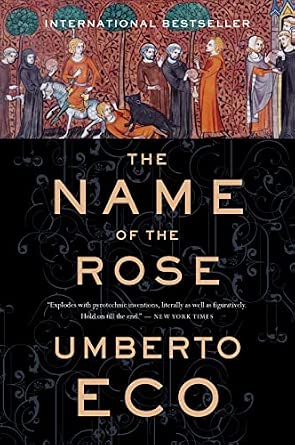
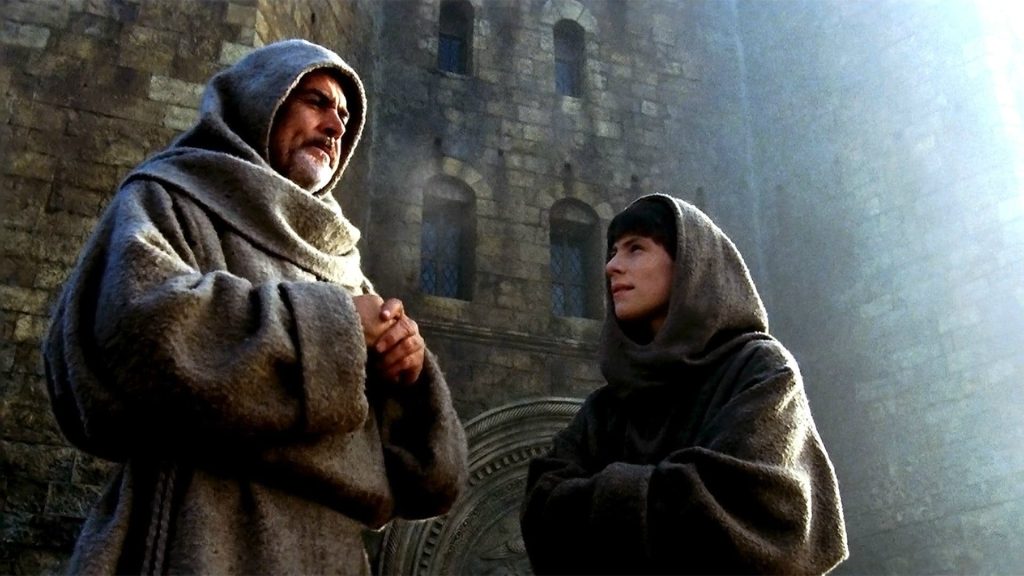
Umberto Eco borrowed him for The Name of the Rose. Its hero, William of Baskerville, is named for Ockham (and for Sherlock Holmes), and the novel is set in 1327, in the thick of the poverty dispute, with a delegation from Avignon on its way. It was one of my favourite books when I read it decades ago, and I loved the film, with Sean Connery as William.

The Razor He Never Wrote
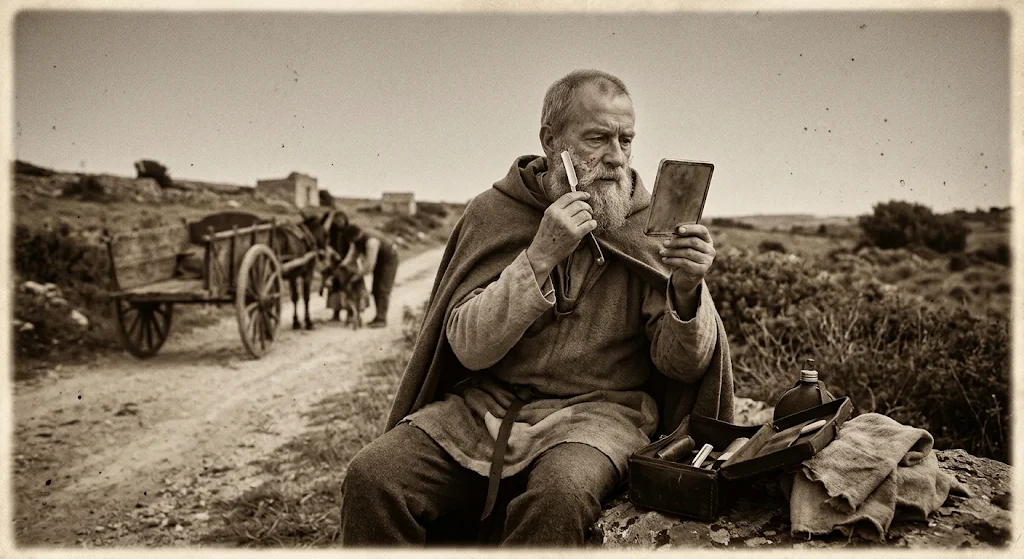
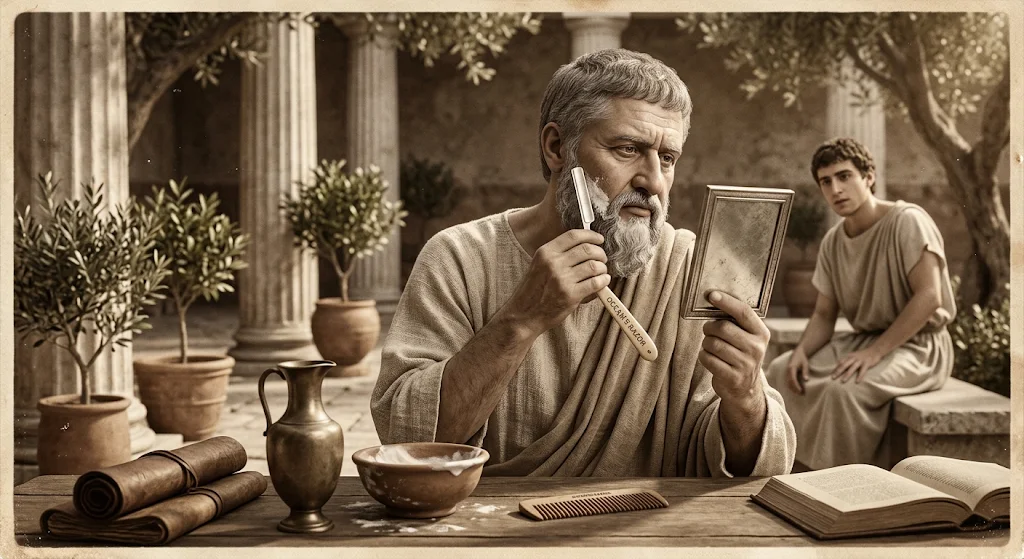
Ockham is remembered for a razor, but the famous phrase is not his. “Entities must not be multiplied beyond necessity” appears nowhere in his writings; an Irish Franciscan, John Punch, is credited with the formulation in 1639, and the Latin tag novacula Occami, Ockham’s razor, turns up only in 1649. The idea itself is older still, and can be found in Aristotle, Robert Grosseteste, and Thomas Aquinas. What Ockham actually wrote is the line at the head of this Act, numquam ponenda est pluralitas sine necessitate; in his Summa Logicae he also invokes the principle that it is vain to do with more what can be done with fewer. Nor did the razor ever tell anyone that a thing did not exist; it only counselled against believing in it without good reason.
Names and Things
Ockham’s deeper quarrel was with universals. Only individual things exist, he argued; “universals” are concepts in the mind, names we apply to many things at once. There is no universal Syrah existing somewhere beyond the individual vines: only this vine, on this slope, in this year. The word gathers these individual vines under a common name. Every grower who has insisted that his hillside makes a different wine from his neighbour’s has, knowingly or otherwise, been making a nominalist’s argument. Which answers the question we left at the end of Act One: “Côtes du Rhône” is a name. The wine in the glass is the thing.
Plato’s Beard
Six centuries later, Ockham found a sparring partner at Harvard. Willard Van Orman Quine, one of the most influential philosophers of the twentieth century, shared his taste for economy. In “On What There Is” (1948), Quine called the old riddle of non-being Plato’s beard: “historically it has proved tough, frequently dulling the edge of Occam’s razor.” He confessed to “a taste for desert landscapes”, and in 1947, with Nelson Goodman, he attempted something more radical: to reconstruct scientific discourse without committing to abstract objects at all.
He could not do it. Ockham could get by with individual things; modern physics cannot get by without mathematics, and mathematics speaks of numbers, functions, and sets. Hence what is now called the Quine–Putnam indispensability argument: we should believe in whatever our best scientific theories cannot do without; those theories cannot do without mathematical objects; so we should believe in mathematical objects. By 1960 Quine had conceded that “a thoroughgoing nominalist doctrine is too much to live up to.”
Ockham, one suspects, would have called this a failure of nerve: abstractions let back in through the laboratory door. But read the razor as he wrote it. Plurality must not be posited without necessity, and Quine’s whole point was that physics had supplied the necessity. Ockham’s own nominalism was not without theological complications. To make sense of the Trinity and the Eucharist, he admitted a handful of entities his razor would otherwise have cut. Each man, it seems, let in exactly what his creed demanded: Ockham’s creed was the Church; Quine’s was physics.
The purest Ockhamist of the last century may be the American philosopher Hartry Field, who, in his 1980 book Science Without Numbers: A Defence of Nominalism, tried to show that Newton’s physics could be rewritten without numbers at all.
Look and See
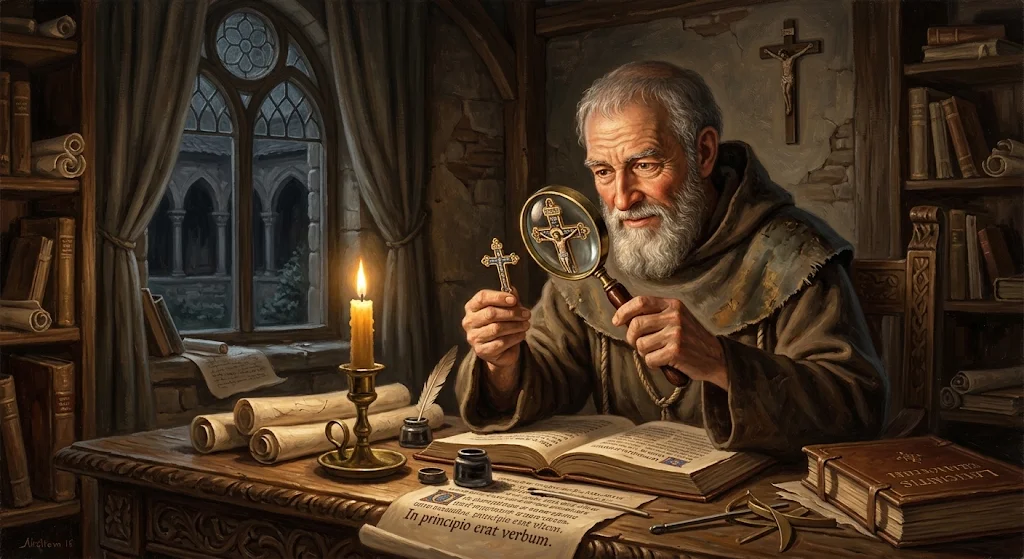
Ockham also cleared ground that natural science would later build on. Knowledge, he held, begins with what he called intuitive cognition: an immediate apprehension of particular things and their contingent existence. The world must first be encountered before it can be explained. Nor could the order of nature be worked out from first principles. God could have made the world otherwise, so the only way to learn how it actually works is to look. Historians have argued that this sense of a contingent world, learned by experience rather than deduced, helped prepare the ground for experimental science.
He drew a hard line, too, between faith and reason. Many of theology’s central claims, among them that there is only one God and that the soul is immortal, could not, he held, be proved by reason; they rest on faith alone. He meant to protect faith from bad philosophy. One consequence was to give the study of nature greater room to proceed according to its own rules. In the generation after him, Paris masters worked in that freer air: Jean Buridan explained moving bodies by an “impetus” given to them, and Nicole Oresme argued that the earth’s daily rotation could not be disproved. By the fifteenth century the universities had split between the “old way” of Aquinas and Scotus and the “modern way” of the nominalists.
A concession is due. Ockham did not invent the scientific method, and the Stanford Encyclopedia of Philosophy calls his contribution to the later mathematisation of physics important but “by no means the only factor”. He swept the floor; others built the house.
A Church of Individuals
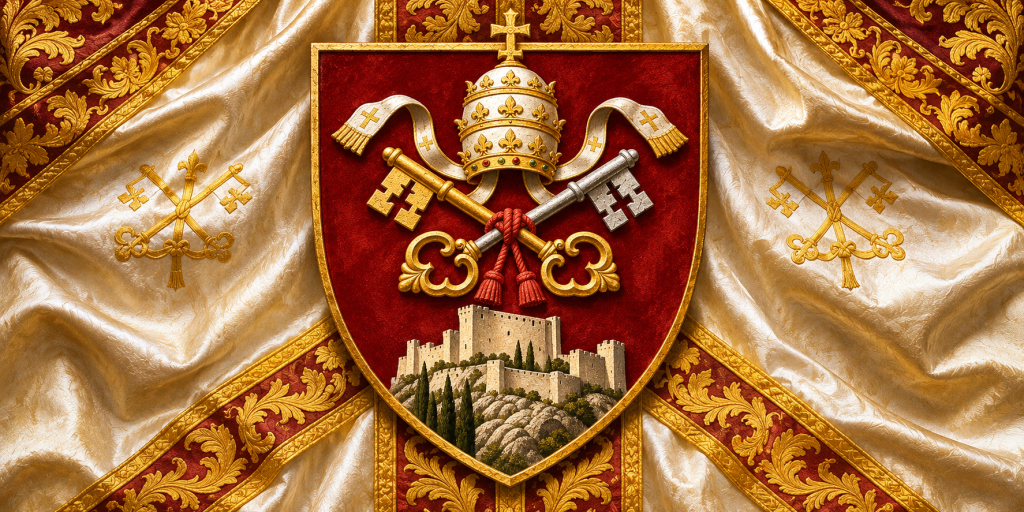
From Munich, under the Emperor’s protection, Ockham turned his nominalism on the papacy itself. If only individual things are real, the Church is not a mystical body hovering above its members; it is the community of the faithful, the believers themselves. Christ promised that this Church would never fail, but he promised nothing of the kind to any single member of it, the pope included. A pope could err. A pope who clung to heresy ceased to be pope, and the faithful were entitled to resist him. The true faith, Ockham argued, might survive in a handful of believers, or even in one, while everyone else, the pope among them, preached error.
He rejected, too, the papal claim to a “fullness of power” over souls and kingdoms alike. Papal authority, in his view, was a service to the faithful, not a lordship over them, and earthly rulers did not hold their power on Rome’s sufferance. That made him, in the Stanford Encyclopedia’s words, “one of the first medieval authors to advocate a form of church/state separation”. Nearly two centuries before Luther, here was a friar arguing that the pope was a man and could be wrong. The fuller theory, with the people as the source of law, belongs to our next guest. Ockham died in Munich on the night of 9–10 April 1347.
A Right Is a Power
The most surprising legacy of the poverty quarrel is the language of rights. To defend friars who used food, clothes, and books without owning them, Ockham had to say exactly what owning was. In The Work of Ninety Days, written in the early 1330s, he defined a right of use as a power: a licit power (potestas licita) to use a thing, of which no one may be deprived against his will without fault or reasonable cause, and which he may defend in court. A right was no longer only what is objectively just; it was something a person possessed.
A second concession: it would be too neat to call him the father of human rights. The French legal historian Michel Villey laid the modern idea of individual rights at Ockham’s door; Brian Tierney has since shown that it grew slowly, from the canon lawyers of the twelfth century onwards, and that Ockham was one important step on a long road. Nor were his rights ours. They were God’s gift, meant to leave a Christian free to live as one; the Universal Declaration of 1948 grounds them in human dignity, for people of every faith and none. But the road runs, by way of Grotius and Locke, from a quarrel over a friar’s habit in Avignon to the documents that now limit what any government may take from us.
ACT TWO
Roasted Slopes
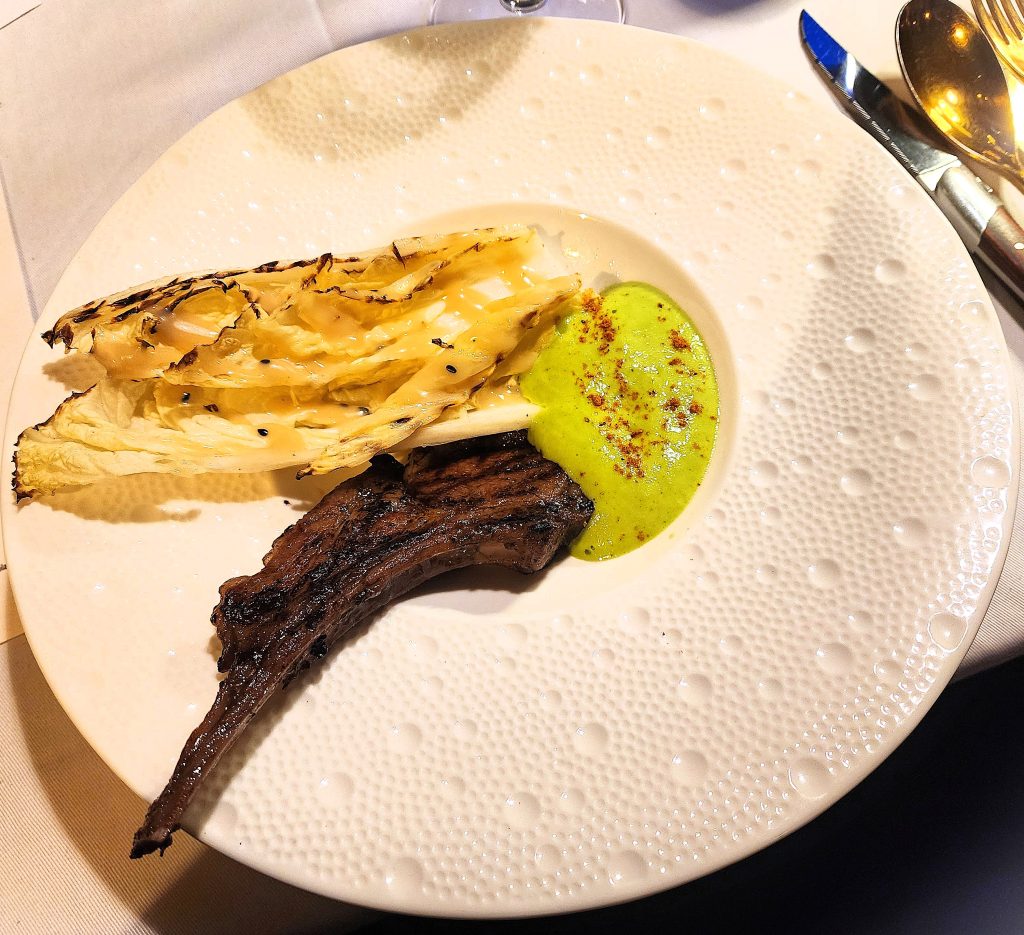
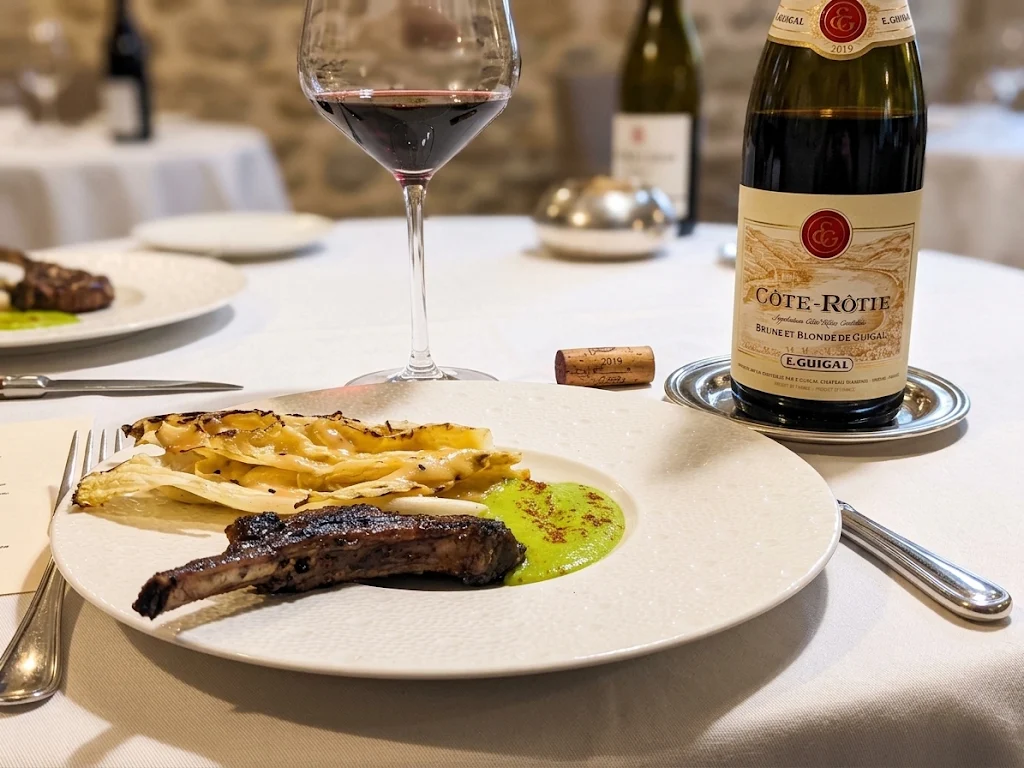
TERIYAKI-GLAZED AUSTRALIAN LAMB CHOP
Pea and mint purée, charred baby gem lettuce
Australian lamb, a Japanese glaze, and a French wine, served in Cambodia. The lamb was slow-cooked and so tender it all but yielded to the knife; the teriyaki glaze brought a smoky sweetness and plenty of umami; the charred lettuce added crunch and a little bitterness, and the pea and mint purée a cool, green balance. Simple on the plate, and all the more impressive for it. Ockham would have approved: it is vain to do with more what can be done with fewer. A good kitchen understands the principle as well as a good philosopher.
- Guigal, Brune et Blonde, Côte-Rôtie, Rhône, France, 2021
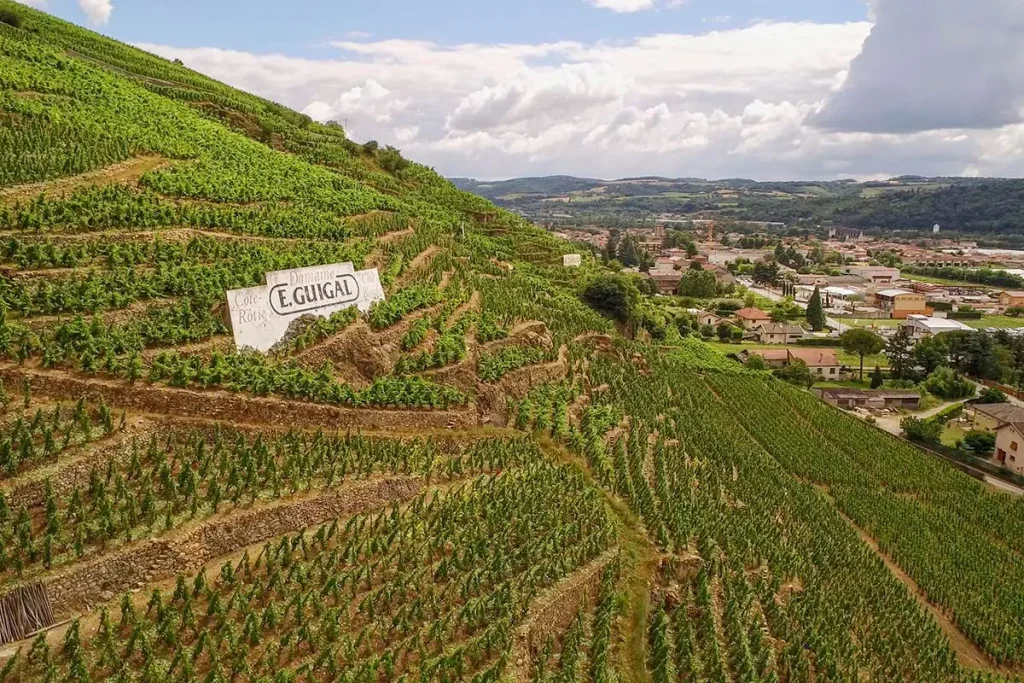
Côte-Rôtie, the “roasted slope”, rises steeply behind the village of Ampuis on the right bank of the Rhône, with gradients of up to 60%. Tradition dates the first plantings to the reign of Caligula, AD 37 to 41; the harder evidence is a third-century mosaic from Saint-Romain-en-Gal, just across the river, showing the harvest and the treading of grapes. The appellation allows up to 20% of the white grape Viognier, traditionally co-fermented with the Syrah. Étienne Guigal founded his house at Ampuis in 1946, and his son Marcel made its name with three single-vineyard wines, La Mouline, La Landonne, and La Turque. Brune et Blonde blends the two great slopes, and 2021 was a hard year to do it in: spring frost, a cool, wet summer, and one of the smallest crops in recent memory, rescued by a dry, sunny September.
The slopes have two explanations for their names. One is geological: darker, iron-rich schist and soils on the Côte Brune, lighter and sandier formations on the Côte Blonde. The other is the Seigneur de Maugiron, who is said to have left a hillside to each of his two daughters, one dark, one fair. The razor prefers the soil. The storyteller prefers the daughters. On this occasion, the storyteller wins.
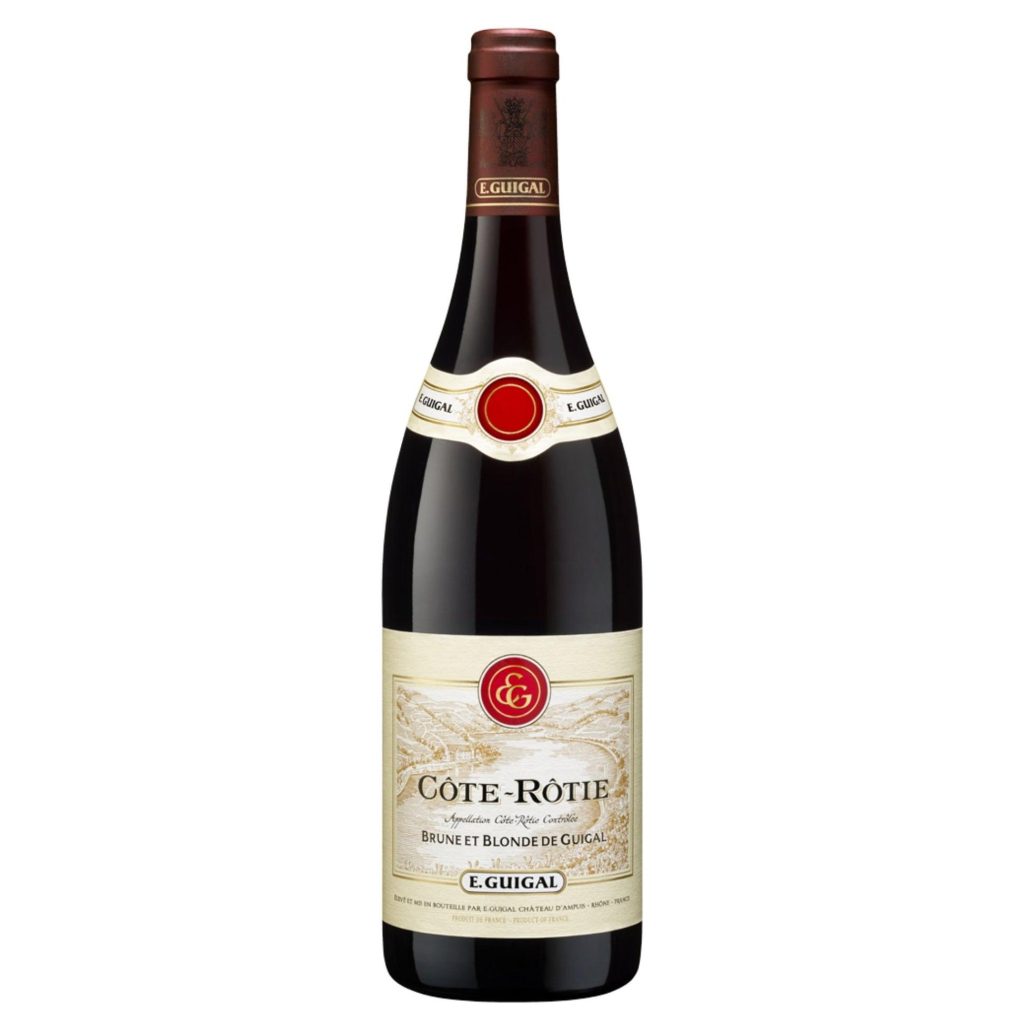
A blend of 96% Syrah and 4% Viognier, matured for 36 months in French oak, 50% new, from Guigal’s own cooperage on site.
In the glass, the wine is the colour of Burmese rubies with flecks of deep Tyrian purple. Aromas are of raspberries, violets, charcuterie, vanilla pod, fruit mince, smokiness, and allspice. On the palate the wine is medium-bodied and easy-drinking, with the characteristic “slipperiness” to its fine texture and mouthfeel. Flavours are of ripe berries, white pepper, and crushed herbs, with hints of allspice, gun smoke, and char siu. Tannins are fine, supple, and savoury. This is a charming Côte-Rôtie, drinking well now and with many good years still ahead of it. 94/100 DG
Ockham, I suspect, would have taken his razor to that note: thirteen descriptors, and allspice twice. In my defence, the wine posited them first.
The Pairing
The smoky, spiced side of the Syrah, the char siu and gun smoke, met the sweet, smoky glaze head-on, while fine acidity and a light frame of tannin cut through the richness of the lamb and kept the palate clean. The pea and mint lifted the wine’s floral top notes, the violets and the faint perfume of Viognier. Two slopes, two daughters, one exceptionally good plate of lamb.
Just upriver from Ampuis, on the other bank, lies Vienne, and Vienne has one more story for us. In October 1311, Clement V opened a council there. The following March, with Philip IV of France pressing his case in person, the pope formally suppressed the Knights Templar.
A king bending a pope to his will, just a few kilometres from these vineyards: our next guest would go further.
Plates cleared and glasses topped up, we were ready for the pope’s own wine.
Next, Act Three: the pope’s castle, and the doctor who said it should never have been his.
Darren Gall
