Drinking the Stars
There is now an official ‘Day’ for just about anything conceivable. Champagne, the drink applied liberally to everything else worth celebrating, surely deserves a day of its own.
Californian wine blogger Chris Oggenfuss recognised the first ‘Champagne Day’ in 2009; it has only grown from there. Champagne Day is now celebrated around the world, and I must admit, the thought of an entire planet bubbling over with joy is somewhat irresistible.
Champagne Day falls on the fourth Friday of October each year, which in 2026 was 23 October.
House Style
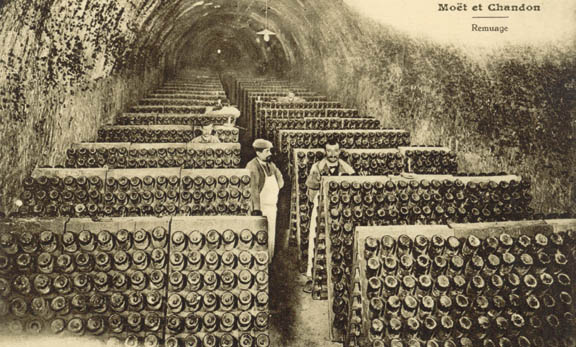
Champagne’s grandes marques have long occupied the commanding heights of the luxury market. Their names are recognised around the world, and their wines are built around a defining house style: a consistent expression that survives changes in vintage and, ideally, becomes recognisable from one release to the next.
However, sometime around the turn of the new Millennium, Récoltant-Manipulant Champagnes began getting noticed, and soon their reputations were—like the beads in a Champagne flute—on a remarkably steep rise.
Récoltant-Manipulant or Grower Champagnes, are wines produced by the same estate that owns and cultivates the vineyards.
The grandes marques have traditionally purchased fruit, juice (must), or in some instances even still base wines from hundreds of growers in order to create their massive blends. Some of these houses grow most of their own fruit, others will cultivate around fifteen to twenty per cent, and some own hardly any vineyard land at all.
The philosophy of these producers has been to consistently produce a memorable ‘House Style’ through the art of blending, a style that represents who they are. An indelible stamp or watermark as conspicuous as the bonnet ornament on a luxury car. That is really the point: not only to produce an exceptional Champagne, but also to be elegantly, recognisably ostentatious.
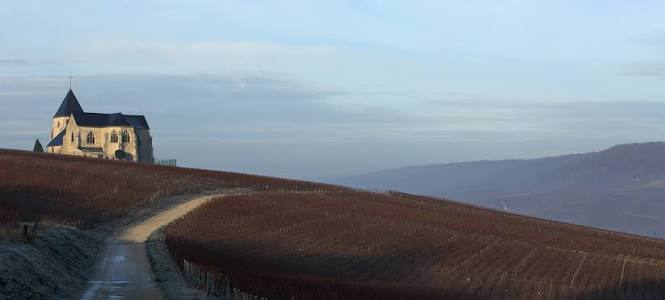
For grower Champagne producers, the emphasis is on terroir: the character of a village; the story told in a single vineyard, even a particular parcel within it. Their wine is an intimate expression of what they have learned over generations about their place, how they choose to give voice to it and how they have listened to what it has to say.
In essence, I would say: the Champagne mega-producers are often, but not exclusively, about house, style, and blends. Whilst the smaller, Grower Champagnes are usually about place, family, and often a single variety.
Rise of the Growers
Grower Champagne’s rise reflects changes at both ends of the market: among the people who sell wine and the people who drink it.
The first change came on the restaurant floor. Through the 2000s and 2010s, sommeliers in New York, London, Tokyo, Melbourne, and San Francisco became figures of influence in their own right. They had little interest in pouring the brands every other list carried. They wanted bottles that were rare, that came with a name and a place, and that needed a story to sell. A grower who farmed a few hectares in one village and could tell you which plot each wine came from gave them exactly that.
Drinkers followed. A generation used to asking where its food came from began to ask the same of its wine. Place began to matter more than prestige. So did the idea of a family that had worked the same land for generations, set against a brand owned by a luxury conglomerate. Many of the best growers farm organically or biodynamically, and that mattered to this audience.
The wines suited the moment. Growers tend to dose lightly or not at all, and many bottle a single variety or a single plot. These are wines with edges, and they sit well beside the tasting menus of more adventurous kitchens.
Then there is scarcity. A large house ships millions of bottles a year. A well-regarded grower might make a few tens of thousands, spread across several cuvées. Once critics, and then the online forums, began naming particular producers, those bottles became hard to find, and what is hard to find is soon collected.
The growers also changed what Champagne was for. Treated as a wine from a place rather than a symbol of occasion, it no longer needed a wedding or a New Year to justify the cork. It could be opened on a Tuesday, with fried chicken or takeaway sushi.
None of this shows in the shipping figures. Growers own about nine-tenths of Champagne’s vineyards and ship about a fifth of its bottles. In 2008 that share was nearly a quarter. What has grown is their reputation.
Rising Stars
Just in time for Champagne Day, a group of industry friends and I tasted two of the most compelling names in the Champagne firmament. Both made an immediate impression, and the evening was only just getting started.
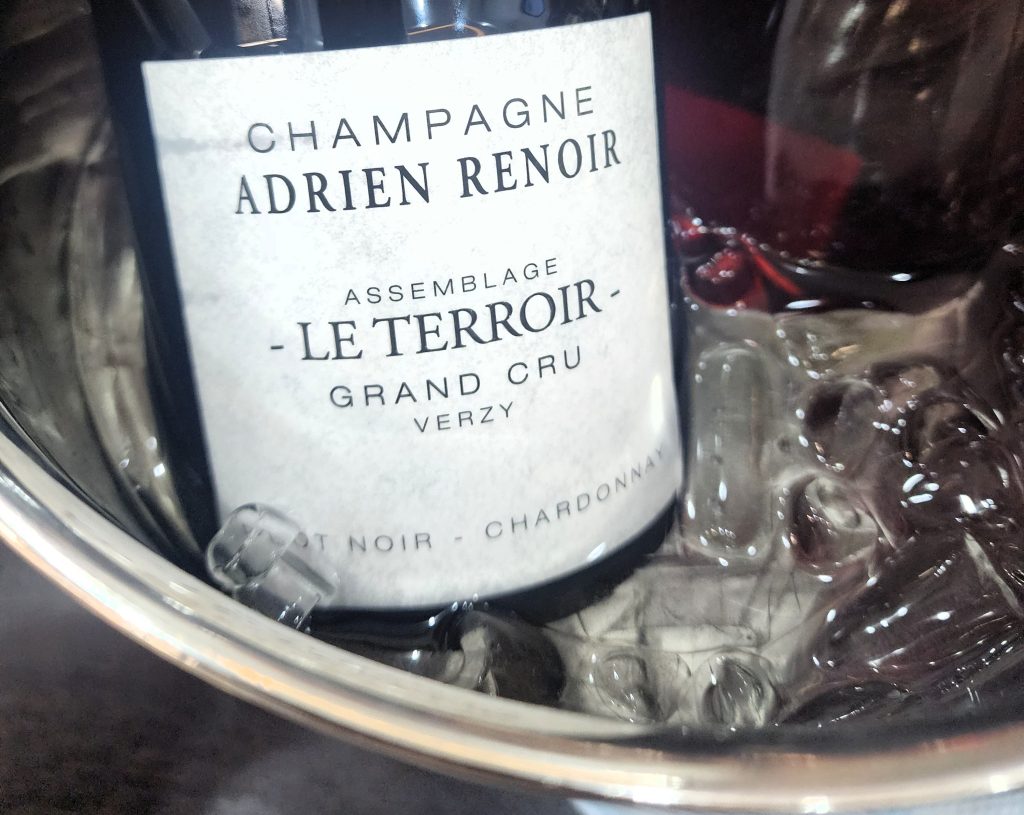
Adrien Renoir Le Terroir Champagne NV
Verzy Grand Cru, Montagne de Reims
Blend: 50% Chardonnay, 50% Pinot Noir
Base vintage: 2019
Reserve wine: 20% from 2018
Vinification: large wooden vats (foudre)
Élevage sur lies: 24 months
Dosage: 1 g/L
Verzy sits on the cold side of the Montagne de Reims. Its vineyards face north and east. In the forest on the plateau above them grow the faux de Verzy, dwarf beeches that twist back on themselves instead of reaching for the light. It is a place where things ripen slowly and keep their tension.
The Renoirs have farmed here for four generations. Until 1940 the family sold its grapes to the négociants. In the 1940s Vincent Renoir’s grandparents began making wine from their own fruit, and the name on the label has changed with each generation since: Bouy-Nicolas, then Renoir-Bouy, then Vincent Renoir. Vincent took charge in the 1980s and made classic Champagne in stainless steel. His Tradition earned a star in the Guide Hachette more than once. He also refused to pull out old vines to raise yields. That decision matters now. Much of the estate is still planted to old massal selections, the oldest from 1961, and everything his son makes is built on them.
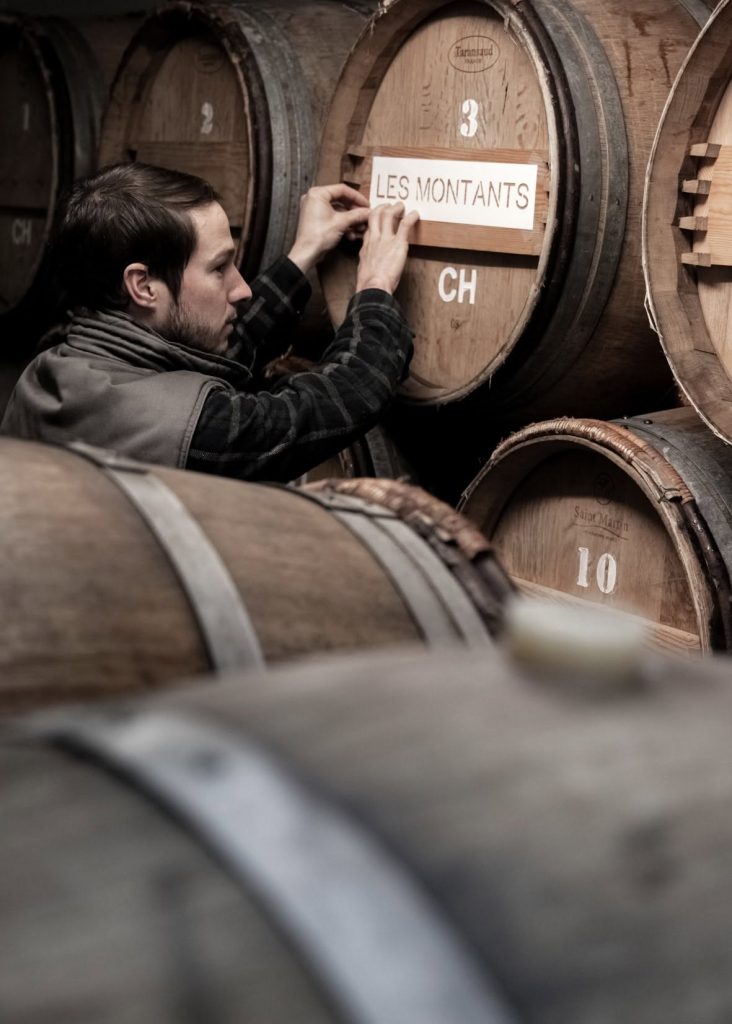
Adrien joined his father in 2014 and made his first two vintages alongside him. By 2016 the domaine was his. Vincent doubted that organic farming could work this far north, where disease pressure is constant, and agreed to the conversion only if it were done slowly, parcel by parcel. It was. The herbicides went first. By 2017 every wine was fermented in old oak with native yeasts. He began bottling the family’s best parcels on their own: Chardonnay from Les Montants, Pinot Noir from Les Épinettes, Pinot Meunier from Les Vignes Goisses. He laid down a Pinot Noir solera, planted hedges and trees among the vines, and in 2019 put his own name on the label.
The critics noticed. William Kelley of the Wine Advocate wrote that “every new release from Renoir seems to surpass the last” and called Adrien “one of Champagne’s brightest young talents.” The single vineyards draw the attention and the scores. Le Terroir is where most people will meet his work.
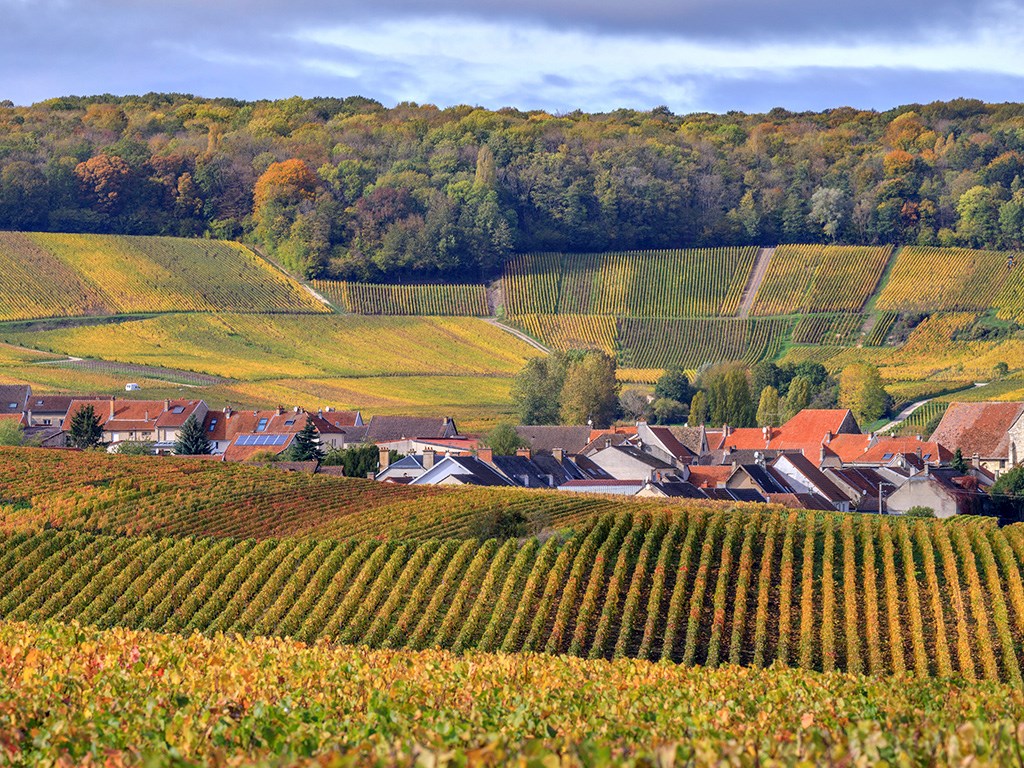
This release is built on 2019, a hot, dry summer with two heatwaves. The nights stayed cool and the acidity held, but the crop was small and the fruit came in concentrated, and the wine is fuller for it.
It is pale gold in the glass, with a fine, steady bead. Ripe pear wafts from the glass first, then comes orange zest and white flowers. The barrel ageing shows as brioche and baked pastry rather than as wood, and under everything sits the scent of yuzu and chalk.
The palate is broad and vinous. The Pinot Noir gives it weight and a soft generosity through the middle, around a dense core of fruit. Then the Chardonnay and the chalk take hold. The acidity is sharp and the mousse exceptionally fine. With dosage at just 1 g/L, the finish remains emphatically dry, its protracted line of acidity carrying a distinctly saline impression.
In Phnom Penh, serve it cold with fresh oysters or Kep Kdam Thmor (mud crab) stir-fried with green Kampot peppercorns, or with Cambodian Bang Kang (river lobsters), their claws the colour of sapphires. Drink now to 2030. 94/100
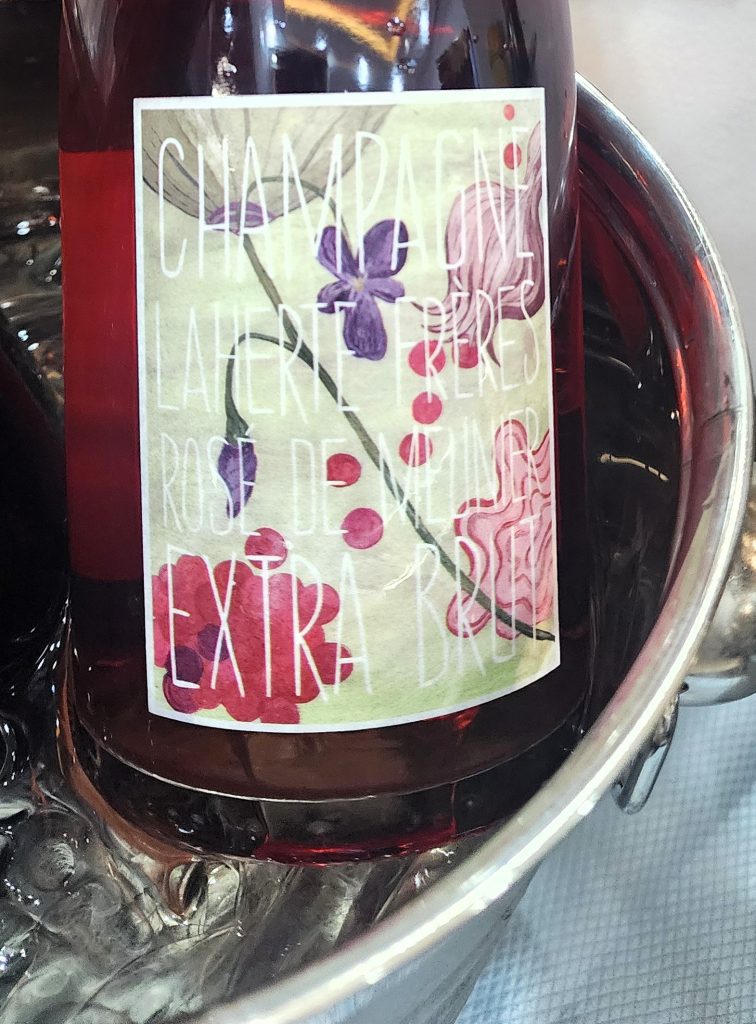
Laherte Frères Rosé de Meunier Extra Brut
Vallée de la Marne and Côteaux Sud d’Épernay (specifically Chavot).
Variety: 100% Pinot Meunier
Vinification: direct press 60%, maceration 30%, still red wine 10%.
Base Wine: 2019
Reserve Wines: 40% to 50% reserve wines from previous years, aged in oak barrels/barriques.
Élevage: At least 24 months aging on fine lees in the bottle before manual disgorgement.
Dosage: 2.5 g/L.
Meunier covers roughly a third of Champagne’s vineyard area and receives a good deal less than a third of the credit. The name is French for miller, after the white down on the underside of its leaves, which look as though they have been dusted with flour. It buds late, ripens early, and has long been at home in the cooler vineyards of the Vallée de la Marne.
Its reputation is that of a supporting player, prized for the freshness and fruitful charm it lends a blend, rather than for any claim to greatness. The verdict is not without foundation. It is, however, incomplete. Meunier has a character of its own, and when given the opportunity to stand alone, it can reveal a clarity of expression that is easily overlooked. At Laherte Frères, it does precisely that.
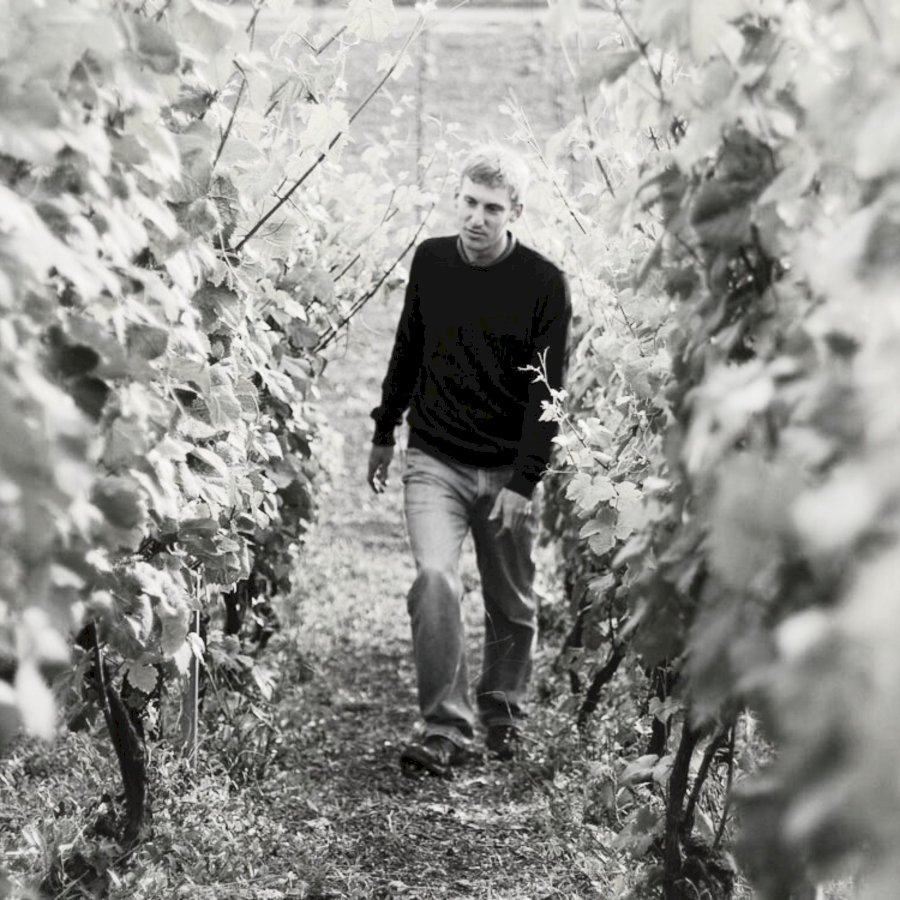
Jean-Baptiste Laherte founded the estate in 1889 at Chavot, just south of Épernay. Aurélien Laherte, the seventh generation, took the reins in 2005, following his father, Thierry, and his uncle, Christian. In 2009, he and Raphaël Bérèche founded Terres et Vins de Champagne, a collective of growers. Part of the estate is certified organic and farmed biodynamically.
Laherte Frères is not classified as a Récoltant-Manipulant (RM). Its plots belong to different members of the family, among them Thierry, Christian and Aurélien, and some fruit is bought in from outside, including biodynamic Pinot Noir from the Montagne de Reims. Because the company buys its grapes, even from the family’s own parcels, it falls under the Négociant-Manipulant (NM) designation.
The RM/NM label is a legal category; Laherte operates with a grower’s mentality in everything except the paperwork.
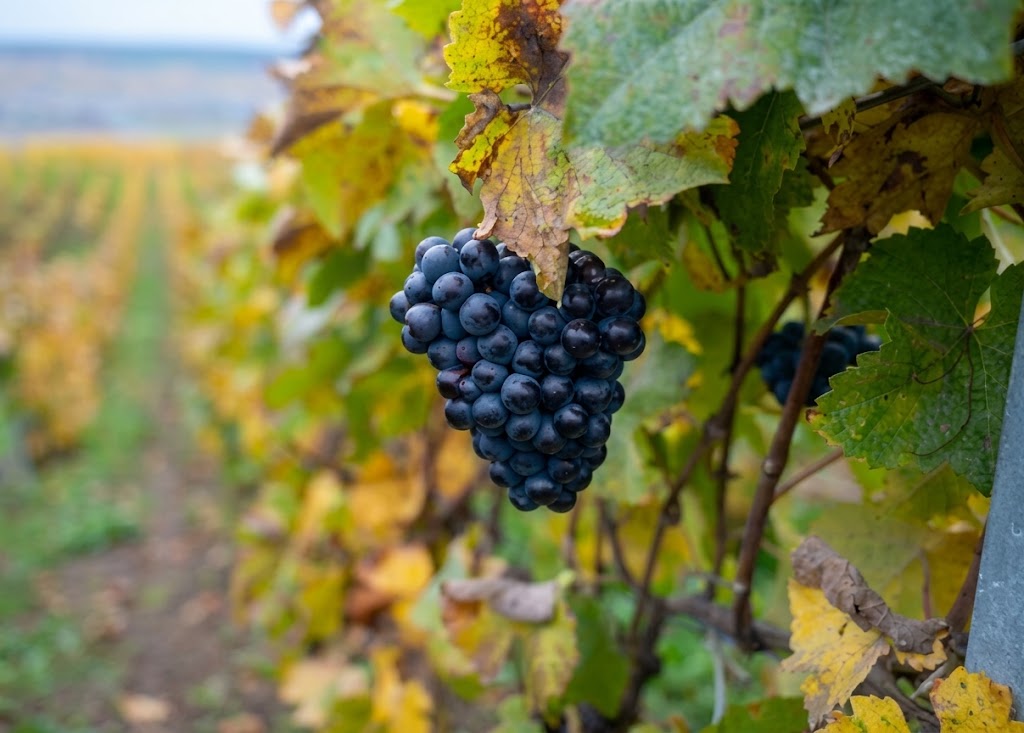
Apart from the principal varieties of Chardonnay, Pinot Noir and Pinot Meunier, the family also cultivates four heirloom Champagne varieties: Arbane, Pinot Blanc, Petit Meslier and Fromenteau (Pinot Gris).
The Rosé de Meunier is made entirely from Meunier grown on clay and limestone in the Coteaux Sud d’Épernay and the Vallée de la Marne, from vines averaging around twenty-five years. With no Chardonnay or Pinot Noir to lean on, the wine has to find its structure within the grape itself.
Laherte makes Meunier three ways and blends the results. About sixty per cent is given a gentle press straight away for freshness and aromatic delicacy. Thirty per cent is briefly macerated on its skins for colour, grip, and a deeper red-fruit register. The last ten per cent is still red Meunier from old vines, for depth, colour, and vinosity. It only works with restraint: the extra structure has to carry the fruit, not bury it.
Reserve wine, part of it aged in barrel, makes up between a quarter and a half of the blend, depending on the release. Each parcel ferments separately, in vats, foudres, and barrels, on native yeasts. Dosage is 2.5 grams per litre, so sugar barely shapes the palate. The aim is not austerity. It is clarity.
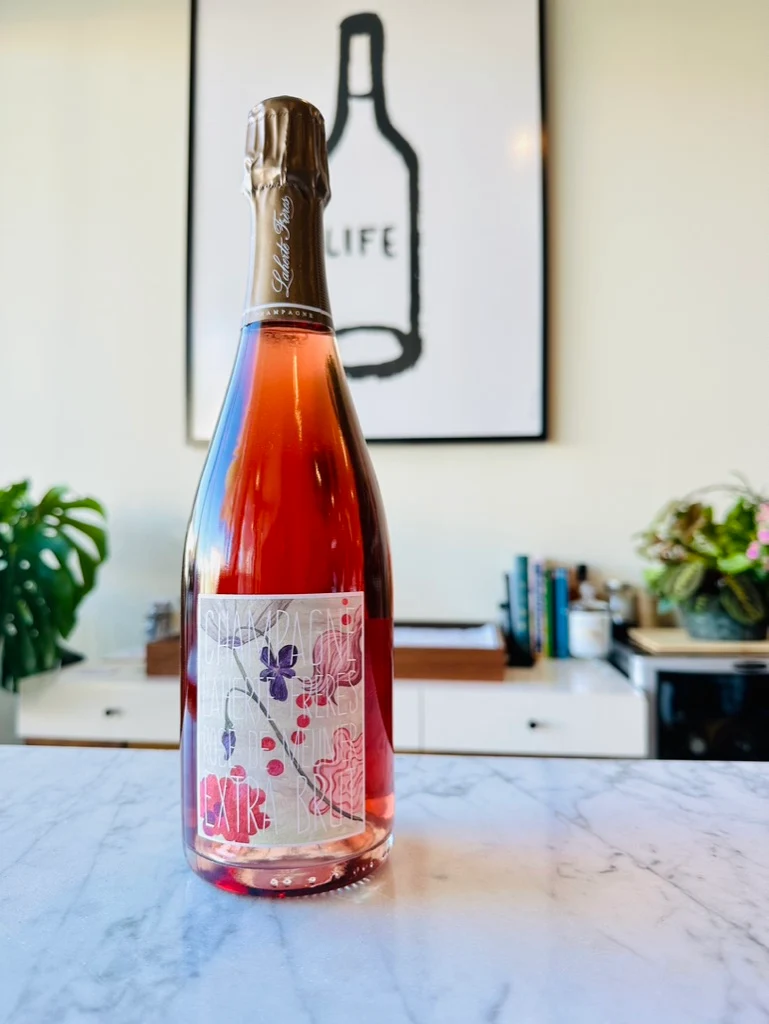
The wine is a deep rosé, somewhere between magenta and cerise, with glints of burnt orange. The bouquet offers cranberry, wild strawberry and redcurrant, followed by blood orange, citrus zest, and a hint of biscotti. Beneath the fruit lies a restrained herbal character and a stony, mineral edge.
The mousse is generous and lively, carrying bright red-fruit flavours against a backbone of fresh acidity. Cranberry lends an attractive tartness. The texture is fine and supple, with a vinosity that many simpler rosés lack. The finish turns drier and more savoury, the fruit present but never crowding. This is an accomplished expression of Meunier, and a Champagne that rewards both a thoughtful food pairing and the time to explore it properly. Drink it with cured salmon, raw tuna, poached langoustines, or duck breast in an orange sauce. Drink now to 2029. 95/100
Darren Gall