
Hippolyte’s Hectare — Vieux Télégraphe
Darren Gall · 19 October 2026
High Ground
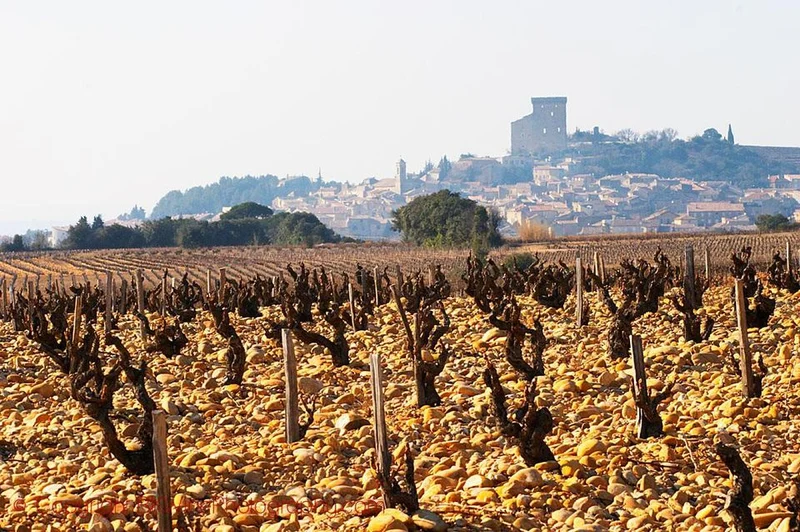
La Crau does not look like promising land. The plateau stands at about 130 metres on the south-eastern edge of Châteauneuf-du-Pape, where the communes of Bédarrides, Courthézon and Châteauneuf meet. Its surface is a spread of smooth round pebbles known as galets roulés. Nothing shelters it. Storms and hail come through unchecked, summer heat comes back up off the stones, and the fierce Mistral wind howls straight down the Rhône valley.
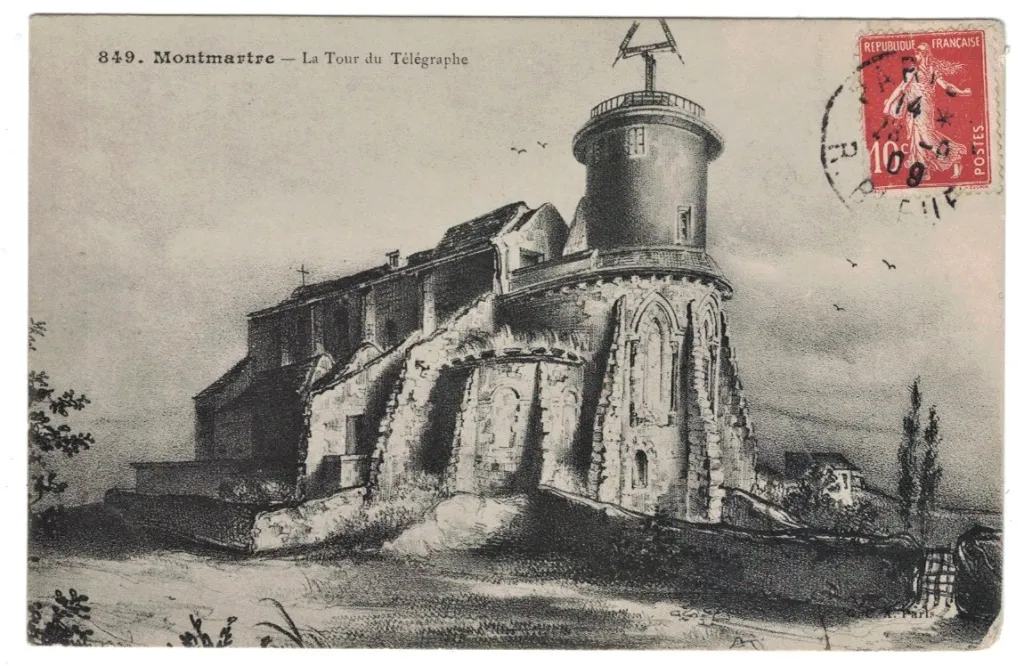
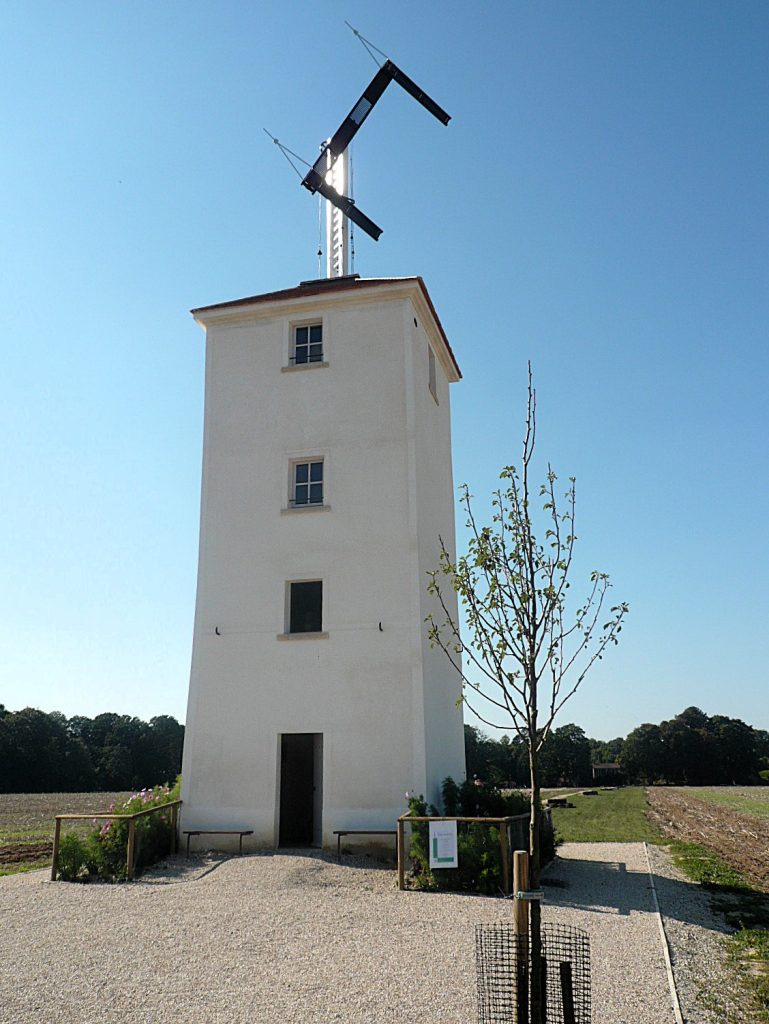
What the plateau has is height, and in 1821 height was worth something. In the month of June, Claude Chappe’s brothers won approval to carry their optical télégraphe south from Lyon to Marseille and on to Toulon: a chain of towers whose jointed arms were set in semaphore code and read by telescope from the next tower along. One of those towers went up on La Crau. The domaine’s own history names Claude Chappe himself as the builder, even though he had apparently been dead since 1805.
The line did not last: by the 1850s the electric télégraphe had made it obsolete. When a Brunier came to name the wine, the télégraphe on the plateau was already old, and the name says so.
Hippolyte’s Hectare
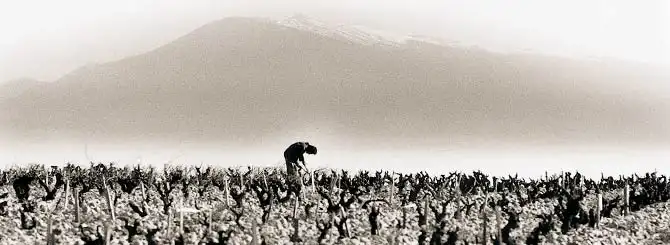
The family story starts at Bédarrides in 1891, when Hippolyte Brunier’s father gave him land on La Crau. It was thought all but useless, land too harsh and bony to farm, though by the family’s account vines had grown on the plateau since the fourteenth century. By 1898 Hippolyte had planted less than a hectare. The rest of the farm went to fruit and vegetables, which paid better.
He planted after phylloxera, not before it. The louse had been found across the Rhône at Pujaut in 1863, and by the 1890s the vineyards of the south were being rebuilt on American rootstock. Whatever the young domaine had to weather in its first decades, the worst of the phylloxera crisis had passed before the first Brunier vines were planted on La Crau.
A Name, Then a Style
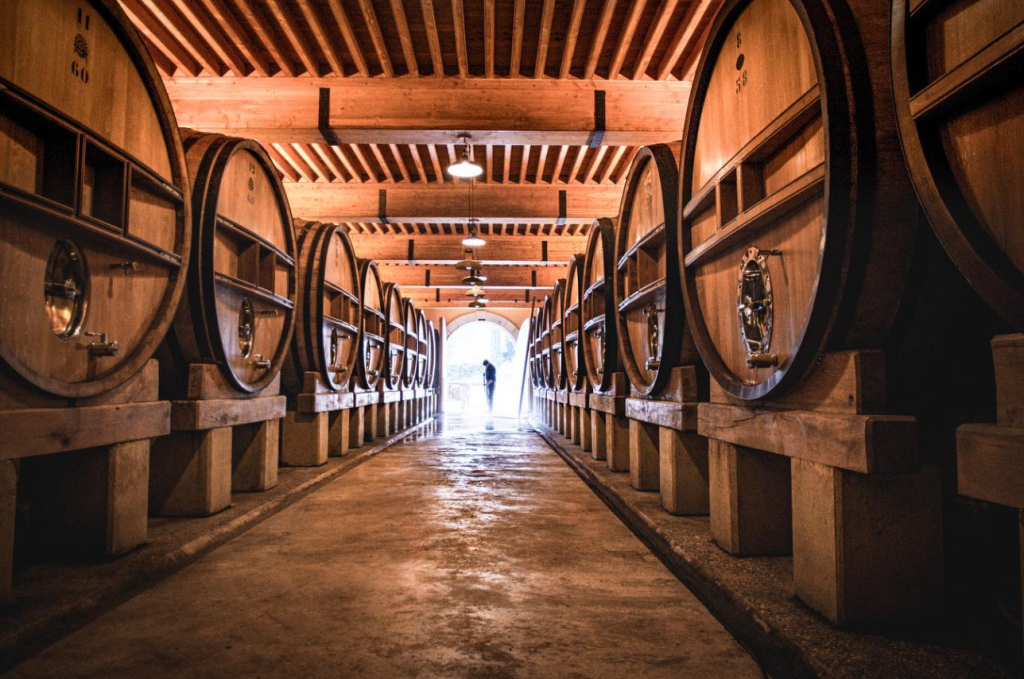
Hippolyte’s son Jules took the vineyard to about seventeen hectares and gave the wine its name. Jules’s son Henri, the fourth generation, rebuilt the domaine after the Second World War. He extended it to fifty-five hectares in a single block, settled the style of the wine, and went looking for buyers beyond France. In 1979 the family built a new cellar that moves grapes and wine by gravity rather than by pump.
By then the domaine had also found an American customer who would change the way it bottled its wine.
Unfiltered
Kermit Lynch, the Berkeley importer, came to know the Bruniers through Henri in the 1970s and shipped his first Vieux Télégraphe to America with the 1978 vintage. In 1979 the domaine began to filter its wine. Lynch asked for his share to be left unfiltered.
The obvious version of what followed is an American palate prevailing over a French family. It is not quite what happened. The Bruniers ran the comparison themselves, bottling both ways and tasting the results from 1980 to 1984, by Daniel Brunier’s account. Lynch’s wine went unfiltered first; the rest followed.
Today Vieux Télégraphe is bottled unfined and unfiltered. Daniel Brunier puts it plainly: ‘We don’t do filtration. We don’t do fining. We don’t use a selected yeast.’
The Brothers, and After
Henri’s sons were both at the domaine by the early 1980s: Frédéric in the vineyards, and Daniel in the cellar. Henri stepped back in the second half of the decade. Early on, the brothers planted new Grenache on La Crau; the fruit now goes into Télégramme; a second wine drawn from the domaine’s younger vines. In 1986 the family bought Domaine La Roquète in Châteauneuf.
In 1998 they looked further afield. With Kermit Lynch they bought and restructured Domaine Les Pallières in Gigondas, and they helped Sami and Ramzi Ghosn found Massaya in Lebanon’s Bekaa Valley. Vieux Télégraphe itself now runs to about seventy hectares; the family farms close to a hundred across Châteauneuf as a whole.
The next handover is well underway. Nicolas, Frédéric’s son, joined in 2015; Édouard, Daniel’s son, in 2016; and Manon, Frédéric’s daughter, in 2018.
Under the Stones
The stones draw the eye, and they do real work. They are Alpine in origin, rolled smooth by water and laid across the plateau by an older Rhône. The usual account is that they store the day’s heat and give some of it back after dark, shade the soil, help slow evaporation, and let heavy rain drain away. They also radiate heat back up under the canopy to assist even ripening.
But a stone holds no water, and in a dry summer water matters more than heat. About a metre down, La Crau turns to red clay crowded with more stones, around seven parts stone to three of clay and sand by Daniel Brunier’s estimate. The domaine’s technical notes also record Miocene molasse, a sandstone far older than the stones above it.
Brunier reckons the profile holds about four hundred millimetres of water, enough to keep the vines healthy through drought. The vineyards are not irrigated, and a young vine needs about eight years to reach moisture at three metres. Old vines are not a luxury here; they are what is required to make exceptional wine.
The Mistral does the rest. It blows cold and dry from the north and is hard on young shoots, but after rain it dries the vines quickly, airflow and lack of moisture ensuring that rot and other diseases struggle to take hold.
One Wine
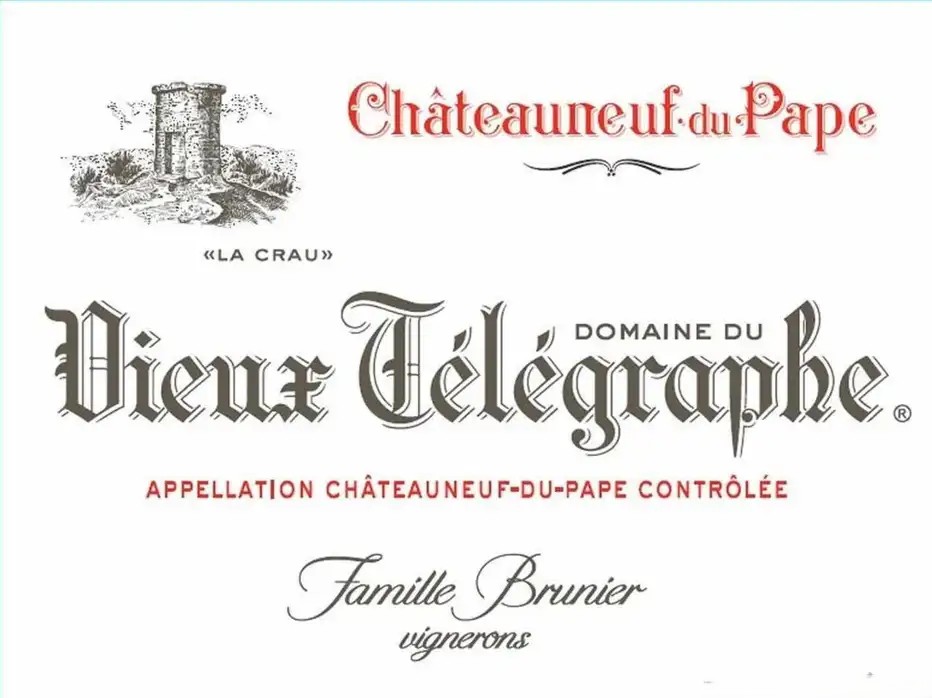
The family has kept to a single red grand vin. It is composed of roughly two-thirds Grenache, around fifteen percent each Mourvèdre and Syrah, and a small proportion of Cinsault, Clairette and other varieties. The grapes come from vines that average seventy years of age. Fermentation runs for thirty to forty days, and the wine spends twenty to twenty-two months in large French oak foudres and is released at two years. The domaine expects the best vintages to keep for twenty-five years and more.
Its reputation rests on depth, earthiness, and long life rather than polish. Daniel Brunier puts the minerality and acidity in the wine down to the plateau, not the cellar.
It would be easy to hand La Crau all the credit. The place invites it: the stones, the wind, the tower in the name. But the same ground was written off as unfit for farming in 1891, and it took four generations to make its wine known beyond France. The reverse holds as well. The same family on lesser ground would have made a lesser wine. The plateau made the wine possible. The Bruniers made it Vieux Télégraphe, made it legendary.
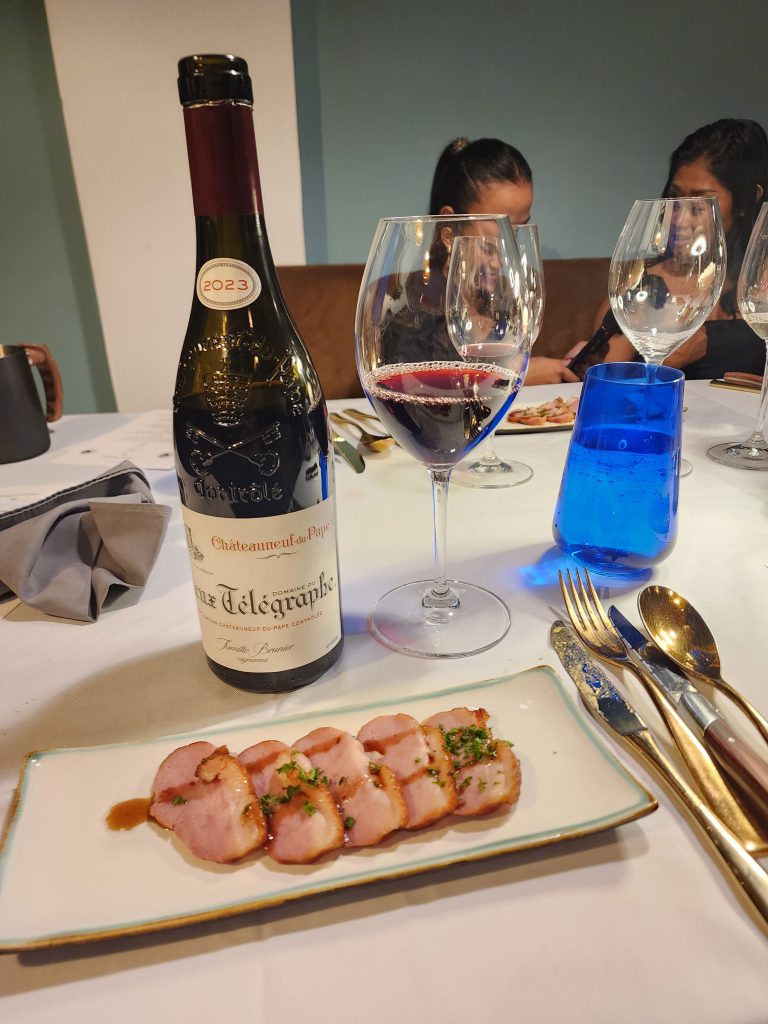
Domaine du Vieux Télégraphe, La Crau, Châteauneuf-du-Pape, 2023
Grenache 65%, Mourvèdre 15%, Syrah 15%, Cinsault, Clairette 5%
Tasted at the Game of Rhone dinner held at Baldwin’s restaurant in Phnom Penh on the 8 October 2026.
The wine displays aromas of crushed violets, raspberries, boysenberries, fruit mince, Chinese five-spice, mocha, and earthy tones of graphite, petrichor and wild herbs. It is immediately evident that there is a lot going on here. Salome’s dance of the seven veils come to mind. The wine reveals a little more of itself as it sheds another layer with every swirl of the glass.
On the palate, medium- to full-bodied, with focused, ripe and remarkable fruit. Red and black forest berries seep across the palate, while an eddy of compote fruit brings complexity to the centre stage. Intriguing, beguiling, this is poetry in organoleptic script.
Then the scaffolding arrives. Lively minerality washes across the back palate; clean, precise acidity, a touch of spice, a hint of smoke; it is as cleansing as a baptism. The taste of juicy, ripened fruit rises like an aria, then lingers on the finish — a memory you wish to hang on to, of how close you once were.
This is a wine made legendary for a reason. It is one of the world’s eminent red wines, from one of its greatest wine regions; you don’t need the old telegraph service to alert you to that. The full symphony orchestra is here, all in tune, balanced; showing nuance and finesse. The music is only going to get better and better with time. Decant for a couple of hours or cellar carefully for a couple of decades. Drink it with smoked duck, roast beef, or a civet de chevreuil. 96/100
Darren Gall
