The Armagh: Eight Acres of Ambition
The First Qualified Man
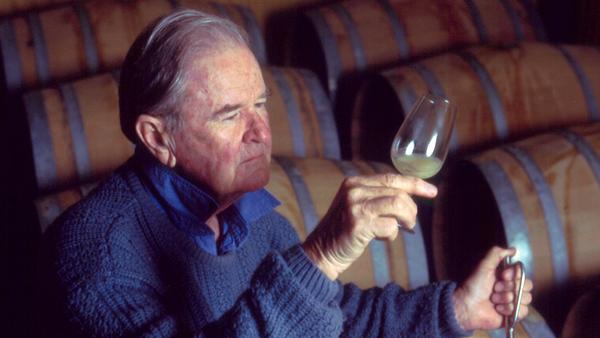
Jim Barry came to the Clare Valley in 1947 carrying a piece of paper that nobody else in the district possessed. He had begun studying oenology at Roseworthy Agricultural College in 1944 and graduated three years later as only the seventeenth student ever to take the degree, which made him, on the day he arrived, the first qualified winemaker the Clare Valley had ever employed.
The position was at the Clarevale Co-operative, a growers’ collective that crushed the fruit of dozens of small Clare families, and he stayed there for twenty-two years. When he finally left, in 1969, it was to help the Taylor family establish their winery and vineyards at Auburn, at the southern end of the valley — a generosity that would characterise him for the rest of his life. His technical knowledge, his energy, and his willingness to give both away are as much a part of the modern Clare Valley as any vineyard he planted.
Nancy
In 1950 he married Nancy Barry, and it is not possible to tell the story of what followed without her. The Barrys were not a wine dynasty with capital behind them. They were a young couple living on a co-operative winemaker’s wage, buying land a parcel at a time as they could afford it, and their first property and vineyards did not come until 1959.
Nancy was the driving force behind the formation of Jim Barry Wines, holding the business together while Jim ran the ferments, and the shape of the family was set by the two of them in those years — the commercial and the viticultural sitting at the same table — long before there was a label to put on a bottle.
The valley they were working in is one of the oldest wine districts in the country, settled in the 1840s and lying some 130 kilometres north of Adelaide, high and narrow and hemmed by ranges. It is known to most of the world for Riesling, and deservedly so, but the same conditions that give those wines their verve — elevation, poor ancient soils, and nights that fall away sharply after the heat of the day — do remarkable things to Shiraz as well. Jim Barry understood that early.
Seventy Acres
Five years later, in 1964, they bought seventy acres of grazing country from Duncan McRae Wood. The block lies a little north-west of Clare, where Benbournie Road meets McRae Wood Road, and the creek that divides it gave the vineyard its name; the district itself had been named by Irish settlers for the county they left behind.
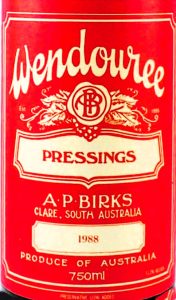
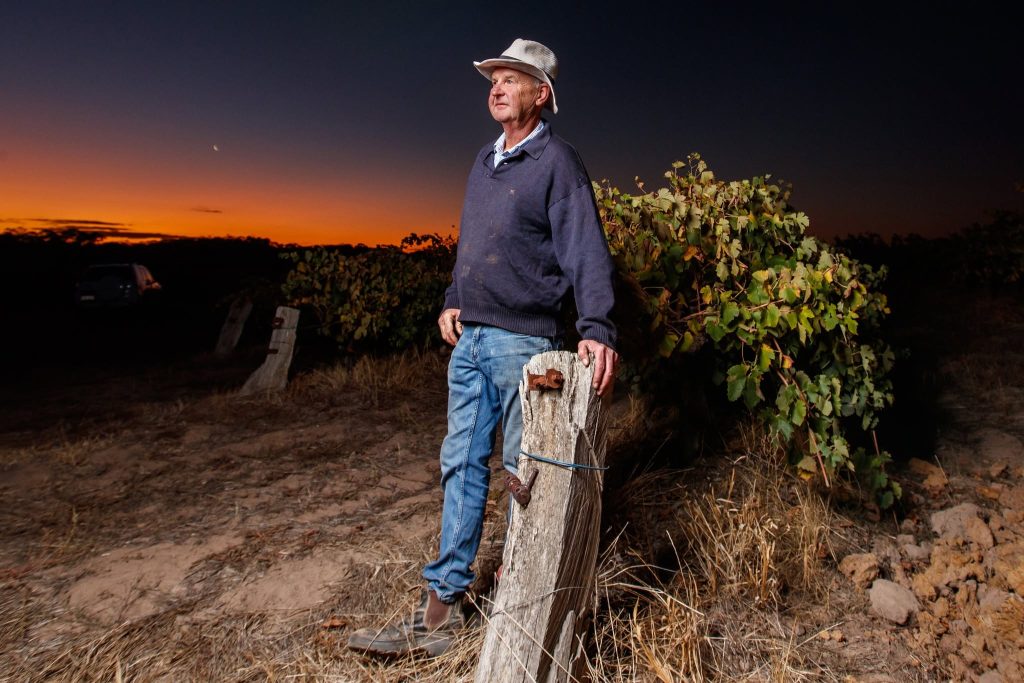
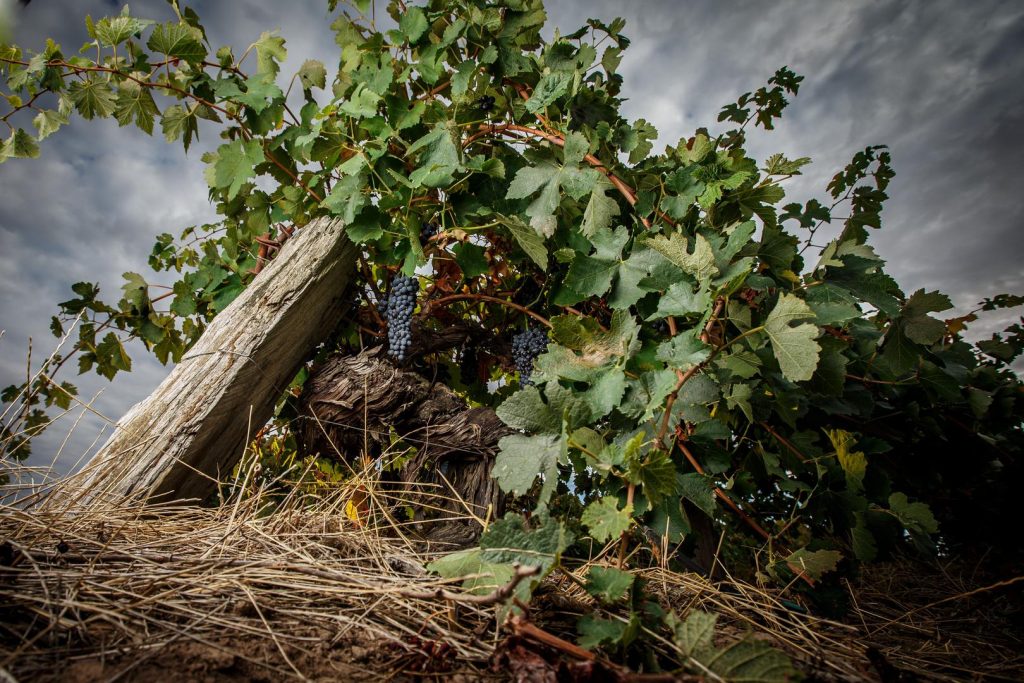
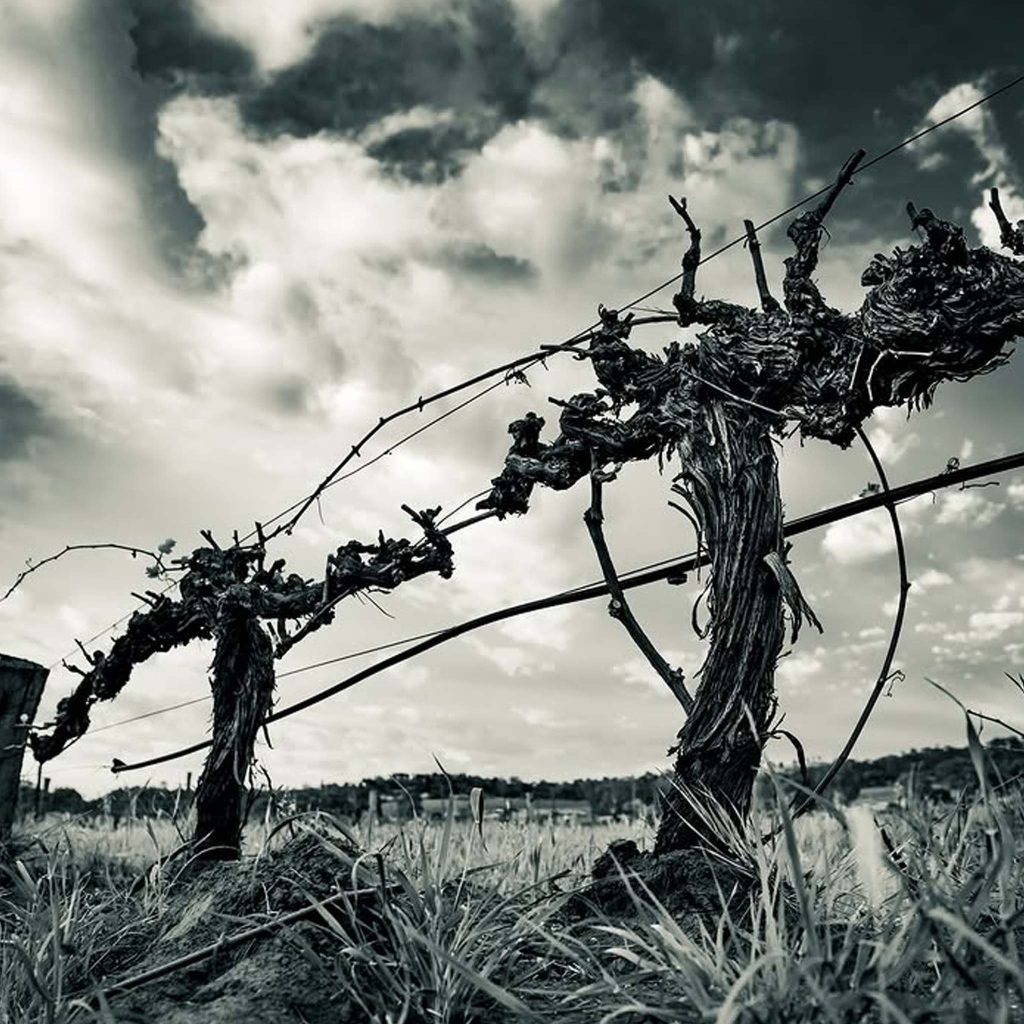
Jim planted straight away — two thousand five hundred Cabernet Sauvignon vines and nine hundred Malbec, on the western side of the block. Then, in 1968, he planted eight acres of Shiraz on the higher, north-easterly-facing ground to the east, and for those he went to Wendouree.
Wendouree, first planted in 1893, is the most quietly revered vineyard in the Clare Valley, and the cuttings Jim carried away from it are the genetic material of The Armagh. It is worth pausing on that. A wine that would eventually be sold alongside the classed growths of Bordeaux began as a handful of sticks taken from a neighbour’s seventy-five-year-old vines.
A Bastide Called Créon
Peter Barry graduated from Roseworthy in 1983 and went straight to France, working that year’s vintage at Château Bauduc, on the edge of Créon, some twenty-five kilometres east of Bordeaux in the Entre-Deux-Mers. The bastide takes its name not from the Créon of Greek myth but from Amaury III de Craon, the English seneschal of Gascony who founded the town in 1315 — though the coincidence is an intriguing one, because Sophocles’ Creon is the figure whose pride and stubbornness cost him in Antigone, when his refusal to bend his will costs him his son and his wife.
Peter came home the following year with an idea that was, at the time, close to heretical, and that could have ruined the family business if it failed. He wanted them to make a single-vineyard Australian wine of genuine grand vin ambition, from their own fruit, and price it accordingly.
The obvious material was sitting on the western side of the Armagh block — Cabernet Sauvignon and Malbec, the Bordeaux varieties, planted by his father. Peter had no interest in them. He had not gone to Bordeaux to learn how to imitate it. What he wanted was the eight acres of Shiraz on the hill, and the timing could hardly have been worse. South Australia had embarked on its vine pull scheme, paying growers to tear vineyards out in order to correct a national oversupply, and Shiraz was precisely the variety going into the fire. Peter was stubborn and persuaded his father anyway.
Rare Earth
What the two of them were looking at is, geologically, among the oldest ground on the Australian wine map. The Armagh sits on rock of the Rhynie Sandstone, which the family dates at more than eight hundred million years — Neoproterozoic material from the Adelaide Rift Complex, laid down when the continent belonged to an entirely different world. Above it the topsoil runs to a pale sandy clay, shot through with pebbles washed down over millennia and sitting on a mottled clay base: low in fertility, sharply drained, and thoroughly disinclined to grow anything vigorously.
The Shiraz is farmed today as three contiguous blocks between 358 and 367 metres in elevation, and they are not the same vineyard as one another. One is gravelly, the others heavier clay; they differ in exposure and they differ in ripening, so that fruit grown within a single site of eight acres will arrive at its moment on three separate schedules.
The vineyard takes around 580 millimetres of rain a year and gives, on average, twenty hectolitres to the hectare — a fraction of what a comfortable commercial Shiraz block would produce. The Clare Valley’s cold nights do the rest. What comes off that hill is small-berried and thick-skinned, concentrated to a degree that has to be managed rather than pursued.
Six Barrels
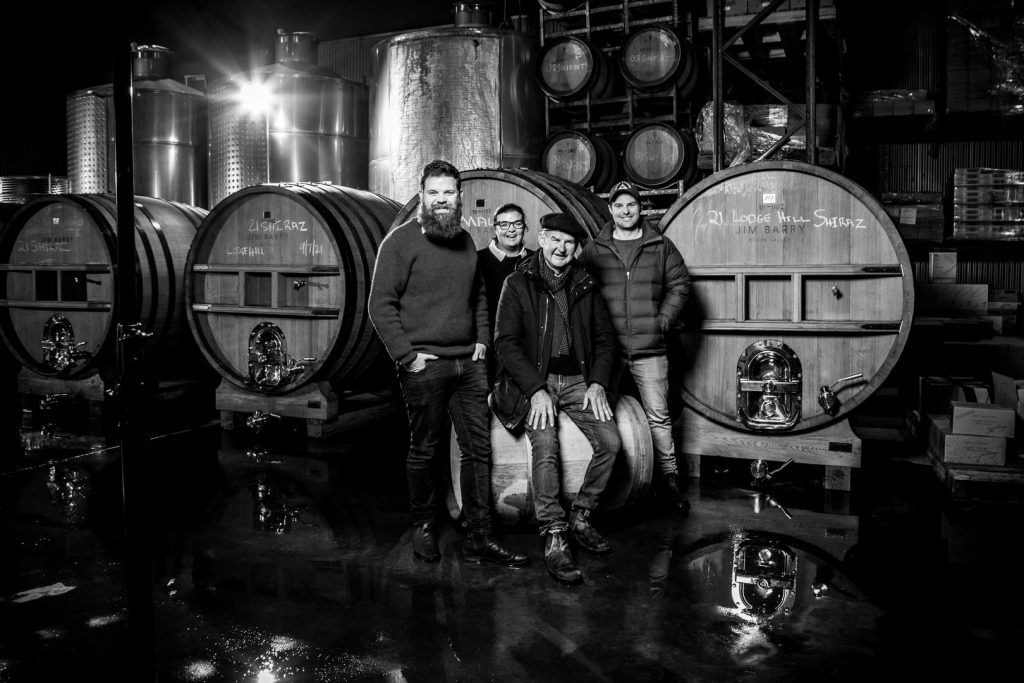
The first Armagh was made in 1985 by Jim’s son Mark Barry, and it filled six new American oak barrels. That is the whole origin of the wine: six barrels, off eight acres, in a season when the government was paying people to pull Shiraz out of the ground.
The 1986 followed, and the family did not release it. It had not met the standard they had set themselves, and rather than put a lesser wine into the market under the name they declined to make an Armagh at all — a decision they would repeat in 2003, a very warm season, and again in 2011, a notoriously wet one. It established the principle that has governed the wine ever since. There is no obligation to produce The Armagh simply because there has been a harvest. The vintage must earn the name.
The wine reached the public in 1989, when Peter Barry launched it at Glen Helen Lodge in the West MacDonnell Ranges, out beyond Alice Springs — about as far from a Bordeaux château as a wine launch could reasonably be staged. It was an audacious release: by World of Fine Wine’s reckoning, a Clare Valley Shiraz asking thirty-five dollars a bottle at a time when Grange was forty and Hill of Grace under ten. The market, and the critics, agreed with him.
From American to French
The wine that exists now is not the wine that filled those six barrels. Early Armagh was a creature of new American oak and wore the vanillin and sweet-oak signature of its era openly. From the early 1990s the family began moving towards French, a shift that took the better part of thirty years to complete: French oak became predominant with the 2014, and from 2018 the wine has been raised in French alone.
The vessels grew as the oak changed — from the conventional 225-litre barrique to the 300-litre hogshead, and later to 500-litre puncheons — each increase lowering the ratio of new wood to wine and letting the vineyard speak with less accompaniment. Production has stayed deliberately small throughout. The family assesses the wine barrel by barrel, and only about half of what the vineyard gives ever goes into The Armagh, which averages some five thousand bottles a year. The technical detail here — yields, elevations, oak formats and volumes — follows World of Fine Wine’s Armagh retrospective.
The Encouragement
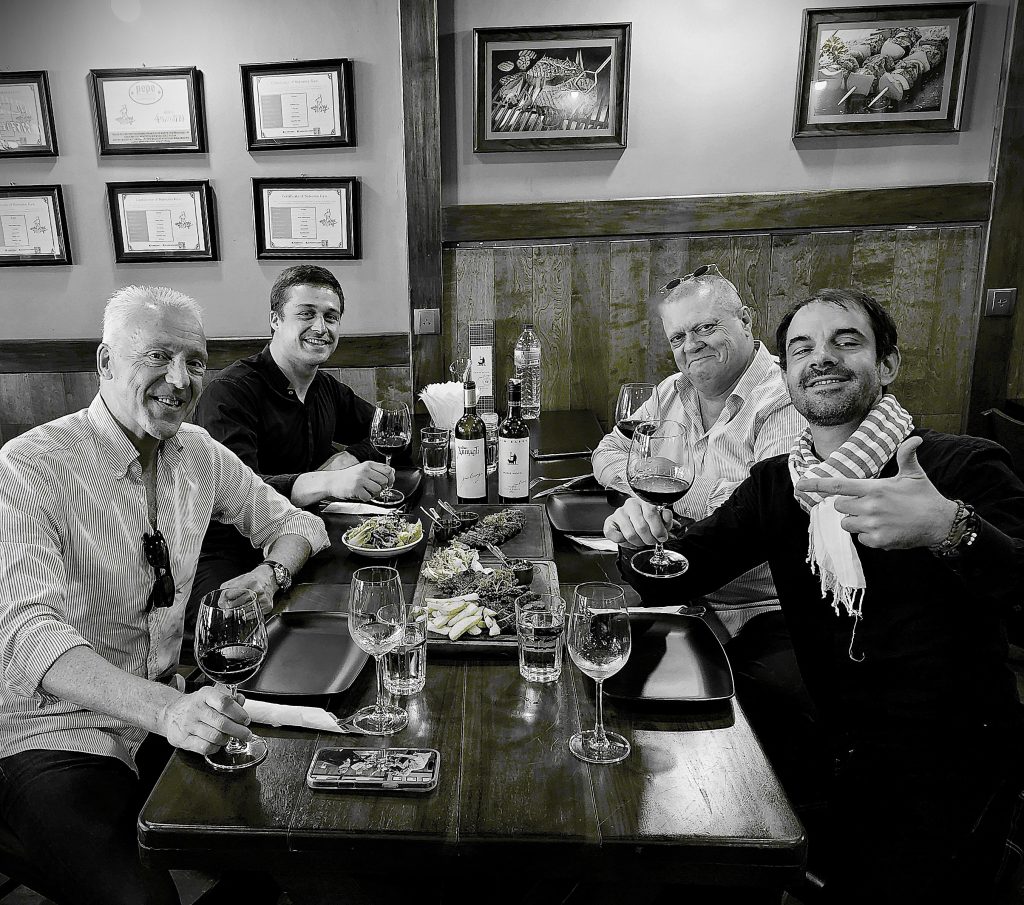
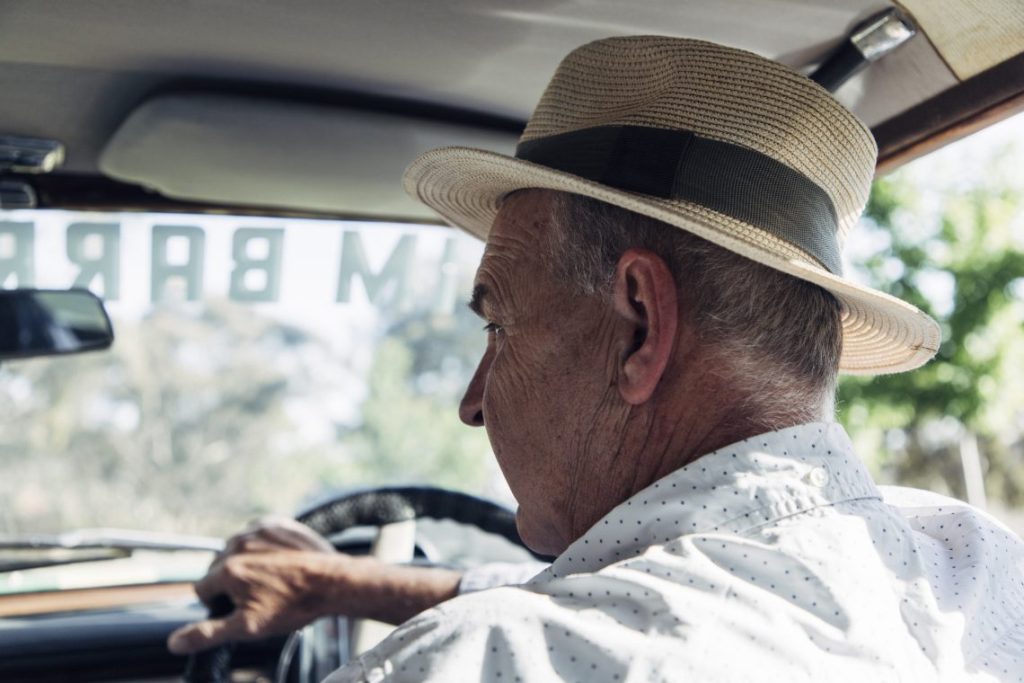
I cannot remember exactly when I first met the Clare Valley winemaker Peter Barry; we would have bumped into each other at any number of wine events, and I had come to appreciate his wines very early on. The meeting with him I will never forget was when I was running the corporate wine service for Philip Murphy in Melbourne, Australia. This operation was a huge success at the time and was a channel through which I could put any winemaker’s wine on the boardroom tables of the richest companies in town. In short, everyone wanted me to sell their wine.
One morning around eleven, Peter Barry came marching into my office and invited himself to sit down. I was genuinely happy to see him; winemakers were rock stars to me back then, and I idolised them. Peter pulled out a bottle of The Armagh — then Australia’s second most expensive wine — and asked me if I’d have a glass with him, to which I obviously and hastily agreed. Once we’d contemplated the wine for a few minutes, Peter asked me what I thought of it. I was gushing in my praise; it truly was one of the best reds made in the country. “Then why the hell aren’t you selling it to your boardroom mob?” was his well-prepared reply. Somewhat ambushed, I cannot now be sure of my very awkward reply. What I do remember, though, is that I have been a huge fan of both Peter and his wine ever since.
Having attended many winemakers’ dinners and events together over the years, I once stated, sarcastically, that just about the worst thing that anyone could do at a Peter Barry wine dinner was laugh at his first joke, because it only encouraged him! I was, of course, joking myself; Peter is one of the industry’s great characters — a great laugh, a big heart, and genuine in what he says and does. He is one of those people you meet in this industry and are simply glad to have met — someone whose wines I have admired ever since, whose family business I have watched with real affection, and whose journey I have followed, even from a distance, and been inspired by, through the many great bottles.
The 2016
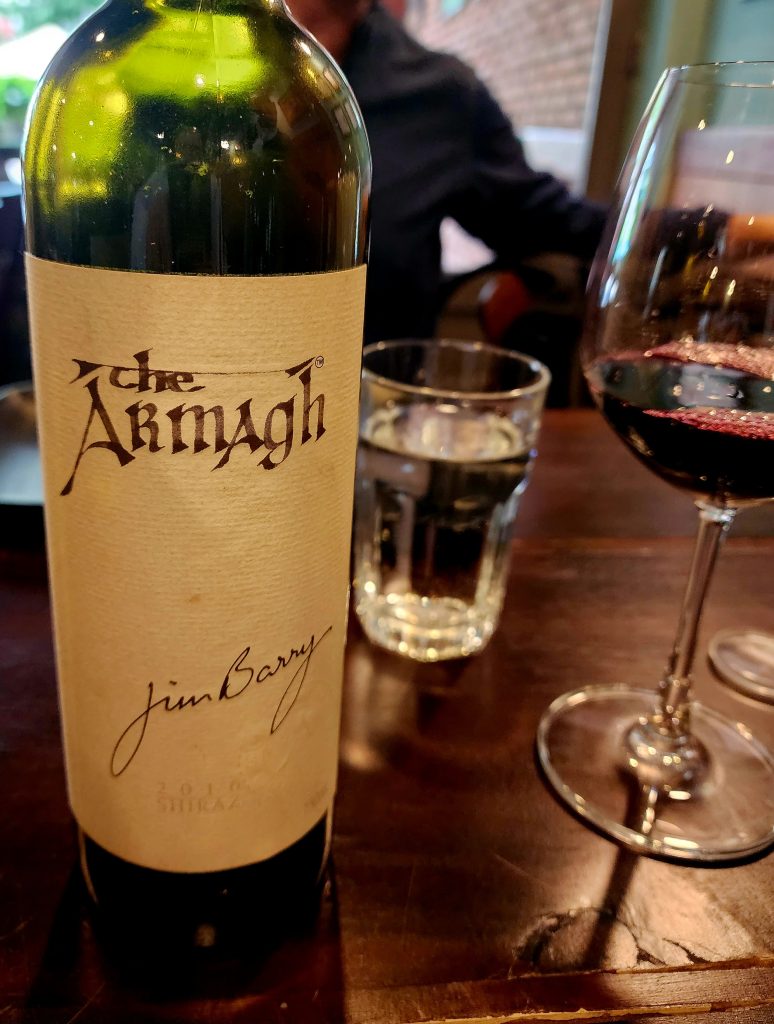
The 2016 vintage spent sixteen months in 300-litre hogsheads, sixty-nine per cent French and thirty-one per cent American, of which two-thirds were new and the balance one and two years old, and it was bottled at 14.4 per cent alcohol. The figures describe a wine that has stopped trying to impress anybody with its scaffolding. It’s all heart and soul from vineyard to winery to family.
It is deeply coloured, oxblood and plum, ten years in and the rim still glows with vibrant youthfulness. The nose is all satsuma plum, violets, and dark fruits, with baking spices, thyme, and fine mineral notes. The oak does not announce itself in any way more than the lightest stroke of an artist’s brush.
The palate is rich and saturated with ripe fruit, combining depth and complexity with notes of dark plum and cassis, star anise, black peppercorns, clove and graphite. The tannins are ripe and fine. The wine lingers in the mouth with hints of iron filings and sage.
What is most striking is the elegance, that refined balance between depth and grace. This is a powerful wine; the site allows nothing else. The fruit is dense rather than ponderous, the structure supports rather than constricts, and the wine glides across the palate with a poise that wines of this concentration are not supposed to have. It will not show its full hand for some years yet, and on the evidence of what this vineyard has done before, it should hold and develop for decades after that.
La Place
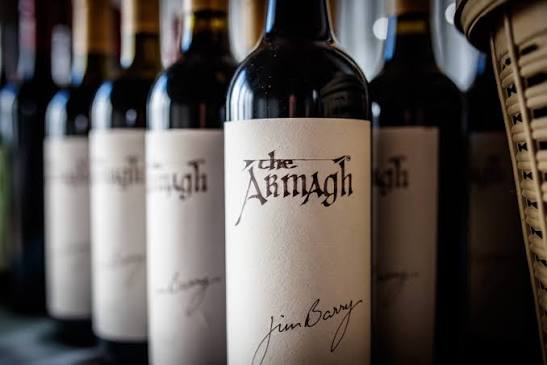
In September 2020, The Armagh 2016 became the first Australian Shiraz ever offered through La Place de Bordeaux. It went out alongside Wynns John Riddoch Cabernet Sauvignon, through négociants including CVBG, Borie Manoux, and Louis Vialard & Joanne — named by Drinks Trade at the time — into the same distribution system that carries the classed growths of the Médoc to collectors from London to Hong Kong.
That last point is not incidental. La Place is how the fine wine of Bordeaux has always reached Asia, and putting an eight-acre Clare Valley Shiraz into that machinery placed it, overnight, in front of the merchants and collectors of Hong Kong, Singapore, and Shanghai on precisely the terms a first growth enjoys.
For a wine that began as an idea in the head of a young Clare Valley winemaker on his way home from the French vintage, the symmetry is almost too neat. Peter Barry went to France, came back convinced that Australia could make a single-vineyard grand vin, and thirty-six years later Bordeaux sold it for him.
Three Generations
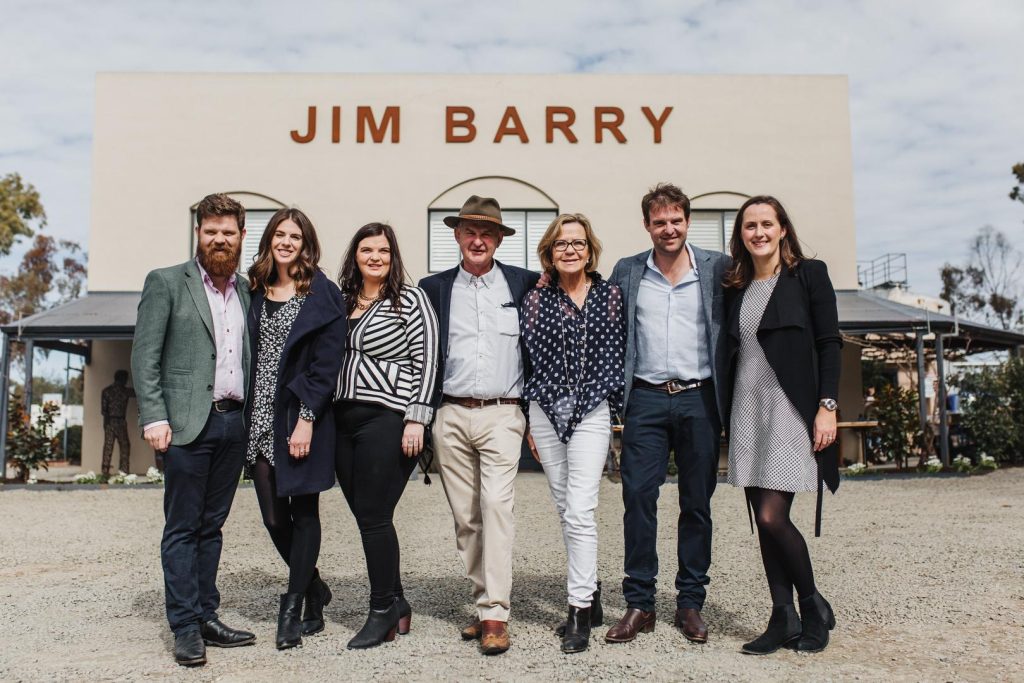
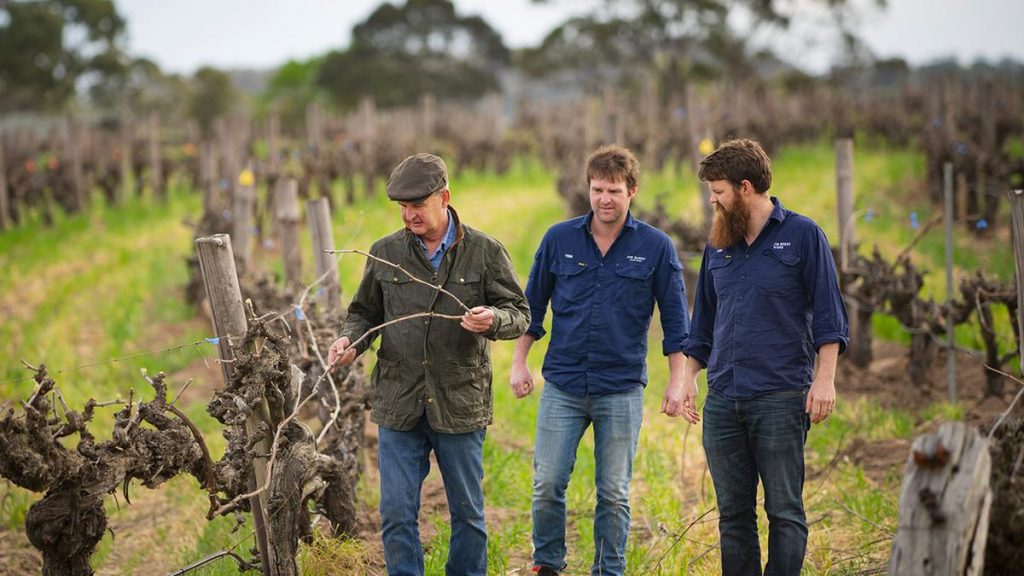
Jim Barry died in October 2004, at seventy-nine, and was survived by Nancy. Peter, who had become managing director in 1985 — the year of the first Armagh — carried the company through the expansion that followed, and today Jim Barry Wines farms seventeen vineyards across some 320 hectares in the Clare Valley, together with two vineyards covering another 35 hectares in Coonawarra.
In May 2024, the retiring Peter Barry was inducted as a legend into the Clare Valley Wine Hall of Fame, celebrated at a once-in-a-decade gala event. The Clare Valley Wine Hall of Fame recognises exceptional achievement and innovation in viticulture, winemaking, brand marketing, as well as regional ambassadors. The Legends inducted are those who have influenced and contributed to the development and success of the Clare Valley wine industry over the course of their working life.
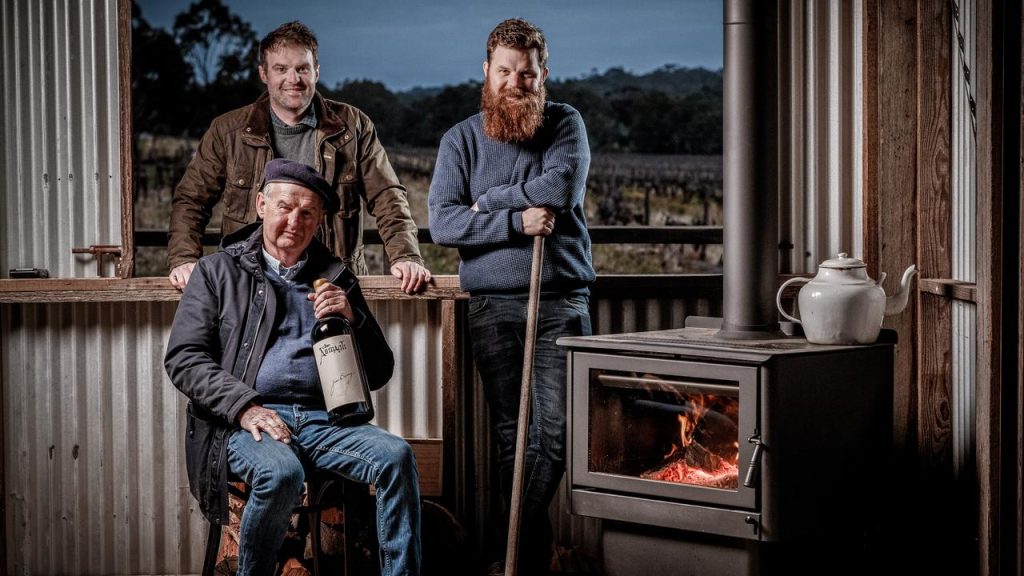
The third generation is in place. Tom completed his oenology degree in 2010 and is part of the winemaking team; Sam came in as commercial manager; Olivia works as the family’s brand ambassador. Tom has described the direction of the wine as a return to his grandfather’s instincts: Jim picked at lower alcohols and believed the wines should show elegance and finesse. His legacy appears to be in good family hands.
Eight Acres
Nearly sixty years after Jim Barry put those Wendouree cuttings into the hill at Armagh, what the vineyard has produced is not the work of one brilliant vintage or one charismatic winemaker. It is the accumulated understanding of a single small piece of ground by a single family, across three generations, which is the only way anybody has ever made a great wine anywhere.
The 2016 is a clear statement of this understanding: powerful without being ponderous, concentrated without losing its freshness, intense without letting the oak do the talking. Eight acres, five thousand bottles, and an ambition that has taken sixty years to look inevitable.
Darren Gall