A Little Touch on the Heart: Champagne and Dim Sum
Dim Sum
In Cantonese, dim sum means, loosely, to touch the heart. Yum cha, the meal it belongs to, means to drink tea. The order matters. In the tea houses of Guangzhou, where Cantonese dim sum flourished in the late nineteenth century, the dumplings were the accompaniment and the tea was the point: hot, astringent, scouring the palate with tannin between baskets. Any case for Champagne at this table has to begin by conceding that tea got there first.
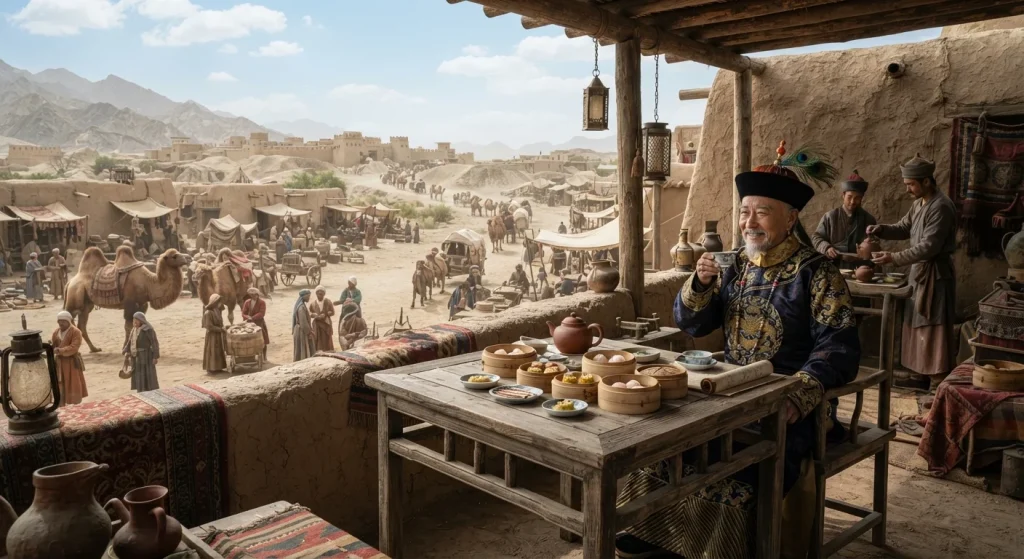
In fact, in the beginning it was all about the tea. Dim sum’s origins are often traced to the Silk Road trade routes, where traders and early travellers would rest at tea houses along the way. These tea houses began offering small snacks as a way of attracting business, which proved so lucrative and the market so competitive that the snacks evolved to become ever more elaborate offerings. It is not unlike the evolution of tapas in Andalusia, Spain. As the story goes, horse riders would stop at an inn for a glass of sherry, and what began as a lid or cover (tapa), usually a slice of bread or ham — used to keep the dust and insects out of the sherry glass — became an attraction, a sort of billboard for a business marketing to a clientele that mostly could not read or write.
Yum Cha
Tea’s tannin makes the meal last. It dries the mouth just as fat and gelatine slicken it, and the two cancel. The dryness is a sensation, not a loss of moisture. Tannin seizes the proteins that make saliva slippery and clumps them together; the saliva remains, but it no longer glides, and the tongue drags against the palate. A sip after a crisp taro puff or a soup dumpling strips the coating away, and the next basket arrives on a clean tongue. The bitterness does similar work on sugar, holding the honeyed glaze of char siu and the custard of an egg tart in proportion. The food returns the favour. Protein and fat soften the tea’s grip, so that tea tastes gentler at the table than it does alone.
Champagne
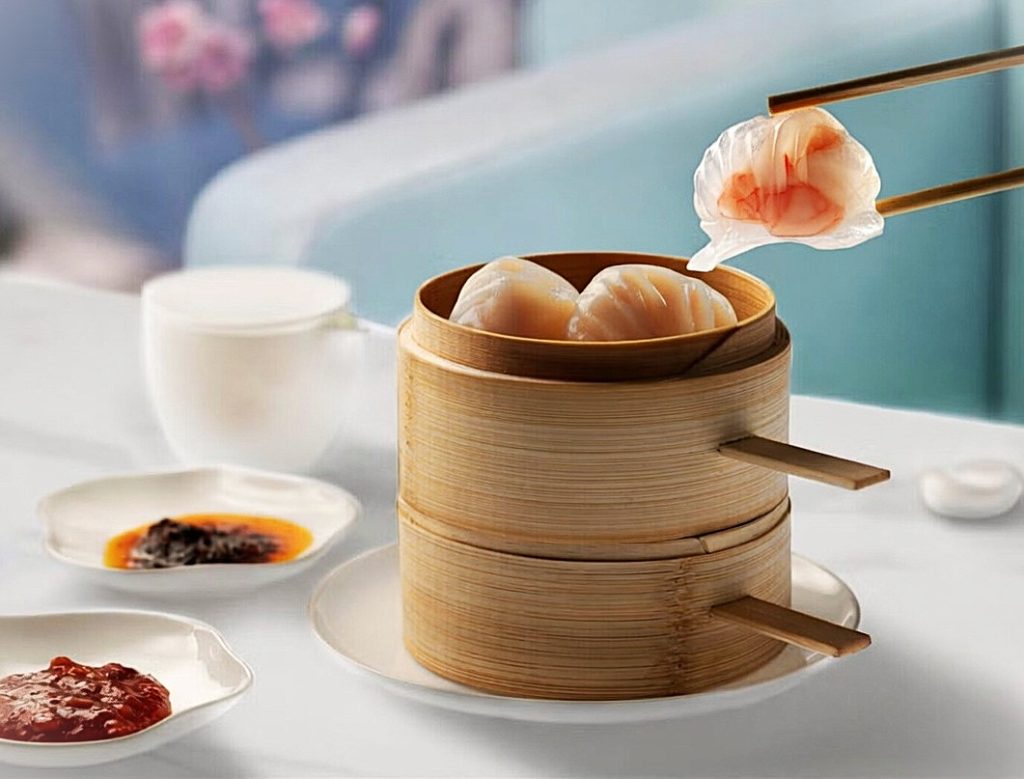
What Champagne offers is the same service, performed with more ceremony. Consider what the table asks of a drink. The translucent skin of a har gow, the crackle of fried taro, the scalding broth inside a xiao long bao, the glossy sweetness of char siu, and soy, chilli, and black vinegar in small dishes all around. It is a procession of textures as much as flavours, arriving at once and shared. Few still wines handle all of it. Champagne comes closest because it is a textural wine before it is anything else.
Where tea works through tannin, Champagne works through acid, and indirectly. Acid is the classic trigger of the salivary reflex, and Champagne, at a pH of around 3, is among the sharpest wines at the table. The mouth answers each sip with a rush of saliva. It carries water, which washes the last basket from the tongue, and bicarbonate, which rises with the flow and neutralises the acid that summoned it. Within a few minutes the flow subsides. By then the next steamer has arrived.
Acid also tightens the mouth slightly, and that faint astringency offsets the slick of anything fried. The wine does not dissolve the oil. It restores the balance against it. The salt in the sauces softens the wine’s edges rather than fighting them.
There is a second chemistry, less obvious than the first. In November 2020, three food scientists at the University of Copenhagen, Charlotte Vinther Schmidt, Karsten Olsen, and Ole Mouritsen, published a paper in Scientific Reports asking why Champagne and oysters work. They analysed seventeen Champagnes alongside two Danish oysters, the native flat oyster and the Pacific. Their answer was umami synergy.
Umami — The Mother’s Milk of Flavour
Of the five basic tastes, umami is the youngest, at least by name. Sweet, sour, salty, and bitter have been recognised for more than two thousand years. Aristotle set them down in the fourth century BC, and Chinese texts of the same era already spoke of five flavours: sweet, sour, salty, bitter, and pungent. Umami waited until 1908, when Kikunae Ikeda, a chemistry professor at Tokyo Imperial University, isolated glutamate from the kombu in his dashi. He called the taste umami, from umai (delicious), and mi (taste), a character Japan borrowed from the Chinese wèi.
The West took its time. Science adopted the word only in 1985, at a symposium in Hawaii. Then the order reversed. In 2000, a team in Miami identified a receptor for umami, the first taste receptor of any kind to be found. Bitter followed the same year and sweet the next. The receptor for salt was identified in 2010, sour not until 2018. The last taste to be named was the first to be explained.
Why we love it is less mysterious. Umami is the taste of protein: of meat roasted, cheese aged, fish dried, stock reduced. It signals nourishment, and it sets the saliva and digestive juices running. The attachment starts early. Glutamate is the most abundant free amino acid in human breast milk, more than half the total, and Ole Mouritsen reckons it at least ten times as rich as cow’s milk. Newborns meet it with expressions of pleasure. We know this taste before we know a word for anything.
Umami is carried by two families of compound. The first is glutamate, an amino acid. The second is a small group of nucleotides: inosinate, found mostly in meat and fish; guanylate, found in dried mushrooms; and adenylate, common in shellfish. Each is weak on its own. Together they are not added but multiplied, because the nucleotide binds alongside glutamate at the tongue’s umami receptor and strengthens its hold. In the presence of glutamate, the threshold at which inosinate or guanylate can be tasted falls more than a hundredfold.
Perfect Partners
Champagne supplies the glutamate. During its long second life (bottle maturation after the second fermentation), on its lees, the spent yeast breaks down and releases amino acids, peptides, and the mannoproteins that help give the wine its creamy texture. The Champagnes in the study averaged 65 mg of free amino acids per 100 ml, against 38 in an Italian sparkling wine used as a reference. Most of that is not glutamate. Proline and alanine, both faintly sweet, make up much of it. Glutamate itself ran from 1.4 to 7.5 mg per 100 ml, and the richest wines were older vintages that had spent many years on yeast lees.
That is not much. Glutamate alone cannot be tasted below about 30 mg per 100 ml, so even the richest Champagne in the study reached only a quarter of the threshold. Champagne cannot taste of umami by itself. It needs a partner carrying nucleotides, and the authors concluded that the wine has more to gain from the pairing than the oyster does. They were also candid about their method: the synergy was calculated from measured concentrations and assumed mouthfuls, not confirmed by a tasting panel.
Here the argument turns towards the bamboo steamer. The oyster, it emerges, is a modest partner. Its nucleotides are mostly adenylate and uridylate, with little inosinate or guanylate, and adenylate is the weakest synergist of the three. On the constants the paper itself uses, guanylate is almost thirteen times as potent, inosinate more than five times. Under one of the paper’s two mouthful scenarios, the Pacific oyster could not lift Champagne’s glutamate over the line at all.
Dim sum is built from stronger material. Pork carries some 230 mg of inosinate per 100 g. Prawn has around 120 mg of glutamate and 90 of inosinate, alongside glycine and alanine, the amino acids that make shellfish taste sweet. Dried shiitake holds over 1,000 mg of glutamate and 150 of guanylate, the most potent synergist of all. Soy sauce runs from 400 to 1,700 mg of glutamate, oyster sauce about 900.
A har gow is therefore a small synergy in itself, glutamate and inosinate folded into one translucent skin, with a sweetness the wine’s acidity keeps in proportion. A siu mai goes further. Pork, prawn and, often, dried shiitake put the full triad of glutamate, inosinate, and guanylate into a single bite. The filling of a char siu bao joins the glutamate of soy and oyster sauce to the inosinate of roast pork, then adds sugar. Sweetness in food makes wine seem sharper, which is why char siu wants a little more fruit in the glass.
Each of these baskets brings the nucleotides Champagne lacks, and Champagne brings glutamate the food can use. That is the chemical case. It must answer an orthodox objection: conventional pairing theory holds that umami is hard on wine, making it seem more bitter, more acidic, and thinner. Champagne survives this better than most. It has almost no tannin to turn bitter and only moderate alcohol to burn. More to the point, it is not meeting umami from outside. It carries a share of it. The study tested oysters, not dumplings, and the extension is an inference rather than a finding. But the chemistry travels well.
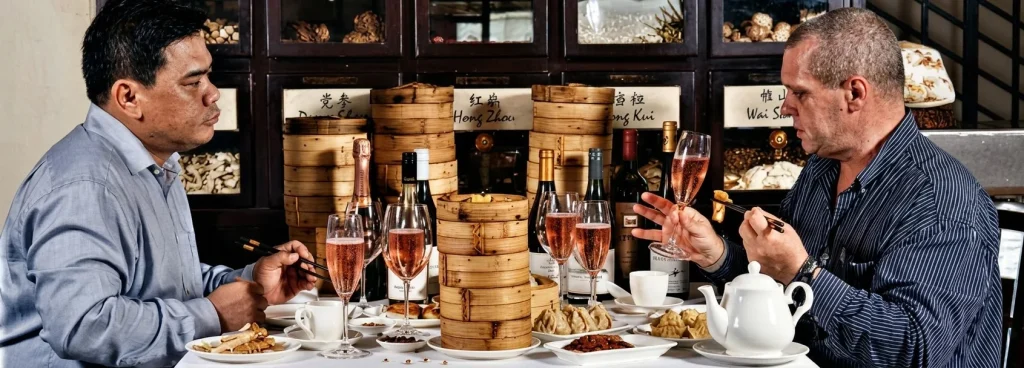
For years I have held lengthy discussions and even longer tastings of wine and dim sum with Cambodia’s legendary chef Luu Meng at his Yi Sang headquarters, and I have done numerous, unforgettable Champagne and dim sum brunches and lunches. One of the most memorable dim sum brunches was in Melbourne’s Chinatown, decades ago, where our host politely asked us to ‘eff off’ late one afternoon, so his team could prepare for the dinner service that night! A Billecart-Salmon Champagne event over dim sum at Zhan Liang in Rosewood Phnom Penh was another of outstanding quality; it could have also run well into dinner if allowed.
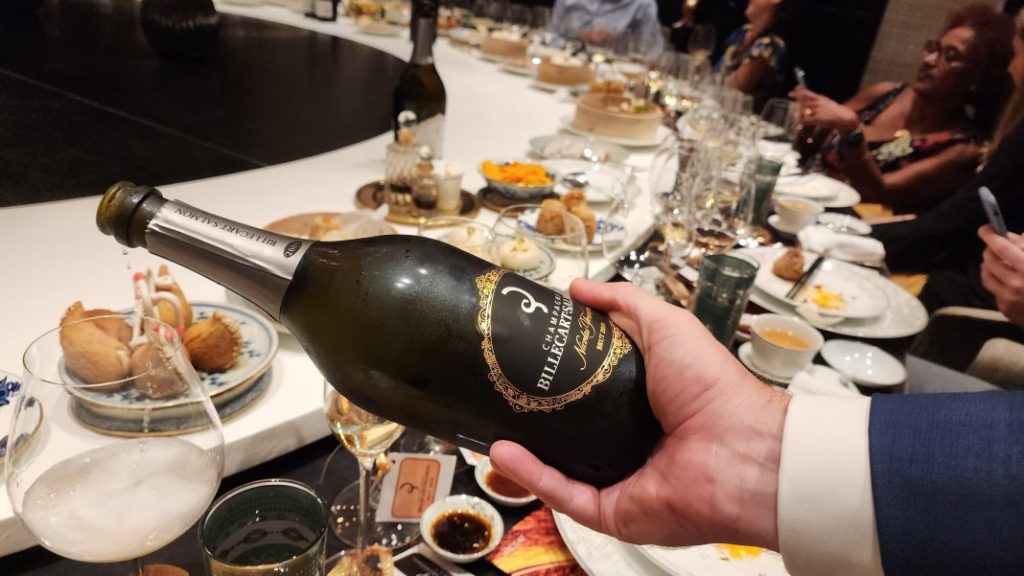
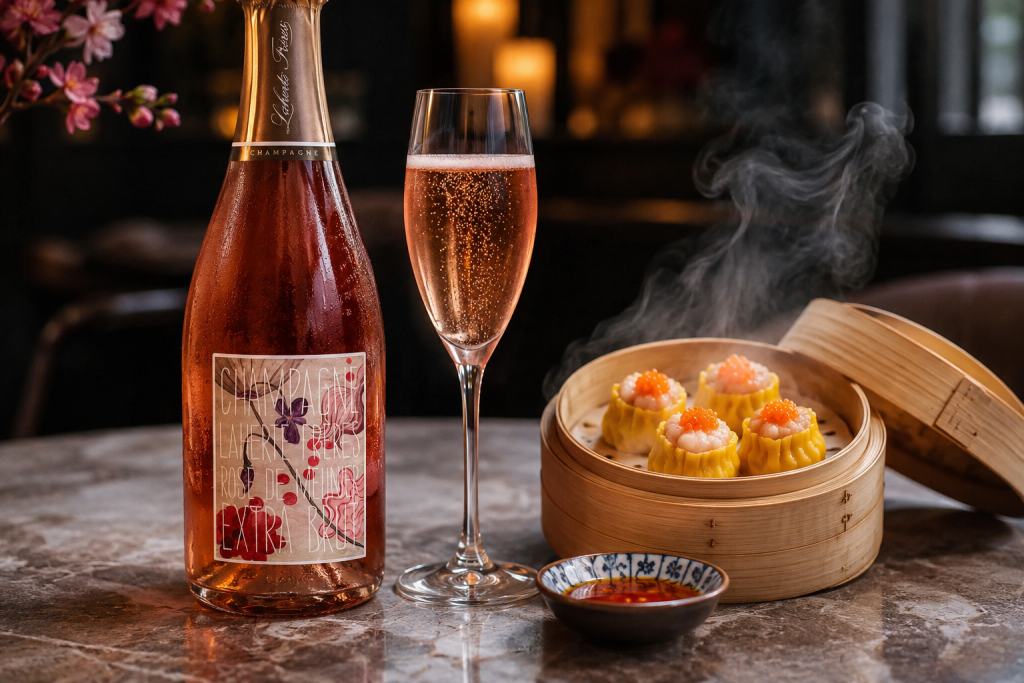
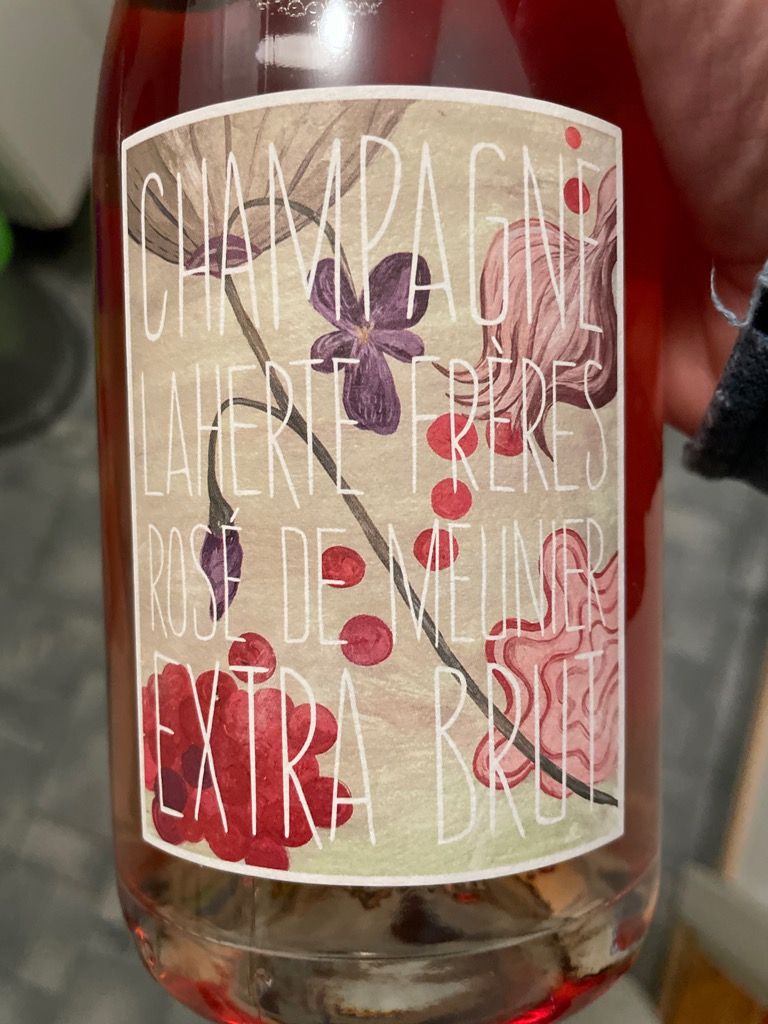
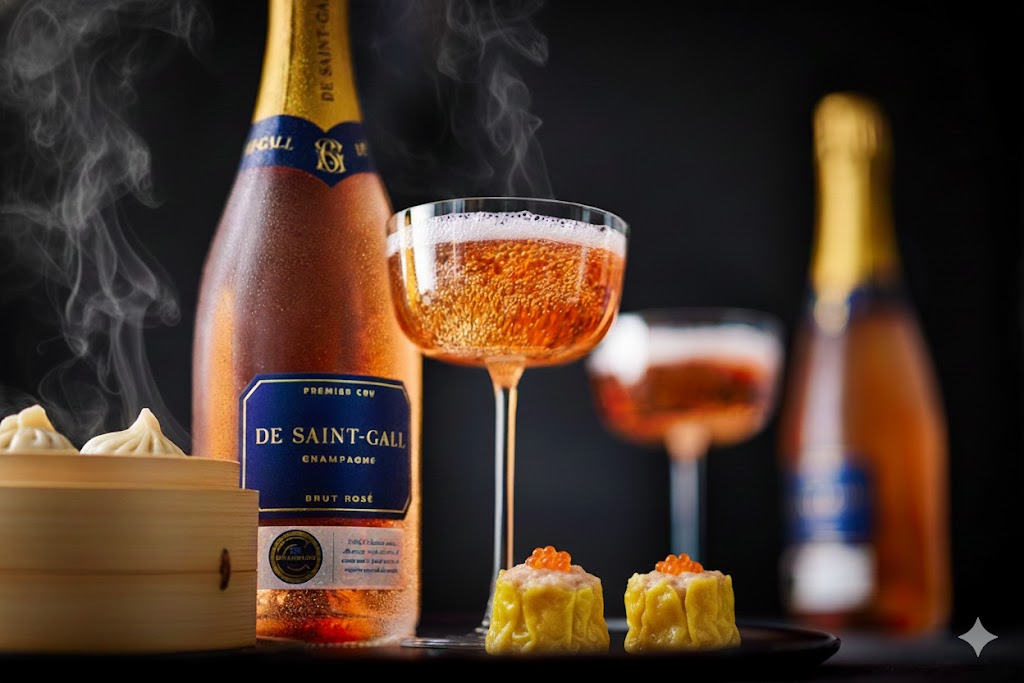
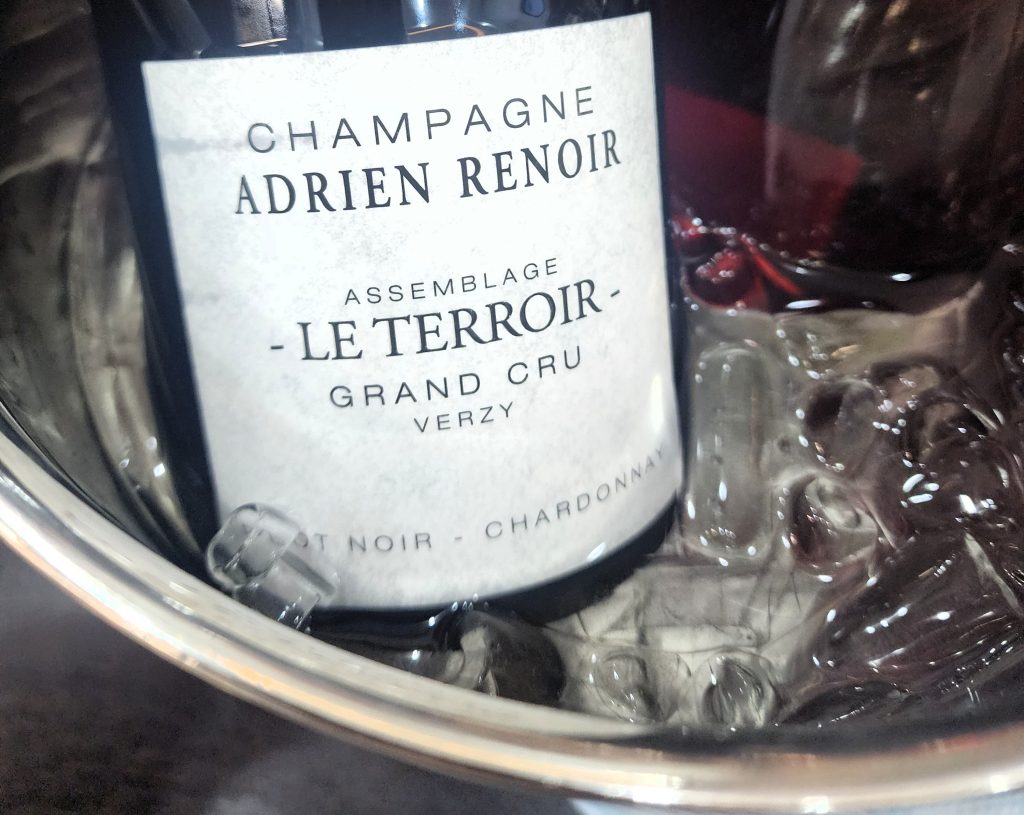
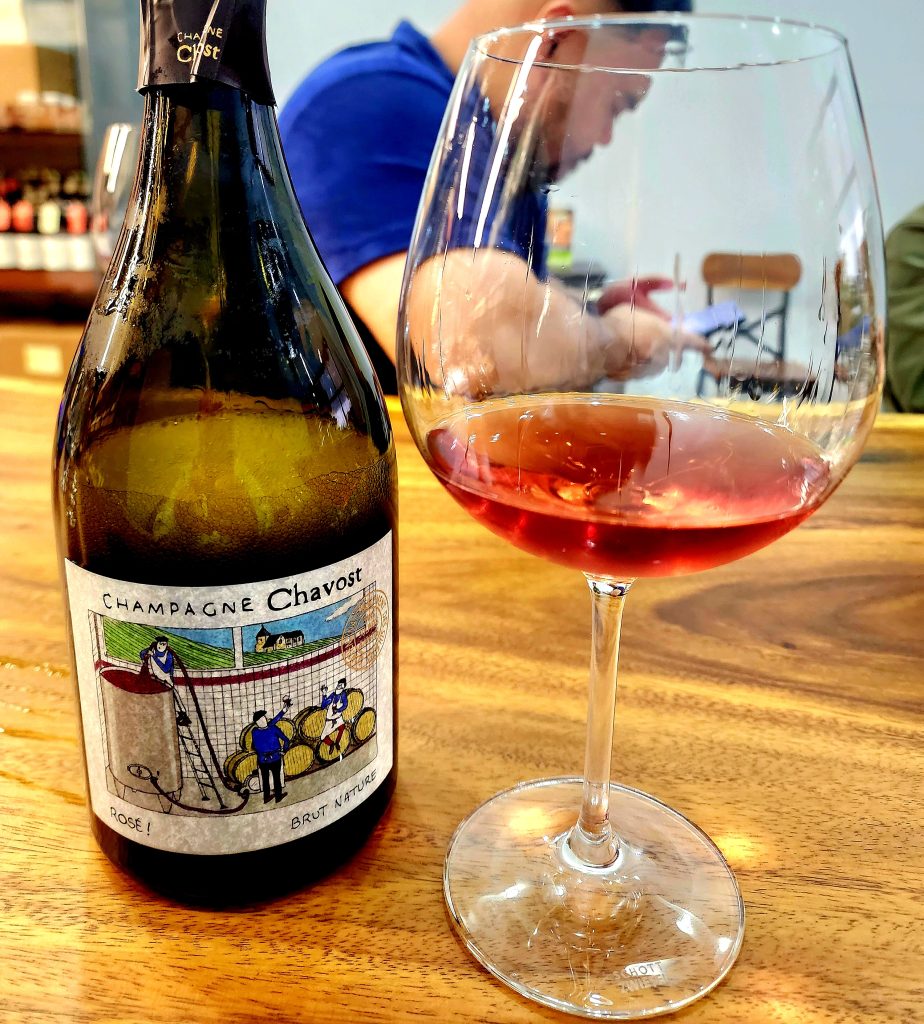
A gentle word of caution: umami does not work with every Champagne. If it is young, with little to no dosage and plenty of acidity, the umami will strip what fruit there is and leave the wine tasting thin and acidic. Go for Champagnes with extended time on yeast lees, bolder in flavour, such as a rosé, and preferably one without any overt evidence of oak. These richer styles meet umami head-on and gain a savoury depth in return. Choose well, and one bottle will go the distance.
None of this is universal. Hong Kong’s Cathay Pacific wine competition has more than once given its dim sum trophy to a New Zealand Pinot Gris, and chilli is beyond Champagne’s help; alcohol and acid only sharpen the burn. Tea remains the native partner, the one the meal is named for. I have long counted dim sum among the great dining traditions of the world, and every little touch of the heart has made me fonder of it. Champagne does not replace the tea. It sits beside it, the finest guest at the table.
Darren Gall