Sons of Ceylon
Tea with Thierry
The pot arrives first. It always does now.
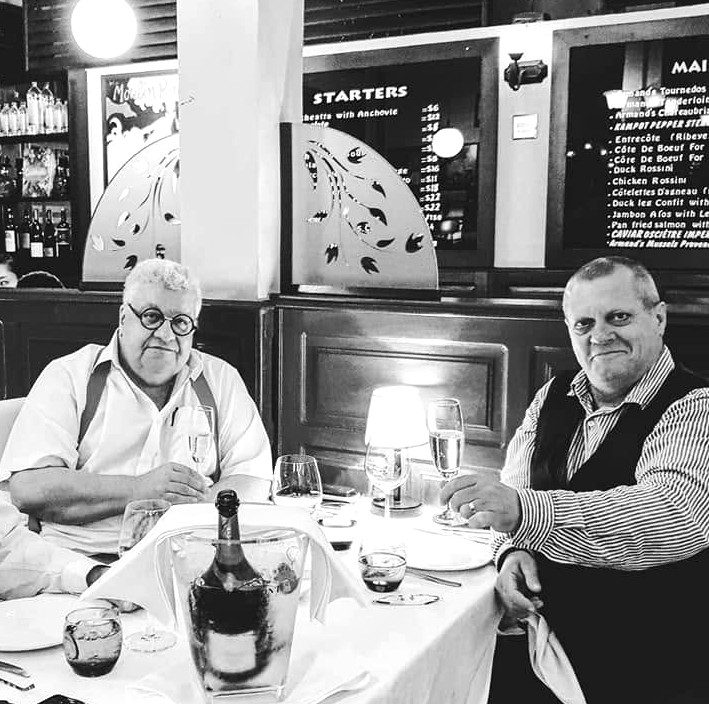
For eighteen years, Phnom Penh has been my home, and for most of those years there has been a standing appointment in my calendar that outranks nearly everything else in it: lunch with Thierry. Once or twice every couple of months, whenever we are both in the city at the same time, we take a table, we take our time, and we talk — about everything, which with Thierry means kings and communists, cargo rates and old vintages, the rise of nations and the fall of empires. In the early years there was wine on that table, and he was a fixture at my tastings and dinners, arriving with old-world manners and mischievous wit. These days the doctors have had their say, and the wine has withdrawn with good grace. What we pour now is tea.
And it occurs to me, watching the steam rise between us, that I could not have invented a better man to drink it with.
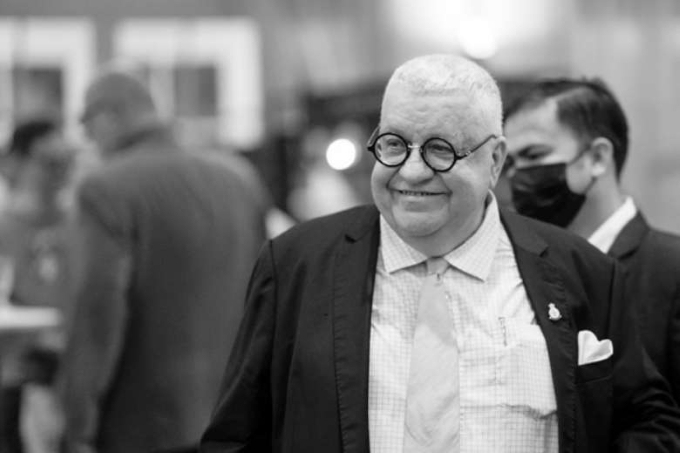
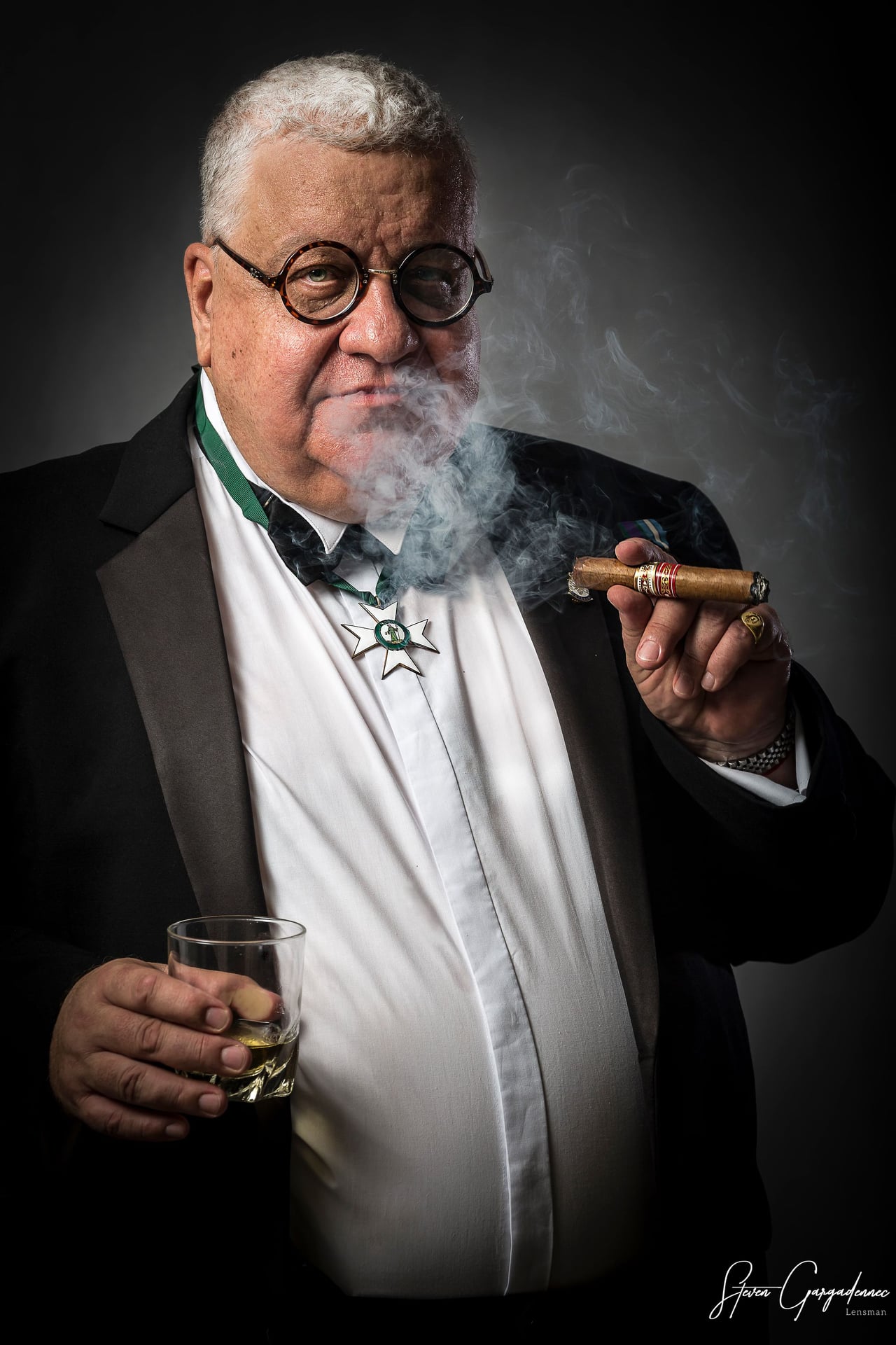
Consider the life across the table. From a French mother carried out of the wreckage of Saigon, Thierry de Roland Peel was born under the Union Jack in the high tea country of Ceylon. He was shipped off as a boy to boarding school in England — a “home” he had never seen. A uniform in the British Army that took him through Northern Ireland, Cyprus, Kenya, and Bermuda; a broker’s years in the City of London; then three decades in Cambodia, summoned there by a king. Until recently, the Bulgarian tricolour flew at his residence in Phnom Penh, where he served as Bulgaria’s Plenipotentiary Representative for seven years, a role he has only just laid down. Some men collect stamps; Thierry has collected flags — or rather, the flags have collected him. His has been a life lived in the courteous aftermath of empires, and though I did not understand it when we first shook hands, that life is one of the reasons tea now means what it means to me.
To understand the man, you must go back — further than Ceylon, all the way to Saigon.
His mother’s people belonged to the old French world of Indochina, rooted there since the nineteenth century, the family story braided through colonial plantations. Josette was a young woman in Saigon in March 1945 when the Japanese, sensing their own end, terminated nearly a century of French rule in a single night. France did not leave Vietnam; it fell. The family villa was caught between frontlines that shifted by the day — Japanese, French, British, Viet Minh — before being commandeered by a Japanese general, the family removed to a compound with other foreigners while their world was dismantled around them. Their lifeline through those months was, of all creatures, the family dog: Mephisto, a black Belgian shepherd who trotted through the checkpoints with messages hidden in his collar, carrying word between the compound and friends beyond it. Stay where you are. Do not move. And once, crueller news: soldiers digging foxholes in the garden had unearthed the family jewellery where it lay buried beneath a tree — packed in a silver jewellery box made, of all places, in Cambodia. Half a century before a Cambodian king would call this family back to his broken country, Cambodia was already in their soil, holding what they treasured.
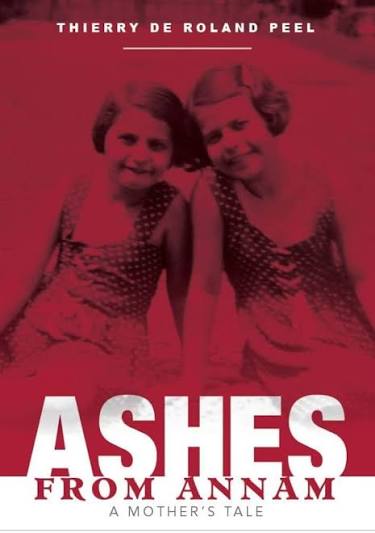
Of what followed in Saigon that terrible year — the priest of the cathedral murdered on the very day of Japan’s formal surrender, the massacres that ran on for months — I will say little here, because it is not mine to say. It is Thierry’s, and he has said it, unforgettably, in his book, Ashes from Annam: A Mother’s Tale. I had the deep honour of writing the foreword to that book, and I remember the night he launched it at Raffles Le Royal. My friend speaking of his family’s life and its tragedies while I stood among the guests with the book in my hands and my own words at its threshold: “It is a deep and rare joy to write about the ones we love; the joy is greater still when the ones we love are also our heroes.”
I have thought often since about why that book had to be written, and why it had to be him. Here is the astonishing thing: Josette never spoke of Saigon. Not to her son; hardly, it seems, to anyone. For decades it was his grandparents, Emanuel and Germaine, who told the boy the stories that held him spellbound — stories they continued telling in later years from the flat in Marseille they bought in 1948, which the family keeps to this day.
His mother held her silence her whole life. Some of that silence, no doubt, was grief. But some of it was discipline: Josette served French intelligence — the old Deuxième Bureau, as the family still calls it — and served it well enough that the Viet Cong put a price on her head. Secrecy laws keep their veil over the details even now. And yet — and this is the part that undoes me — she kept everything: diaries, letters, a whole written record of those years, set down and put away. She would not tell the tale; Josette was trained not to, bound not to, hunted for it. But she would not let it die, either. And when the time came, her son gathered her pages, his grandparents’ voices, a cousin’s wartime diary, and the official archives, and gave her story back to the world with her name upon it. There are few greater acts of love than a child remembering his mother so completely.
After the war, the family’s road divided: Emanuel and Germaine to Marseille; Josette, in time across the Bay of Bengal to the island of another fading empire — Ceylon. If French Asia had ended in fire, British Asia was ending in etiquette — signatures and ceremonies, the flag lowered gently in 1948 while the world beneath it carried on as though history had merely changed its letterhead. Nowhere did that world carry on more completely than in the high country, where the tea ran to every horizon and the planter’s day still turned on morning muster, the drying tea’s perfume drifting down the valley, log fires against the mountain cold, and Saturdays at the club. Thierry’s father was English, manager of the Ragalla estate in the hills of Halgranoya, out on the eastern flank of the tea country — and so it was that in March 1957, in the manner of the planter world, his mother made the long journey across the island’s high spine to the Hatton Nursing Home.
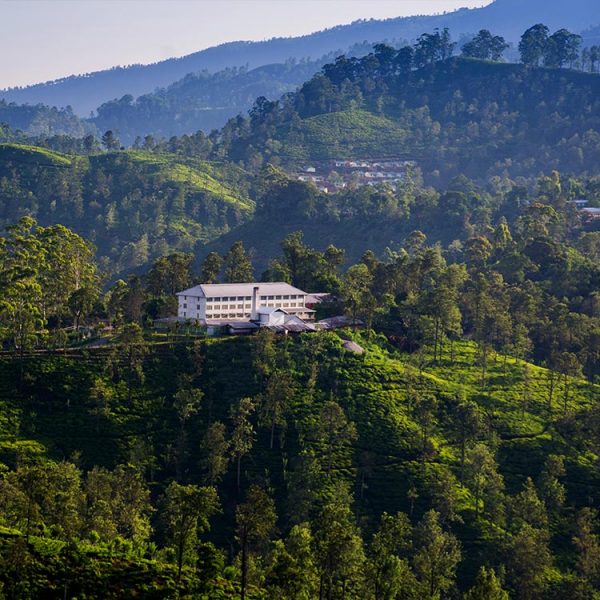
I love this detail more than almost any other in his story. For decades, Hatton was where the planter world was born — the maternity home to which expecting mothers travelled from estates across the entire highlands, arriving ahead of their time to wait out their confinement together while the men stayed behind with the leaf. Planters’ wives from Dimbula and Dickoya, from Uva and Udapussellawa, gathered under one roof, comparing gardens: a whole scattered world funnelling its future through a single building. An entire generation of estate children — the last generation born into that world — share one cradle. On 29 March 1957, Thierry joined them: a son of Saigon’s ashes, delivered in the nursery, in the last light of the system that built it. And the island itself was already shifting beneath the lawns and the club verandas. He arrived in the narrow valley between the riots of 1956 and the riots of 1958 — the first tremors of the long conflict to come. His family had escaped the ending of one world only to arrive, unknowing, at the overture of another’s.
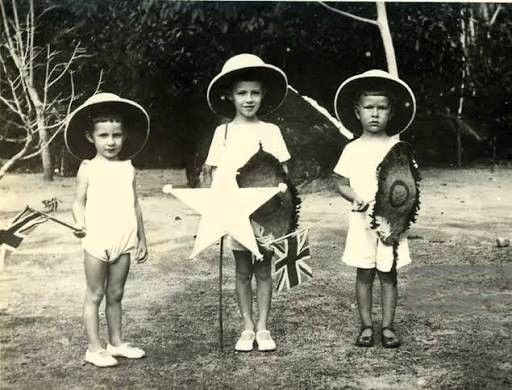
Childhood in the tea country ended in 1968, and not in the old way. The planters were no longer merely sending their children “home”; their world was packing up around them — the English planters leaving, the estates changing hands — and when Thierry was eleven, his school in Ceylon simply closed beneath him. So he was put, alone, aboard a BOAC flight to England, consigned to the professional kindness of a stewardess he recalls, across six decades, as quite attractive — bound for a country he had been raised to call home and had never once seen. His father stayed on a while longer, moving from Ragalla to a final posting at the Springwood estate, in the Rakwana hills, where — as Thierry puts it — matters came to a head with the political situation in Ceylon. How that story ends is not mine to tell. He is saving it for his next book, and I intend to hold him to that.
England gave the boy a school, then the Army, then the City. It gave his mother a second war to fight — this one waged in committee rooms, a woman with plenty of pluck, trying to restore what was left of the world she knew, and take care of those it had left behind. In 1974, at the request of the first refugees from Indochina to reach Britain, Josette founded two committees at the House of Commons — enlisting parliamentary allies such as Julian Amery, later Lord Amery of Lustleigh, and Lady Olga Maitland — to reveal the plight of Indochina’s refugees and to press for political solutions. Thirty years after that part of the world had thrown her family out, there she stood, helping it still; her son has said that watching this is part of what moved him to write his book. And the work ran on, year upon year, toward the settlement that finally came: the United Nations, and Cambodia, 1991 to 1993. When King Norodom Sihanouk — with whom Josette had worked for many years — asked, through her, whether her son would come and help rebuild a country that had emerged from its wars as a failed state, it was less a bolt from the blue than the closing of a long circuit.
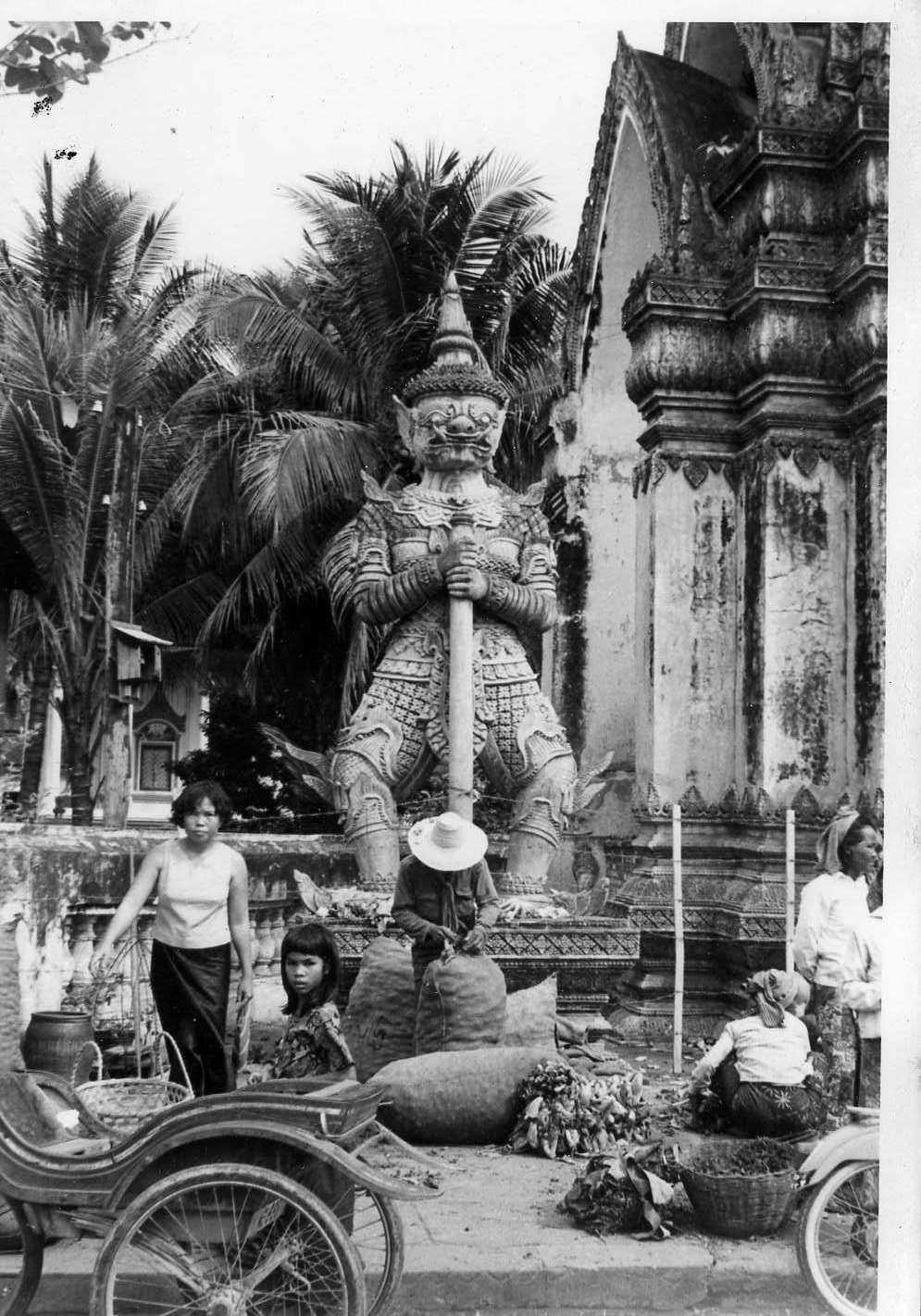
Thierry answered as his family seems always to have answered history: he went. He arrived in 1993 and began, unglamorously and perfectly, with a jute mill and a power station in Battambang. He has now given Cambodia more than thirty years — as an investor and, quietly, as a humanitarian. A king called, through a mother, and a son gave a country three decades of his life and service. I know of no better summary of the man.
I washed up in Cambodia myself some fifteen years behind him. It is so long ago that I cannot remember the first time we met in Phnom Penh, no doubt at one of my regular wine events. What I can remember is always being impressed by his wit, charm, proper British gentility, and his Gallic gourmandizing. Thierry, like me, understands the true value and weight of friendship to those orphaned by an expatriate life. We have learned to rely on the friendships we have made and deeply cherish the great comfort we find in them. Thierry has become one of my dearest friends in this city, and one of the most faithful faces at my table, always jovial, always with a good tale to tell.
When the wine finally had to leave the table for good, I confess I feared the table might lose something with it. It has not. It has gained.
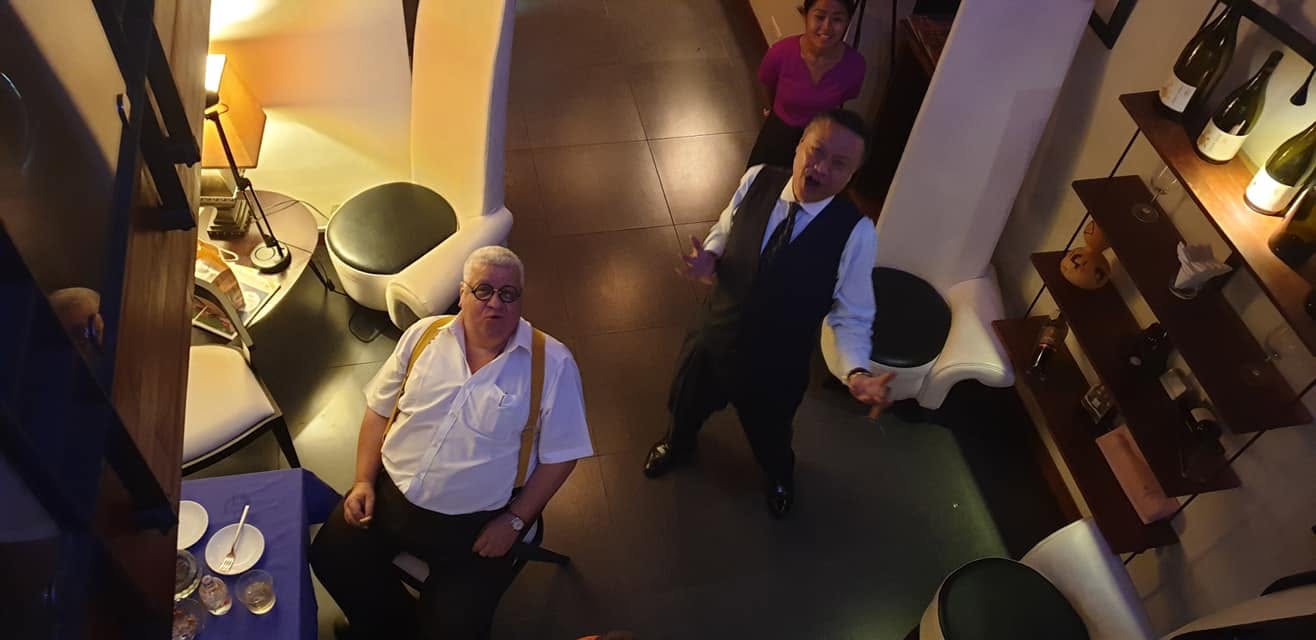
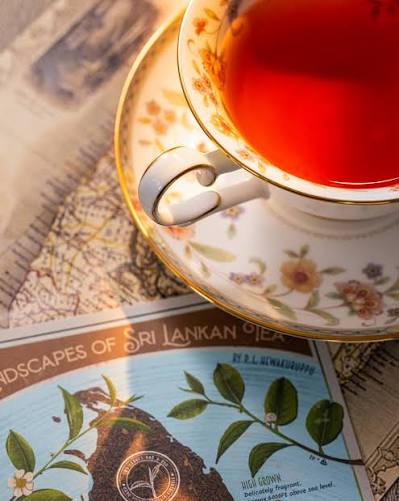
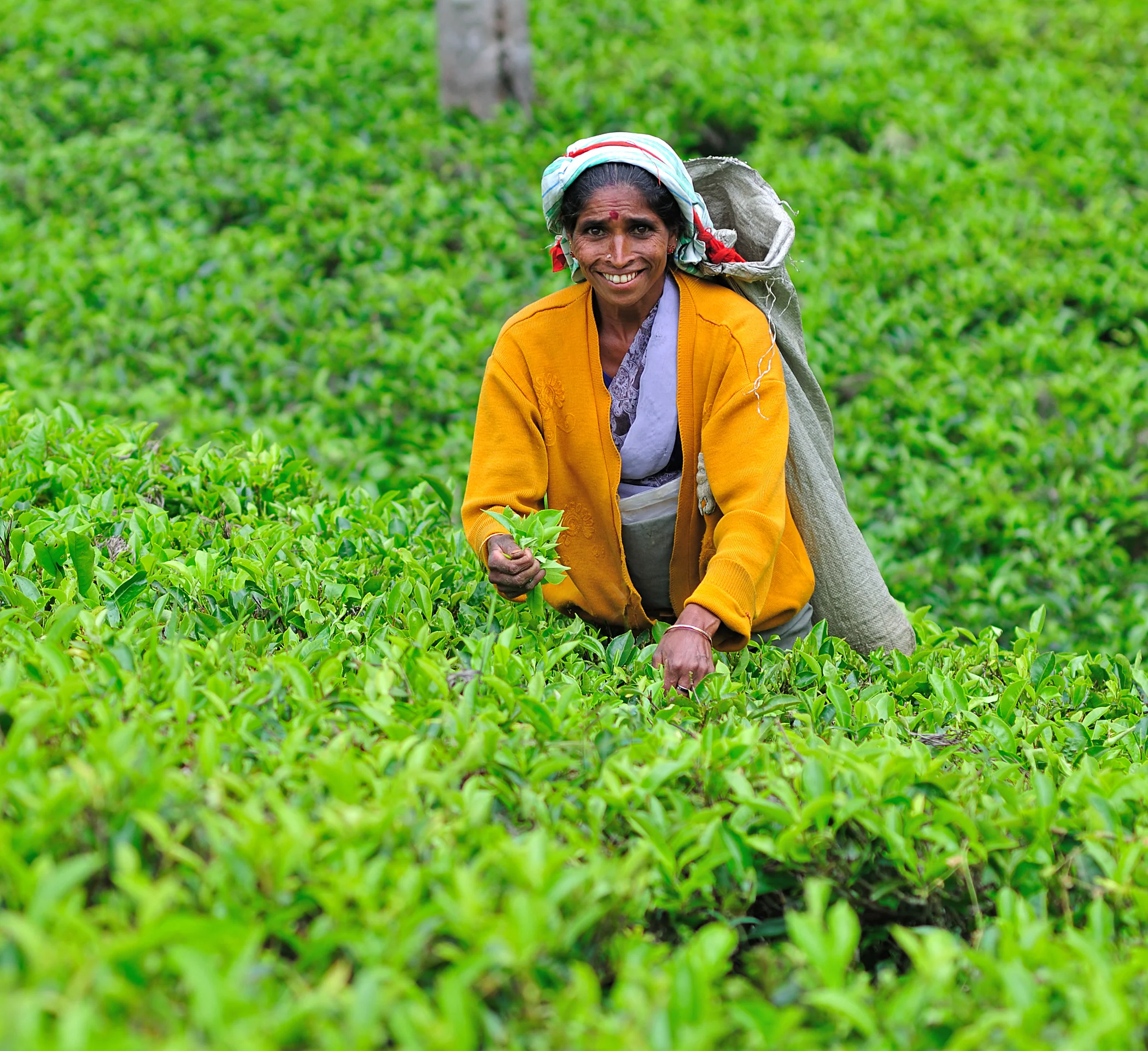
Since returning from Sri Lanka, I have decided the leaf we drink will always be Ceylon. It is both the least I can do and the most: when the pot goes down between us, it must carry Hatton and Halgranoya within it — the factory’s perfume, the planter’s cold mornings, the cradle of a vanished world. I will pour, and my friend — son of Saigon’s ashes and of Ceylon’s last planters, soldier of the afterglow, keeper of a Cambodian king’s hope — will lift his cup and drink of his own beginnings.
He will tell me, with a broker’s shrug and perfect manners, that it is only tea.
It is never only tea.
Darren Gall