The Code and the Côte
How Napoleon’s Civil Code shaped Burgundy’s vineyards, and how one family in Vosne-Romanée has lived with it for almost two centuries.
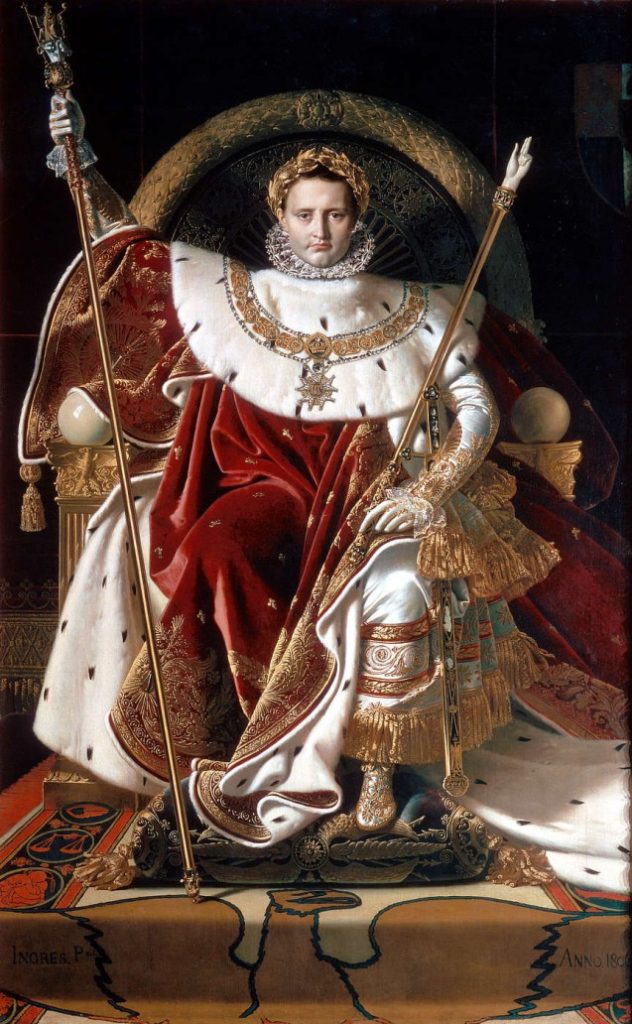
Alphonse Gros was born in 1804 in Chaux, a village in the Hautes-Côtes, the wooded hill country behind the great slope of the Côte de Nuits. That same year, on 21 March, France received its Civil Code: 2,281 articles and, for the first time in its history, a single civil law for the whole country. From 1807 it carried its patron’s name, the Code Napoléon.
The two events had nothing to do with each other. Within a generation they would. In 1830 Alphonse came down from the hills to Vosne-Romanée, and the law of his birth year would govern every inheritance his descendants received.
On Saint Helena, by the account of his companion in exile the Comte de Montholon, Napoleon said that Waterloo would wipe out the memory of forty victories, but that what nothing could erase, and what would live for ever, was his Civil Code. It was an exile’s boast. It was also largely correct. The battles are history. The Code is still the civil law of France and nowhere can its rules on inheritance be read more plainly than on the slopes of the Côte d’Or.
Under the Ancien Régime
Before 1789 France had no national civil law. North of a line running roughly from La Rochelle to Geneva, people lived under customary law, local usage written down from the fifteenth century onwards, of which the Coutume de Paris was the most influential. South of it, in the pays de droit écrit, the law was Roman. Voltaire, repeating the usual estimate, put the customs with the force of law at 144, and observed that a man travelling through France changed law almost as often as he changed post-horses.
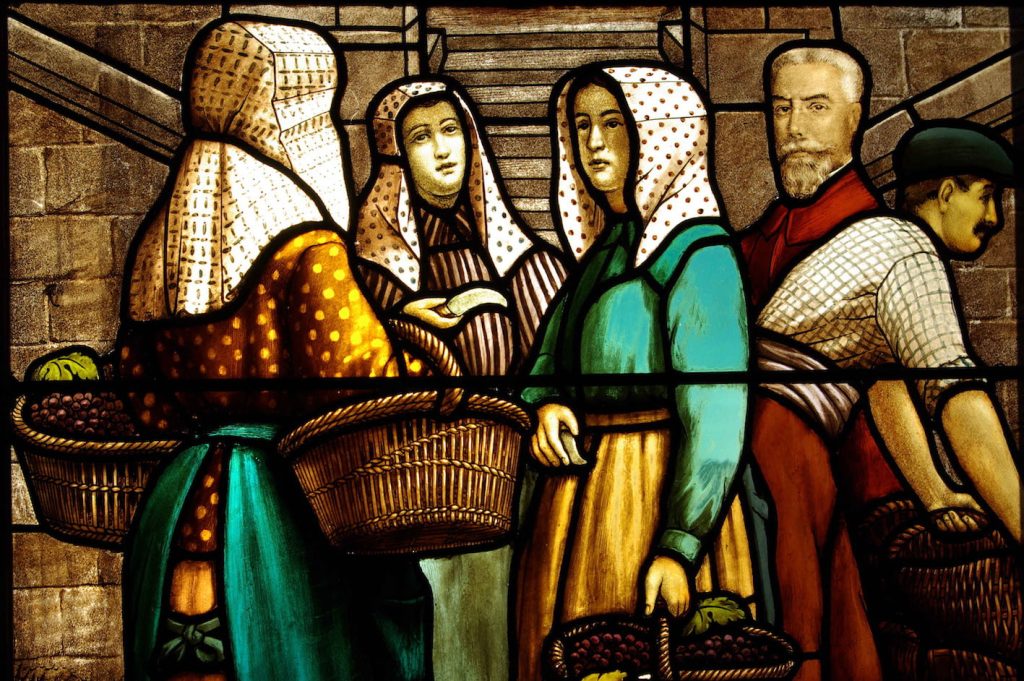
The law also depended on who you were. Clergy, nobility and commoners held different rights, and provinces and towns held their own charters and exemptions. The Church kept the registers of baptism, marriage and burial. Noble land commonly passed to the eldest son and could be bound by entail for generations. The great Church estates never passed by inheritance at all: their owners were religious houses, which had no heirs.
This was not chaos. Jurists had spent two centuries reconciling the customs, and Chancellor d’Aguesseau’s ordinances of 1731, 1735 and 1747 had standardized gifts, wills and entails across the kingdom. What the monarchy could not do was abolish the privilege on which the whole arrangement rested.
The Revolution did. On the night of 4 August 1789 the National Assembly voted to end feudal privilege; in November it placed the Church’s lands at the nation’s disposal, to be sold. Primogeniture was abolished in 1790 and 1791. In September 1792 the registers passed from the parish to the town hall, and marriage became a civil contract that divorce could dissolve. Under the law of 17 Nivôse Year II, in January 1794, a parent with children could freely leave only a tenth of the estate.
The Revolution made a great deal of law and no code. Cambacérès put forward three drafts between 1793 and 1796. The first was judged too technical, the second too brief; the third was never debated.

One Law to Rule Them All
In August 1800 Bonaparte, as First Consul, appointed four jurists to try again: Tronchet, Portalis, Bigot de Préameneu and Maleville. They had a draft within four months. It took three more years of debate to pass, and on 21 March 1804 the Code became law: a preliminary title and three books, on persons, on property, and on the ways property is acquired. It travelled with Napoleon’s armies, and Belgium is only now replacing it, book by book.
Portalis described the method without ceremony: “We have made, if we may put it so, a transaction between written law and the customs.” Roman law, the Coutume de Paris, royal ordinances and revolutionary statute all went in. The articles were short, general and written to be understood. Laws, Portalis wrote, “are made for men, and not men for laws”. In 1840 Stendhal told Balzac that while writing La Chartreuse de Parme he read a few pages of the Code each morning to keep his style natural.
The Code gave France a common civil law, and in principle the same law for every Frenchman. It recognized no orders, no privileges of birth and no seigneurial rights. Property became, in the words of Article 544, the right to enjoy and dispose of things “in the most absolute manner”, provided the use was not forbidden by law. With the Constitution of Year VIII and the Concordat of 1801, the Code left the buyers of former Church and émigré land secure in what they had bought.
Inheritance was rebuilt on equality. Under Article 745 children inherited from their parents in equal shares, “without distinction of sex or primogeniture”, whichever marriage they came from. Entails were prohibited outright. A parent could leave as he wished only the disposable portion: half the estate where there was one child, a third where there were two, a quarter where there were three or more. The remainder was reserved to the children.
On the family, the Code stepped back from the Revolution. “The husband owes protection to his wife, the wife obedience to her husband” (Article 213). A married woman could not go to court, sell, give or acquire property without her husband’s authority. A husband could divorce an adulterous wife; a wife could divorce an adulterous husband only if he had kept his mistress in the family home. “The search for paternity is forbidden” (Article 340). “The Code, my dear Paul, makes woman a ward,” runs a line in Balzac’s Le Contrat de mariage; “it considers her a child, a minor.”
A Guarantee
The Code put the owner at the centre of civil life. The peasant who had bought a field from the nation, or simply been freed of dues on his own, now held it outright, to sell, mortgage or bequeath within the law. A society of orders became, in law, a society of proprietors, and daughters inherited equally with sons, which was not a small thing.
Equal division changed the size of families. If every child must share the land, fewer children keep the farm whole. A recent study in the Journal of Political Economy found that the Revolution’s equal-partition rules, which the Code made permanent, cut completed fertility by about half a child per family where they overturned local custom. Inheritance is part of the reason France’s families shrank earlier than anywhere else in Europe.
The new proprietors received the Code as a guarantee. Peasants who had bought Church land, or stopped paying dues, wanted above all to know that neither would be taken back. In a largely rural nation, that counted for more than anything the Code said about marriage.
The clearest evidence of acceptance came from the Code’s enemies. When the Bourbons returned in 1814, their Charter kept the Code in force and declared all property inviolable, “without any exception of that called national”. The Restoration abolished divorce in 1816, but it left the land settlement alone. It did try once to change inheritance. In 1826 the government proposed that in families paying 300 francs or more in land tax, the eldest son should receive the disposable portion of the estate unless the father willed otherwise. On 8 April the Chamber of Peers rejected it, and that evening Paris lit its windows in celebration.
Criticism did not stop. Frédéric Le Play, in La Réforme sociale en France (1864), attacked compulsory division for breaking up farms and families. Feminists attacked the Code’s treatment of wives for a century; in 1904, the year of its centenary, the suffragist Hubertine Auclert and her allies burned a copy in public.
The family law came apart slowly, between 1884, when divorce returned, and 2006, when girls could no longer marry at fifteen. The principle of equal inheritance was never undone. Children still inherit equally; the reserve is still fixed at the fractions of 1804; and no heir can be held in joint ownership against his will. In Burgundy you can see what those three rules do.
Burgundy
Before 1789 much of the Côte’s vineyard land was already in secular hands, but the Church held many of its most prestigious sites. The Cistercians of Cîteaux assembled the Clos de Vougeot from the early twelfth century and had walled it by 1336. The Bernardine nuns of Tart had held the Clos de Tart since 1141. The Prince de Conti bought La Romanée in 1760 and added his name to it.
The Revolution took them all. The Clos de Vougeot, some 50 hectares, was sold in a single lot in 1791, and the Clos de Tart went at auction the same year. Romanée-Conti was seized from the last Prince de Conti and auctioned as national property in Year II. The buyers were mostly merchants, professionals and landowners who already had vines; small vignerons were largely priced out.
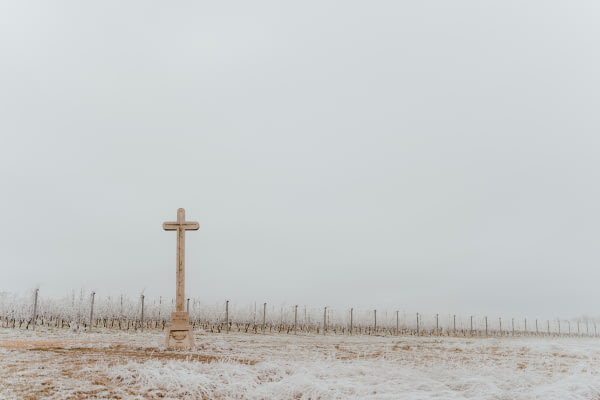
The monks and nuns had no heirs. The people who bought their vineyards did.
From 1804 every death in a vineyard family opened a succession under the Code. Each child was owed an equal share. Any heir could demand partition at any time and take his share in land rather than money, and land that could not conveniently be divided had to be sold at auction.
The Code told those dividing an estate to avoid breaking up holdings where possible, but also to give each lot the same mix of property of the same nature and value. Where a row of grand cru is not worth a row of village wine, lots of the same nature and value tended to mean a slice of every vineyard.

The Clos de Vougeot shows how it went. It passed whole in 1818 to Julien-Jules Ouvrard, son of Napoleon’s banker. His three heirs held it jointly after his death in 1861, then sold it in 1889 to six négociants. Resales and successions did the rest. Today some 80 owners share its 50 hectares, and growers still count their holdings in ouvrées, about a twenty-fourth of a hectare, the area a vigneron could work in a day. Some holdings in the grands crus amount to a few rows.
Fragmentation shaped the trade. A grower with a few barrels from each of several vineyards had little to sell under his own name, and until the 1930s almost every grower sold in barrel to the négociant houses of Beaune and Nuits.
Families learned to live with the Code by turning the law to their purpose. One heir farms the others’ shares under lease. Vines are held through companies, so that heirs inherit shares and the land stays whole; the Domaine de la Romanée-Conti has been a société civile, owned by the de Villaine and Leroy families, since 1942. From 1938 the Code itself was amended, step by step, to let an heir who farmed take the holding whole and pay the others out, and the groupement foncier agricole, created in 1970, added tax relief.
Paying the others out is now the problem. The average hectare of vines in the Côte-d’Or passed €1 million in 2024, and grand cru land costs many times that. An heir who does not farm is still owed his share, and inheritance tax is assessed on the land’s value. Clos des Lambrays went to LVMH in 2014. A controlling stake in Bonneau du Martray went to Stan Kroenke in 2017, and later that year the Clos de Tart, famously never divided since the nuns, went to François Pinault’s Artémis, at a price Andrew Jefford put at €26–30 million a hectare. In February 2025 Parliament widened the tax relief on passing vineyard land to heirs.
Some families have held on. In Vosne-Romanée, the Gros have been dividing their vines, and keeping them, since Alphonse came down from the hills.
Two Shares Together
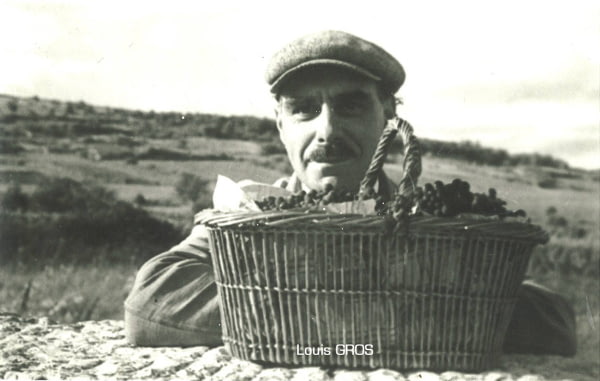
In Vosne, Alphonse bought the Clos des Réas. His son was already selling domaine-bottled wine by the middle of the nineteenth century, some eighty years before the growers of the 1930s, Armand Rousseau, Henri Gouges and the Marquis d’Angerville among them, began bottling their own. In 1882 he bought two hectares of Richebourg, a neighbour of Romanée-Conti. Clos Vougeot came from 1920, a generation after the Ouvrard heirs sold the Clos and it began to break up. The family gained from fragmentation as well as living with it. Grands-Échézeaux and Échézeaux followed, and by the time Louis Gros died in 1951 the family held some of the most celebrated ground in Burgundy.
Louis left four children: Jean, François, Gustave and Colette. For twelve years they farmed the estate as one. In 1963 they divided it, as the Code still allowed any one of them to demand.
Gustave and Colette did not divide. They put their two shares together and gave the result the plainest of names: Gros Frère et Sœur, brother and sister. The name is less sentimental than it sounds. It is a description, recording who owned the vines. But in a village where every inheritance is shared out by law, two shares held together was not nothing.
Jean and François went their own ways, and their vines live on in the domaines of their children: Michel Gros and A.-F. Gros on Jean’s side, Anne Gros on François’s.
The brother and sister’s heir in the cellar was their nephew. Bernard Gros, Jean’s son, came to work with them in 1980. When Gustave died, before his time, in 1984, Bernard took charge, with Colette beside him. In 1995 Jean retired, and his own vines were divided among his three children, Bernard, Michel and Anne-Françoise. Bernard now stood in both branches of the family.
By 2019 the family’s Richebourg, bought as two hectares in 1882, was held by three of Louis’s grandchildren: 0.69 hectares at Gros Frère et Sœur, 0.60 at A.-F. Gros and 0.60 at Anne Gros. That is the Code’s arithmetic in a single vineyard.
The arithmetic did not stop there. In 2021 Gustave and Colette’s vines were shared out again. Michel and Anne-Françoise received their portions, and a few parcels passed the other way, to Bernard’s son Vincent. The movement shows in at least one bottle: the Clos de la Fontaine, thirty-six ares just south of the village and for years an A.-F. Gros monopole, has carried the Gros Frère et Sœur label since the 2022 vintage.
The Piano in the Cellar
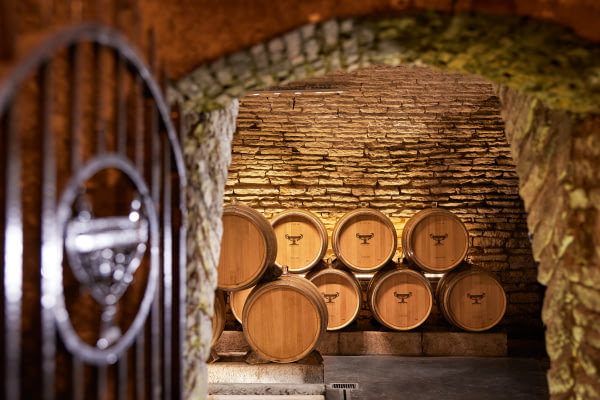
The domaine farms about twenty hectares. The finest lie on the slope below the village: Richebourg, Échézeaux and Grands-Échézeaux. Among the Clos de Vougeot’s eighty owners, Gros Frère et Sœur holds three-quarters of a hectare in the climat called Musigni, high in the walled Clos beside the path to the château, with Musigny itself on the far side of the wall. The rest is up in the Hautes-Côtes, where Bernard planted twelve hectares at Concœur-et-Corboin, in the same hills Alphonse came down from.
Bernard replanted much of the estate, spacing his vines wider and training them higher than his neighbours. At the end of the 1990s he pulled out vines he judged unworthy and replanted with finer clones. “The grape is master of everything,” he told the Guide Hachette. “Eighty per cent of a wine’s qualities are in the vineyard.”
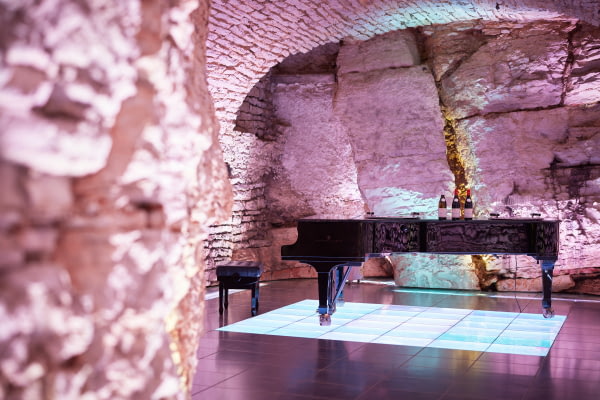
He is also a musician. In the domaine’s cellar in Vosne stands a Steinway, and Bernard is convinced that wine and music answer one another. His son Vincent, now increasingly involved in the vineyards and the cellar, has joined him at the keyboard. Father and son play the same duet, at the piano and in the vines.
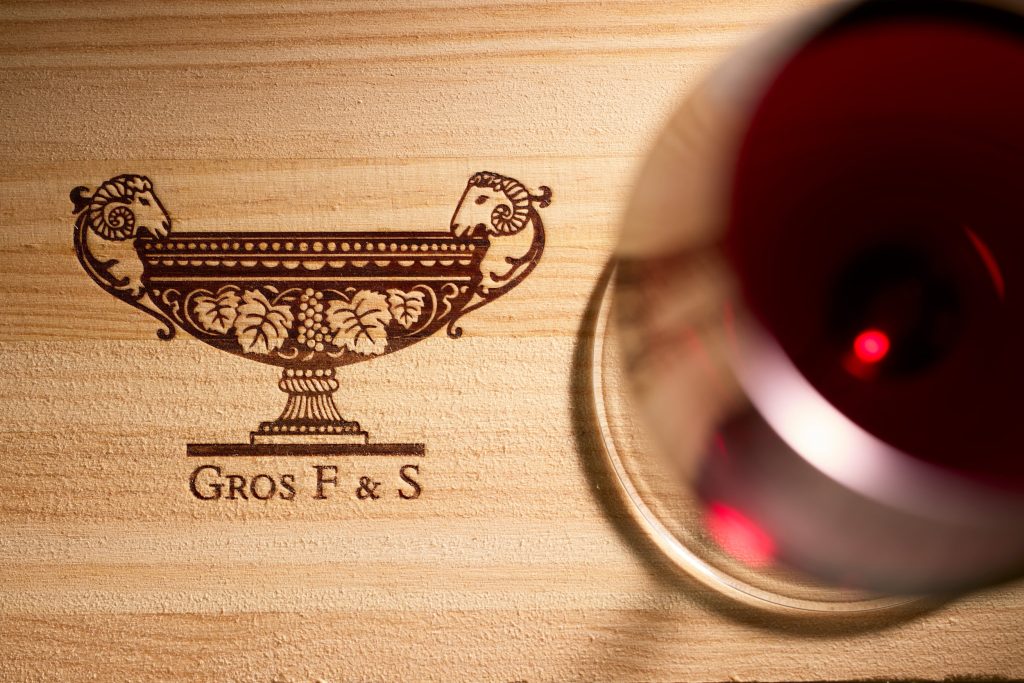
The winemaking is classical. The grapes are picked by hand and destemmed, then fermented in concrete vats with a short maceration and no cold soak. The grands crus go into new oak, the premiers crus into half new. Yields are kept low, and the wines are no longer filtered.
The result is Vosne in its fuller register: deep in colour, ripe and full-bodied, with oak evident in its youth while the silk and spice of exceptional Pinot Noir lays the foundation for years to come. The wines are admired for finesse but loved above all for their generosity. The Richebourg is the summit of the range, and the Guide Hachette has given it three coups de cœur in four years. The Hautes-Côtes red and white are the domaine’s entry-level wines.
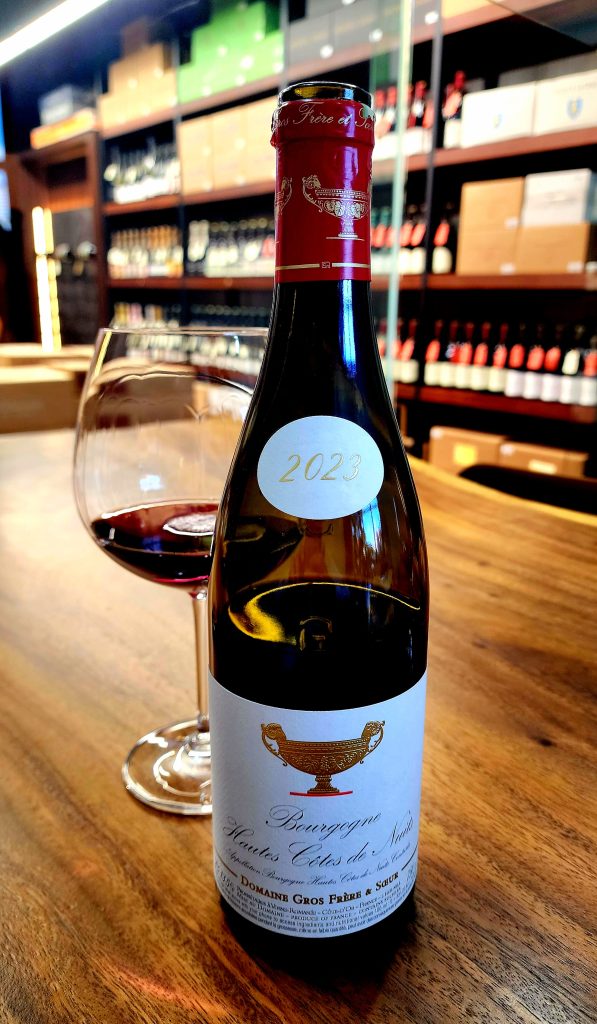
Domaine Gros Frère et Sœur, Bourgogne Hautes-Côtes de Nuits Rouge, 2023
Quintessential Burgundy, with aromas of sour cherry, wild strawberry, and complex undertones of forest floor (damp autumn leaves, earth, undergrowth, mushroom, spices). The ripe, tart fruit is matched by a soft, plush texture, while long, lithe, vibrant acidity lifts the wine and holds it all together. This is an incredibly drinkable, satisfying glass of wine. It delivers far beyond its modest appellation and is a magnificent introduction to Burgundy, at an affordable price, for anyone who needs convincing. 94/100.
One Succession at a Time
The Code is often blamed for Burgundy’s patchwork. That is too simple. The Revolution, not the Code, took the vineyards from the Church, and it sold them mostly to merchants and professionals rather than to vignerons. The same Code governed Bordeaux, where the great estates largely survived: families incorporated them, so heirs inherited shares rather than rows, and the value lay in the château’s name rather than in the plot. What the Revolution and the Code did together in Burgundy was move land that had never been inherited into the hands of families, then divide it equally, generation after generation, in a place where value is measured by the row.
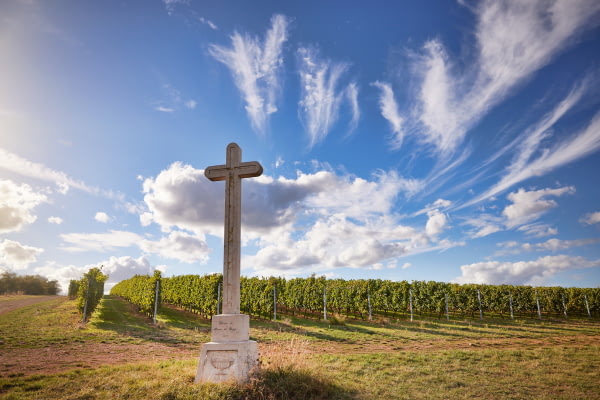
Napoleon said the Code would outlive his victories. On the Côte d’Or it is still at work, one succession at a time, and the Gros have lived under it in Vosne-Romanée for almost two centuries.
Twenty hectares, four grands crus, and a name that still remembers a brother and a sister who kept it together.
Darren Gall