
CHAPTER SIX
Make It New
Ezra Pound and the Lost Generation
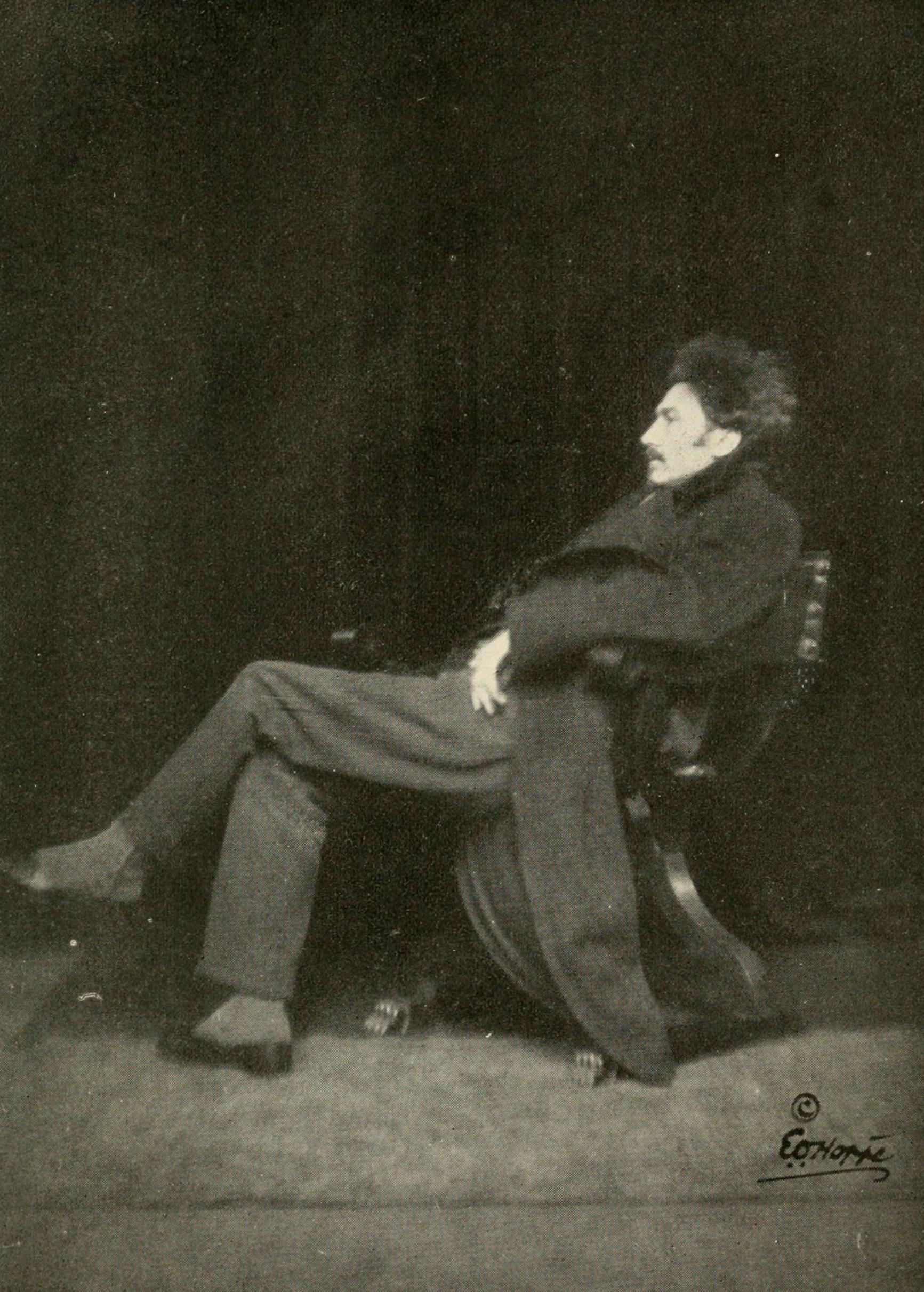
London, 1908 — The American Arrives
In February 1908, a twenty-two-year-old from Idaho arrived in Europe with light luggage, a manuscript of poems that had been rejected by at least one American publisher, and an ambition not yet proportionate to anything he had actually achieved. He had been dismissed from his teaching post at Wabash College in Indiana under circumstances he contested but could not entirely clarify (a chorus girl was discovered in his room). So, he had set sail for Gibraltar with the specific energy of a man who has decided that the world he was born into is insufficient. He believed or at least hoped, that somewhere else — Europe, London, the literary world he had read about but not yet entered — would be equal to what he required. His name was Ezra Loomis Pound. He was often right in his aesthetic judgements — and influential enough that his preferences reshaped the field — but catastrophically wrong about the most important things a person can be wrong about.
He reached London by September 1908. Within months, he had entered William Butler Yeats’s circle, published his first London collection, Personae. He had begun establishing himself as a presence in the literary life of the city, with a combination of genuine talent, theatrical energy, and an almost pathological appetite for the work of other people. He was interested in everyone doing something interesting. He read everything. He wrote to writers he admired, pressed their work on editors he knew, argued their cases in print with a commitment that went beyond the requirements of friendship. He had arrived in London determined to transform its literary scene, and within a few years, he had done something close to exactly that.
The energy was real, and its results were real. Through Pound, Yeats — already famous, already established — turned away from the soft romantic diction of his early work toward something harder and more precise, toward the colloquial authority of the middle and late poems that would make him one of the greatest English-language poets of the century. Pound later described himself as Yeats’s secretary during their years sharing a cottage in Sussex, studying occult lore, Chinese poetry, and Japanese Noh drama; the influence ran both ways, and what Yeats learned from the younger man about eliminating abstraction from poetry is visible in every line he wrote after 1912.
The programme Pound was advancing had a phrase at its centre — one he popularised from a Confucian text via the scholar Ernest Fenollosa: Make It New. It would become the rallying cry of literary modernism, and it had a specific technical argument behind it. Poetry had become sentimental, ornate, full of secondhand borrowings from poets who thought from convention rather than from life. What was needed was directness, precision, economy — the image presented without excess, the word earning its place in the line, the rhythm drawn from the movement of speech rather than the tick of the metronome. He helped define and aggressively promote a movement he called Imagism, working alongside H.D. and Richard Aldington to shape its principles, and he began deploying those principles in his own work with results that were, at their best, genuinely extraordinary.
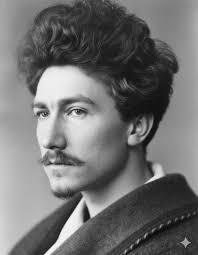
Rodin and the Threshold — What Must Be Surpassed
The story of this book has been, among other things, the story of what Rodin gave to the poets and writers who came into his orbit. Rilke received the lesson of patient daily labour, the understanding that the poem is a made thing rather than a visited state. Gibran received the recognition that the fusion of visual art and prophetic vision was a legitimate and serious artistic position. But Pound’s relationship with Rodin was more complicated, and in its complication more revealing about what modernism actually was.
Pound did not sit at Rodin’s feet. He arrived in Europe when Rodin’s reputation was at its absolute zenith and his influence — the emotional surface, the impressionistic treatment of light on clay and bronze, the body as the vehicle of spiritual truth — was everywhere in the visual arts. Pound absorbed all of this with the thoroughness of a man who reads in order to understand what he needs to move past. In his 1916 memoir Gaudier-Brzeska, written after the young sculptor’s death in the trenches at twenty-three, Pound used Rodin as the critical benchmark — the great ancestor who defines the standard against which the new generation measures itself.
Rodin had mastered what Pound called the “caressable” surface — the treatment of form through modelling, through the accumulation of expressive detail, through the way light moved across a surface shaped by patient and passionate attention. It was the supreme achievement of nineteenth-century sculpture. The Vorticists — the movement Pound was now championing, built around Wyndham Lewis’s painting and the sculpture of Gaudier-Brzeska — were after something different: not the caressable surface but what Pound called the vortex, the concentrated point of energy from which and through which ideas are constantly rushing. The form should express force rather than emotion, carry its meaning in mass and planes rather than accumulated expressive detail.
He quoted Gaudier-Brzeska’s own assessment: “Rodin is a great man, but he is a man of the 19th century. He is not a man of the 20th.” And in the heat of the Vorticist moment, in a deliberately provocative formulation, Pound urged readers to “spit out the later Rodin” — to refuse the conservative drift of his later, more conventional phase and insist on the radical energy of the earlier work.
This was not ingratitude. It was the act of taking seriously what Rodin had achieved and then asking what it required of the generation that followed. Rodin had done something unprecedented — had broken sculpture free from the academic tradition, had insisted on the body’s truth over the body’s idealisation, had shown that a fragment was not incomplete but concentrated. What Pound was arguing was that these discoveries had been so successful, they had themselves become the new convention, the new standard against which the next generation needed to push. The compliment embedded in “spit out the later Rodin” is enormous: you can only be surpassed if you have first established the measure.
There is a structural parallel that this book has been building toward from its first chapter. Baudelaire had done the same to the tradition that preceded him — absorbed it, understood it, then declared it insufficient and pushed past it. Rilke had done it to the Romantic idea of poetic inspiration. Gibran had done it to the classical Arabic prose tradition. And now Pound was doing it to Rodin: using the sculptor as the measure of what had been achieved, and insisting that the achievement itself was the obstacle to what came next.
In a Station of the Metro — The Poem
In 1912, Pound emerged from the Concorde station of the Paris Métro into the afternoon light and was struck by something he could not immediately name. He had seen faces in the crowd — pale, anonymous, fleeting, present for a second and then gone — and the impression they left was not the impression of individual people but of something more concentrated and more strange: a collective apparition that seemed for a moment to be something other than human. He tried to write a poem about it. The first version ran to thirty lines.
He destroyed it. He tried again six months later. He destroyed that version too. A year after the experience in the Métro, working with the discipline he had developed through his study of Chinese and Japanese poetry — the haiku’s capacity to hold an entire world in seventeen syllables, the understanding that the image presented directly needs no explanation and tolerates no elaboration — he arrived at the version he kept. Two lines. Fourteen words.
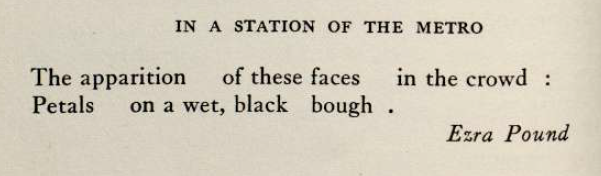
The apparition of these faces in the crowd: Petals on a wet, black bough.
— “In a Station of the Metro,” Ezra Pound (1913)
The poem is structured as an equation — Pound himself used that word — in which two images are placed against each other without a verb to connect them, without any statement of relationship, the reader required to make the connection the white space holds in suspension. The faces in the crowd and the petals on the bough. The underground and the garden. The anonymous and the ephemeral. The colon at the end of the first line operates as both pivot and demand: look at this, now look at that, find what they are to each other.
What the poem enacts is exactly what Rodin’s surfaces enact — and what Rilke’s thing-poems enact, and what Gibran’s best aphorisms enact. The concentrated looking directed at a specific thing until that thing yields something not visible before the looking. In a Station of the Metro is the Imagist manifesto made into an object. It holds more than its fourteen words because it was made by a man who had spent years learning exactly how much a word must carry before it earns its place in a line. The compression Rodin achieved in sculpture — the fragment holding within it the whole force of the body — achieved in language. Fourteen words. The whole underground world of modern urban experience and a wet bough in a garden somewhere, and the precise instant at which the two worlds touch.
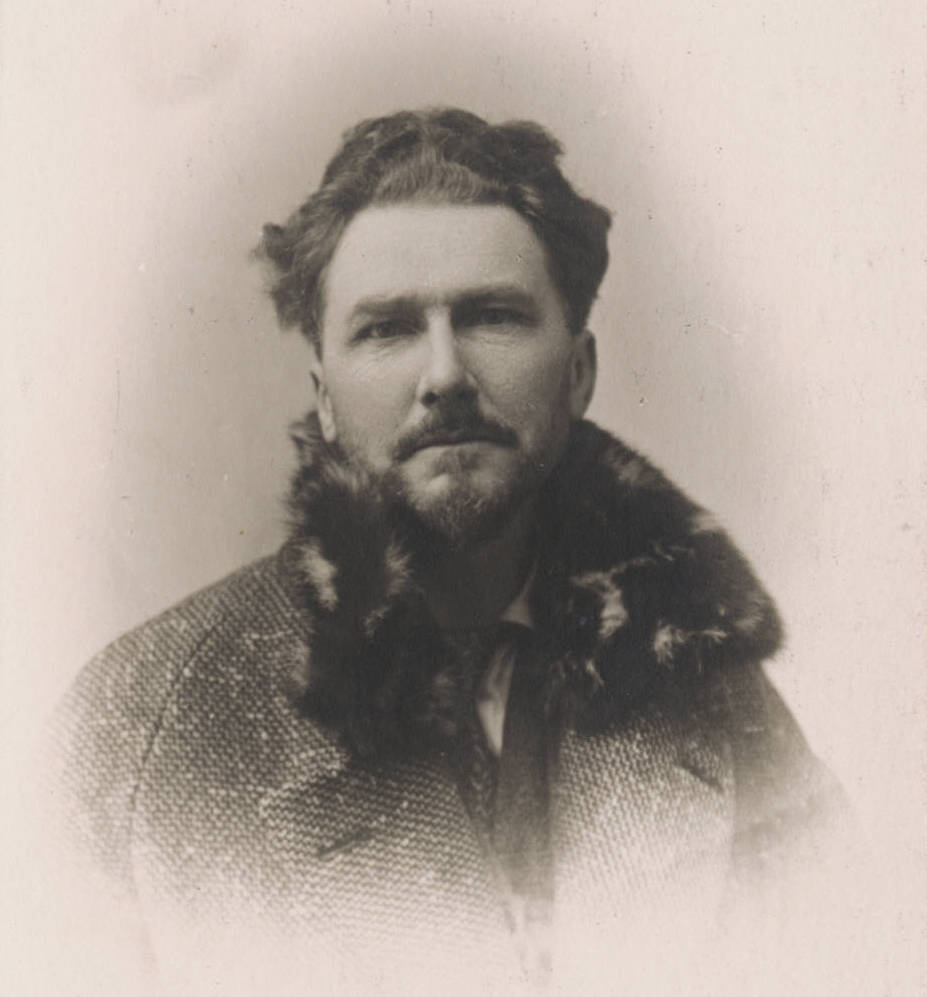
The Impresario
It is Pound’s peculiarity — rare enough in literary history to deserve attention — that his most lasting contribution to the culture of his century may not be his own poetry but his work on behalf of other people. He was the most effective literary advocate in the history of English-language modernism, and he exercised this advocacy with a generosity that did not diminish as his own reputation grew.
T. S. Eliot arrived in London in 1914, a young American philosopher from St Louis with a manuscript of poems sitting in a drawer for two years. Pound read them and immediately understood what he was reading. He sent Eliot’s work to Poetry magazine, wrote to editors, talked to publishers, placed the poems wherever he could. When, in 1922, Eliot showed him the manuscript that would become The Waste Land — a long, formally experimental poem about the spiritual desolation of post-war European civilisation — Pound cut it almost in half. He removed passages of pastiche, tightened transitions, sharpened the structure, stripped what was merely clever from what was genuinely extraordinary. The poem Eliot dedicated to him as il miglior fabbro — the better craftsman — is the poem Pound made possible, and the dedication was not false modesty but precise acknowledgement.
James Joyce was living in Trieste in 1913, unpublished and unknown, when Pound encountered the early chapters of A Portrait of the Artist as a Young Man. He recognised immediately what Joyce was doing with English prose and threw his full energy behind getting the work into print — arranging serialisation, championing Ulysses in its earliest form, securing financial assistance, writing about the work with the authority of someone who understood it completely. The story that Pound gave Joyce a pair of his own shoes because Joyce’s feet were unsuitably shod is almost certainly true and entirely characteristic — the practical generosity of a man who did not distinguish between literary support and material support when both were needed.
Ernest Hemingway was twenty-three when he arrived in Paris in 1921 with the beginning of a literary style that had not yet found its form. Pound read his early work and offered advice focused on economy: cut the unnecessary words, trust the declarative sentence, let the concrete detail carry what the adjective would announce. Hemingway later described this guidance as among the most useful instruction he ever received about writing.
H.D. — Hilda Doolittle, Pound’s friend from his student years in Pennsylvania — had her early poems shaped and championed by him to the point where Imagism as a movement was in part constructed around her work. He pressed her manuscripts on editors, invented the label “H.D. Imagiste,” and made her the movement’s exemplary figure before the movement itself had a name.
The list continues: Robert Frost, William Carlos Williams, Marianne Moore, John Dos Passos. Each received from Pound some version of the same gift: the attention of a reader who understood what they were trying to do better than they understood it themselves, and who knew exactly where to place their work and how to argue for it. T. S. Eliot later wrote that Pound was “more responsible for the twentieth-century revolution in poetry than is any other individual.” These are large claims. They are not exaggerated.
The Lost Generation — The Forms They Invented
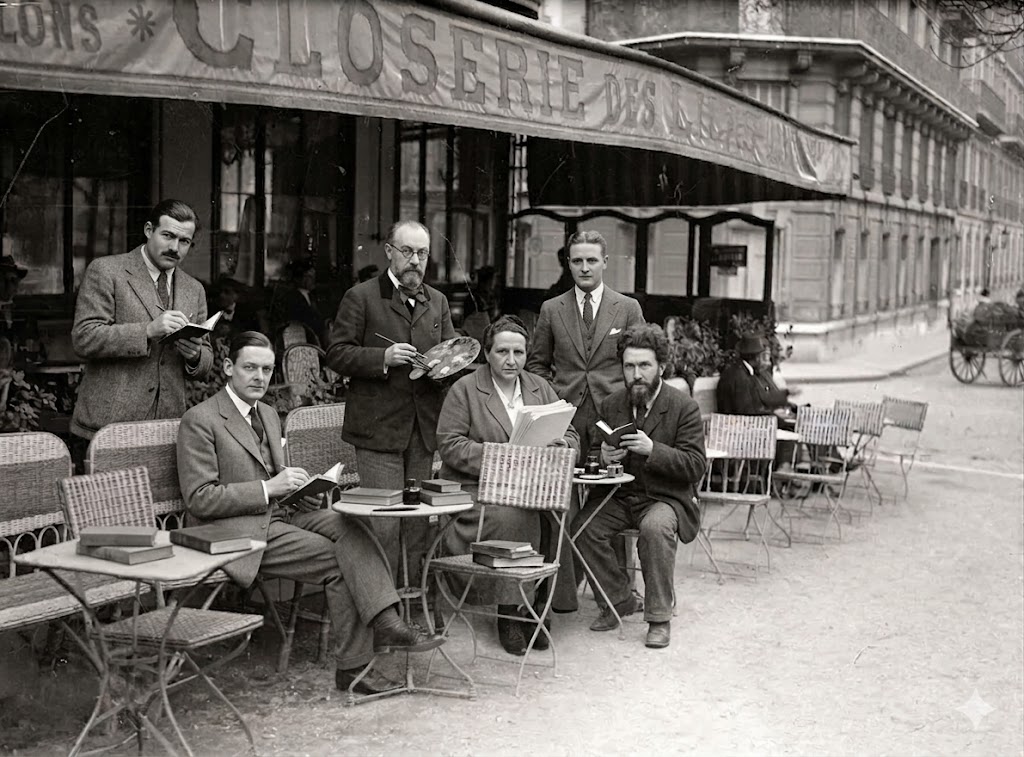
In the summer of 1922 or thereabouts, Gertrude Stein was in France when the owner of a garage reproached a young mechanic for failing to complete a repair quickly enough. The owner’s phrase was vous êtes tous une génération perdue — you are all a lost generation. Stein heard it, recognised something in it the garage owner had not intended, and repeated it to Hemingway: “All of you young people who served in the war. You are all a lost generation.” He used it as one of two epigraphs to The Sun Also Rises in 1926, and the phrase became shorthand for an era.
The label has worn somewhat smooth with use. What matters is not the name but what the writers it names were actually doing: inventing forms adequate to an experience that had shattered the inherited ones. They were among the most disciplined and productive writers of the century. The “lost” in their name referred not to aimlessness but to something more precise — the loss of the frameworks through which the previous generation had understood the world. The omniscient narrator who guided the reader with moral authority, the linear plot with its clear resolution, the confidence that suffering had meaning within a stable order — all of it was broken by an experience that had no resolution and no moral to offer, only the daily fact of survival.
Hemingway’s answer was the stripped declarative sentence. Subject, verb, object. The minimum necessary. Trust the reader to feel what you will not say. The iceberg principle: seven-eighths below the surface, one-eighth visible, the visible fraction carrying the weight of everything submerged. The Sun Also Rises is a novel about people who drink too much and love each other badly and cannot talk about what the war did to them — because what the war did to them is the seven-eighths below the surface of every conversation in the book. The form enacts the wound. The silence around the sentences is the subject.
Fitzgerald’s answer was the prose of lyrical excess — the extraordinary sentences of The Great Gatsby, their beauty almost unbearable precisely because the world they describe is so hollow. The green light at the end of Daisy’s dock. Boats against the current, borne back ceaselessly into the past. The style performs the subject: luminous prose deployed in service of depicting lives of perfect emptiness. The American Dream exposed as a beautiful lie by being written about in the most beautiful prose in American literature. Where Hemingway stripped language to the bone to show the bone, Fitzgerald clothed the bone in silk to show that the silk was all that was left.
These were not the only answers available. The Lost Generation was never a literary school — its members had no shared manifesto and could disagree ferociously, as Hemingway and Stein eventually did, as Hemingway and Fitzgerald eventually did. What they shared was the conviction that literature had to find new forms adequate to the century’s experience of itself. Pound had been arguing this since 1912. They were, in various ways, his students, even when they had never formally studied with him.

The Années Folles
The Paris the Lost Generation inhabited in the 1920s was not the Paris of the Belle Époque that this book has traced through its earlier chapters. The city of Rodin’s studio at Meudon and the last summer before the lamps went out — that Paris was gone, replaced by something louder, faster, more deliberately hedonistic. The Années Folles — the Crazy Years — were what happened when a city that had spent four years in proximity to industrial slaughter decided to refuse, with maximum theatrical intensity, any further acquaintance with gravity.
The centre of gravity had shifted from Montmartre to Montparnasse — from the hill where Picasso and Braque had made Cubism in cold studios to the flat district of the Left Bank where the cafés were cheaper and the exchange rate made an American dollar go far enough to live on while working. Le Select and La Rotonde on the Boulevard du Montparnasse. Les Deux Magots and the Café de Flore on the Boulevard Saint-Germain. The Dingo Bar on the rue Delambre, where Hemingway first met Fitzgerald in 1925. Sylvia Beach’s Shakespeare and Company at 12 rue de l’Odéon — the English-language bookshop that served as the social and intellectual hub of the expatriate literary world, where Beach had published Ulysses when no one else would touch it, where you could borrow books, leave your mail, and find out where everyone was that evening.
At the centre of the social world, as she had been at the centre of the artistic world of Paris since before the war, was Gertrude Stein. Her apartment at 27 rue de Fleurus — its walls covered with Picassos and Cézannes, its Saturday evening gatherings drawing artists and writers in extraordinary combination — was the salon that connected the world the pre-war generation had made to the world the post-war generation was making. Stein herself was a writer of radical formal innovation, her prose dissolving conventional syntax in pursuit of something more like the direct experience of consciousness, and she was a reader of uncommon acuity who understood what her contemporaries were doing before most of them understood it themselves. Her assessment of Fitzgerald — “the most talented writer of his generation, the one with the brightest flame” — had the precision of a judgment made from very close and very honest observation.
Pound was in Paris from 1921 to 1924. He moved through this world with his usual combination of genuine generosity and spectacular difficulty — promoting everyone he admired, quarrelling with everyone who failed his standards, operating simultaneously as the most useful person in the room and the most exhausting. He helped Hemingway find his economy. He assisted Eliot with The Waste Land. He championed Brancusi’s sculpture — the Romanian artist who had briefly worked in Rodin’s studio before rejecting his style for a more austere abstraction — as the logical development of what Rodin had begun. And then, in 1924, he left for Italy, following a trajectory that would take him further and further from the literary world he had helped create.
The Closerie des Lilas — Return to the Room
At 171 Boulevard du Montparnasse, at the junction with the Boulevard Saint-Michel, the Closerie des Lilas had been standing since 1847. Chapter Three of this book traced its presence across several decades of Paris literary life: Zola and the naturalist circle passing through its rooms in the 1880s and 1890s; Paul Fort’s Tuesday soirées in the early 1900s, with the Cubists arguing about pictorial space and Lenin reportedly playing chess at a corner table; Marinetti at his preferred table in the years before the war, shaping the arguments that would become the Futurist Manifesto. The café had been the room where successive generations of the pre-war avant-garde worked out what they were trying to do, in the specific way that certain rooms accumulate the energy of the conversations held in them.
In 1921, a young American from Oak Park, Illinois, who had been wounded in Italy as an ambulance driver and had come to Paris to learn how to write, found the Closerie was the one decent café in his neighbourhood. He began working there in the afternoons — at a table near the bar, his notebook open, a café crème beside him, the chestnut trees visible through the window and Marshal Ney’s bronze sword catching the autumn light outside. He was working on the early drafts of a novel. He was twenty-two years old. His name was Ernest Hemingway and the novel would be The Sun Also Rises.
The brass nameplates that still mark the tables of the Closerie came later — the café’s institutional memory, its acknowledgement of who had sat there and what had been written. But the continuity they commemorate was real before it was marked. The same room where Paul Fort’s soirées had drawn the pre-war avant-garde, later remembered as the place where Lenin played chess while the future of Western art was being loudly debated around him — that room now held a young American working on the first great novel of the post-war generation. A novel about people trying to live in the ruins of the world the war has left, and finding, against their own expectations, that they can still feel things, that the capacity for experience has not been entirely destroyed.
The room holds the conversations — the arguments and silences, the pages written and the decisions made and revised, each generation adding its layer to what the walls have absorbed. Hemingway could not have known, sitting at his table in 1921, that Zola had drunk here before being exiled for telling the truth, that Marinetti had planned the demolition of everything Hemingway would find himself inheriting. But the novel he was writing was, without knowing it, in conversation with all of it.
The Poison in the Root
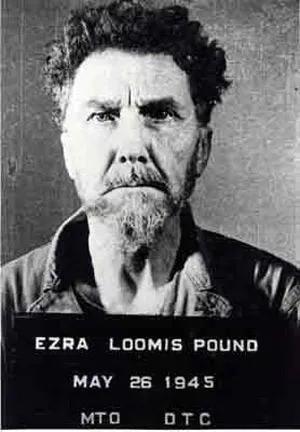
Ezra Pound moved to Rapallo on the Italian Riviera in 1924 and did not leave Italy for more than twenty years. The trajectory from Paris to Rapallo to Rome Radio is one of the most painful descents in literary history — painful because the intelligence that navigated it was genuinely exceptional, studied because the question it raises has no comfortable answer.
The path toward fascism was not sudden, and it was not entirely solitary. Pound had always been interested in economic theory and governance — in the question of what political arrangements allowed artists to do their work. He encountered the Social Credit theories of Major C. H. Douglas in London in 1918 and became convinced that the maldistribution of wealth through insufficient purchasing power was the root cause of economic depression and war. He was not alone in these preoccupations. Eliot’s language around usury, Yeats’s flirtations with authoritarian social organisation, Joyce’s Stephen Dedalus railing against the money power — these were symptoms of a broader intellectual pathology of the modernist age, an anti-usury anxiety that ran through the period like a fault line. Pound did not invent the obsession. He took it to its murderous extreme.
He came to believe that international banking — and behind it, in his increasingly paranoid analysis, Jewish financiers — was the mechanism by which wealth was unjustly concentrated. The leap from this conviction to Benito Mussolini, who seemed to offer a practical programme for reorganising the relationship between the state and capital, was not as long as it should have been. He met Mussolini in January 1933 and presented him with a copy of Jefferson and/or Mussolini in proof. Mussolini read a few pages and remarked that the book was amusing. Pound received this as high praise. His admiration for the dictator never wavered after the meeting.
When the Second World War began, and Italy and America found themselves on opposite sides, Pound went to Rome Radio. Between 1941 and 1943, he made several hundred broadcasts transmitted to American audiences. The content was extraordinary in its ugliness. The broadcasts were incoherent, repetitive, and genuinely vicious — and they were made by the man who had edited The Waste Land, championed Joyce and Hemingway, written In a Station of the Metro and the early Cantos. Hemingway described the broadcasts as “vile, absolutely idiotic drivel” and wrote that they were evidence of a mind “warped and twisted and decayed.”
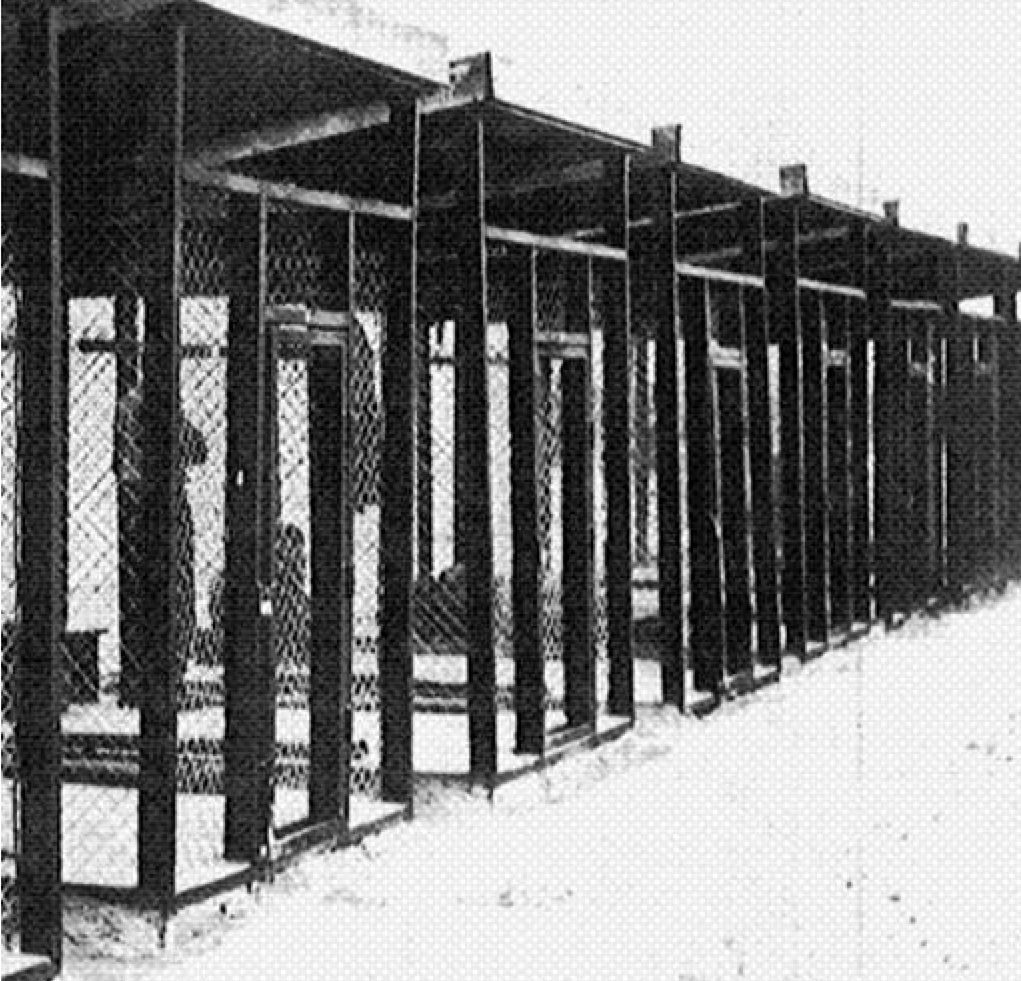
In May 1945, captured by Italian partisans and handed to American forces, Pound was taken to the Disciplinary Training Centre near Pisa. For several weeks, he was confined in an outdoor steel cage, with no bed, no roof, and no shelter from sun or rain. He slept on the concrete floor. The Mediterranean summer bore down on the cage and the man inside it. The guards kept their distance. He was fifty-nine years old, he had been one of the most important literary figures of the century, and he slept on the concrete floor.
He wrote poetry.
On scraps of packing material and toilet paper, in whatever light remained after the sun had gone down far enough for the cage to cool, he drafted what would become the Pisan Cantos — among the most remarkable things he ever produced. Passages of extraordinary beauty and lyrical precision interspersed with the economic theories and anti-Semitic obsessions that had brought him to the cage in the first place. The two voices coexist in the same poem as they had coexisted in the same mind throughout his adult life. The impossibility of separating the beautiful from the monstrous is exactly the problem the Pisan Cantos pose to anyone who reads them; there can be no forgiveness and no denial, the problem has no resolution.
St Elizabeths — The Salon in the Hospital
Pound arrived in the United States in November 1945 to face nineteen counts of treason, a charge carrying the death penalty. A panel of four psychiatrists declared him “insane and mentally unfit for trial.” He was committed to St Elizabeths Hospital for the Criminally Insane in Washington, D.C., where he would remain for twelve years.
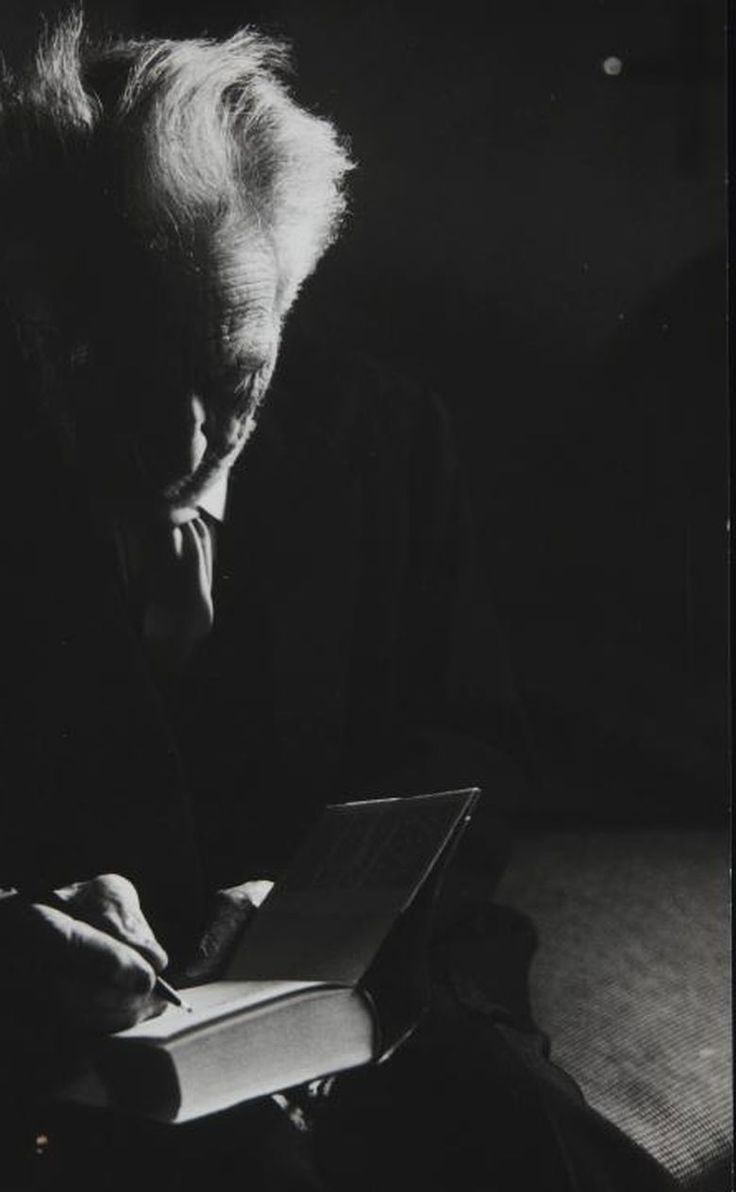
The psychiatric findings have been disputed ever since, most forcefully by E. Fuller Torrey, a psychiatrist who obtained Pound’s hospital records under the Freedom of Information Act and concluded that the finding of insanity was, in substantial part, a legal manoeuvre sustained by his literary allies. What is not in dispute is that Pound’s behaviour in the hospital was not consistent with severe incapacity. He continued working on the Cantos. He translated Confucius and Sophocles. He maintained a vast correspondence with writers across the world. He received visitors — T. S. Eliot, Robert Frost, Ernest Hemingway, Robert Lowell, Elizabeth Bishop, Allen Ginsberg — and conducted what amounted to a literary salon. The poet Robert Fitzgerald, who visited seeking help with a translation of Homer’s Odyssey, later concluded that if Pound was not in fact insane, then “you were craven not to stand trial on your indictment.” It is a verdict that carries weight.
The Bollingen Prize controversy of 1949 brought the central question into its sharpest public focus. The Fellows in American Letters of the Library of Congress — a distinguished committee including Eliot, Auden, Conrad Aiken, and Robert Penn Warren — awarded the first Bollingen Prize for Poetry to the Pisan Cantos on the grounds that they were, as poetry, the best collection published in the United States in 1948. The debate that followed divided the literary world along lines that had no clean resolution: could you separate the work from the man who made it? Could you award a prize to a man who had broadcast anti-Semitic propaganda while Allied soldiers were dying? Could you refuse on those grounds without accepting that the state had a legitimate role in determining what art was worthy of recognition?
There is no comfortable position here. Pound’s wartime broadcasts were not a private lapse or a momentary confusion. They were sustained, deliberate, and vicious — expressions of convictions he had held for decades and never fully abandoned. And the poetry of the Pisan Cantos is genuinely extraordinary. These two facts are in irresolvable tension, and the tension is the most honest thing that can be said about his legacy.
He was released from St. Elizabeth’s in April 1958, after Archibald MacLeish, Robert Frost, and Hemingway petitioned for his release on the grounds that indefinite confinement without trial was itself unjust. He returned to Italy, stepped off the ship, and — by several accounts — raised his arm in a fascist salute for the press. He settled in Venice and lapsed into silence from around 1960. He told Allen Ginsberg, who came to visit and who forgave him, that his “worst mistake was the stupid suburban prejudice of anti-Semitism.” Late in life, with more characteristic self-laceration, he told William Carlos Williams: “Williams was in touch with human feelings. I was not.”
He died in Venice on 1 November 1972. He is buried on the cemetery island of San Michele, in the lagoon.
The Arc
This book began with a boy in Paris who could not see clearly enough to follow lessons written on a blackboard and who found, in the act of drawing, something he could see perfectly well. It ends with a man in Venice, silent, looking back at eighty years of extraordinary productivity and moral catastrophe and finding them, in the end, inseparable.
Between those two lives the book has traced a story about what artists give each other across the distances of time and culture and language. Baudelaire gave Rodin his subject matter — the body in extremis, the human form as the vehicle of spiritual truth that cannot be expressed any other way. Rodin absorbed that lesson and spent fifty years working out its full implications, producing along the way the Gates of Hell and The Thinker and the Burghers of Calais and the headless torso that Rilke would sit in front of for hours before writing the poem that ends with a command. Rilke received from Rodin the doctrine of patient daily labour and carried it through years of silence to the savage creative storm of February 1922 that produced the Duino Elegies — the summit of his achievement and one of the supreme works of the German language.
Gibran received from Rodin the recognition that the fusion of visual art and prophetic vision was a serious artistic enterprise, and carried that recognition to the small studio in Greenwich Village where he wrote The Prophet — the book that half the world has read, translated into more than a hundred languages, never out of print since September 1923. And Pound received from Rodin’s example the understanding that the nineteenth century’s greatest formal achievement was now the standard to be surpassed — and went on to surpass it in poetry, with the same concentrated intensity and the same commitment to the made thing that Rodin had applied to clay.
The line connecting these figures is not one of direct influence in all cases. Rilke sat at Rodin’s feet and worked in his garden. Gibran sat in his studio and received his blessing. Pound read Rodin critically, absorbed the lesson of what he had achieved, and declared it must be surpassed. Baudelaire knew Rodin only through the mutual recognition of two men working in the same city on the same problem from different angles. But the line is real — it is the line of a shared conviction about what art demands of the people who make it.
Art demands the full attention of the maker, brought to bear on the surface of the thing with patience and daily discipline. Art demands that the maker look at the world rather than project feelings onto it — that the panther in the cage be seen as it is, that the faces in the Métro be held as they are, that the joy and sorrow of Orphalese be received rather than manufactured. Art demands honesty about what the world is and what the human being is within it, including the honesty that requires the artist to look at their own darkness without looking away.
On that last demand, Pound failed catastrophically. Rilke failed in different ways, smaller and harder to name but real: the daughter abandoned, the love held always at a distance, the life that fell short of the letters. Gibran cultivated myths about himself and drank himself to death at forty-eight. Rodin kept his private life in a state of disorder that cost the people around him significantly.
Baudelaire destroyed his own health and died at forty-six having spent his gifts and his body in roughly equal measure. These are not comfortable biographies.
What they are is true. These were people who gave everything they had to the work — who found, in the making of art, the thing that justified the expenditure of a human life — and who paid for that commitment in the ways that absolute commitment tends to exact payment. The question of whether the work was worth the cost is not a question this book can answer. It is a question each reader brings to the work and answers for themselves, in the particular silence that follows the last page of a book that has said something true.
— — —
Coda — The Closerie, the Brass Plates, the Present Tense
At 171 Boulevard du Montparnasse, the Closerie des Lilas is still open. The lilac bushes still partially screen it from the boulevard. The chestnut trees still provide shade on the terrace in summer. Marshal Ney still raises his bronze sword among the branches outside, his gesture of command addressed to a street that has long since moved past the world he represented.
Inside, the brass nameplates on the tables are still there. Each one marks someone who sat here and thought something or wrote something or argued something that mattered — in this room, at this table, in one of the decades this book has traced. The room holds the conversations, the arguments and silences, the cups of coffee and the pages written and abandoned. It does not rank them. It simply holds them.
Rodin is buried at Meudon, in the garden of the Villa des Brillants, in the shadow of The Thinker; the Hôtel Biron in Paris, which Rilke suggested to him, became the Musée Rodin. Baudelaire is in Montparnasse. Rilke at Raron. Gibran in Bsharri. Pound on San Michele, in the Venice lagoon.
The work they made is not buried anywhere. It is in the world, read and reread, doing what all serious art does: pressing against the reader’s life until the reader feels the pressure, until something in the encounter changes something in the person encountering it. Du mußt dein Leben ändern. The stone has been saying it for a century.
The lamps went out in August 1914 and came back on in a different kind of light. This book has tried to trace some of what happened in the years when they were burning at their brightest — before the war, and in the long aftermath — in the studios and cafés and salons of Paris, and in the lives of the men who worked in them. The work they made is evidence enough that something happened here worth the trouble. In a garden in Meudon, the Gates of Hell stand open still.
Darren Gall
