Rubia Gallega: The Slow Beef of the Atlantic Coast
In the green, rain-washed hills of Galicia — where the Atlantic rolls against a coast of granite and pine, and the weather seems always to be making up its mind — a strain of cattle has shaped the landscape for as long as anyone has kept written record. The Rubia Gallega, the “Galician Blonde,” is not the oldest beef story in Europe, but it may be the slowest. To understand it is to accept that time, more than technique, is the real ingredient.
A History Worked Into the Soil
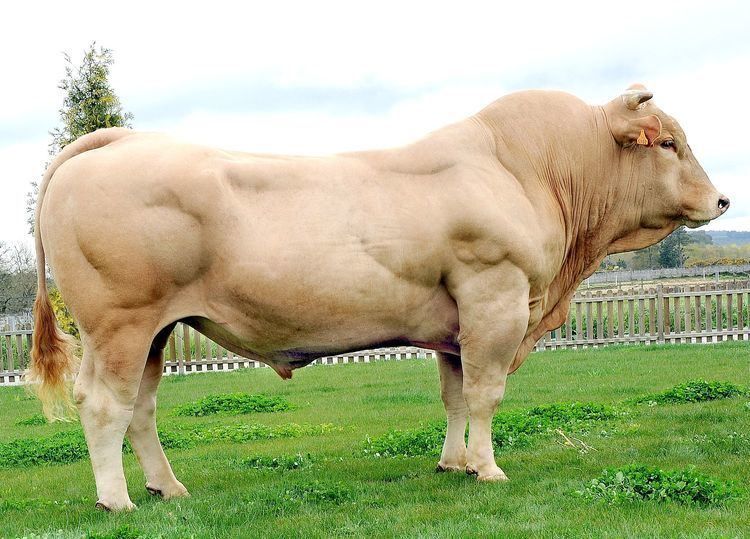
Cattle of some ancestral type have grazed Galicia for many centuries, drawing on Celtic and Iberian roots, but the Rubia Gallega as a defined breed is a more recent creation. Its modern genetics carry traces of Simmental, Swiss Braunvieh, British Shorthorn, and the Portuguese Barrosã — the residue of agricultural exchange across the Peninsula and beyond. The herdbook was formally established in 1933. For most of the intervening centuries, these blonde, heavy-shouldered animals were not prized as beef at all; they were prized as oxen. They pulled ploughs through clay that tested the patience of men and machinery alike, and they earned their keep by working, not by eating.
That background is the quiet heart of the story. A Rubia ox, hauling a cart across a wet hillside in middle age, is doing something no modern feedlot animal will ever do: it is building the slow architecture of flavour that cooks and butchers later spend decades trying to coax out of younger meat.
Two Products, Often Confused
What reaches the table under the Rubia Gallega name is, in truth, two quite different things.
The first, and by far the larger, is the beef sold under the Protected Geographical Indication Ternera Gallega, recognised by the European Union in 1996. This is mostly young animal — Ternera slaughtered at under ten months, Añojo between ten and eighteen, Cebón up to thirty months. The finest sub-category, Ternera Gallega Suprema, comes from calves suckled by their mothers until they are seven months old, and it is beef of a delicate, pale, almost veal-like character: clean, grassy, pleasantly mild.
The second is the one that has turned food writers into poets over the last decade — the aged animal, vaca vieja or buey, raised on pasture for eight, ten, fifteen years before slaughter, then hung and dry-aged for anywhere from forty-five days to more than a hundred. This is a luxury niche, a fraction of total production, and the thing most visitors to a specialist steakhouse in Madrid, London, Hong Kong, or Dubai are actually eating when the menu says “Rubia Gallega.” Conflating the two, as much marketing copy does, flatters both and describes neither.
Marbling, Fat, and the Yellow Cap
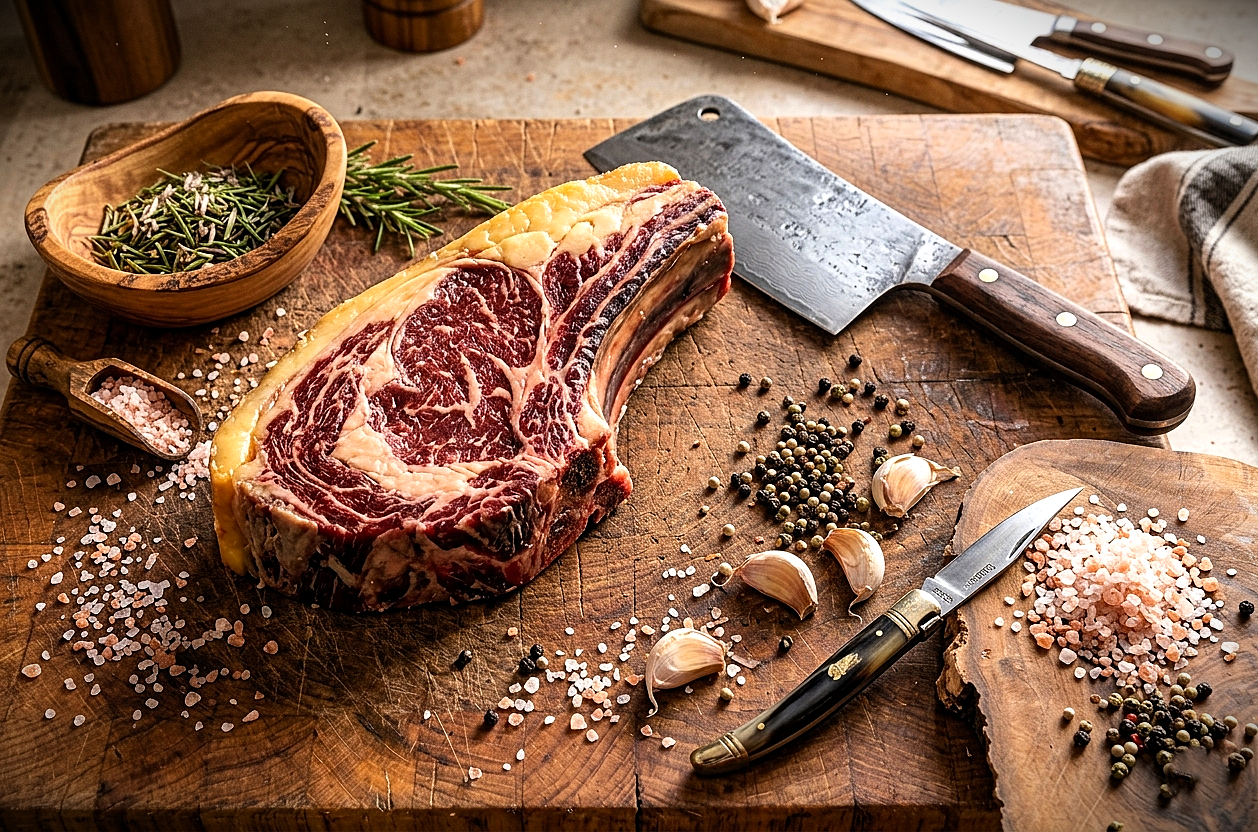
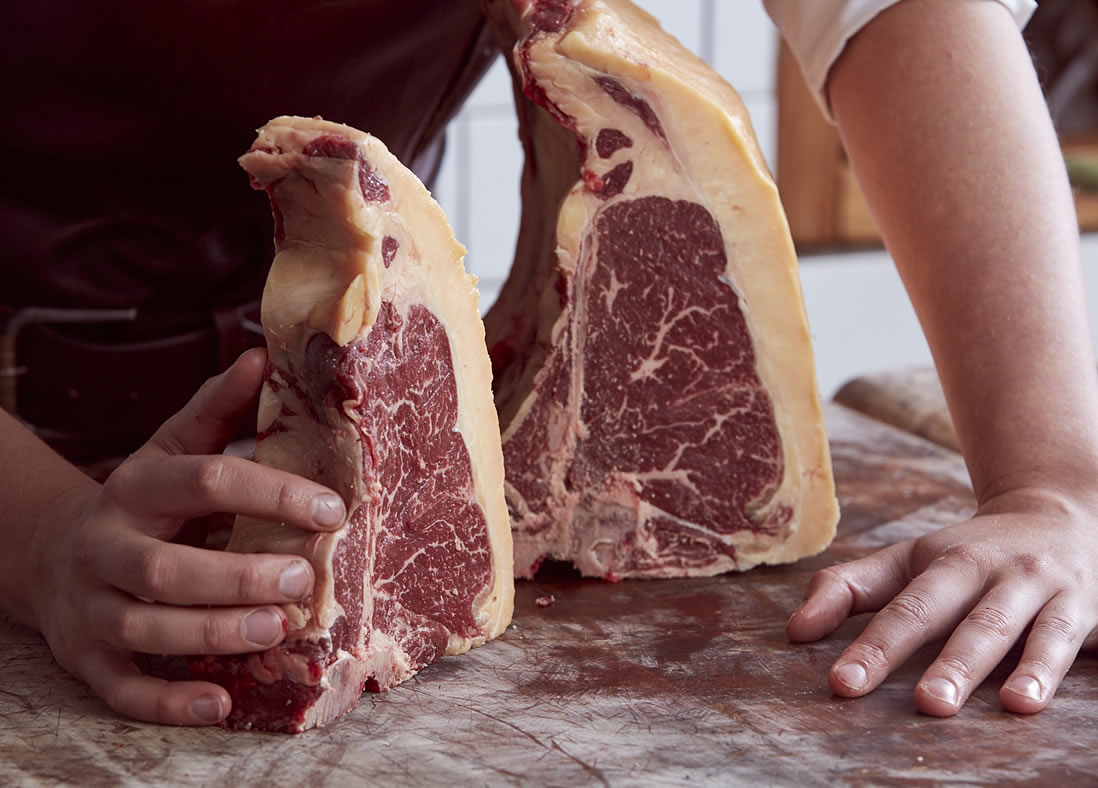
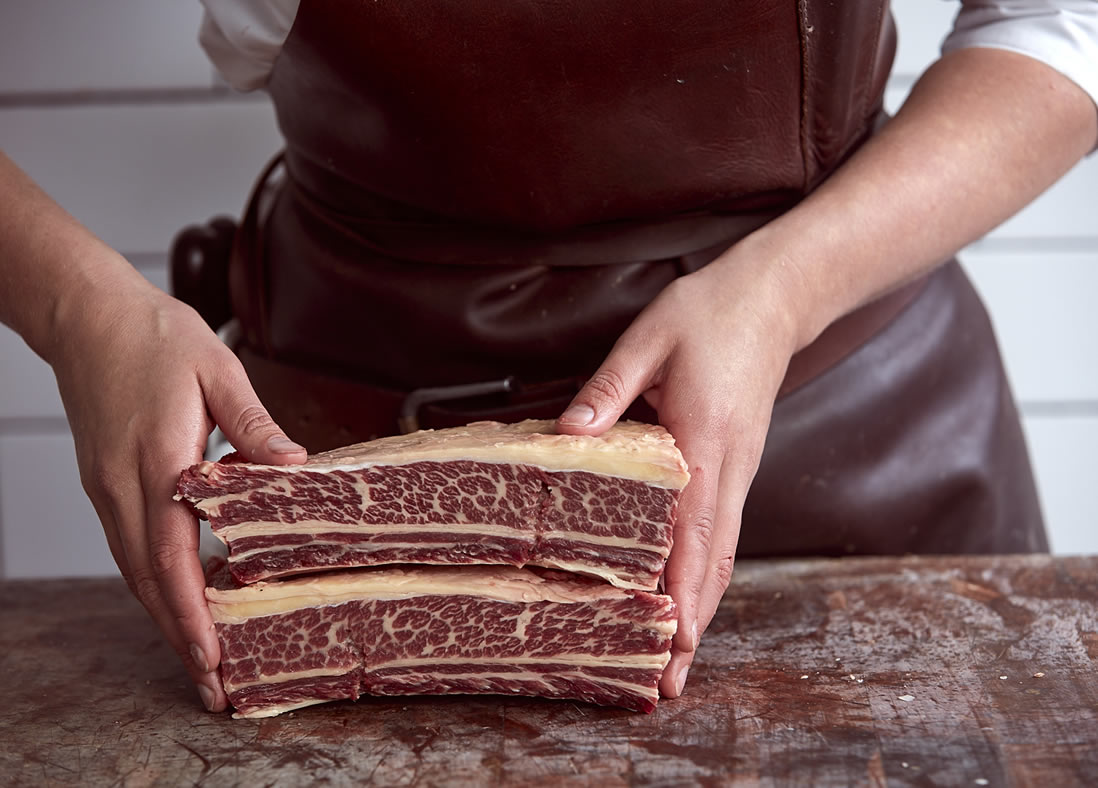
The mature cow, having spent years on Galicia’s Atlantic pastures — rain-fed grass, wild clover, a supplement of maize and local cereals — arrives at the butcher’s block with fat of a buttery, almost daffodil-yellow hue. The colour comes from beta-carotene stored in the tissue, a signature of a diet heavy on fresh forage, and it is accompanied by a finer, more threaded marbling than one finds in younger animals of the same breed. Cut a thick chuletón — the bone-in rib steak that is the canonical cut — and the fat looks less like the clean white lace of Wagyu and more like a lattice of old ivory laid across deep, garnet meat.
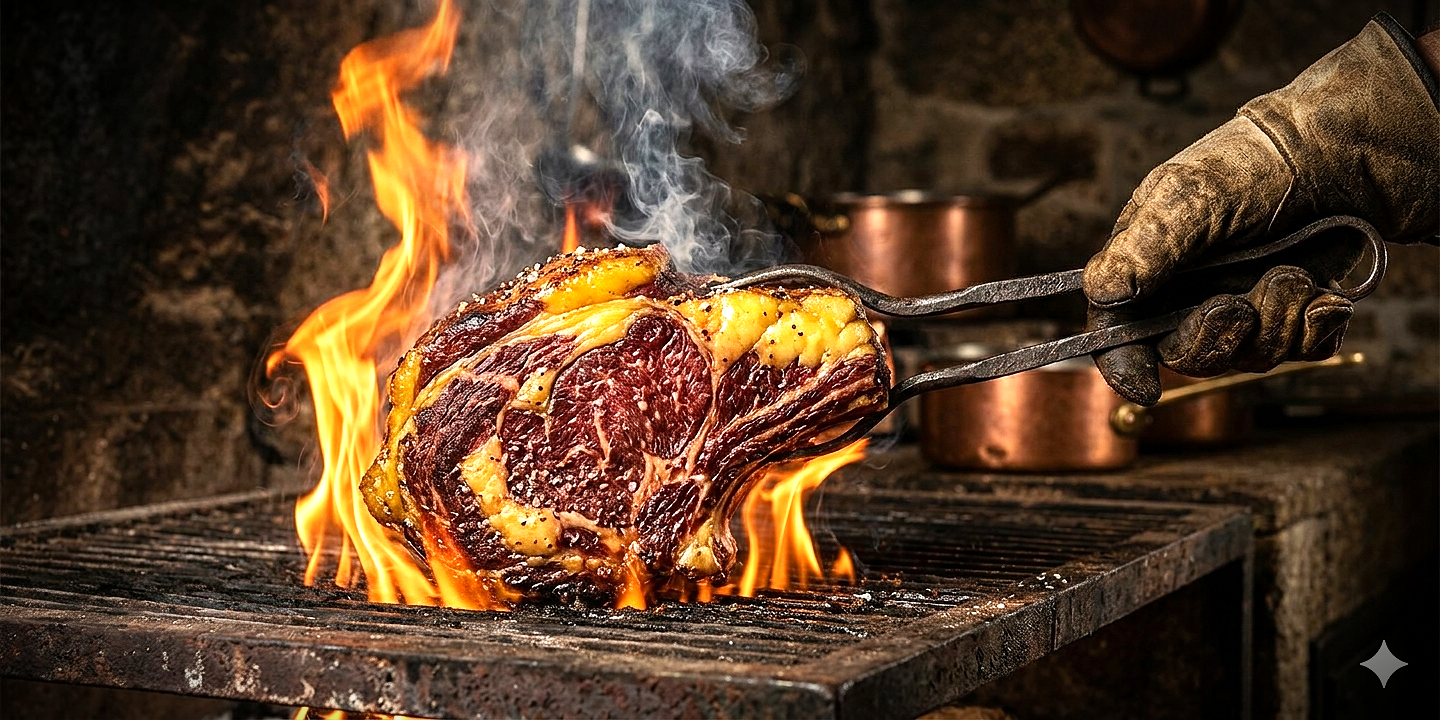
Heat exposes the difference. The yellow fat does not melt so much as unfurl, basting the muscle from within. The aroma carries hints of browned butter, hazelnut, and something herbaceous that is hard to place until you have stood in a Galician meadow in spring.
On Taste, and on Honesty
The flavour is not to everyone’s liking, and a piece of writing about this meat ought to say so. This beef doesn’t just reward patience; it demands it. A long-aged Rubia Gallega is mineral, funky, almost cheesy at the rind — notes of blue cheese, wet stone, dried mushroom. The texture is firm. The finish lingers for longer than seems polite. Those who come expecting the silken yielding of prime Wagyu sometimes leave disappointed; those who come looking for beef that tastes of itself, with the weight of a decade behind every bite, tend to become quiet converts.
It is fashionable, in restaurant copy, to call Rubia Gallega “the rival to Wagyu” or “the best beef in the world.” Neither claim stands up cleanly. Blind tastings have found well-raised beef from other breeds — certain Basque cattle, aged Galloway from the Scottish borders, old Friesian dairy cows in the Netherlands — that holds its own against the Galician buey. What Rubia Gallega has is not unassailable supremacy, but a clear and distinctive character, rooted in a specific place and a particular kind of patience.
How to Encounter It
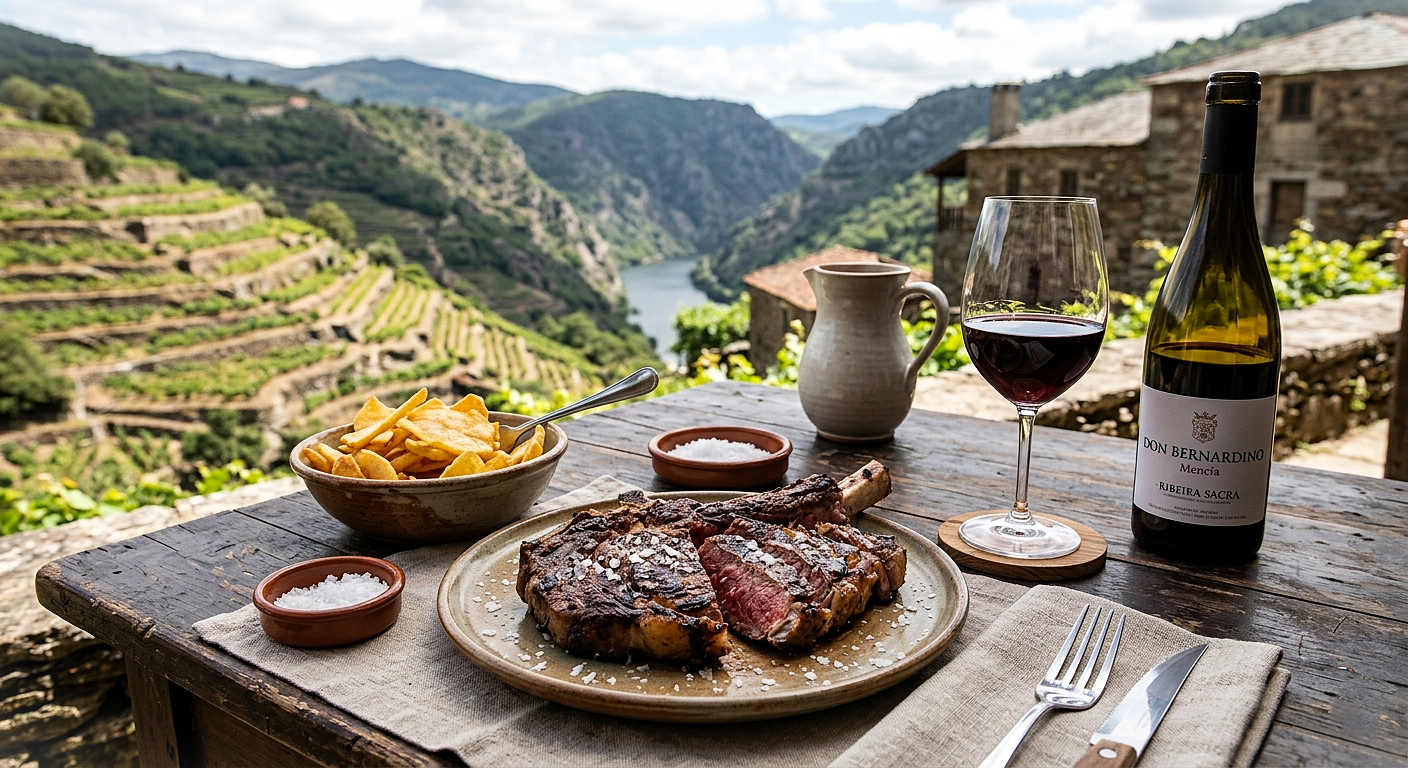
In Galicia itself, the meat is traditionally grilled over charcoal or oak, served under flaked salt, and eaten with little more than chips and a glass of something red — a Mencía from the Ribeira Sacra is the local instinct. Abroad, purveyors such as Basco Fine Foods in the UK have built a cult export trade, and the chef José Gordón, at El Capricho in the province of León, has done as much as any one figure to make aged Iberian cattle an object of pilgrimage for the obsessive.
A properly sourced chuletón will not be cheap — expect, in a good London or Madrid steakhouse, somewhere north of £100 for a kilo at the table. Whether that price is justified depends less on the breed than on the cow: her age, her pasture, her years, her particular life. This is beef whose virtues cannot be industrialised and cannot be hurried. Like most things worth waiting for, it rewards the attention it demands.
Darren Gall