
The Scent of Greene Papaya
Vietnam Voices
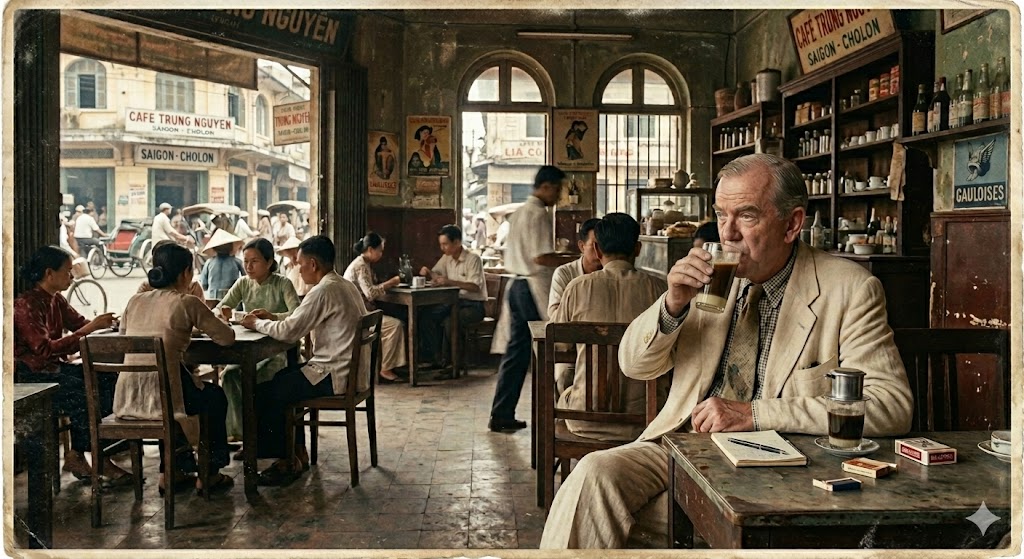
“The smell: that’s the first thing that hits you, promising everything in exchange for your soul.”
— Graham Greene
“Không có chuyện gì xảy ra, nhưng mọi thứ diễn ra thật đẹp.”
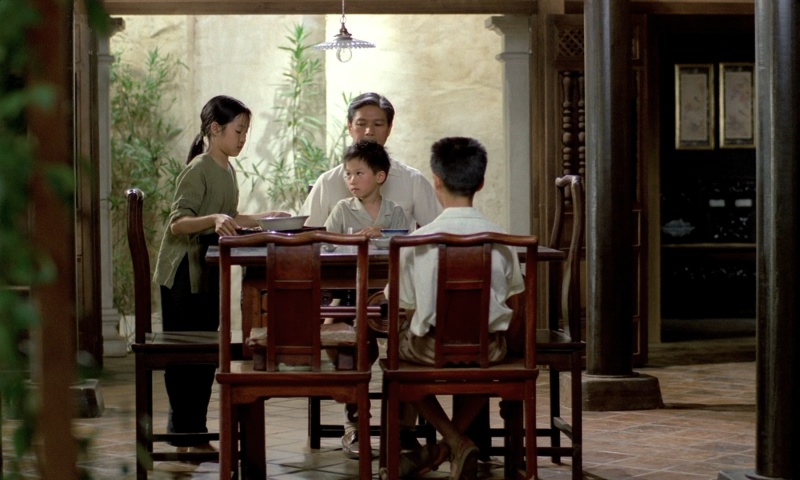
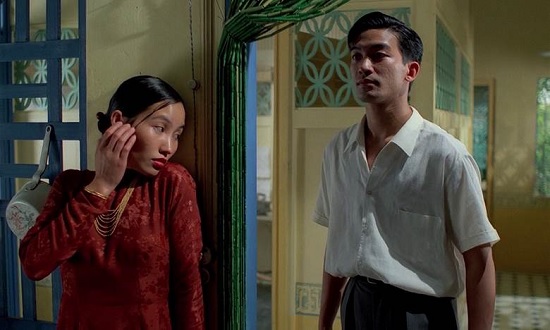
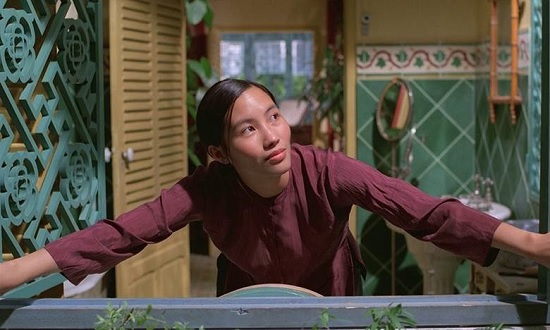
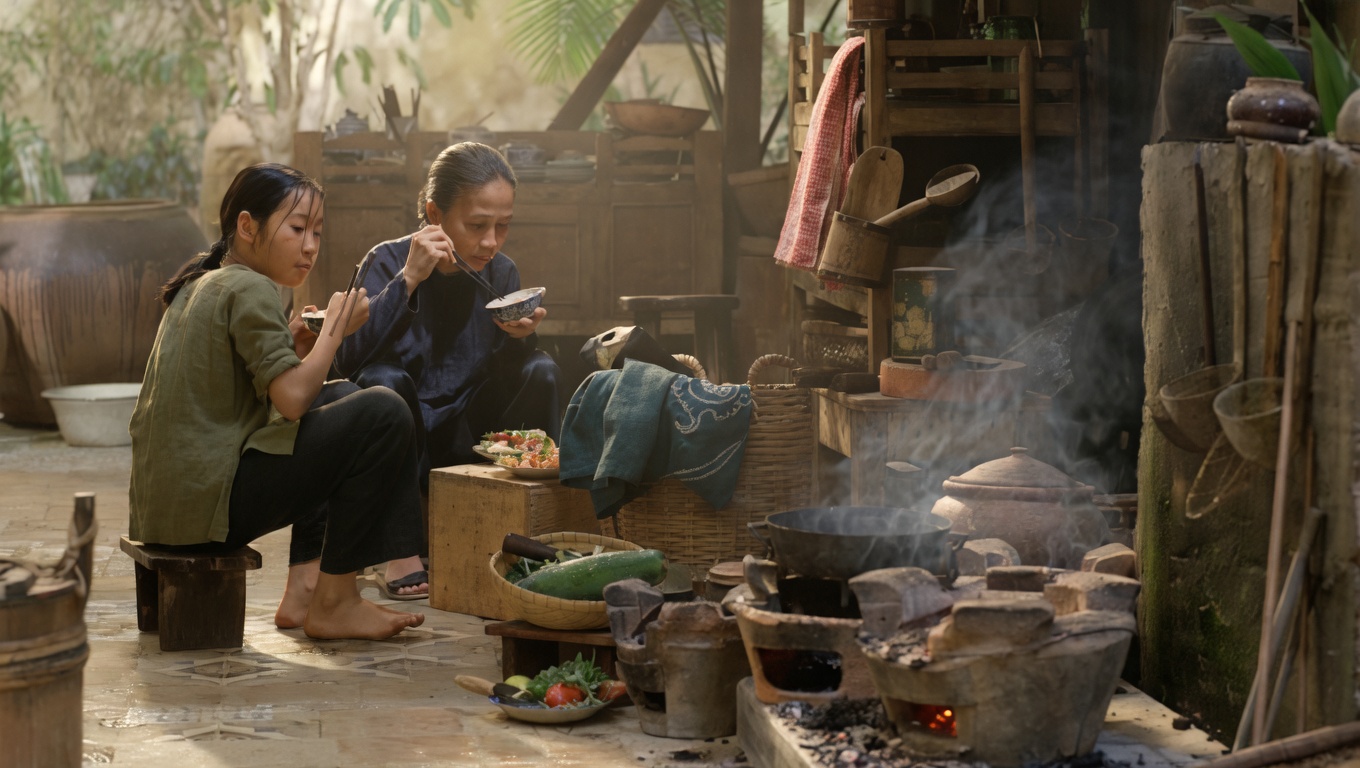
There is a film that begins in silence. A ten-year-old girl arrives at the gate of a Saigon household in 1951 and pauses — just for a moment — before stepping through. The camera watches her face: the eyes moving, receiving, the world entering her. Then she is inside, and the courtyard opens around her, and the film begins its long, unhurried act of paying attention. It is a film of such rich visual beauty, clarity of sound and patience for the viewer to immerse oneself in its exquisiteness. This is a film that does not demand that you keep pace with it. Rather, it unfolds and moves you as the slightest breeze moves a lotus petal across the surface of a pond. It is one of my favourite films; its cinematography still astounds me, moves me, and I am transformed.
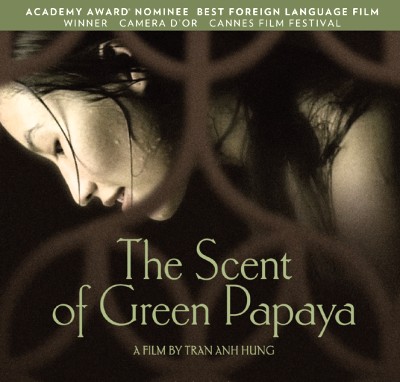
The Scent of Green Papaya — Mùi đu đủ xanh — was directed by Trần Anh Hùng and released in 1993.
One of the most astonishing things I later learned is that it the movie was shot entirely in Paris. Filmed on studio sets constructed from the director’s childhood memories and his mother’s descriptions of a city he had left as a boy. This is important. The film that feels most sensuously, achingly present in its Vietnamese setting — a film so saturated with specific sound and light and texture that watching it resembles memory rather than observation — was made in exile, in France, from loss. It is an act of reconstruction so precise that it becomes a form of grief. And it is, in its way, the key to everything that follows.
Because every voice this essay gathers was also, in some sense, making something from loss. Trying to hold a place that history kept destroying. Trying to find a form equal to what had happened there. The question each of them was circling, with different tools and from different positions of privilege and pain, was the same one the girl in the film asks simply by looking: what does it mean to truly see a place, and what is the cost of failing to?
The Terrace and the Courtyard
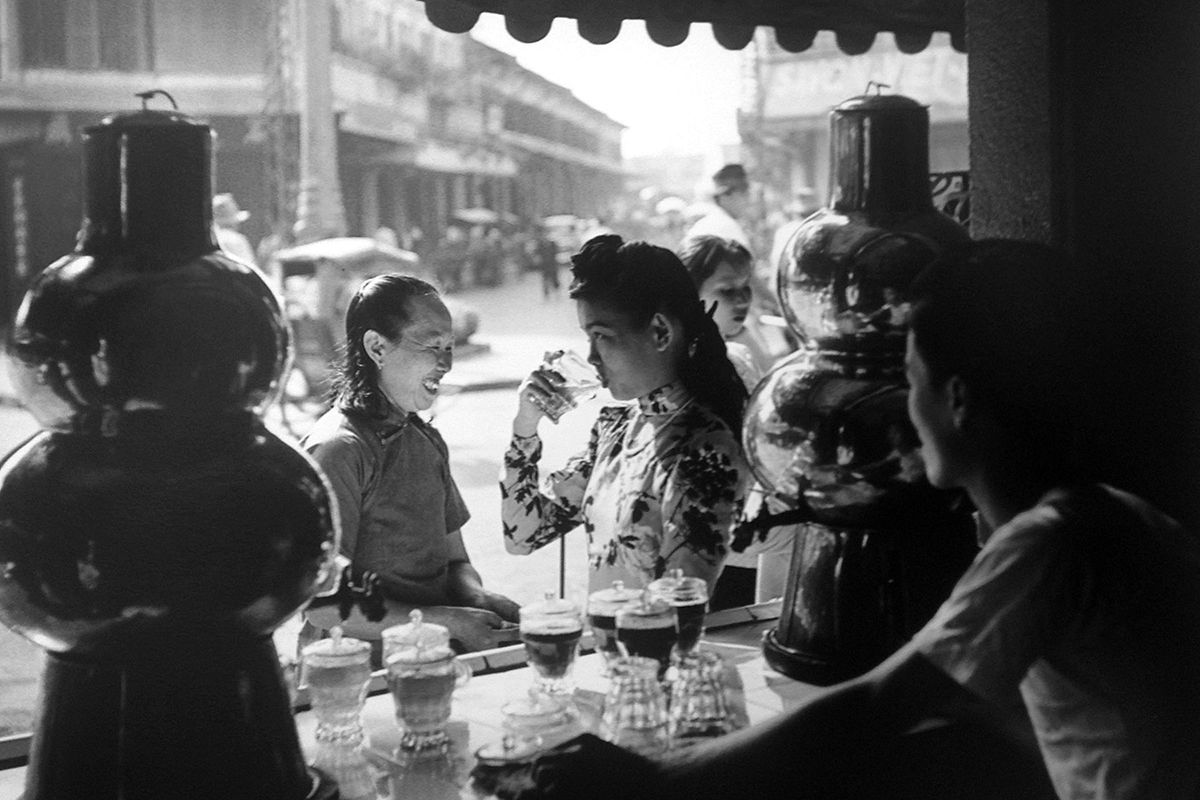
Graham Greene arrived in Saigon in 1951 on assignment for Life magazine, though calling him a journalist feels like calling the city behind him merely a port. He was a novelist of the fallen world — Catholic in the bone, if not always in the practice; drawn toward beauty in its terminal phase; constitutionally alert to the smell of endings. Vietnam in those years was in several endings simultaneously. The French were hemorrhaging in their war against the Viet Minh. American money and American advisors were beginning to arrive, carrying with them the particular brightness of people who have not yet been proved wrong about anything. And Saigon — its tamarind trees and ceiling fans, the terrace of the Hôtel Continental where spies and correspondents and opium merchants orbited each other in the sticky heat — was performing its role as the Paris de l’Orient with the doomed concentration of a theatre company that knows the building is on fire.
Greene made four trips between 1951 and 1955. He rode with French patrols into the Delta. He watched. He accumulated detail with the patience of a man who understood that truth resists the frontal approach and must be surprised from the side, through the senses, through the particular rather than the general. The novel he left behind — The Quiet American, published in 1955 — was received by the American establishment as a provocation, possibly as a slander. The CIA lobbied against its distribution. Critics called it anti-American, which missed the point by enough distance to be telling.
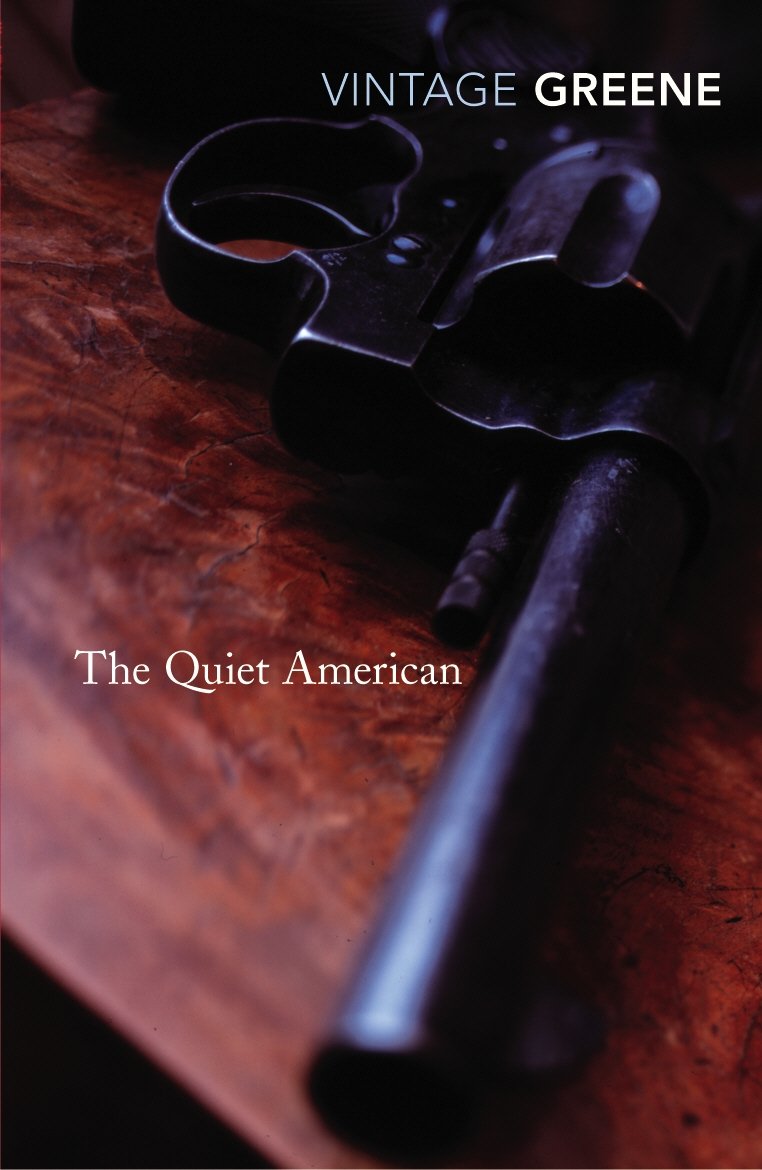
Alden Pyle, the novel’s quiet American, is not a villain. That is the point. He is an idealist, which in Greene’s moral universe is a more dangerous category than villainy — a man armoured by good intentions and impervious, therefore, to the instruction of reality. He has read a political theorist named York Harding and believes what he has read with the absolute faith of someone who has never had his beliefs tested by an actual human being standing in front of him, bleeding. He wants to build a Third Force in Vietnam, a political alternative between communism and colonialism, as though the country were a blank page on which an American idea might be written cleanly, without residue, without the inconvenience of Vietnamese history.
Fowler, the narrator — a weary British correspondent, whisky-worn, morally compromised, in love with a Vietnamese woman he cannot fully see and a country he cannot fully leave — watches this with the sad recognition of the twice-burned:
“I never knew a man who had better motives for all the trouble he caused.”
That sentence, written in 1954, is the entire tragedy of American involvement in Vietnam, composed a decade before it properly began. Greene did not predict the future. He diagnosed the present so precisely that the future had no choice but to confirm him.
What Greene had — what Pyle catastrophically lacked — was the capacity to be genuinely present. To let the smell arrive before the interpretation. To allow a place its full, complicated, irreducible reality before converting it into something useful to an argument. This is a novelist’s discipline, but it is also, as we shall see, something closer to a spiritual one. And it is exactly what the girl in Trần Anh Hùng’s film does, watching a drop of sap form on a cut papaya stem with the same quality of attention she brings to an ant crossing a courtyard tile. She does not organize what she sees into a theory. She simply, completely, sees.
The Practice of Seeing
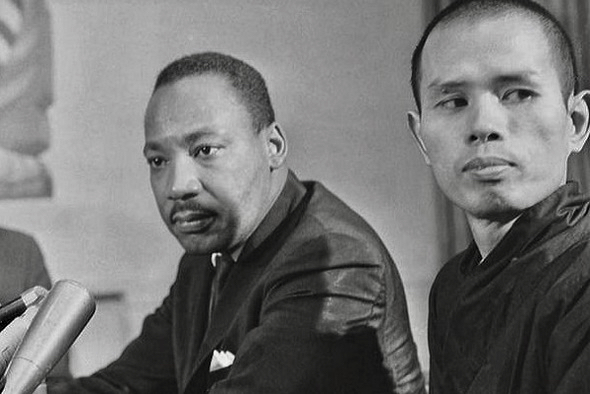
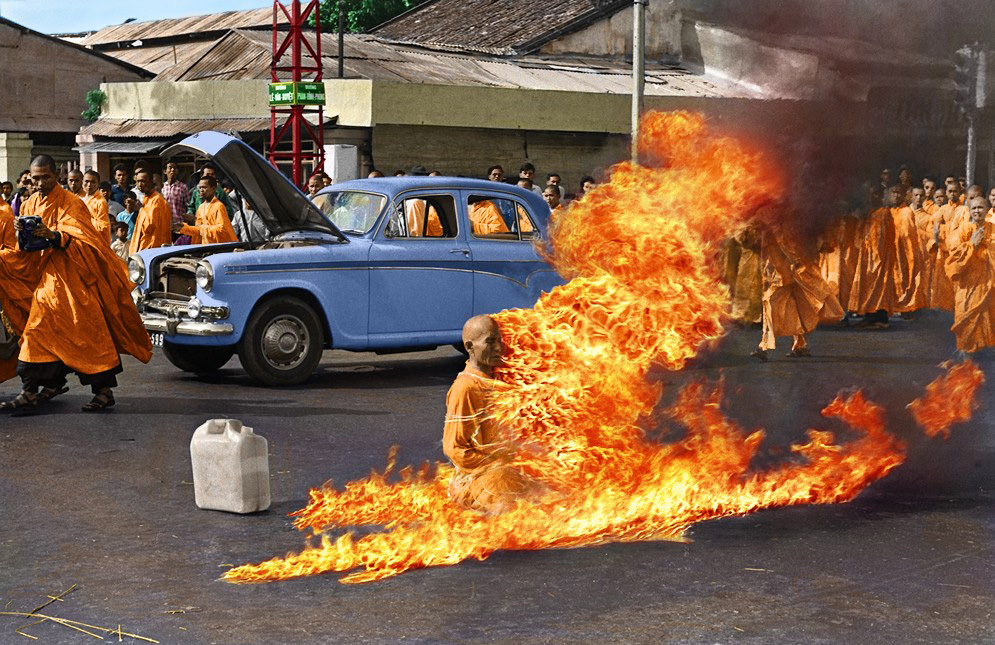
Thích Nhất Hạnh — Thầy, simply ‘teacher’ to his students — was born in Huế in 1926 and ordained as a monk at sixteen, at the precise moment the country was beginning its long twentieth century of consecutive catastrophes. He would spend eighty years refusing the false choice between contemplation and action. His philosophy is built on a concept he named interbeing — tương tức in Vietnamese — the understanding that nothing exists independently, that everything is woven into everything else in a causality so dense and mutual that the categories we use to separate things — oppressor and oppressed, soldier and victim, self and other — are not falsehoods exactly, but dangerous simplifications.
The flower contains the cloud that rained on it. The bomb contains the fear that ordered it, the ideology that shaped the fear and the history that produced the ideology. You cannot draw a clean line anywhere. This is not comfortable. It does not permit satisfying villains, and a war that does not permit satisfying villains is a war that keeps its causes visible and therefore keeps insisting on being prevented.
Thầy was exiled from Vietnam in 1966 after calling for a negotiated peace — too radical for the South Vietnamese government, too conciliatory for the North. Neither side could accommodate a man who kept insisting that Vietnamese people on both sides of the war were equally real, equally suffering, equally worthy of grief. He would not return permanently until 2018, decades older, moving carefully, back to the monastery near Huế where he had been ordained as a boy. He died there in January 2022. The exile had lasted more than fifty years.
During those decades, he built Plum Village in the Dordogne — a community of practice, of walking meditation and mindful breathing, of learning to inhabit the present moment rather than fleeing it toward ideology or nostalgia or the seductive numbness of abstraction. What he was teaching, refined over half a century of homesickness, was essentially this: if you are truly present with another person — not with your idea of them, not with your theory of what they represent, not with your history of them — you would be much less inclined to harm them. Presence is the antidote to violence. The inability to be present is not merely a philosophical error. It is the mechanism by which wars are made possible.
This is, in other words, what Pyle lacked. And what Fowler — for all his self-protective cynicism, his performed detachment, his whisky, and his moral exhaustion — occasionally, involuntarily, possessed. The moments in Greene’s novel that cut deepest are moments of involuntary presence: a face seen clearly, a sound received without interpretation, the quality of light at a particular hour over a particular stretch of water. These are not decorative. They are the novel’s moral argument made sensory.
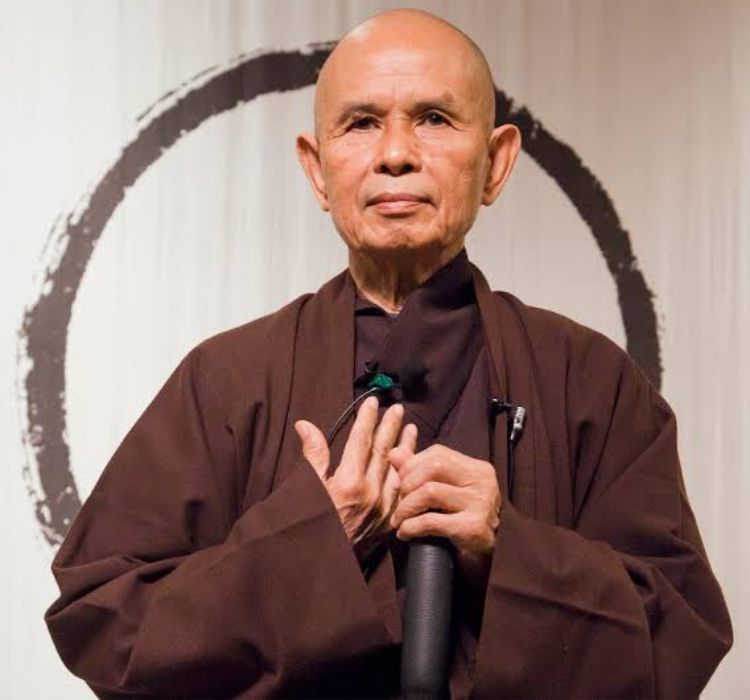
Thầy would have read Pyle with compassion — in the Buddhist sense, which is different from forgiveness. He would have recognized in Pyle a man imprisoned by wrong view: the distorted perception that generates suffering while believing itself to be generating good. And he would have had more trouble with Fowler. Fowler’s cultivated detachment — the journalist’s art of being present without being implicated, of seeing without being responsible for what is seen — is precisely what Thầy’s engaged Buddhism exists to refuse. To witness suffering and choose non-involvement is not wisdom in his tradition. It is a sophisticated form of cowardice dressed in the clothes of sophistication.
The Jungle of Screaming Souls
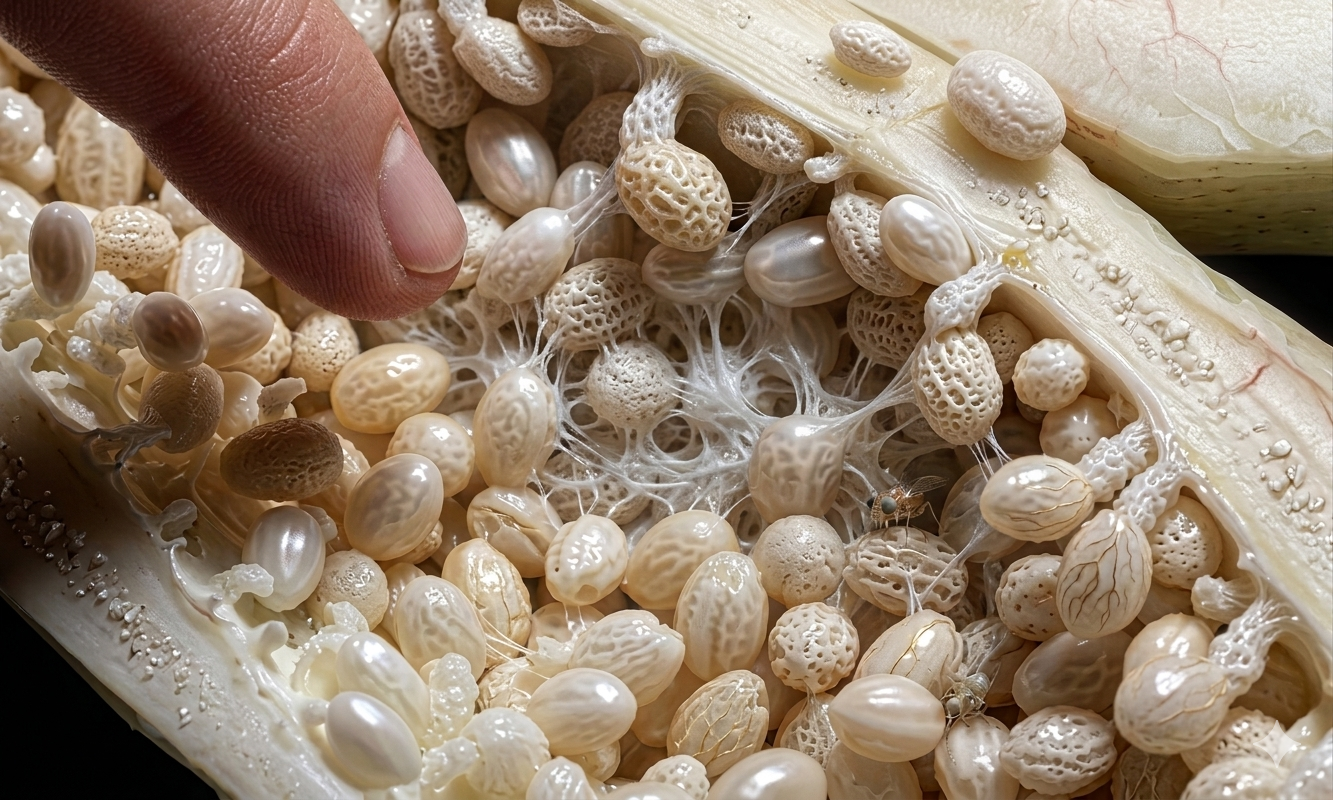
In the courtyard of Trần Anh Hùng’s film, a green papaya is cut open. The sap rises in a slow bead, viscous, faintly luminous. The sound of the knife is very precise. The girl — Mùi — watches with an attention so complete it approaches reverence. This is not a plot point. It is the argument. It is the film saying: This is what it looks like to truly be somewhere. This is what all the other looking — the foreign looking, the strategic looking, the ideological looking — was failing to do.
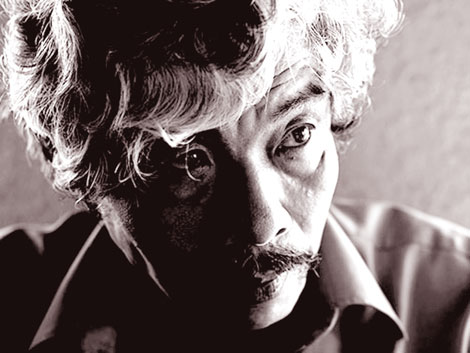
Bảo Ninh was one of ten survivors from a brigade of five hundred men. He fought in the Central Highlands, in a place the soldiers called the Jungle of Screaming Souls — a real geography, a real name, earned honestly. After the war, he wrote a novel that the Vietnamese government initially suppressed, not because it was false but because it was too true in the wrong direction. The Sorrow of War, published in 1990, refuses to make the war heroic. It refuses, more precisely, to make the victory adequate compensation for what it cost.
The novel’s narrator, Kien, is a writer trying to reconstruct his wartime experience from a pile of disordered manuscripts. The form is not incidental. Memory after trauma is not sequential. It does not advance. It circles back, returns, finds itself again in the same clearing at the same hour, the same face, the same moment of irrevocable loss, as though the mind is trying to locate the exact point where the world became irreparable. The jungle of the title is both a place and a condition of consciousness — a landscape the living cannot leave because the dead have not been fully mourned.
What Bảo Ninh adds to this gathering — what nobody else present can provide — is the voice of the Vietnamese soldier himself. Not observed, not theorized, not mourned from outside. Inhabited. Greene’s Vietnamese characters, for all his sympathy and all his precision, are ultimately perceived from without. Bảo Ninh’s are inhabited from within. He is not writing about the Vietnamese experience of the war. He is the Vietnamese experience of the war, finding language for itself at great cost and with no guarantee of being understood.
The victory was real, his novel insists. And it was not enough. The dead remained dead. The survivors remained damaged in ways that peace did not repair. The country was reunified and the grief was not. This is not defeatism. It is the most rigorous form of honesty — the refusal to allow the political meaning of an event to determine its human cost.
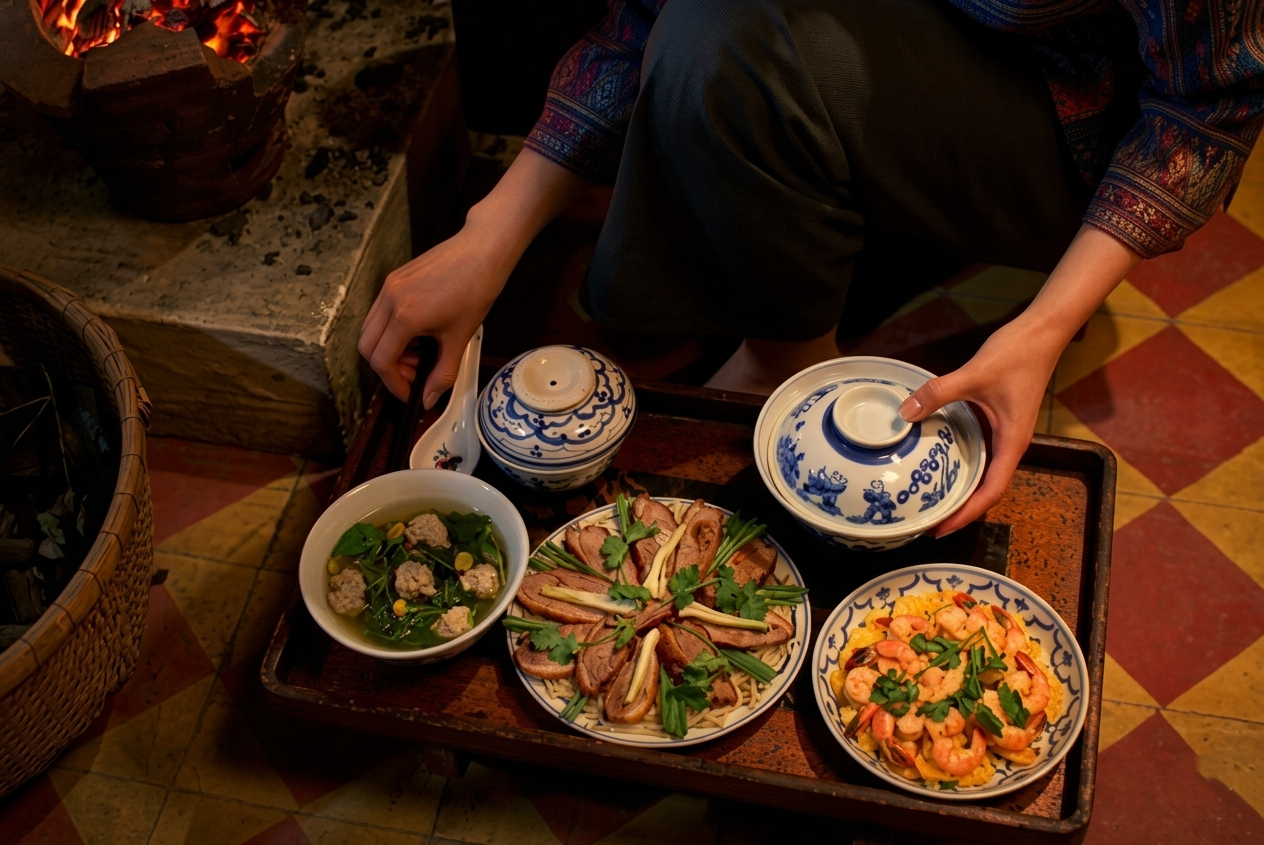
The Interior That War Forgot
“Nơi nào em cũng nghĩ, Hướng về anh – một phương.”
“When I go to the North,
Or to the South,
When I go anywhere,
I think of you,
My only direction.”
—Xuân Quỳnh
The conversation between Greene, Thầy, and Bảo Ninh is, for all its richness, conducted largely between men looking at Vietnam from various forms of distance. The voice that most conspicuously needs adding is the Vietnamese woman’s, and no voice adds it more beautifully or more painfully than Xuân Quỳnh.
Born in 1942, she grew up in the North during the French war and came of age as a poet during the American one. She wrote love poems. The phrase requires unpacking. Love poetry in wartime, when your husband is at the front, and the bombs fall on civilian infrastructure, and the question of whether the person you love will survive the week is not rhetorical — this is not decorative literature. It is the most urgent literature possible. It is the literature of people insisting, against everything, on the primacy of the interior life.
Her poem Sóng (Wave) moves between the turbulence of the sea’s surface and the stillness of its depths, between the restlessness of longing and the constancy beneath it, between the self that knows its own smallness and the self that dissolves into the vastness of feeling. It is a poem about how love survives, knowing it is mortal.
What Xuân Quỳnh gives to this conversation is what the conversation was missing without quite knowing it: the Vietnamese woman’s interior life, delivered from the inside, without the intermediary of a foreign eye. Greene’s Phuong — the Vietnamese woman at the centre of The Quiet American, the woman whom Fowler loves, and Pyle idealizes and both reduce — is the novel’s most honestly examined failure. She is the symbol of Vietnam being fought over by men who cannot quite see her as fully real. Greene knows this; it is partly his point. But the knowing does not dissolve the problem: Phuong remains somewhat opaque, her interior kept from us, because Fowler, and perhaps Greene himself, cannot quite break through to full presence with her.
Xuân Quỳnh breaks through. Her poems insist on the reality of a Vietnamese woman’s inner life with such precise and undeflectable beauty that no subsequent reader can claim not to have been shown what was there. She does not argue for her interiority. She simply demonstrates it, in lines so clear they cannot be explained away. After reading her, Phuong’s silence in Greene’s novel becomes not an absence but a withholding — something held back, not because it is not there but because no one in the room knew how to ask.
Xuân Quỳnh died in 1988, at forty-six, in a car accident alongside her husband, the playwright Lưu Quang Vũ. They died together, on a road, in peacetime, in a country that had survived everything. The grief of this — the timing of it, the absurdity — has never quite dispersed.
Story-Truth and Happening-Truth
Tim O’Brien served with the 23rd Infantry Division in Quảng Ngãi Province in 1969 and 1970 — a province that had seen My Lai the previous year. He came home and spent decades trying to find a form equal to what he had witnessed, done, and failed to prevent. The Things They Carried, published in 1990, is that form — a work of fiction presented as memoir and memoir presented as fiction, a book that interrogates its own truthfulness so obsessively that it arrives, by that route, at a deeper truth than either mode alone could provide.
O’Brien distinguishes between the happening-truth — what factually occurred — and the story-truth — what the story must do to make the reader feel the reality of what occurred. These are not always the same thing, and he refuses to pretend otherwise. A true war story, he writes, is never moral. It does not instruct. It does not encourage virtue. It makes the stomach believe.
What makes O’Brien’s presence in this gathering almost unbearably poignant is the pairing with Bảo Ninh. The Things They Carried and The Sorrow of War were written in the same years, published in the same year, by former enemies who had no knowledge of each other’s existence. They are, structurally and emotionally almost the same book. Both fragmented. Both non-linear. Both haunted. Both insisting on the particularity of the dead. Both refusing consolation. Two men, on opposite sides of the same war, arriving independently at the same form because the experience demanded it.
Thầy would have found in this convergence a perfect illustration of interbeing. The trauma inter-is across the line of enmity. The obligation to the dead is inter-is regardless of which flag they fought under. The form that grief takes, when it is honest enough, crosses every cultural divide. And yet the two men never met. The books sat on shelves in different languages in different countries, saying the same thing to different readers, neither knowing the other existed. This, too, is a form of loss.
The Architecture of Incomprehension
Frances FitzGerald’s Fire in the Lake, published in 1972 and winner of the Pulitzer Prize, is the intellectual architecture that the other voices were building toward without quite having the blueprint. Her thesis is plain: the Americans lost the Vietnam War not primarily through military failure but through a categorical incomprehension of the civilization they had entered. They brought to Vietnam an entirely different theory of what a person is, what a village is, what the purpose of government is.
The American worldview is linear, progressive, reformist — problems are identified, resources deployed, solutions implemented, history moves forward. The Vietnamese worldview, shaped over centuries by Confucian and Buddhist frameworks, is cyclical, ancestor-oriented, village-centered — the individual is embedded in an interlocking web of obligation to family, community, and the dead that has no equivalent in the American political imagination.
These were not two cultures meeting awkwardly across a table. They were incompatible ontologies, and the incomprehension was so total that it was invisible. The Americans could not see it because seeing it would have required them to see themselves — to recognize their own assumptions as assumptions rather than facts, their own version of history as a version rather than the thing itself. This is precisely the epistemological blindness that Thầy called wrong view, that Greene dramatized in Pyle, that Bảo Ninh documented in the rubble of villages that had been liberated into ruin.
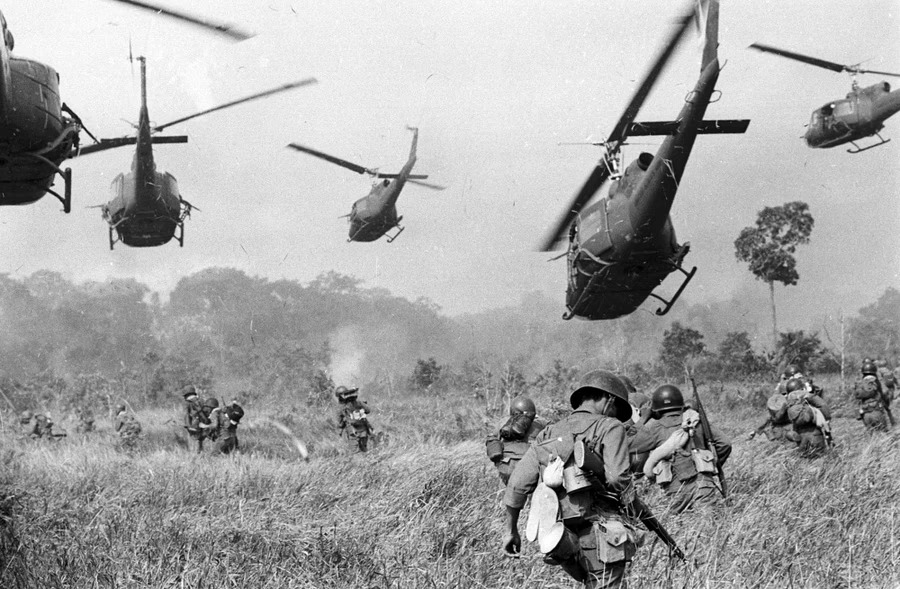
To read FitzGerald alongside Trần Anh Hùng’s film is a quietly devastating experience. The film shows, in its patient courtyard and its ordinary household, exactly what FitzGerald is describing in the abstract: a texture of Vietnamese life so dense, so particular, so rooted in relationships and daily rhythms that the American policy apparatus had no conceptual tools to even perceive it. Mùi’s world — the preparation of a meal, the sound of a boy practising scales, the way light falls through a courtyard gate in the afternoon — is precisely the world that the helicopters flew over without seeing.
Simone Weil wrote, “The capacity to give one’s attention to a sufferer is a very rare and difficult thing; it is almost a miracle; it is a miracle. Nearly all those who think they have this capacity do not possess it. Warmth of heart, impulsiveness, pity are not enough.”
Fowler is present — genuinely, attentively present — and for most of the novel does nothing. The torturer who looks directly at his victim, who sees the fear and the breath and the particular face, and continues anyway, is not failing to attend. Presence can coexist with cruelty. It can be a form of possession — Trần Anh Hùng’s Paris-built Saigon is made from the most loving attention, and is also, inescapably, a dream shaped by the dreamer’s grief, his selection, his need.
The colonial administrator who genuinely loves the country he administers is often more dangerous than the one who doesn’t, because his presence gives him better tools. Attention, as Simone Weil understood, is the precondition of love — but it is not love itself. You can attend to a person and still not make the final movement toward them, still not cross the distance from perception to care. Some people look, and remain sealed.
What presence cannot do alone is convert seeing into acting, or dissolve the structures that exist independently of individual perception. A soldier may be fully present to the specific Vietnamese farmer standing in front of him and still participate in a war sustained by economic interests and bureaucratic momentum that no quality of attention can interrupt. The structure does not care how mindfully you inhabit it. The books in this essay were written after the fact. The attention came too late, or circulated among people who already agreed, or was aestheticised into something that could be appreciated rather than acted upon. Xuân Quỳnh wrote the most precisely present love poems imaginable and died on a road at forty-six. What presence can do — and this is not nothing, it is where everything begins — is make certain lies harder to tell, certain violences harder to authorise, and create in the space between one person and another the possibility, not the certainty, of something other than abstraction.
The Ethics of the Beautiful
Susan Sontag complicates everything. She belongs here precisely because she is unwilling to let the essay rest.
She visited Hanoi in 1968, at the height of the bombing, and wrote about it — carefully, uncomfortably, aware of the political uses to which her presence might be put and unwilling to pretend she was simply a witness. Her later work, Regarding the Suffering of Others, spends two hundred pages asking what it means to look at suffering — not as a political question but as an ethical and aesthetic one. What does photography do to moral attention? Does the image of atrocity generate empathy, or does it, through repetition and framing, generate a kind of anaesthesia?
She would arrive at this table with an uncomfortable question for everyone seated around it.
For Greene: is the beautiful novel about suffering itself a problem? The Quiet American is a work of extraordinary aesthetic power, its Saigon rendered with such precision and such love that reading it is a genuine pleasure. The tragedy it depicts is, in some measure, aestheticised by the quality of the prose — made beautiful, made formally satisfying, made into something that can be experienced and set back on the shelf. Does that aestheticisation serve the Vietnamese people whose suffering it documents?
For Thầy: has mindfulness, absorbed into Western corporate culture with such appetite, become another way of not looking at structural violence? A technology for making individuals more comfortable within unjust systems rather than more motivated to dismantle them? Thầy worried about this himself, publicly and repeatedly, distinguishing his teaching from what he called ‘McMindfulness’ — the commodification of attention, sold back to the people most harmed by the systems that required it.
For Trần Anh Hùng: is the film’s extraordinary beauty a form of mourning or a consolation that makes the mourning easier to bear than it ought to be? The Saigon in The Scent of Green Papaya never existed in quite this form. It is a dream of Vietnam, made in Paris from memory and longing, and it is touchingly beautiful, and something was destroyed so that this beauty could be mourned.
Sontag would not answer any of these questions cleanly. She was too rigorous for clean answers, too honest about her own complicity in the systems she was critiquing. What she insisted was simply that they be asked. That the beautiful work, however powerful and however true, does not exempt itself from interrogation. She died in 2004. Vietnam has changed almost beyond recognition since she visited it. The questions have not changed at all.
The Convergence
What is extraordinary, standing back from all of this, is the degree to which these eight voices — across their differences of nationality, gender, language, faith, and the profound divide of which side of the war they were on — converge on a single diagnosis.
What the war required, at every stage and in every guise, was the ability to truly see. To see Vietnamese people not as the object of foreign intention but as people with their own ancient, irreducible, interior life — with their rice fields and their ancestor shrines, their love poems and their sorrow, their ordinary mornings, and their extraordinary grief. Greene diagnosed this failure in the figure of Pyle. FitzGerald documented it systematically in the structure of American policy. Thầy spent his entire life offering the cure. Bảo Ninh and O’Brien showed what the failure cost, not in statistics but in names and faces and the specific weight of specific loss. Xuân Quỳnh showed what the interior life looked like when all the foreign voices went quiet. Sontag stood at the edge and asked whether even the act of showing was innocent.
And Trần Anh Hùng made a film, in Paris, from memory, about a girl watching a drop of sap form on a cut papaya stem, and in doing so said more about what had been lost — and what, impossibly, persisted — than almost any account written by people who were actually there.

The Last Image
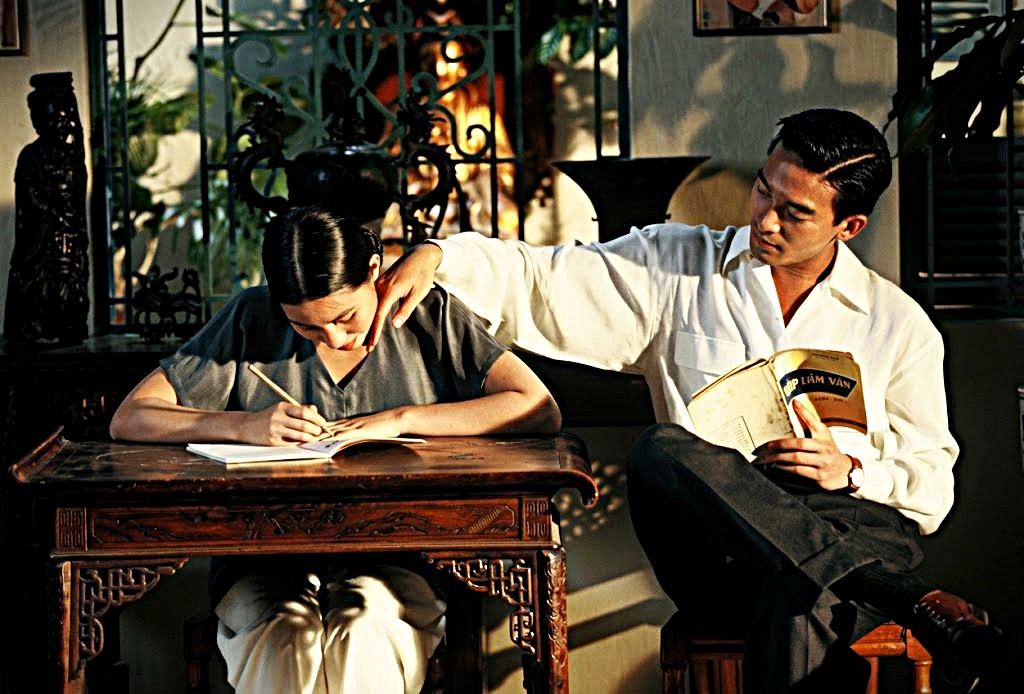
The film ends in the early 1960s. Mùi is a young woman now, living in the household of the musician she has always loved, learning to read at his direction, discovering a world of language that opens around her. The last image is of her face in the light, eyes moving across a page, the world entering her again as it entered her at the gate of the first house years before, with the same quality of absolute, unhurried reception.
Outside the frame: the war is coming. In a few years, the American advisors will become combat troops, the combat troops will number half a million, the bombing will be unlike anything seen outside of Europe in the 1940s. The courtyard will be damaged or destroyed. The people in it will be scattered or killed or will survive in ways that survival barely describes. Xuân Quỳnh will write her poems about waves, longing and mortality. Bảo Ninh will watch four hundred and ninety of his comrades die. Tim O’Brien will carry things through the rice paddies and drop them and carry something else that cannot be dropped. Frances FitzGerald will write the book that explains how none of it was inevitable. Graham Greene will be in England, ageing, vindicated in ways that brought him no pleasure.
And Thích Nhất Hạnh will be in exile, in France, building a community of people trying to learn to pay attention — trying to learn to see each other, to really see each other, before it is too late.

I have lived in Vietnam twice, and I have visited regularly for over twenty-five years, and there is something I can share with you. The scent of green papaya cannot be described to someone who has not encountered it. You have to arrive somewhere particular, in the heat, in the morning, and a knife falls through the fruit, and the aroma rises, slightly astringent, faintly milky, carrying the green of it into the air. And for a moment — before the interpretation, before the meaning, before the history — you are simply there. Present. Receiving.
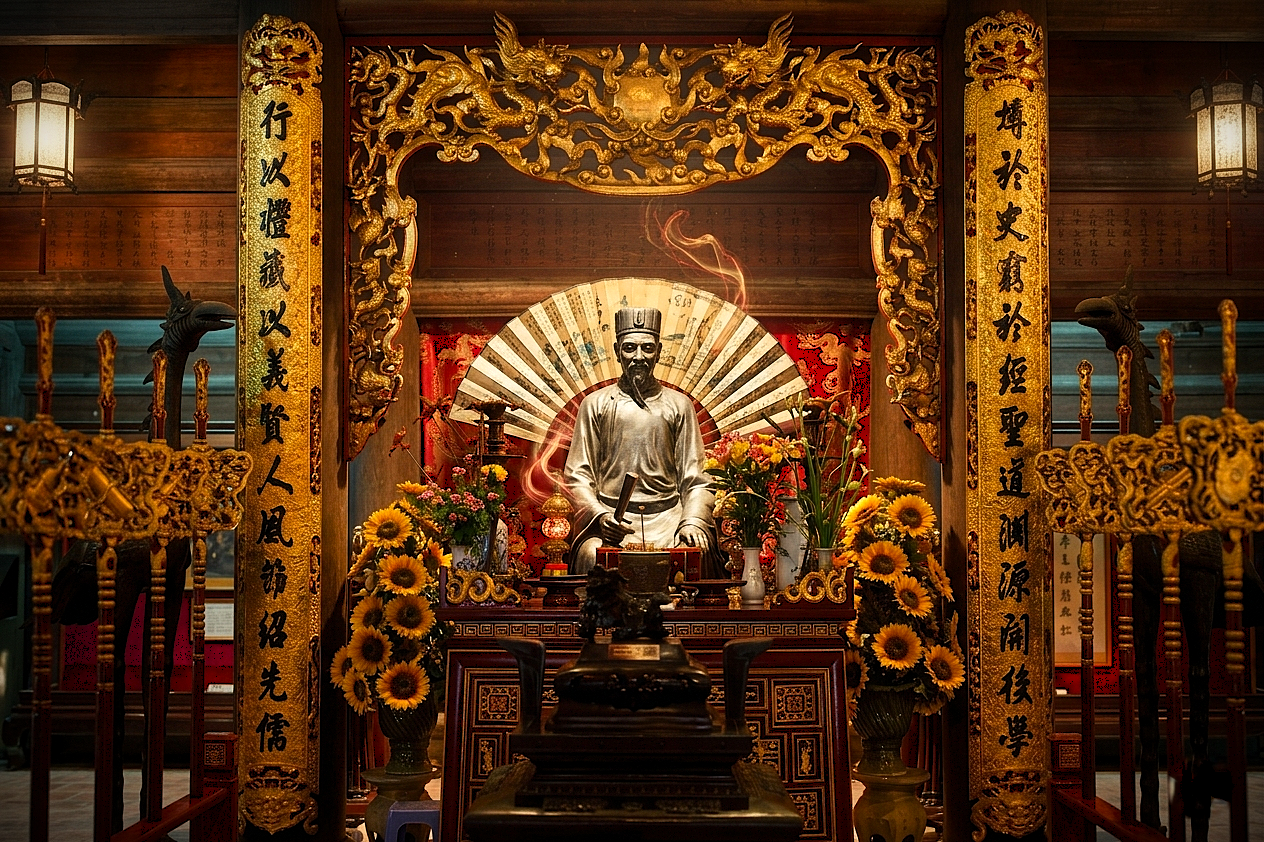
The country is not a concept. The people are not a theory. The loss is not a metaphor.
The smell that first hits you — that Greene caught so precisely— has always been trying to tell you something that cannot be told. That can only be received.
Be where you are. See what is actually here.
Before it is taken.
Darren Gall
Afterword
Graham Greene died in 1991. Thích Nhất Hạnh died in January 2022, at his home monastery near Huế, in the country from which he had been exiled for more than fifty years. Frances FitzGerald is still alive. Tim O’Brien is still writing. Bảo Ninh has published little since The Sorrow of War, but the novel has not stopped speaking. Susan Sontag died in 2004. Trần Anh Hùng continues to make films.
Xuân Quỳnh died in 1988, at forty-six, on a road in the country she had loved in wartime and lived to see at peace. She was not alone. The man beside her was the man she had always been writing toward.
“Không có chuyện gì xảy ra, nhưng mọi thứ diễn ra thật đẹp” translates in English to “Nothing happens, but everything unfolds beautifully”.
