
The Narrow Road to Phka Romduol
A Japanese brewer, a Cambodian grain, and the long road between them
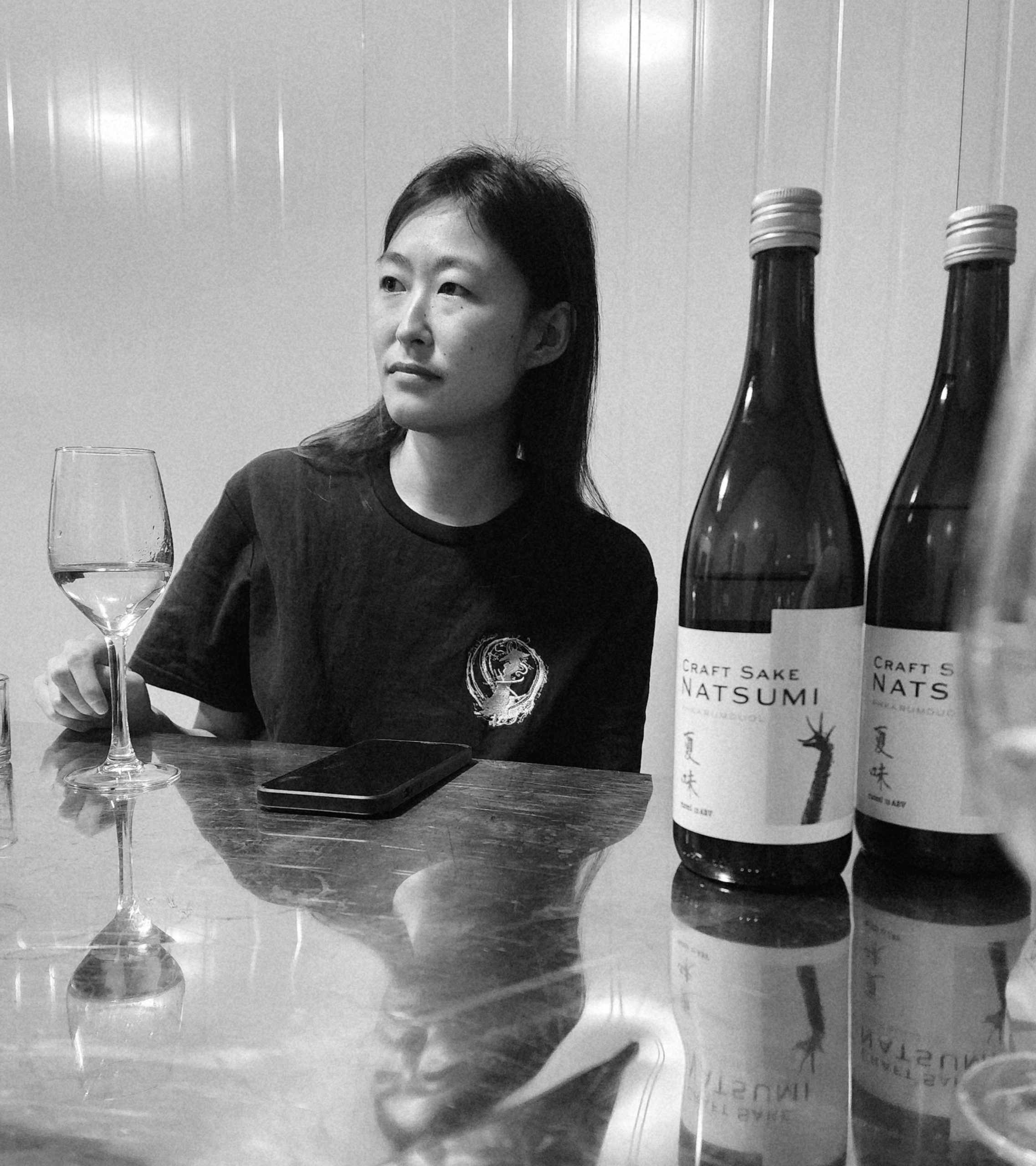
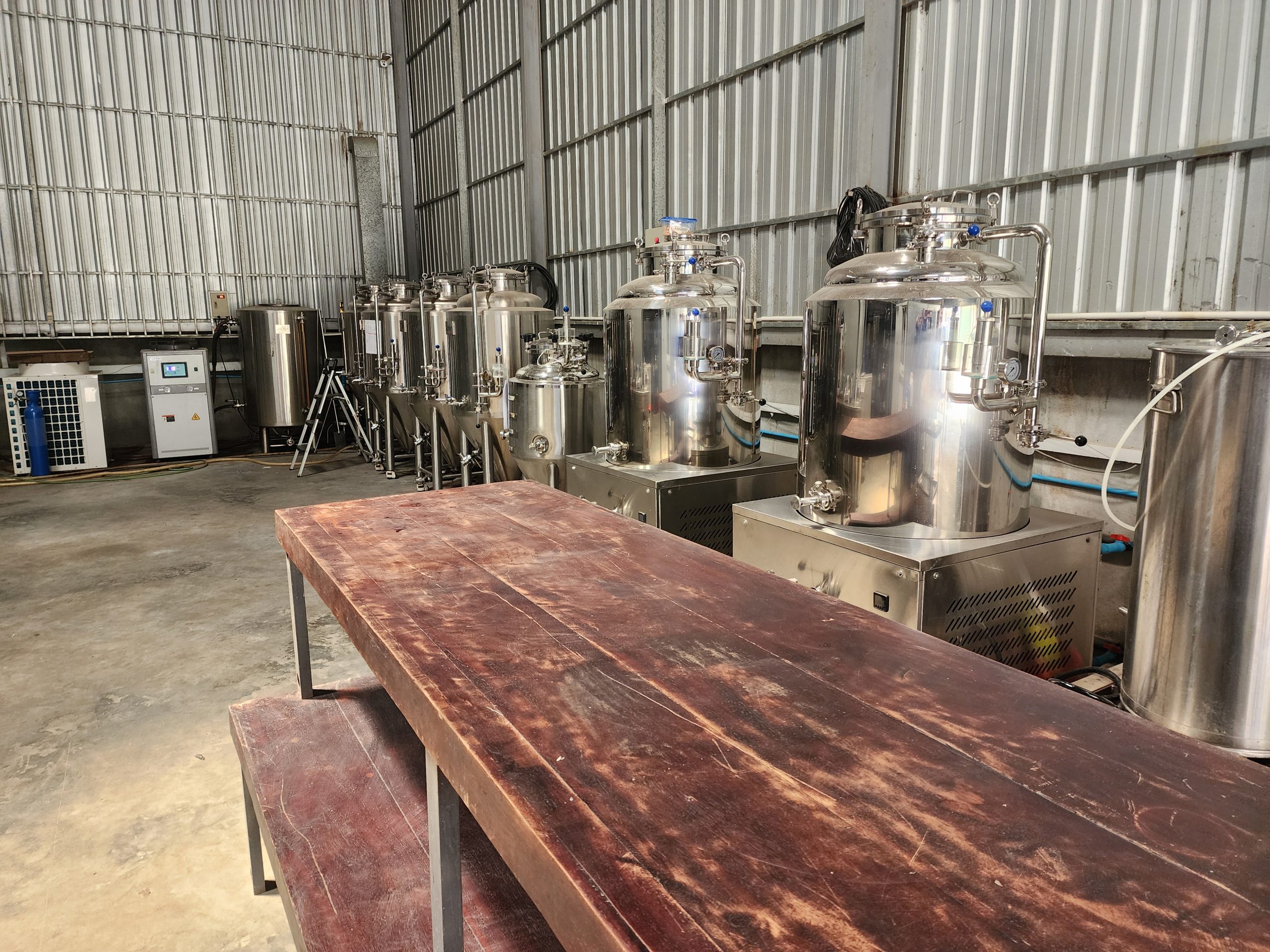
The brewery sits behind an unmarked door in Boeung Tompun, on the southern edge of Phnom Penh, where the city begins to thin into market gardens and old warehouses. Inside, the air is warm and faintly sweet, the way a bakery is sweet at four in the morning. Stainless tanks line one wall. On a low table, spread across racked trays, a pale carpet of steamed rice is gently exhaling. The grains are flecked with something that looks like the first dusting of snow on a tile roof — the koji mould, Aspergillus oryzae, beginning its enzymatic work. Natsumi Kawabata moves between the ferments with the unhurried attentiveness of someone who has learned that this part of the process cannot be hurried, only attended.
She is in her late twenties, slight, focused. The rice she is tending was harvested a few months ago in the alluvial plains north of here, in fields where Phka Romduol — Cambodia’s national rice — ripens once a year under the shortening November light. By the time she is finished with it, it will be sake. Not Japanese sake made in Cambodia, exactly. Something stranger and much more interesting than that.
Tsuki hayashi / kozue wa ame wo / mochi nagara
The moon swift overhead — / the treetops still hold / the rain.
Bashō wrote that on the road north in 1689, somewhere in what is now Yamagata. I think of it here because Tsuruoka City, Yamagata Prefecture, is where WAKAZE has an important craft brewery. WAKAZE not only trained Natsumi (actually in Tokyo), but it has also become the most visible name in the global movement to make sake outside Japan, with its sake brewery in Paris. Bashō walked through this country alone, and Natsumi is carrying the craft to a country he could not have imagined.
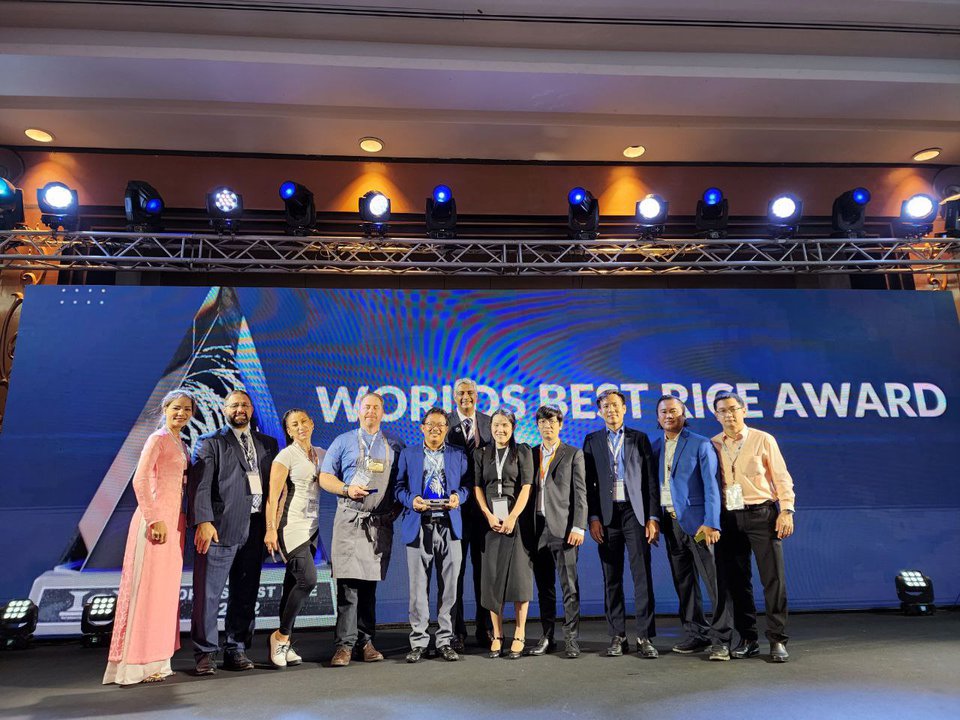
A few days before I visited the brewery, in early November, Cambodia’s rice industry was celebrating in a hotel ballroom across town. At the TRT World Rice Conference, held this year in Phnom Penh itself, Cambodia’s Malys Angkor — the certification mark under which the country exports its premium aromatic rice — had just been named World’s Best Rice 2025. It was the seventh time Cambodia had won the title under that mark, following 2012, 2013, 2014, 2018, 2022 and 2024. Including three wins in four years and a national triumph staged on home soil.
The flagship variety inside the Malys Angkor umbrella is Phka Romduol, named after Cambodia’s national flower. It is a relatively young rice, despite how it is sometimes marketed: developed at the Cambodian Agricultural Research and Development Institute (CARDI) over a decade of patient breeding by Cambodian scientists, released to farmers in 1999, and slow to find its market until that first World’s Best title in Bali in 2012. In CARDI’s comparative trials, it has reportedly performed on par with, or above benchmark aromatic varieties, including Japan’s Koshihikari, on key sensory and cooking measures. It is photosensitive. It will not be hurried into a second annual crop. It ripens once, in the short window between early November and mid-January, and then it is gone for another year.
There is a particular dignity to a rice that refuses to be industrialized on someone else’s schedule. There is also, for a country whose farmers in the late 1970s were forced by famine to eat their seed grain, a recovery arc almost no other rice nation can match. From eaten seed to seven World’s Best titles in less than fifty years is a national rebuilding that does not announce itself but accumulates, season by season, in the fields. CARDI’s breeders, the Cambodia Rice Federation, the millers and exporters, and most of all the farmers who refused to give up on their fields — they are the authors of that arc.
It is into their story that Natsumi has carefully inserted herself.
She arrived in 2022, with two years of WAKAZE training behind her and an offer to run the Cambodia operation of a small Tokyo company called Argo Ludens Co., Ltd. The brewery did not yet exist in any meaningful sense. She built it with the help and support of her CEO Mr Saga.
Her training matters. WAKAZE, founded in Yamagata in 2016, is not a centuries-old kura. It is the standard-bearer of a new craft sake movement that has explicitly broken with the orthodoxies of the Japanese industry — using table rice instead of specialty sakamai, deploying wine yeasts for added acidity, ageing in wine and whisky barrels, opening a brewery in Paris that uses Camargue rice. The movement exists in part because Japan has not issued a new refined-sake brewing license since 1962, which means a young brewer who wants to make sake by her own hands, in her own way, has had to either work inside the small “Other Brews” category at home or leave the country entirely. WAKAZE chose to leave, pursuing an ambition to transform sake into a global beverage. Natsumi, having trained inside that ethos, simply went further than most: not going to Paris, but to Phnom Penh.
When Natsumi first tasted Phka Romduol, she told me later, she was struck by its natural sweetness and elegance — and felt strongly that it ought to be shared with the world. That moment, more than anything else, is the seed of the brewery I am standing in.
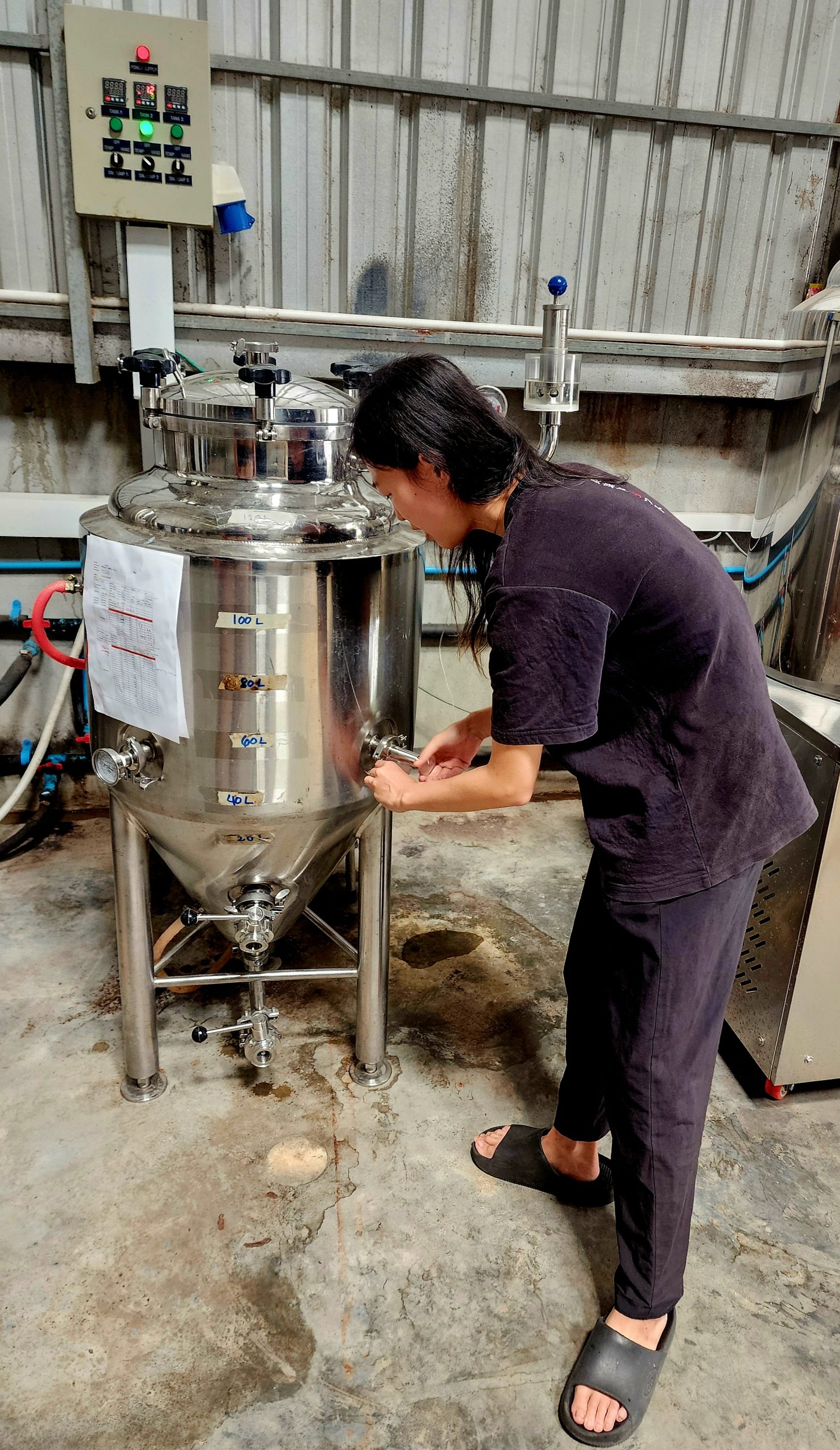
But the rice that inspired her also resists her. Phka Romduol is Indica, not Japonica — a different family from the short, round, starch-dense grains that Japanese sake brewing has been refined around for a millennium. Sake rice has been bred for centuries to carry a hard shinpaku core that survives aggressive polishing; Indica rice is longer, more fragile, structured differently. The conventional Japanese workflow simply does not work on it. So Natsumi has done what brewers in this position have always had to do: she has rethought the process from the raw material upwards. Steaming, milling, the handling of the grain before the koji ever touches it — all of it has been redesigned through trial and error to draw the pure starch from the core of the Cambodian grain in a way that lets its character speak. The high-temperature liquefaction technique called yūmai-jikomi (融米仕込) is part of this answer; it suits both the Indica rice and the tropical climate better than the steamed-rice methods her teachers in Yamagata used. But the technique is downstream of a more fundamental decision: to listen to what this rice is, and to brew accordingly.
The climate is the second adversary. Japan’s kura are cold places by design, and the koji propagation and fermentation that Natsumi superintends here must be coaxed through ambient temperatures her training never had to account for. Achieving the delicate aromas she wants while keeping fermentation stable is, in her own description, an ongoing technical focus — the kind of problem you do not solve so much as keep solving, batch by batch.
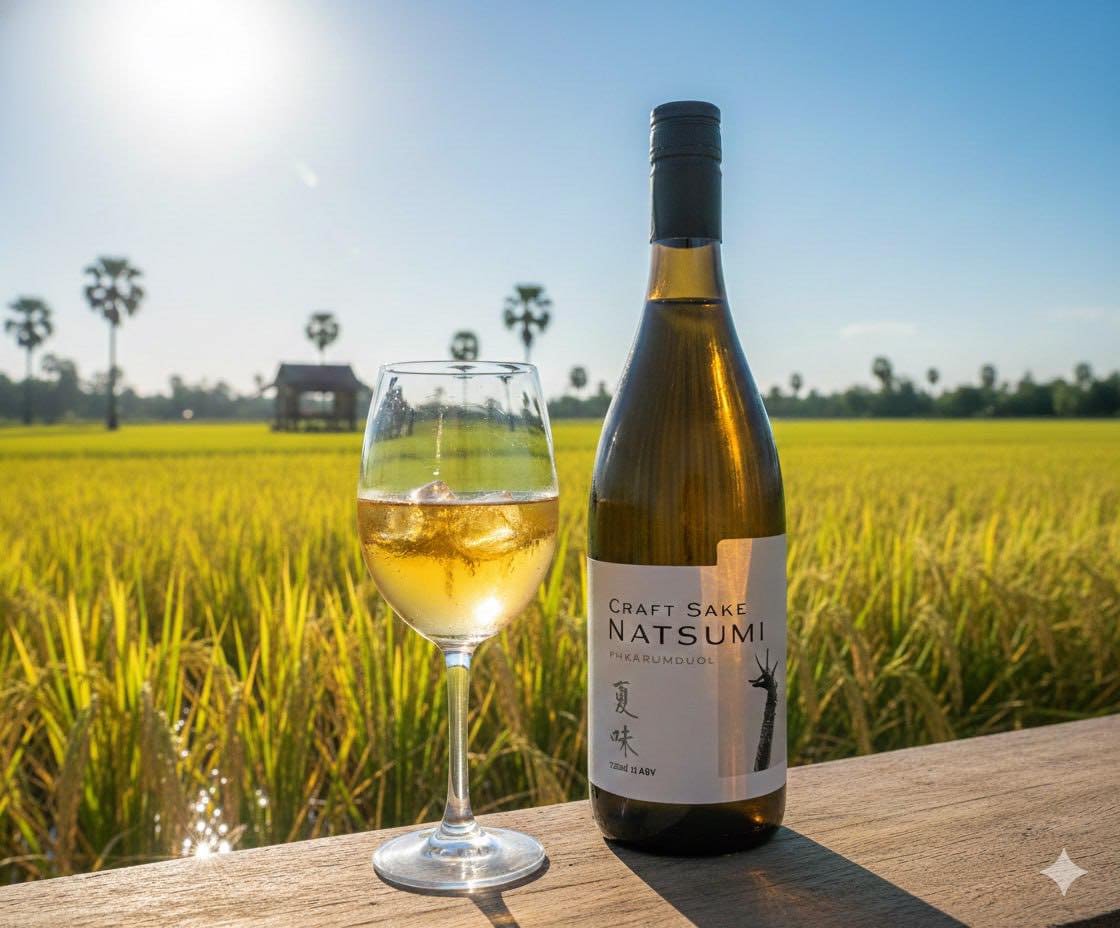
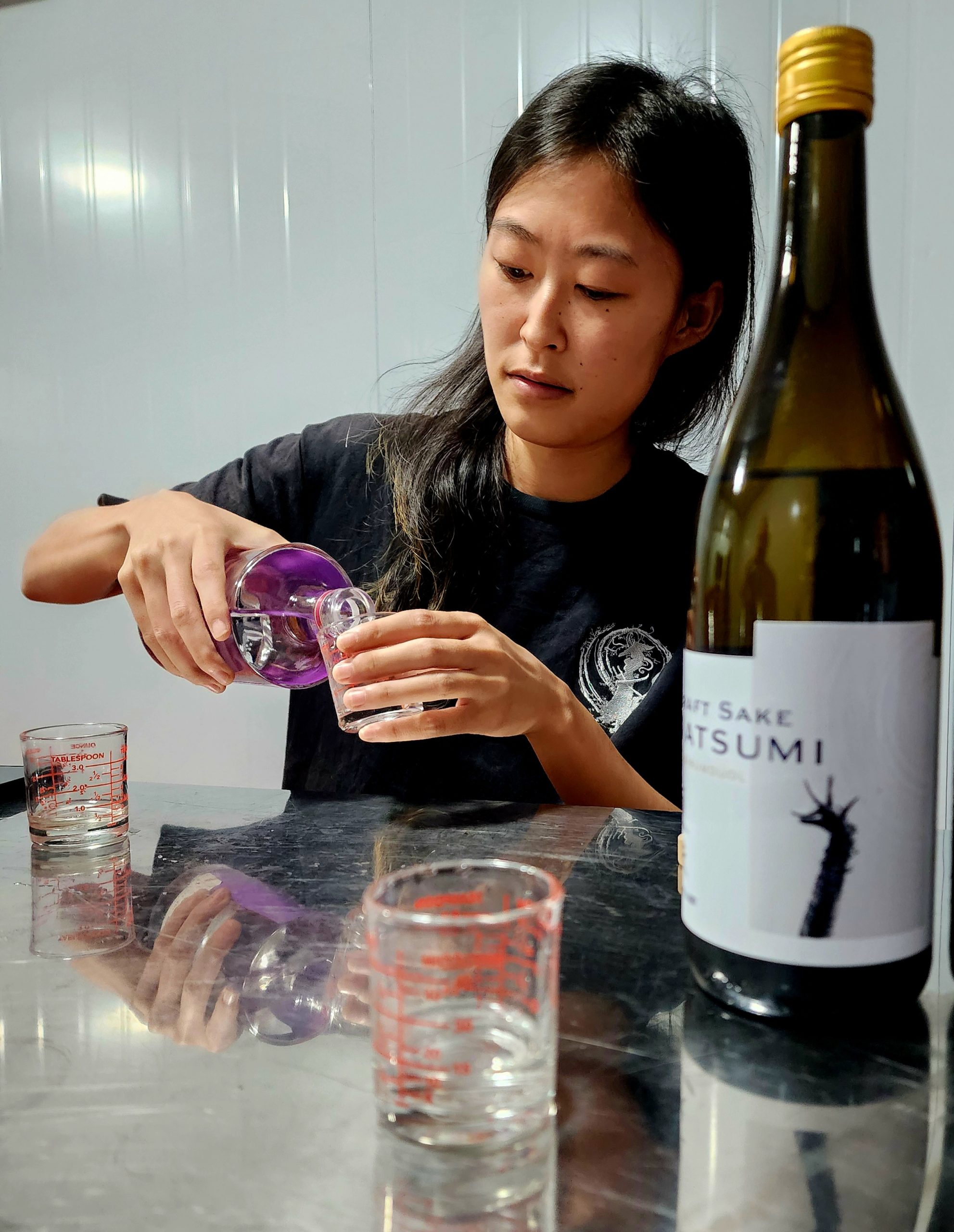
The flagship that has emerged from all of this is the Cambodian ‘Natsumi Craft Sake’ — a 14% junmai-style brew made with house-cultivated yellow koji. It is fruity, with the wine-like acidity that is WAKAZE’s lineage signature, the nose somewhere between white peach and something more floral. She also makes a Rice IPA, a Sake Saison, a sweet-potato-and-rice shōchū using Battambang sweet potatoes with orange peel introduced at distillation, and a craft gin built around pahdolpik — the Khmer medicinal herb known as Heavenly Elixir — alongside six other botanicals. Five products, one brewer, one set of hands. None of them existed in Cambodia in this form, at this level of technical integration, before her.
The market is its own challenge. Sake is not yet widely familiar here, in a country whose drinking culture is built around beer and spirits. Part of Natsumi’s project, as she frames it, is to introduce sake not only as a Japanese tradition but as a food-friendly drink that sits easily beside Khmer cuisine as well as the wider world’s table. Phnom Penh’s growing appetite for craft and premium products gives her something to work with. Her customers, for now, are Japanese restaurants in Phnom Penh and Siem Reap, expatriates, the occasional curious local. There is no peer community of sake brewers to call when something goes wrong with a batch. Whatever knowledge she has brought with her, she has had — alone — to translate into a country that did not ask for it.
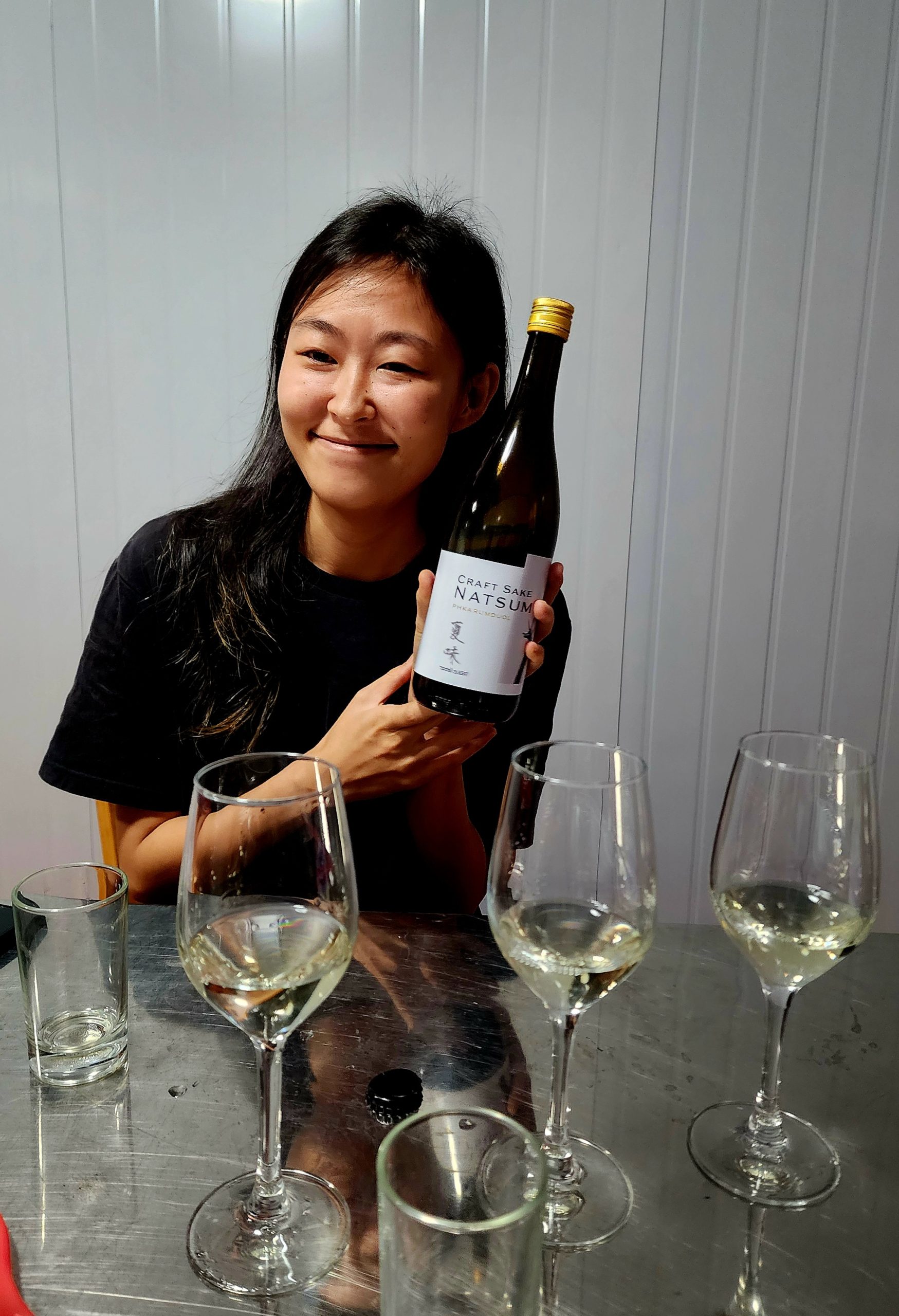
The Japanese word that comes to mind, watching her work, is shokunin. It translates flatly as “artisan” but carries a weight English does not. The sculptor Tashio Odate once described it as meaning not only technical skill but an attitude and social consciousness, a material and spiritual obligation to work at one’s very best for the general welfare. There is also kodawari — the relentless commitment to standards in every small step of the work. Both apply. But there is a tension in calling Natsumi a shokunin in the classical sense: the classical shokunin inherits a craft refined for centuries, sometimes within a single family, and devotes a lifetime to small improvements within an established form. Jiro Ono did not feel he had become a master until he was fifty.
Natsumi, by contrast, is the entire lineage of Cambodian sake brewing in one person. There is no master above her in this country. There is no apprentice below her yet. She is doing the shokunin’s work — the dedication, the daily tending, the immersion in a craft — but on a frontier, in a discipline that has no settled form here. Her stated ambition is not to replicate Japanese sake in a hot country but to express the terroir of Cambodian rice and establish a distinctive style of her own. That is shokunin practice without the comfort of shokunin tradition. It is harder, not easier.
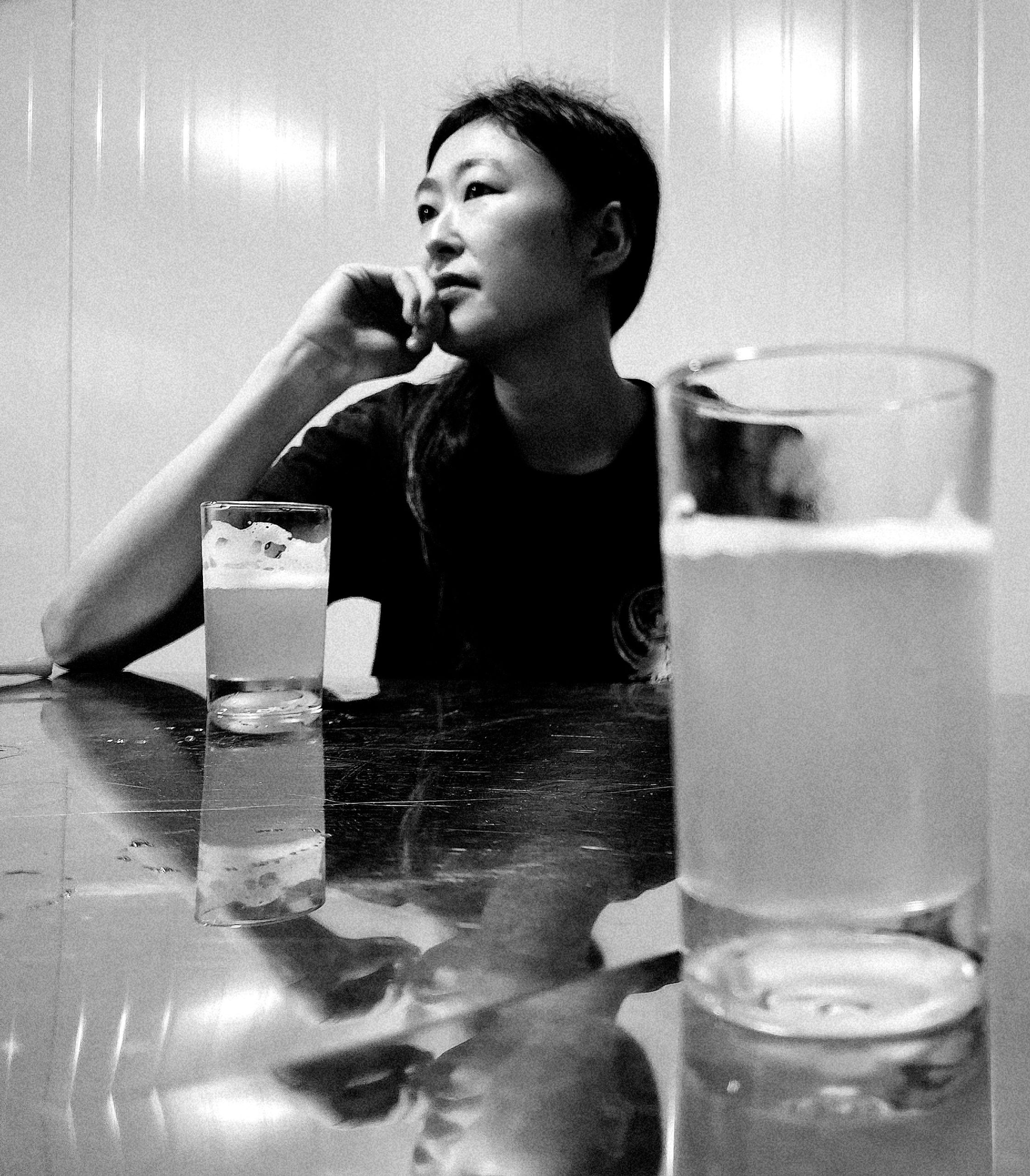
The brewery is the visible part. The picture widens considerably once you know where to look.
Fungi Art Co., Ltd. is the Cambodia operating company. Its CEO is Saga Kiyotaka, a doctor of agriculture from the University of Tokyo who worked in biofuel research at AIST and at the University of Tokyo before leaving academia to found a Tokyo company called Agro Ludens in April 2021. Fungi Art is its Cambodian subsidiary.
The name tells you something. Agro Ludens is a Latin compound — ager, the field, meeting ludens, the present participle of to play. Playing field, in the agricultural sense: a field that plays, a playful agriculture. The reference, oblique, is to Johan Huizinga’s Homo Ludens — the Dutch historian’s 1938 argument that play is one of the generative forces of culture, not its idle hours. A postdoctoral researcher visiting a Cambodian sake experiment and asking what else its leftovers might be was, in this sense, playing. That a venture-backed company eventually grew out of the question is exactly Huizinga’s point: play is generative because it begins outside utility.
The leftover rice from that early sake experiment — protein-rich residue from a brewing tank — is both the company’s founding myth and its operating logic. Agro Ludens now runs three product lines from the same grain. The first is the alcohol Natsumi makes here. The second is a koji-based mycoprotein, sold in Japan as Comeat or Haccome and in Cambodia as Umameat: the protein fraction of the rice, fermented with koji until it becomes a dense, meat-textured ingredient with deep umami and roughly 40–60% protein in its dried state, used in sauces and miso-style pastes. The third is rice biomass converted into bioethanol — work the company is now exploring as a pathway toward sustainable aviation fuel. Same grain. Three streams. One platform. The Japanese name for the food product, Comeat, is itself a quiet pun: kome meaning rice, meat meaning what it aspires to be. The kind of joke a company called Agro Ludens would make.
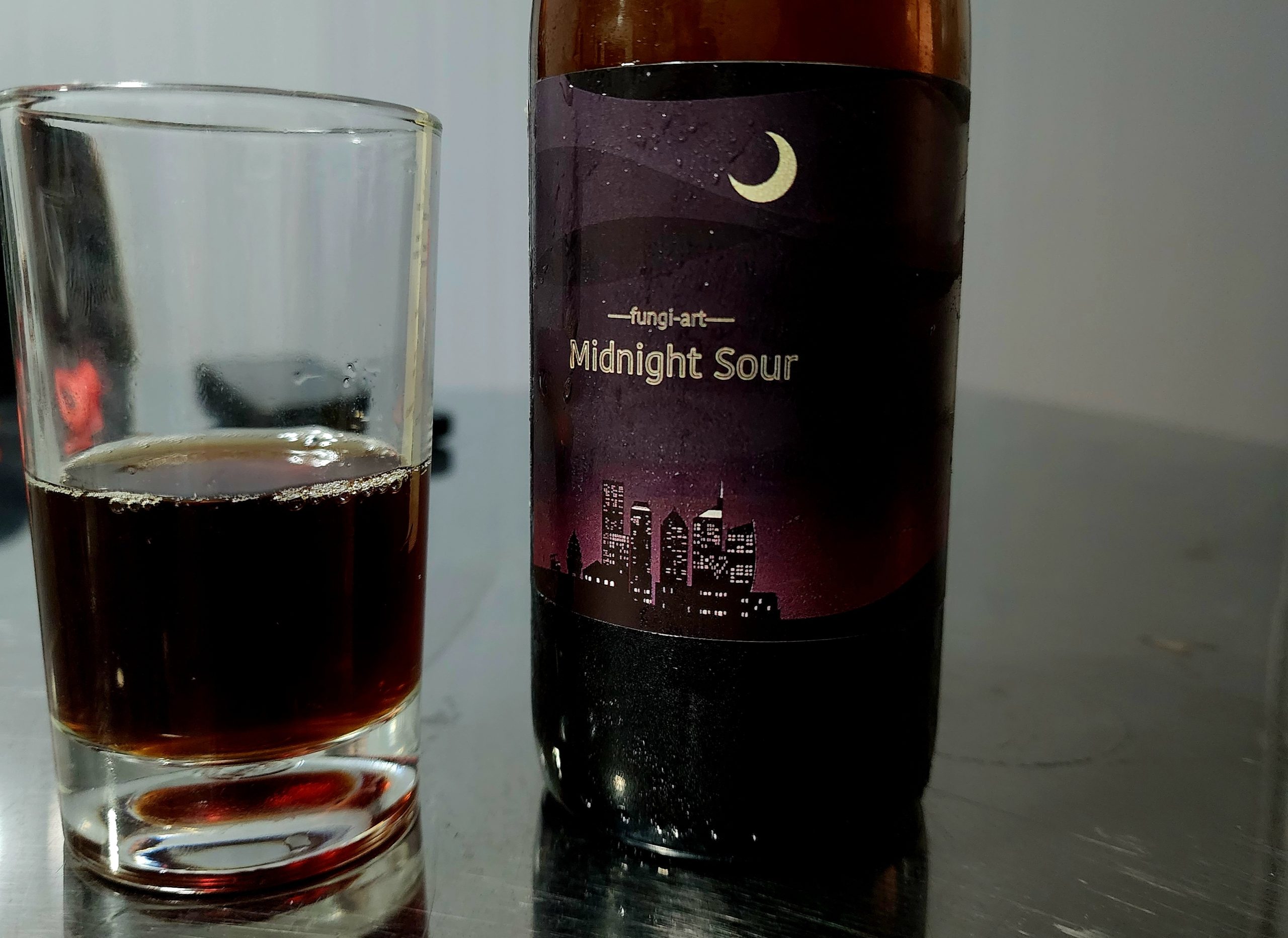
For now, the alcohol line is small-scale and boutique. A handful of bars and restaurants in Phnom Penh and Siem Reap stock it. The larger ambition — building a feedstock model that one day supports farmer livelihoods at scale through protein and fuel as well as grain — is the long game, still under construction. The brewery is the place where the company is most visible, but it is not the place where the company’s bet is mostly being made.
There is a closer Japanese ancestor for this kind of thinking. Masanobu Fukuoka, the Shikoku farmer and microbiologist who developed shizen nōhō — natural farming, sometimes called do-nothing farming — left an institutional research career to return to the rice fields with a different set of eyes. The eventual goal of farming, Fukuoka wrote, was “not the growing of crops, but the cultivation and perfection of human beings.” His four principles — no tilling, no fertiliser, no pesticides, no weeding — were a discipline of seeing: observe what the system is already doing, and stop fighting it. Fungi Art is, on its surface, the opposite of his Shikoku farm. It is a biorefinery. But the underlying instinct — that one rice grain is already alcohol and protein and energy, that the leftover from one process is the seed of the next — is descended from his seeing.
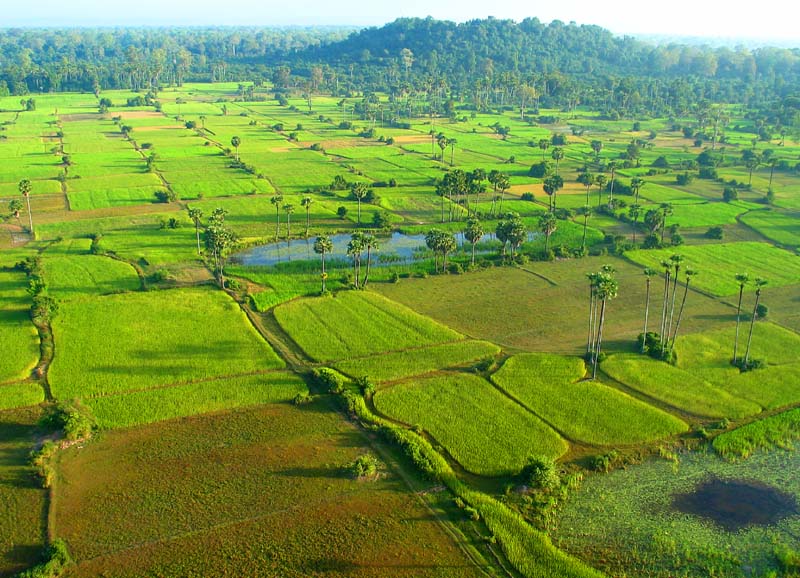
In a country whose modern history includes the catastrophe of having to eat its own seed grain, there is something moving about a foreign brewer choosing to make her sake from Cambodia’s most prized rice — and a foreign company choosing to build its R&D platform around what that rice can become. Phka Romduol on a dinner table, sold under the Malys Angkor brand to premium markets in Europe and the United States, is one model of value. Phka Romduol in Natsumi’s tank, becoming terroir-driven sake, while its protein fraction becomes a viable meat alternative and its straw is studied as feedstock for jet fuel, is another. Both can be true.
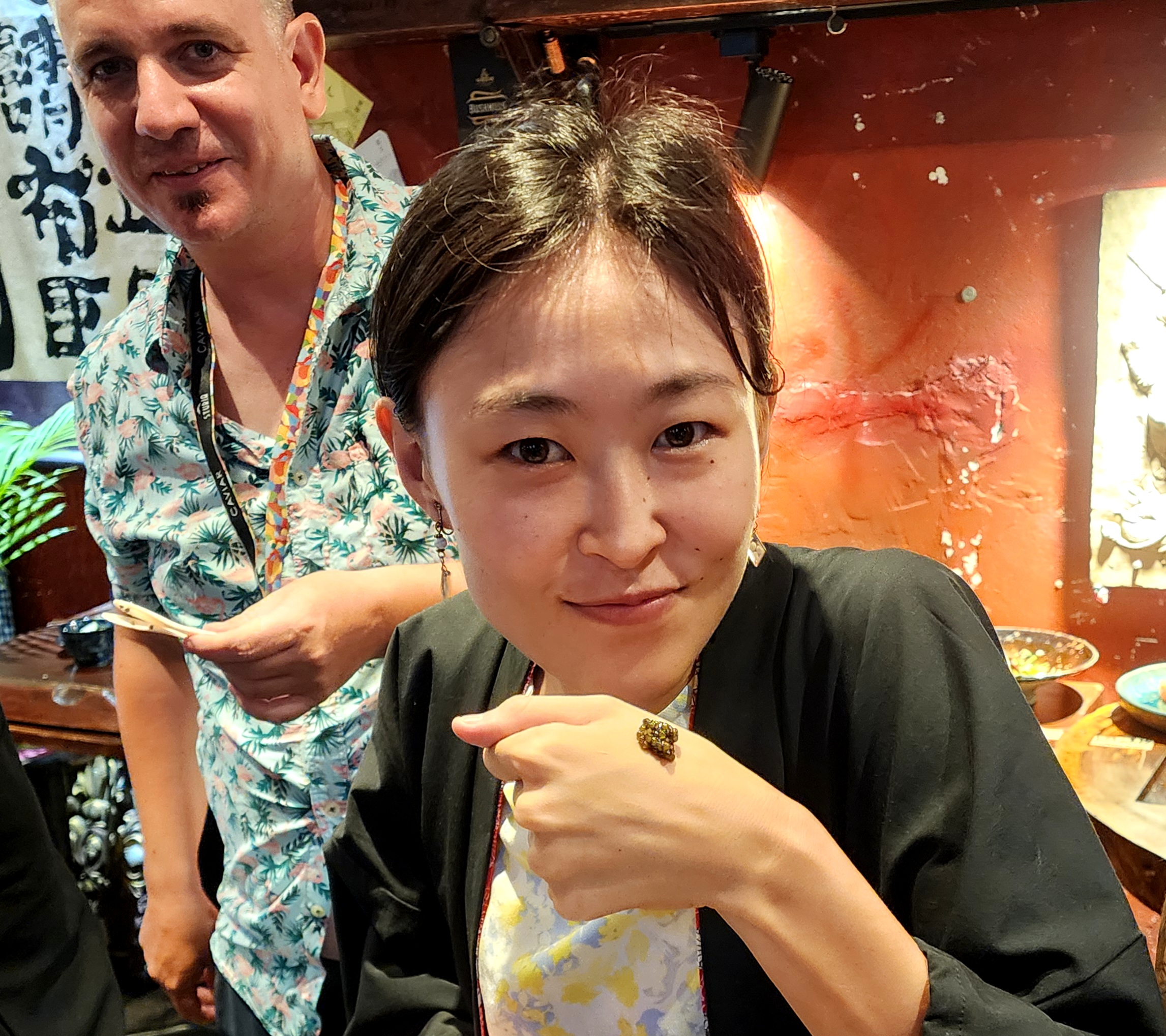
When I was at the brewery, Natsumi’s new dry-style sake was still in fermentation. Ren, she had called it — designed to be lower in alcohol, clean, food-friendly, built to sit easily beside almost anything. On a Tuesday evening some weeks later, with an intimate group of friends in a private space we call The Sake Sessions, we tried it. It was the final sake of the night, poured after a flight of impeccable, imported bottles from Sado Island. The room was already in good company by the time her glass arrived. Expectations were high. I wondered, watching her, whether Natsumi was nervous. If she was, she didn’t show it — she had been drinking and talking with the rest of us all evening.
The sake offered aromas of ripe passionfruit and subtle yoghurt, supported by notes of peach, sugar-banana, and star anise. On the palate, there was a delightful tension between flavour and structure: a fruity, creamy entry, then a core of melon, starfruit and pink peach, giving way to umami characters and a refreshing, refined acidity. It was something incredibly special — an inviting, intriguing, alluring expression of precise Japanese brewing as an art form, and a cereal grain born of rural Cambodian charm.
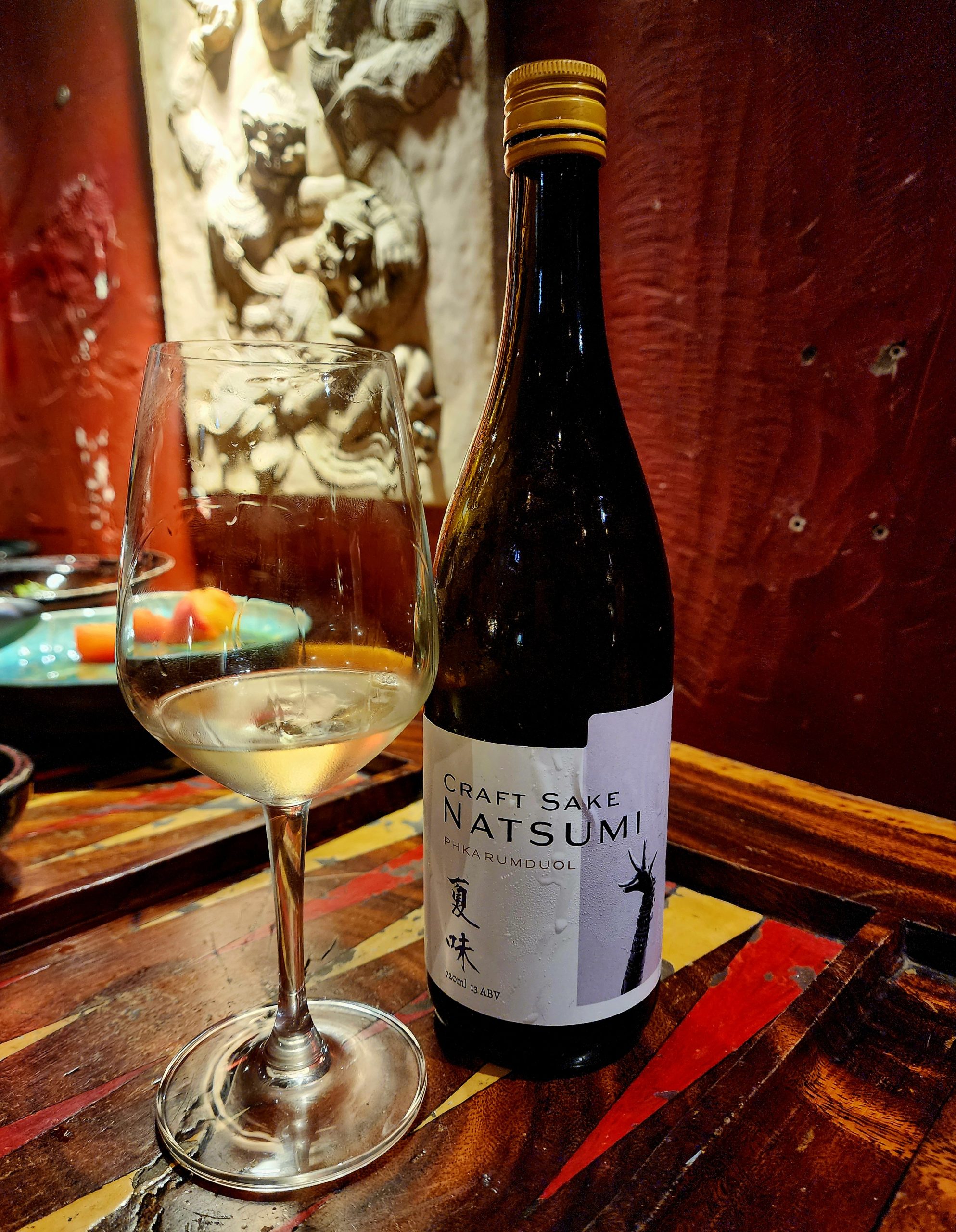
Sake is the perfect drink for mono no aware — the bittersweet awareness of impermanence, the pathos of transient things. It is seasonal. It is alive in the bottle. It will never be exactly the same twice. Phka Romduol shares the quality: a photosensitive grain that ripens once and refuses a second harvest. Natsumi’s brewery is the place where these two transient things meet — a Japanese craft and a Cambodian grain, both modern, both rooted in something older, neither permanent, always evolving, ever changing.
Bashō again, from the same northern road:
Soba mo mite / kenarigaraseyo / nora no hagi
Gaze at the soba too / and make them envious — / bush clover in the fields.
He stopped on his way north to notice a flowering grain, and the noticing became a poem that has outlasted him by three centuries. Standing in the brewery as the koji works on the rice, attended by a friend who chose this country and this grain and this craft, it is hard not to feel that Cambodia’s rice has acquired another kind of poet — one who writes in fermentations rather than ink.
Darren Gall
