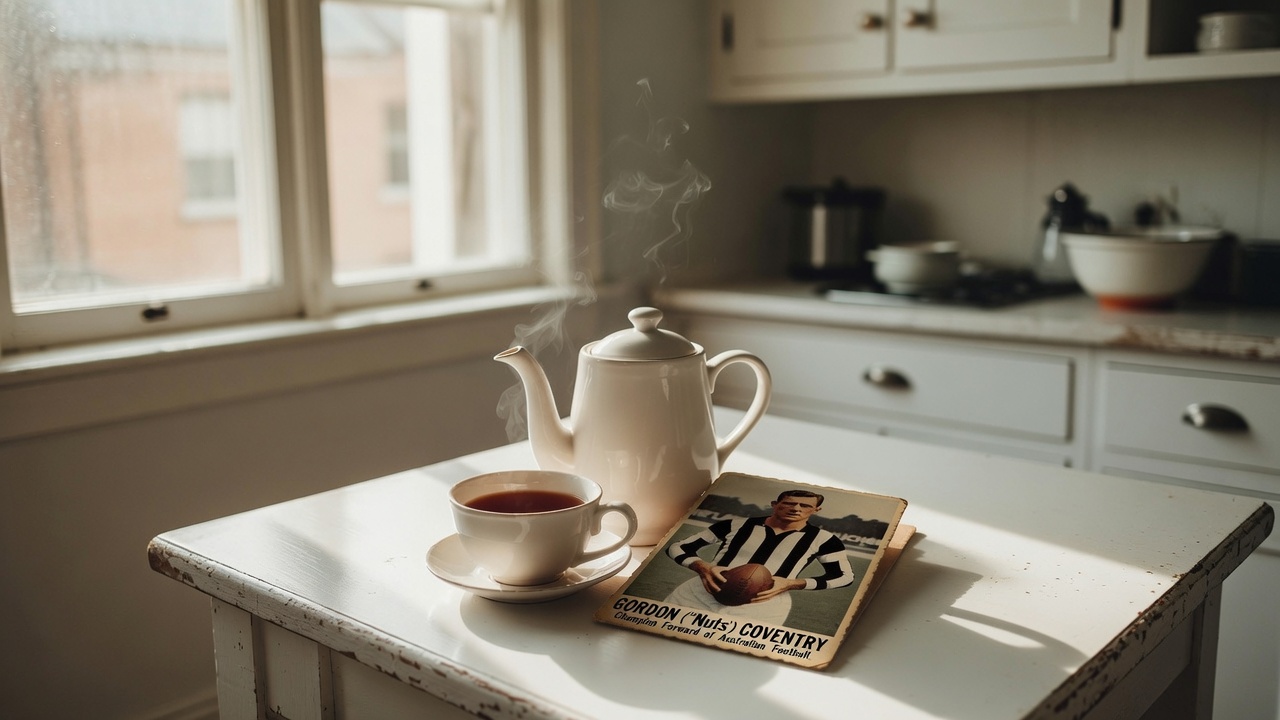
The Tea Chronicles
Tea and Football
At my grandmother’s house, the kettle went on before the coats came off. It was the first thing you did after answering the door — before the news, before the gossip, almost before hello — so that by the time a visitor had settled at the kitchen table, the pot was already between them, dressed in its knitted cosy. Black and white, the cosy, of course. We will get to that.
Jean Elizabeth Gall was small and fine in the way little birds are, and in all the years I knew her I never once heard her raise her voice. It took me most of my life to understand that she never needed to.
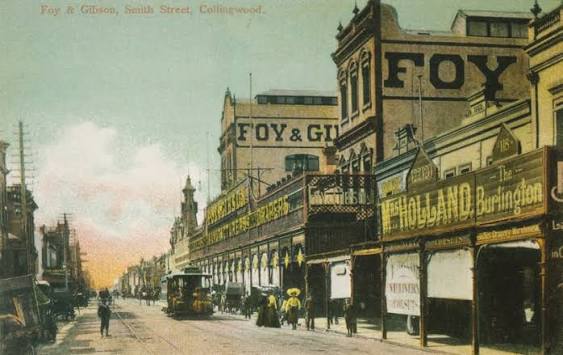
She was born in 1907 and raised in Collingwood, in those years the poorest suburb in Melbourne — a low, flood-prone flat of toxic runoff and ramshackle housing, famous for disease, crime and hard men. She was the youngest child and the only girl in a family of rough-house boys, with a drunkard for a father. Very early in her childhood it was decided that for her own good and to give her a better chance at survival, she would be given to a neighbour to raise. For much of her early life she knew her real mother only as an auntie from up the street. She never spoke of it with bitterness; she rarely spoke of it at all. But I have come to believe that everything that follows begins there — with a girl whose own family gave her away, growing up in the shadow of a football club that never gave anyone away.
To grow up between the wars here in Melbourne was to understand that football was the conversational currency of the city. The thing that gave people something to talk about other than the weather — and, in Collingwood’s case, the one field on which the suburb with nothing could look down on everybody else. The borders were tribal, and they were real. Fitzroy lay just across Smith Street, and legend holds that feelings ran so high a Fitzroy shopper kept strictly to the Fitzroy footpath, while a Collingwood shopper would sooner walk home empty-handed than be seen dead on the other side. My grandfather, William Ernest Gall, came from the wrong side of that street: a Fitzroy man whose own brother, David ‘Robbie’ Gall, was playing for Fitzroy in the year they married. Jean accepted him on a single condition, and it tells you everything about her: he would change sides, and take her to watch her beloved Collingwood. He did — every week, for the rest of their lives together. She was twenty-one, and she did not need to raise her voice then, either.
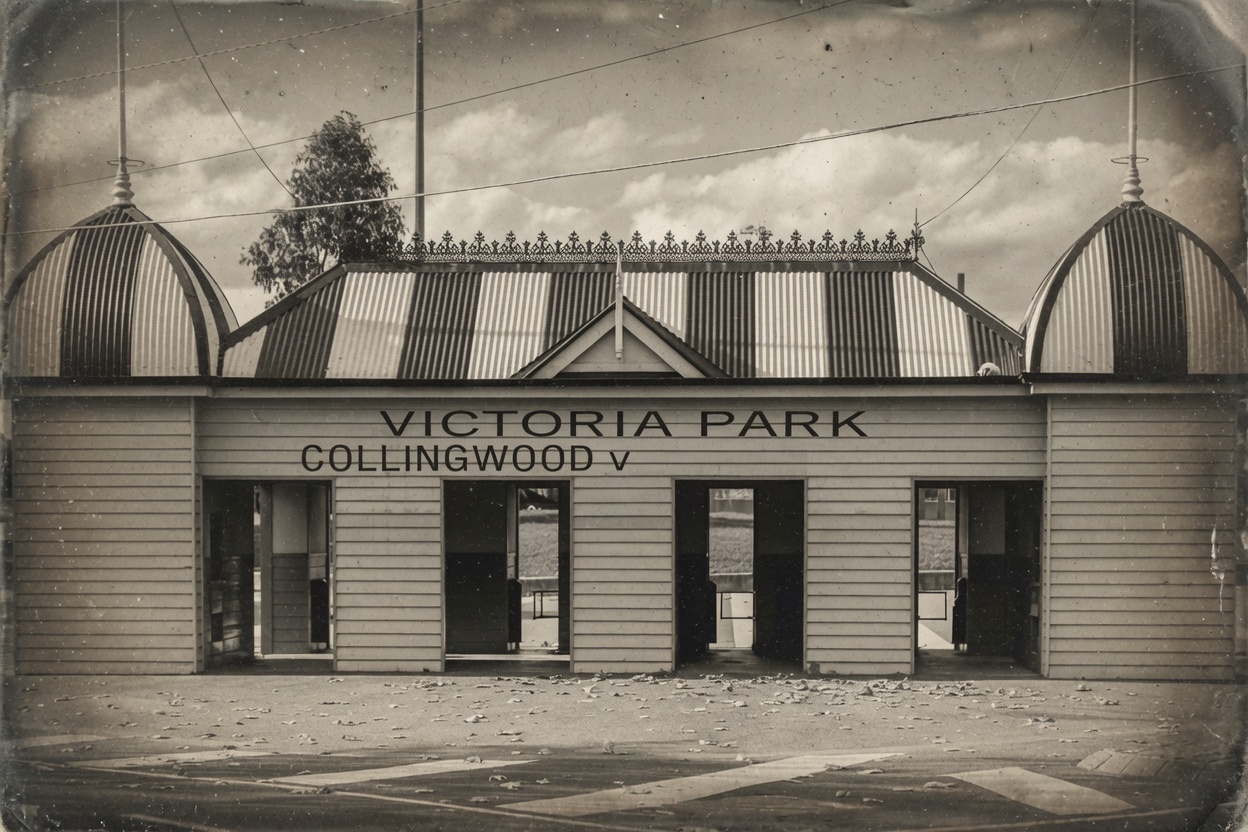
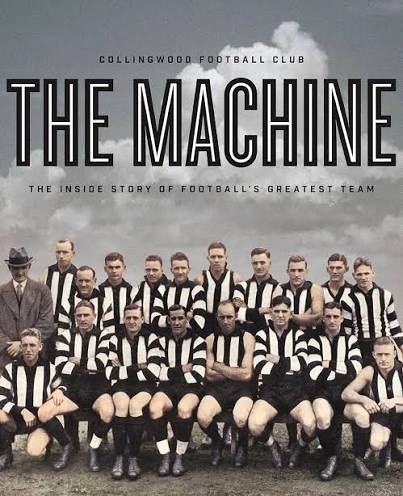
From the time she could walk there, she was going to Victoria Park on Saturdays, and by her early twenties she was watching the greatest team the game has produced. They called them The Machine: four premierships in a row — 1927, ’28, ’29, 1930 — a feat no club has equalled in the near-century since. The last of those flags arrived as the Great Depression settled over Collingwood like a second flood, and I believe that is why she loved them the way she did. The suburb had nothing, and then it had the one thing nobody else could have. Heroes mattered desperately in those years. Hers wore black and white, and half a century later she could still recite them across the teapot, the way other grandmothers recited scripture. She loved her full forwards, the goal kickers; names like Nuts Coventry, Dick Lee, Ron Todd, Peter McKenna. “Nobody ever beat The Machine,” she told me once, refilling my cup as though the matter were closed. “They just ran out of years.”
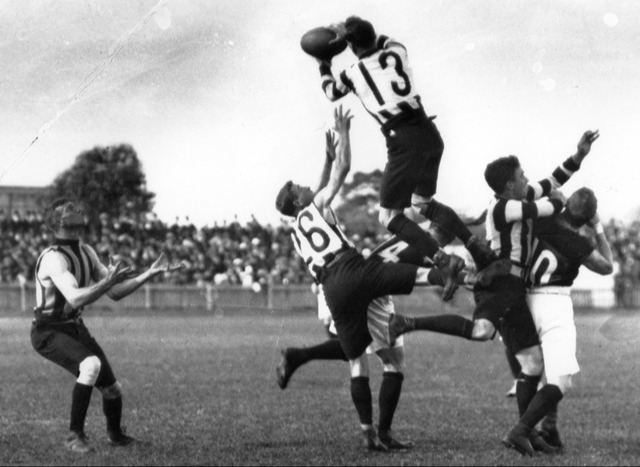
Most who remember her reach for the same word: kind. She was not a churchgoer, nor one to say grace, but she said her prayers every night and held that being called kind was the finest compliment a person could receive. I cannot recall her being angry with me, not once — and yet to this day I remain incapable of imagining going against her on anything at all. Bear that in mind. It matters to what happened next.
My father barracked for Geelong. My godfather, who lived across the road and was very good to me, was Fitzroy through and through; he bought me football boots I would not grow into for another five years, and a Fitzroy guernsey, the most colourful in the league. At four years old I pulled it on and declared myself a Lion. In a family whose history had already turned once on the question of Fitzroy, this was no small announcement.
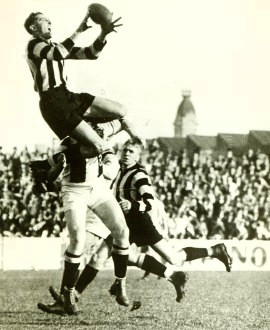
My grandparents took me to the football with them anyway — perhaps my grandfather, of all people, felt some sympathy for the condition. Jean would pack a little tin of toasted cheese sandwiches wrapped in wax paper, and a thermos of tea for half-time. That was her provisioning: warm, sensible, brought from home. Bill’s contribution was of another order altogether. Bill bought me a hot dog at the ground — until then, the most beautiful thing I had ever eaten.
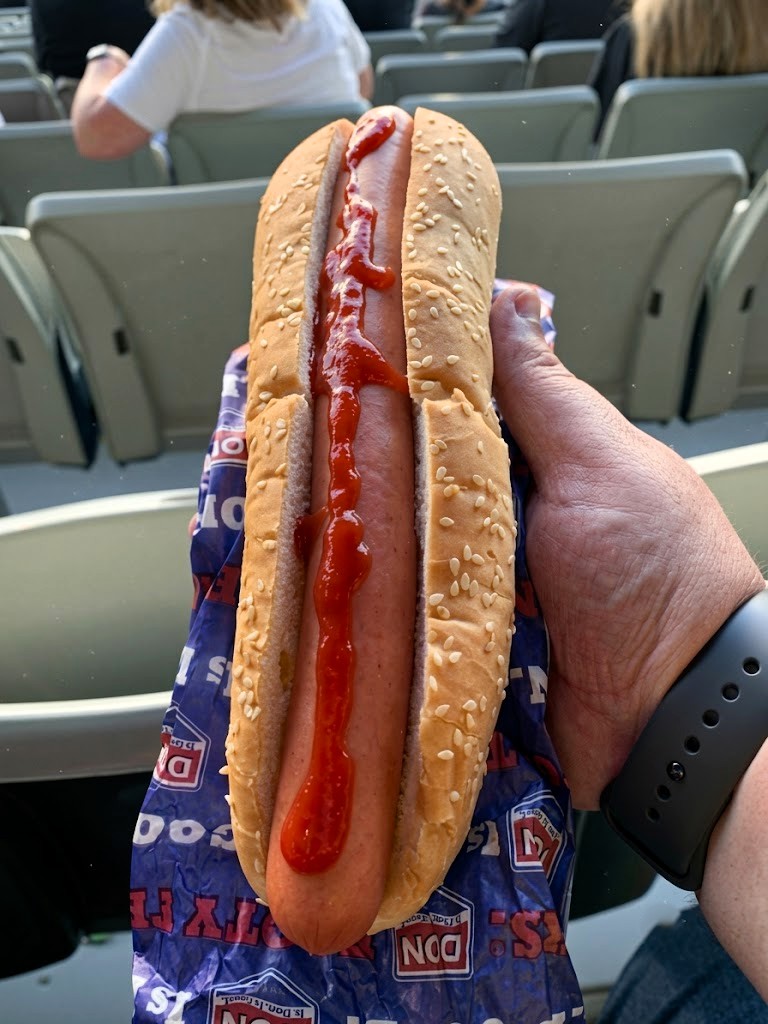
And it was in the hot dog queue, out of my grandmother’s hearing, that Bill Gall made his move. Did I like coming to the football with them? Very much. And what was my favourite part? I told him, with a child’s honesty, that it was the hot dog. My grandfather didn’t flinch; I was maybe five years old, and he was about to put the squeeze on me. It wasn’t right, he said, to come to Collingwood games every week and follow another team. If I wouldn’t change sides, he would have to stop bringing me, and the hot dogs would end. Besides, he added, it upsets your grandmother.
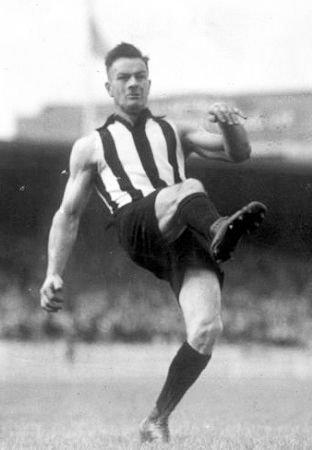
There was no contest. Both my grandmother and that half-time hot dog meant far too much to me; I flipped without resistance — the second Gall male to change clubs for the same small, quiet woman. My grandfather had done it for her hand. I did it for a hot dog. But I notice, from this distance, that in both cases it was her will and his doing, and that she never had to ask either of us for a thing.
My defection delighted her. She kept scrapbooks of ‘our’ players for me, bought badges and buttons, collected players’ cards, knitted scarves and all manner of things black and white. But what she mostly gave me was the table: the pot between us and the stories coming — the premierships, the legends and urban myths, the losses and injuries and scandals delivered with real grief in her voice, and the great victories with her eyes shining like champagne saucers. Her bribe was slower than my grandfather’s, and it never wore off. The hot dog got me through the gate. The tea kept me at the table for the next thirty years.
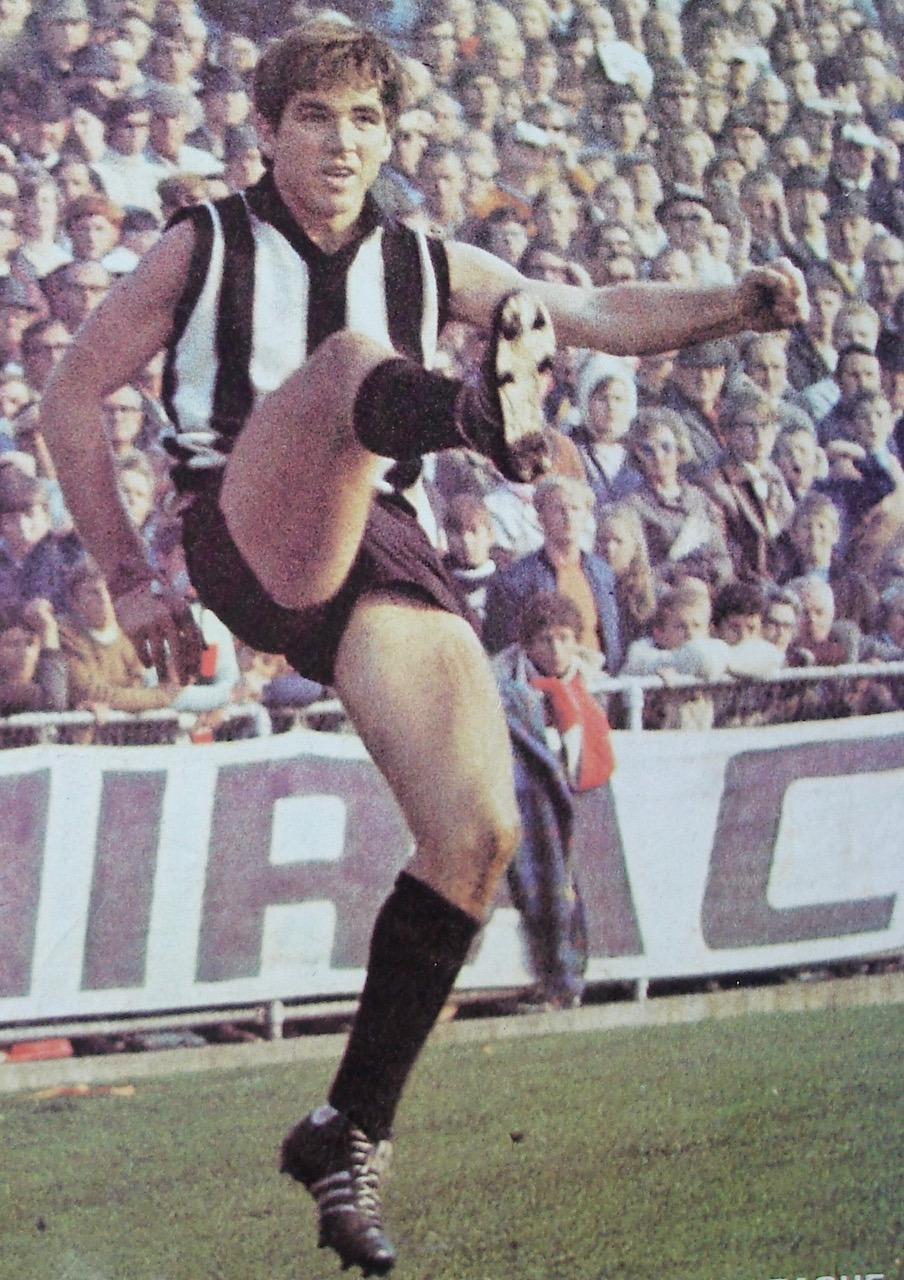
She watched Collingwood for as long as her eyes would let her, and when they gave out, she listened. She died quietly on 16 November 1998 — though the truth is that with all my travelling I had lost her some time before that, and I have carried it since. Half a world away now, I still stop for every game Collingwood play, live, online, at whatever hour Melbourne decrees, and there is always a cup of tea beside me. People talk of reading the tea leaves, of finding the future in a cup. Mine runs the other way.
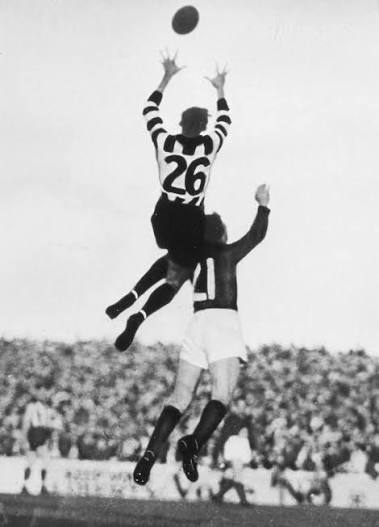
Because what I remember, more than any final score, is the kitchen table in the afternoon light: the pot going cold between us while my nana stared out the window, not seeing the yard at all — seeing Victoria Park in 1929, The Machine in full cry, the suburb with nothing beating everyone who had everything — and me, four years old, waiting for her to turn back to me, and tell me all about it.
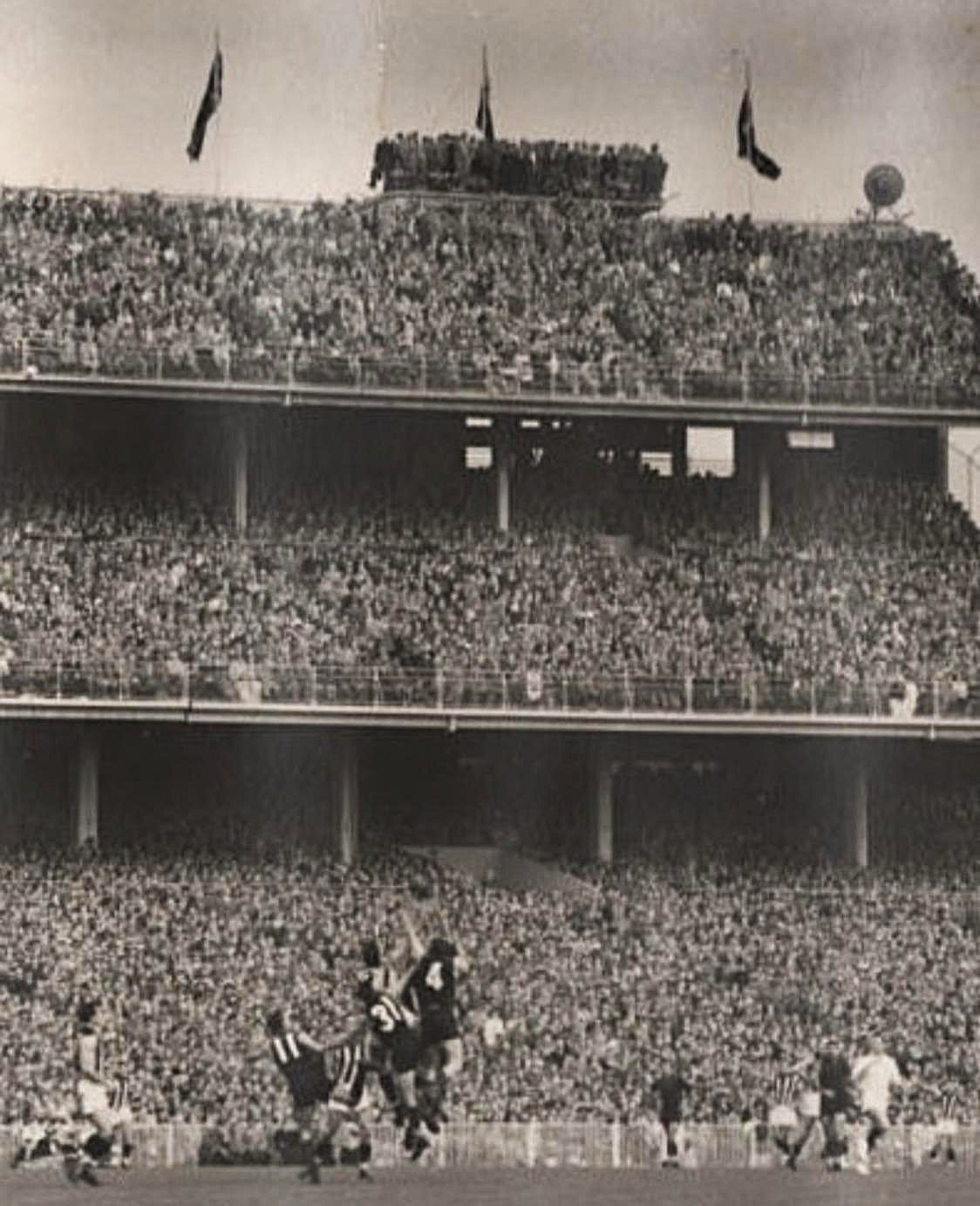
All of that, from a single cup of tea.
Darren Gall