
Lo Bak Go: The Golden Cake That Crossed the Sea
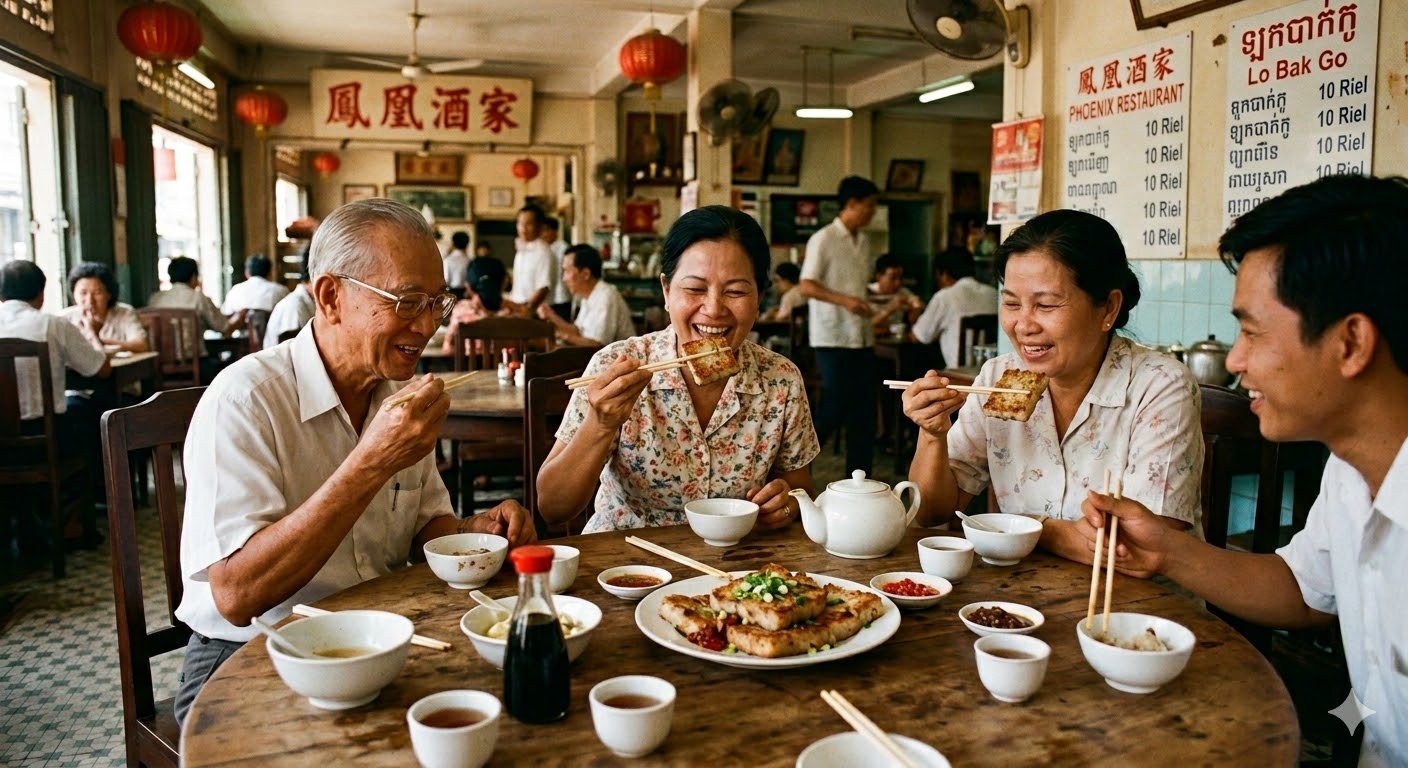
Chinese Fried Radish Cake (蘿蔔糕)
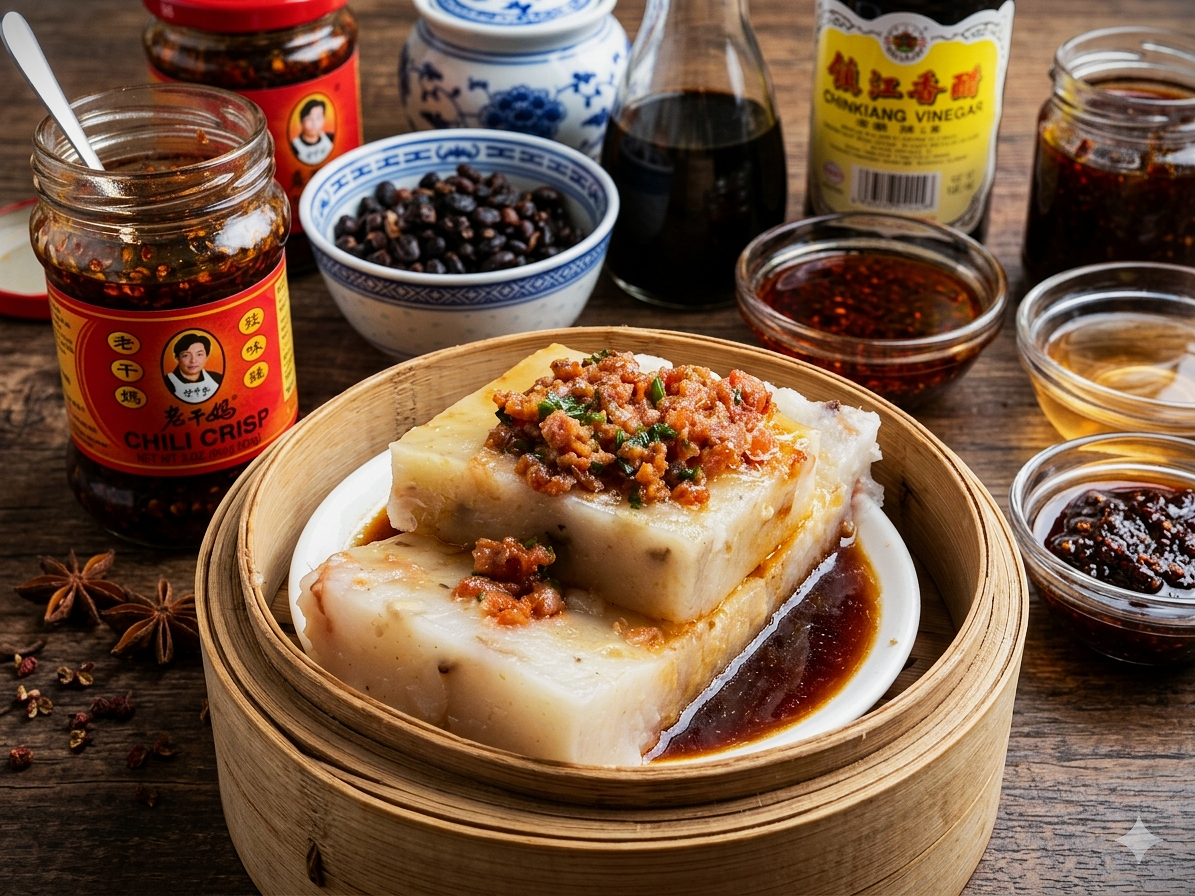
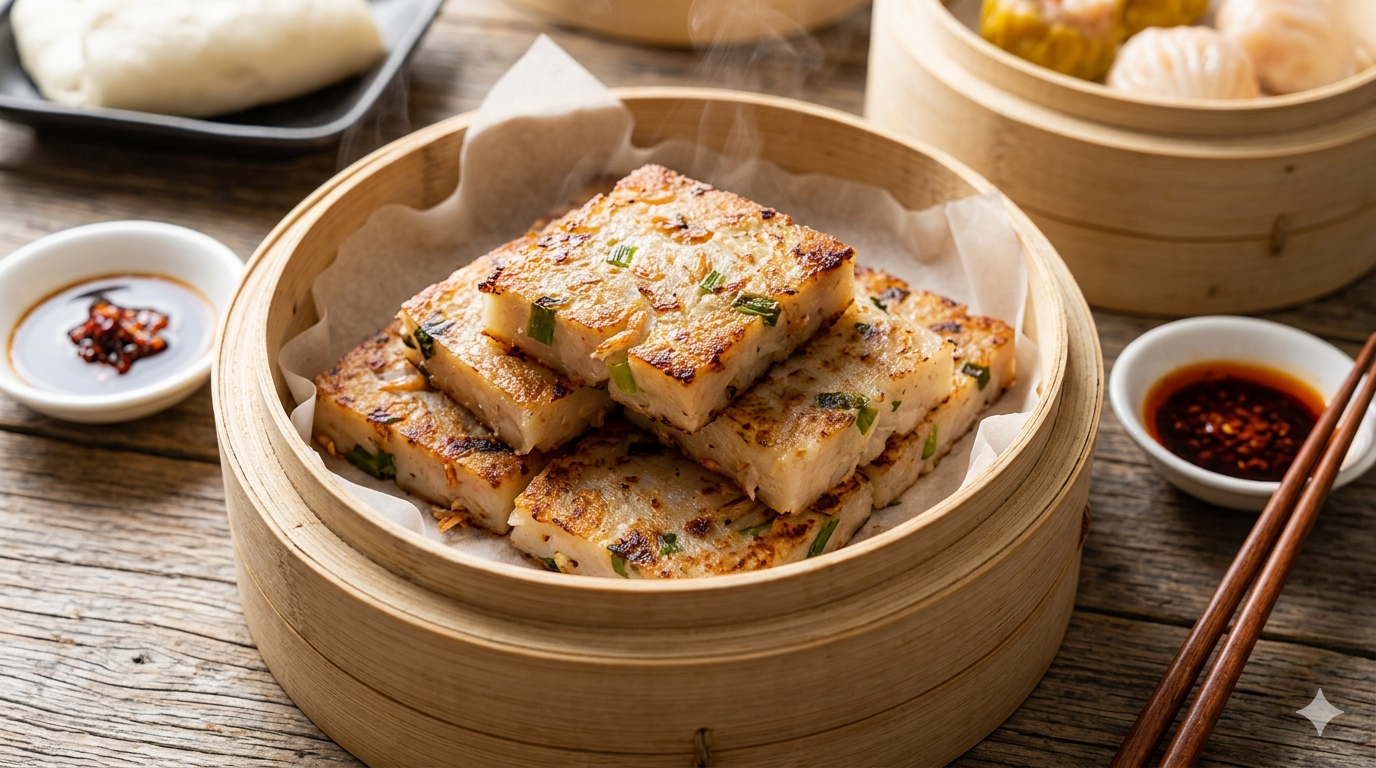
Few dishes tell a story quite as quietly, or as completely, as lo bak go. To look at it on the plate — a modest rectangle of pan-fried rice cake, golden and crackling at the edges — is to see something deceptively simple. But pick it up, take a bite, and you are tasting centuries of migration, memory, and culinary resilience. In Cambodia, and particularly in Phnom Penh, lo bak go is more than a dim sum staple. It is an edible history of a people who carried their food across the sea and never forgot how to make it.
Origins in the South of China
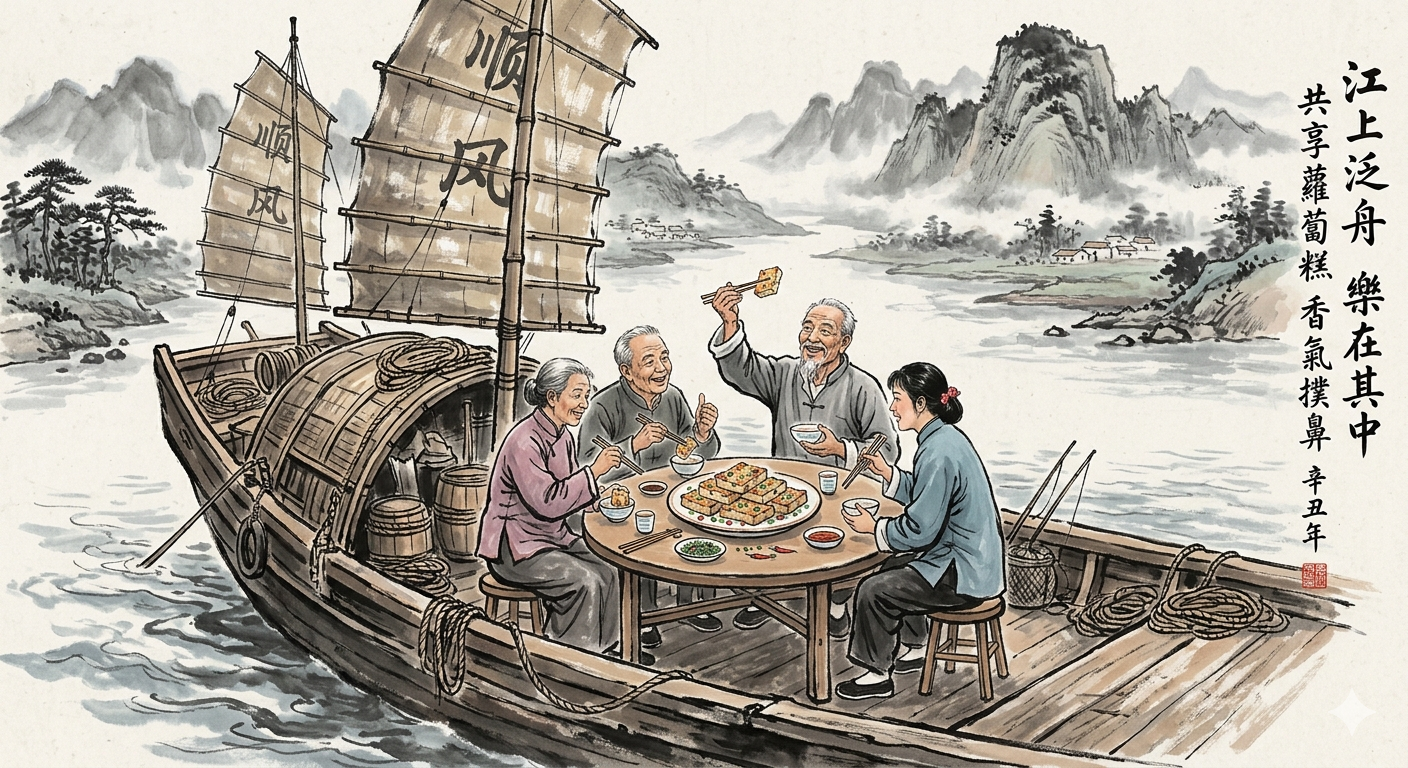
Lo bak go — Cantonese for radish cake — has its roots in Guangdong province, the southern Chinese heartland of one of the world’s great culinary traditions. The dish is believed to have begun as peasant food, a practical solution to abundance: white daikon radish, plentiful and cheap, grated down and bound with rice flour into a dense, steamed cake. Over time, cooks enriched it with ingredients like dried shrimp, Chinese sausage, and shiitake mushrooms, each adding a layer of umami complexity to what was once a simple staple.
Rice flour-based cakes have existed in Chinese culinary history since at least the Tang Dynasty, but lo bak go, as we recognise it today, likely solidified during the Qing Dynasty, as the teahouse culture of Guangzhou — yum cha — flourished into a full social institution. These teahouses were gathering places for labourers and merchants, for families and old friends, where tea was poured endlessly, and small plates arrived in a steady, generous procession. Lo bak go was always among them: humble, dependable, satisfying.
The Journey to Cambodia
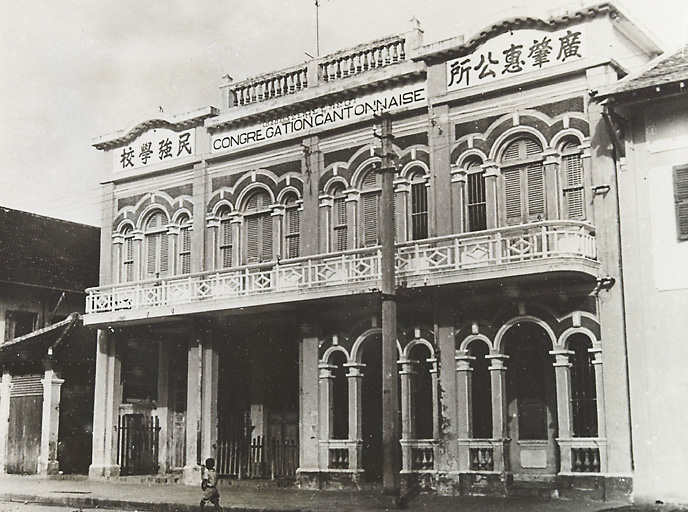
The dish did not arrive in Cambodia on any single boat, on any single day. It came gradually, carried in the collective memory of successive waves of Chinese migrants who made the journey south across the centuries. Chinese communities had been present in the Khmer Empire as far back as the 13th century, introducing techniques — stir-frying, steaming, the use of soy sauce and rice noodles — that would permanently alter the texture of Cambodian cooking. While early migrants were predominantly Teochew, it was the Cantonese community that brought with them the specific culture of dim sum, of the teahouse, of lo bak go.
These were not conquerors or colonizers. They were traders, labourers, entrepreneurs — people who built new lives while holding tightly to the flavours of home. In Phnom Penh’s Chinatown and in the city’s Chinese-owned restaurants and shophouses, the rituals of yum cha took quiet root. Bamboo steamers were stacked. Tea was brewed. And lo bak go, steamed into firm cakes, and fried to order, appeared on tables in a city far from Guangzhou, tasting exactly as it always had.
Survival and Resurrection
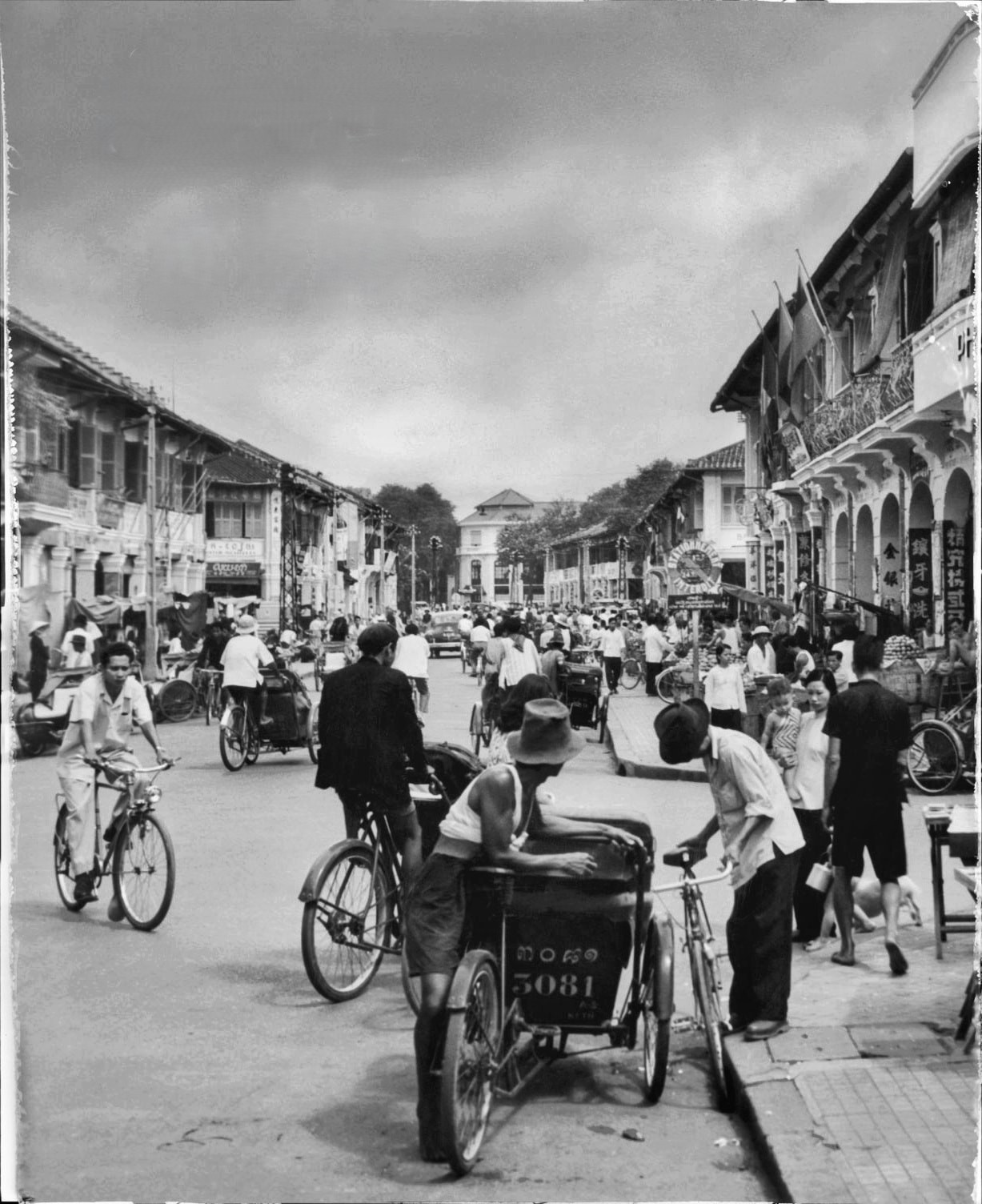
That continuity was nearly severed. The Khmer Rouge period of 1975 to 1979 was catastrophic for Cambodia’s culinary heritage. Communities were scattered, restaurants shuttered, and the oral traditions through which recipes passed from one generation to the next were violently interrupted. Nearly two million people perished. The Chinese Cambodian community, like so many others, was devastated. Much was lost — not just recipes, but the cooks themselves, and the culture that gave the food meaning.
Yet lo bak go survived. It persisted in households, in the quiet kitchens of families who rebuilt their lives in the years after the regime collapsed. And as Phnom Penh gradually recovered — as restaurants reopened and the city’s appetite returned — the dish re-emerged, unchanged in its essentials, as resilient as the community that had preserved it.
A Dish Reborn at Yi Sang
No figure has done more to restore and celebrate Cantonese culinary tradition in modern Cambodia than Luu Meng, the Chinese-Cambodian chef and founder of the Yi Sang restaurant group. Born in Phnom Penh in 1974, Meng grew up in the shadow of the Khmer Rouge, his family’s story a microcosm of his country’s trauma and tenacity. He rose through the kitchens of Phnom Penh’s finest hotels before opening Yi Sang — a restaurant devoted to the authentic flavours of Cantonese cuisine, prepared from scratch with the finest local ingredients.
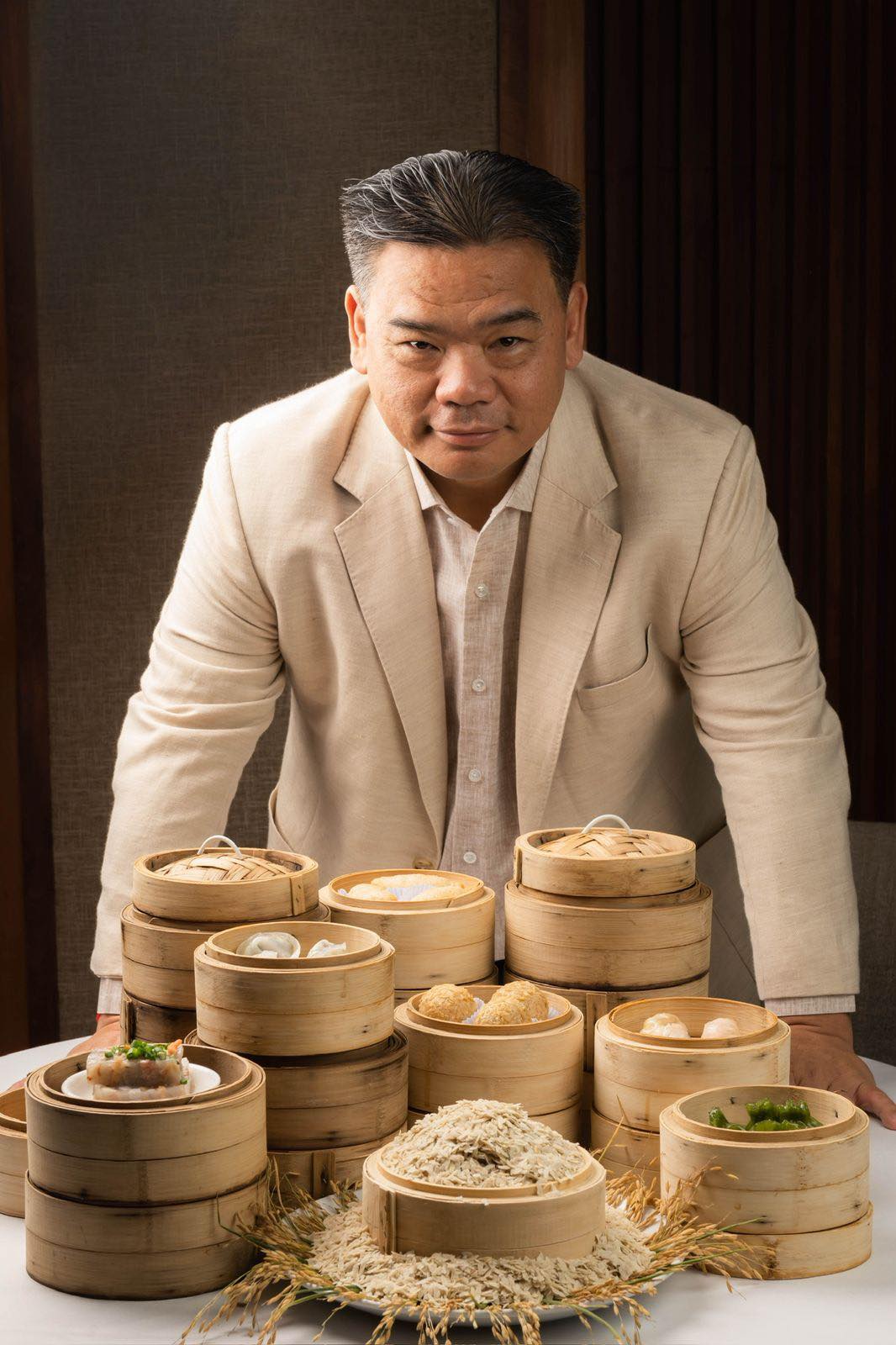
At Yi Sang, lo bak go is an act of respect. Luu Meng sources his ingredients with obsessive care — fresh daikon, Kampot pepper, locally raised pork, pesticide-free aromatics — and his kitchen team prepares every dish by hand. The radish cake arrives at the table deeply golden, crackling with that signature crust born of the Maillard reaction, yielding to a soft, fragrant interior rich with sausage and dried shrimp. It is technically flawless, but more than that, it is sincere.
A Small Cake, A Long Story
To eat lo bak go in Phnom Penh today is to participate in something larger than a meal. It is to sit at the intersection of Cantonese ingenuity, the long arc of Chinese migration, the trauma of a nation’s darkest chapter, and the quiet, determined work of chefs like Luu Meng, who refuse to let great food be consigned to history.
The dish itself has not changed much in centuries. A little radish. A little rice flour. Heat, patience, and a hot pan. What it carries, however, the stories pressed into every golden layer — is immeasurable.
Darren Gall
