Dan Tat
“To a mind that is still, the entire universe surrenders.”
― Chuang Tzu
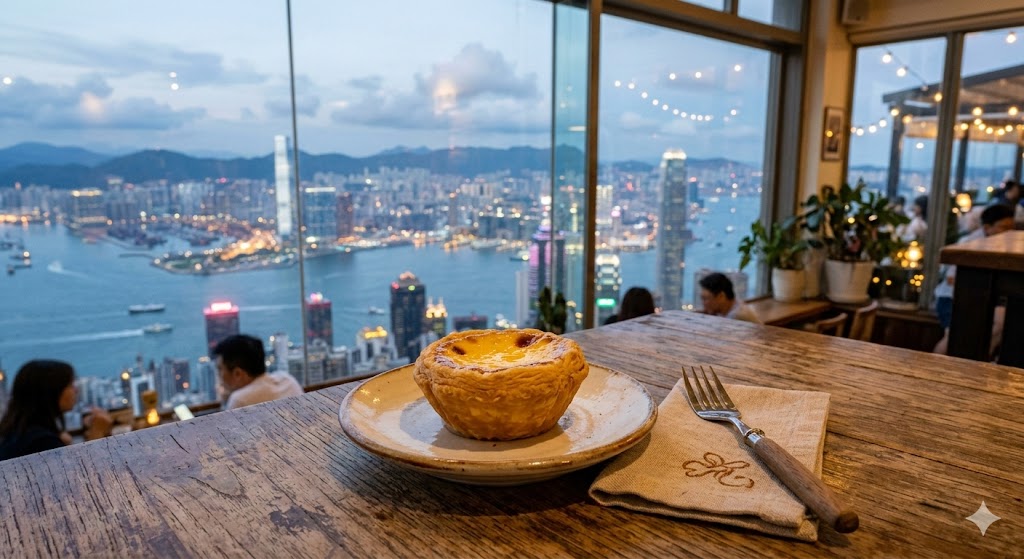
The art of eating an egg tart in Hong Kong is a ritual centred on freshness, timing, and sensory indulgence, characterised by chasing the “freshly baked” (新鮮熱辣) aroma. This approach involves savouring the contrast between a piping-hot, silky, and slightly jiggly custard filling and the crisp, flaky crust.
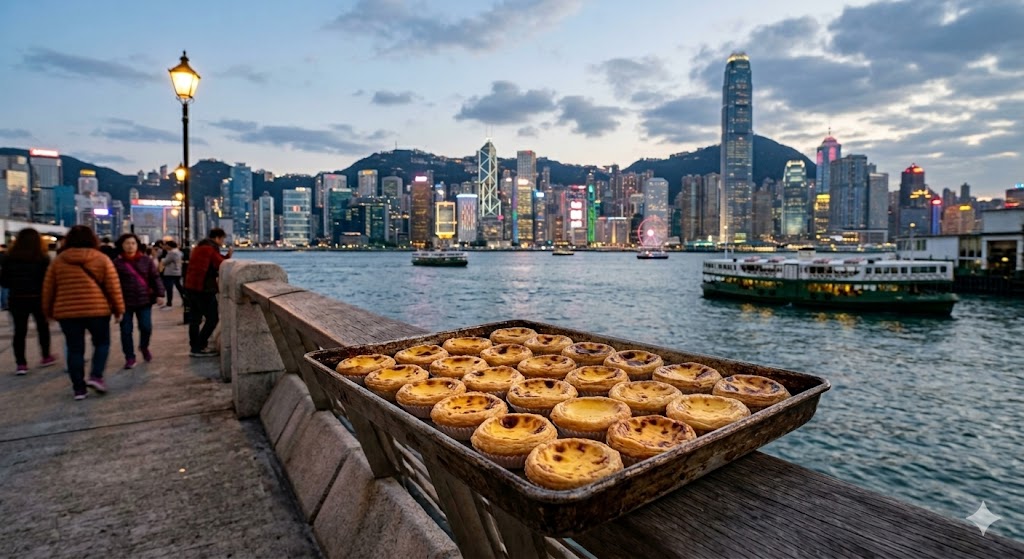
Timing is key. In Hong Kong, at first light, as the sun begins to shine, beams of light fall into the alleys and nooks of the city—like a prism shining with the promise of a fresh start, over the detritus and remnants of the night before. Locals here know the exact schedule of their favourite bakeries and flock to them to secure tarts directly from the oven.
A perfect egg tart should be eaten immediately to experience the contrast in textures—tender, buttery pastry, and smooth, warm custard. To complete the experience, the egg tart is best enjoyed with a classic, strong Hong Kong-style milk tea, often as a casual breakfast, post-dim sum treats, or afternoon tea.
“You can leave Hong Kong, but it will never leave you.”
― Nury Vittachi, Hong Kong: The City of Dreams
Of this place
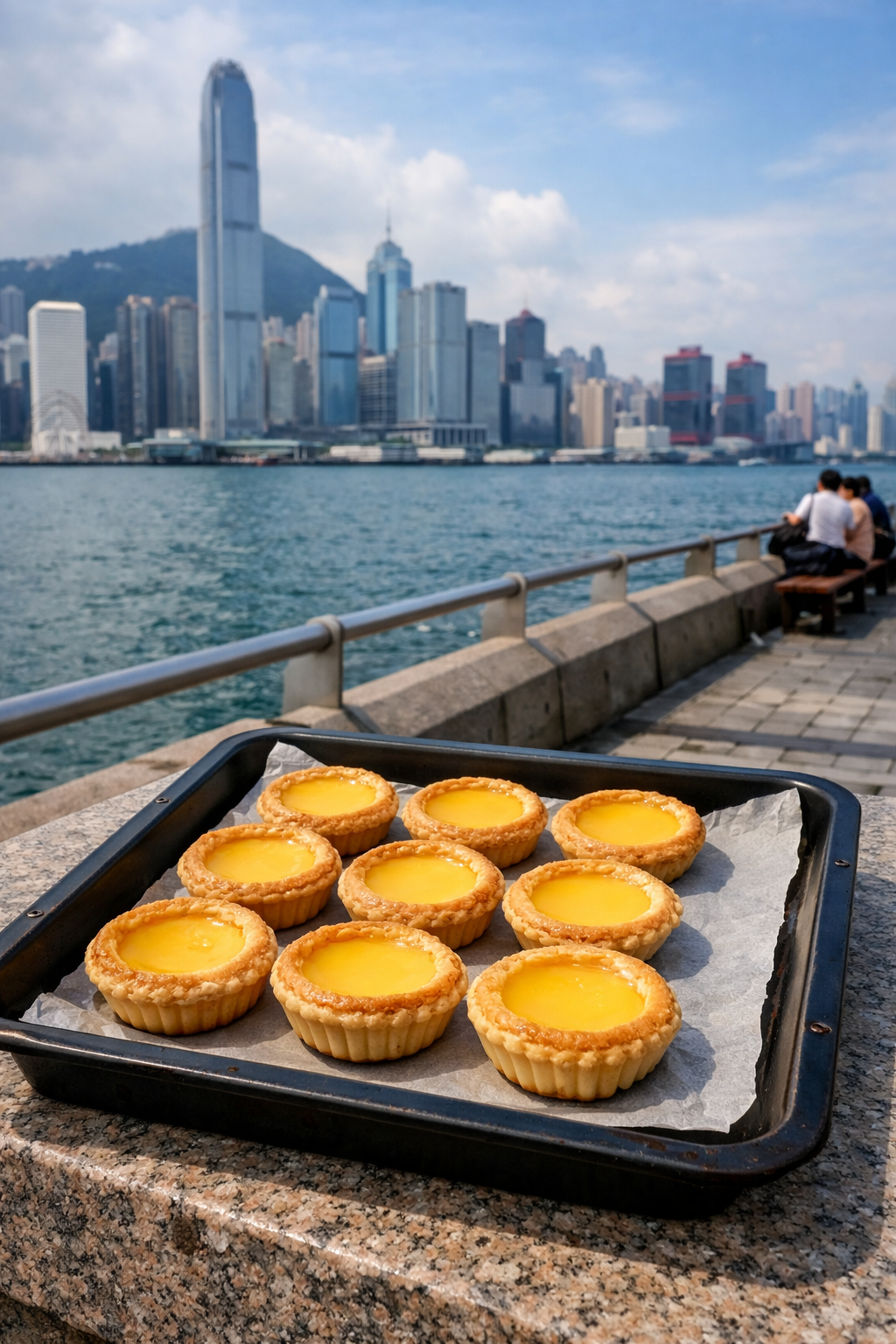
In Hong Kong, the dan tat (or Hong Kong-style egg tart) is a symbol of the city’s identity, a beloved pastry that encapsulates the city’s vibrant culinary fusion. These small, circular tarts, typically about three inches in diameter, feature a flaky, buttery crust encasing a smooth, glossy egg custard filling that is lightly sweetened and irresistibly silky. Often enjoyed warm or at room temperature, the dan tat has become a staple in Hong Kong’s food scene, from bustling dim sum halls to casual tea restaurants known as cha chaan tengs. Its glassy surface and delicate layers make it a perfect bite-sized treat, blending simplicity with sophistication.
It was famously a favourite snack of Chris Patten, the last British Governor of Hong Kong, earning him the nickname “Fei Pang” among locals who often saw him at the famous Tai Cheong Bakery.
In a city known for constant change, the egg tart remains reassuringly familiar. Whether eaten in a humble bakery or served at a banquet-style dim sum restaurant, dan tat connects generations through taste and ritual.
Custard Tart
The origins of the dan tat trace back to early 20th-century Guangzhou (formerly Canton), where it emerged as a Chinese adaptation of the British custard tart. Around the 1920s, British merchants and officials in southern China introduced their love for creamy custard tarts, prompting local chefs to innovate.
These early versions drew inspiration from English recipes but incorporated Chinese baking techniques, such as laminated puff pastry, to create a flakier crust. Some sources also note influences from the Portuguese pastel de nata, brought via Macau, which added a caramelized touch, though the Hong Kong variant leans more toward the smooth, untorched, British style.
The tart’s journey to Hong Kong accelerated after World War II, when wealthy Cantonese migrated to the city, bringing their culinary traditions. In the 1940s and 1950s, cha chaan tengs—affordable eateries blending Western and Chinese elements—began serving dan tat to the working class, democratising what had once been a luxury item found only in upscale and decidedly Western restaurants.
This period marked Hong Kong’s post-war boom, where British colonial rule (from 1841 to 1997) fostered a unique East-West fusion. The dan tat symbolised this hybrid meld, evolving from a Guangzhou invention into Hong Kong culinary perfection. By the 1960s, it was ubiquitous, and in 2014, the technique of making egg tarts was officially recognized in Hong Kong’s Intangible Cultural Heritage Inventory, underscoring its historical and cultural value.
Dan Tat is more than dessert; it is a cultural emblem of the city’s colonial past and innovative spirit. Found in every bakery and cha chaan teng, it represents affordable indulgence, evoking nostalgia for generations who grew up on them and the opportunity to innovate, embracing new freedoms and individuality, whilst still paying respect to ancestry and tradition.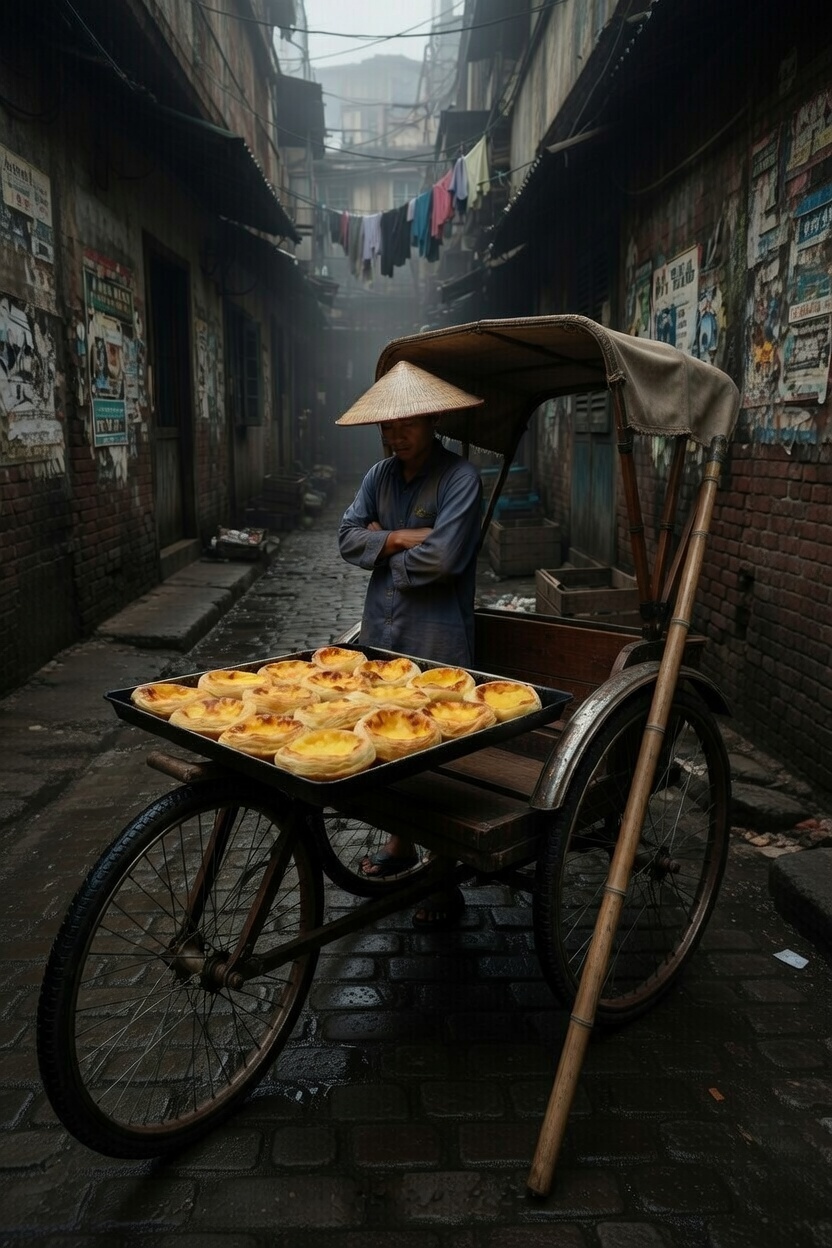
At yum cha gatherings, it is regarded as an essential item of the dim sum, one of the “Four Heavenly Kings,” along with Siu Mai (pork/shrimp dumpling), Har Gow (shrimp dumpling), and Char Siu Bao (BBQ pork bun). It is often the last item ordered, providing a creamy contrast to steamed buns and dumplings.
Its inclusion in dim sum menus worldwide has helped export Hong Kong’s culinary identity, making it a must-try for tourists and a comfort food for locals. Today, variations like matcha or chocolate fillings keep it relevant, but the classic remains timeless.
In essence, the dan tat embodies Hong Kong’s resilience and adaptability, turning a borrowed idea into a local icon. Whether savoured in a noisy teahouse or at home with family, it continues to connect and delight, one flaky bite at a time.
Pastel de Nata
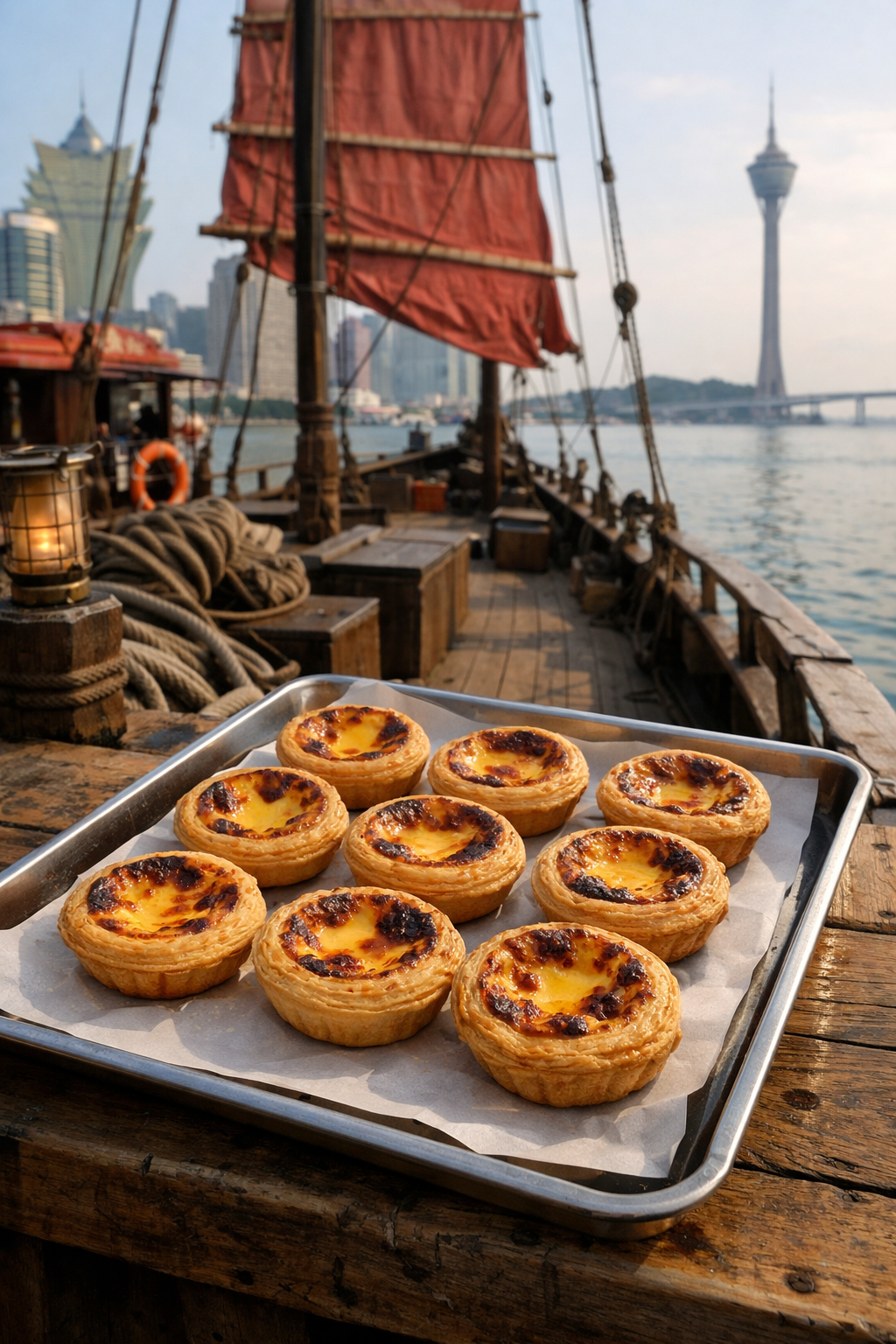
Dan Tat’s closest ancestor is the Macau version of the Portuguese ‘pastel de nata,’ a custard tart developed in Lisbon in the 18th century. When Portugal established trading routes in southern China, similar custard pastries began appearing in Macau.
The Portuguese Pastel de Nata is known for its scorched, caramelized top and flaky, puff-pastry-like shell (instead of shortcrust). The Macau version has the same traits but is more of a hybrid between a Portuguese tart and the English version.
In 1989, Andrew Stow, a British pharmacist-turned-baker, opened Lord Stow’s Bakery, specializing in an egg tart made with a Portuguese-style shell, English-style custard, and burnt topping. While Stow originally developed the tart for the homesick Portuguese community, they were an instant hit with the local Chinese as well. Almost 30 years later, the bakery produces over 15,000 tarts a day.
Anyone who has seen Lord Stow’s bakery at the Venetian in Macau, just before opening, will have witnessed the long queues. Tourists and locals lined up for several hundred metres, waiting anxiously for the first trays out of the oven.
“Wherever there is seawater, there are Chinese; wherever there are Chinese, there is Mazu.”
― Chinese proverb
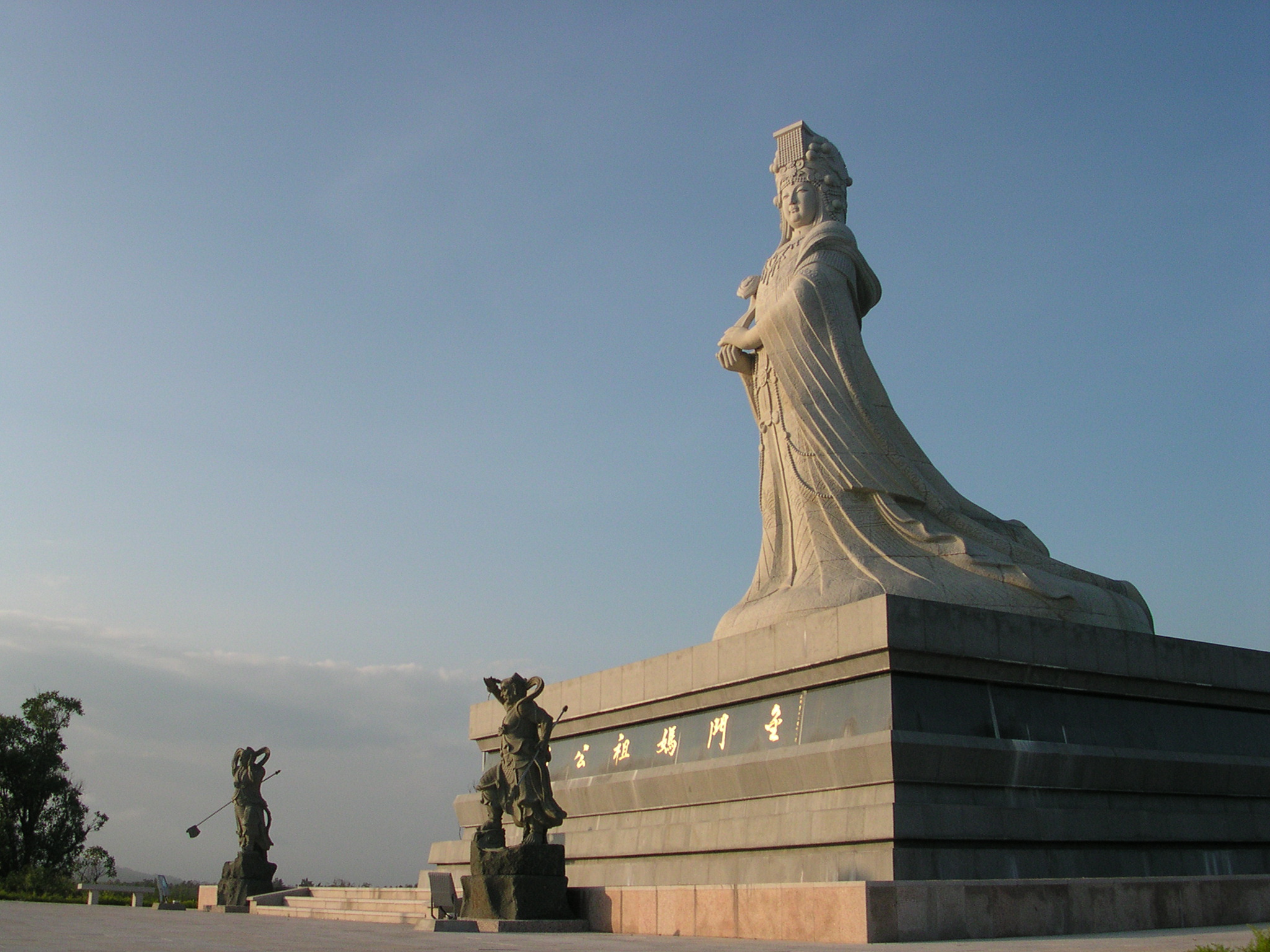
Mazu (林默娘, Lín Mòniáng) is the much-revered Chinese Goddess of the Sea and patron deity of sailors, fishermen, seafarers, and island dwellers—like those who live on the islands of Hong Kong and Macau. Indeed, Mazu protects the very “trading routes” that brought these ingredients and influences to the region. She is worshipped across coastal China, Taiwan, and Southeast Asia, and a well-known saying goes, “Never lie before Mazu.”
So, if I had to name a favourite, between the Hong Kong and Macau versions of the famous egg tart, I would simply say that when I am in Hong Kong, I enjoy the dan tat, and when I am in Macau, I enjoy the Portuguese-style tart; when I am in neither, I thoroughly enjoy them both.
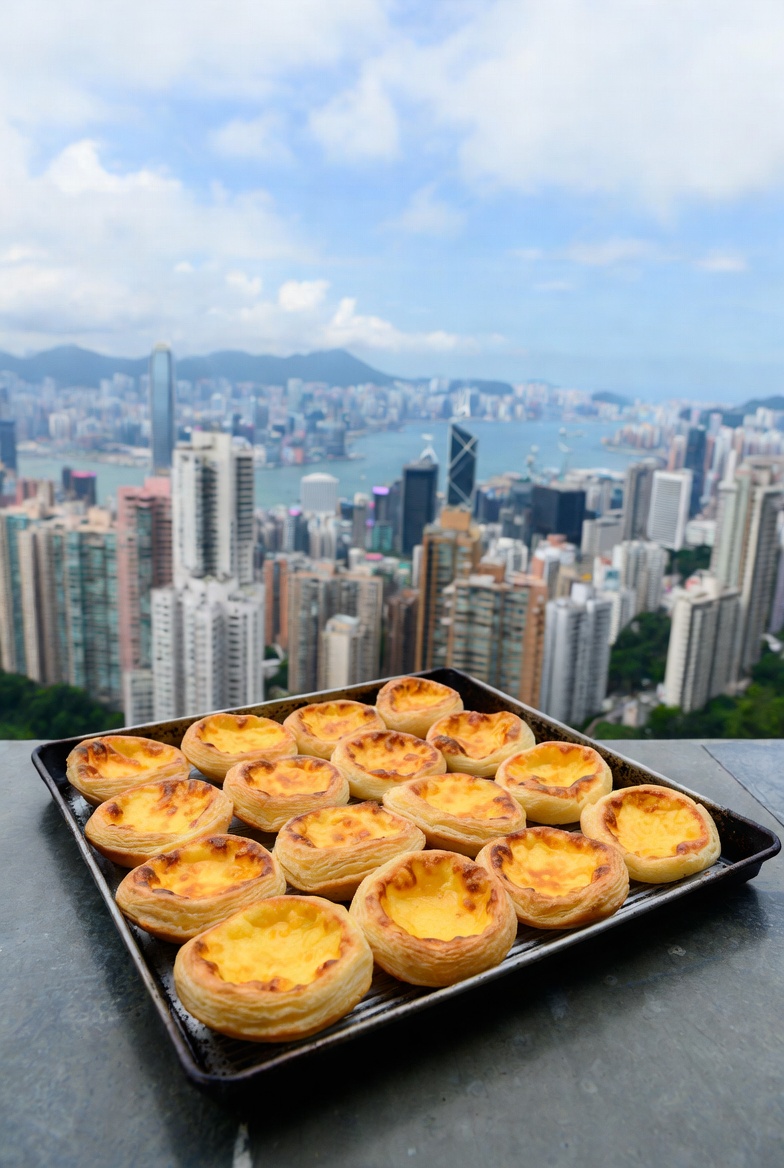
The Jewel that Tops the Dim Sum Crown
Dan Tat stands at the crossroads of East and West, tradition, and innovation. From its European roots to its Cantonese refinement, it has become one of Hong Kong’s most beloved culinary exports. Its smooth custard, crisp pastry, and gentle sweetness capture the essence of Hong Kong food culture: practical yet refined, rooted in history yet open to influence. Within dim sum and beyond, the egg tart remains a small pastry with a lasting cultural impression.
To pause in this busy, frenetic, and at times chaotic city, taking in a moment of stillness, just to inhale and ingest these tasty little creations of pure, beautiful deliciousness, a moment of pure “Hong Kong Chan (禪)”.
Darren Gall