
No View from Nowhere
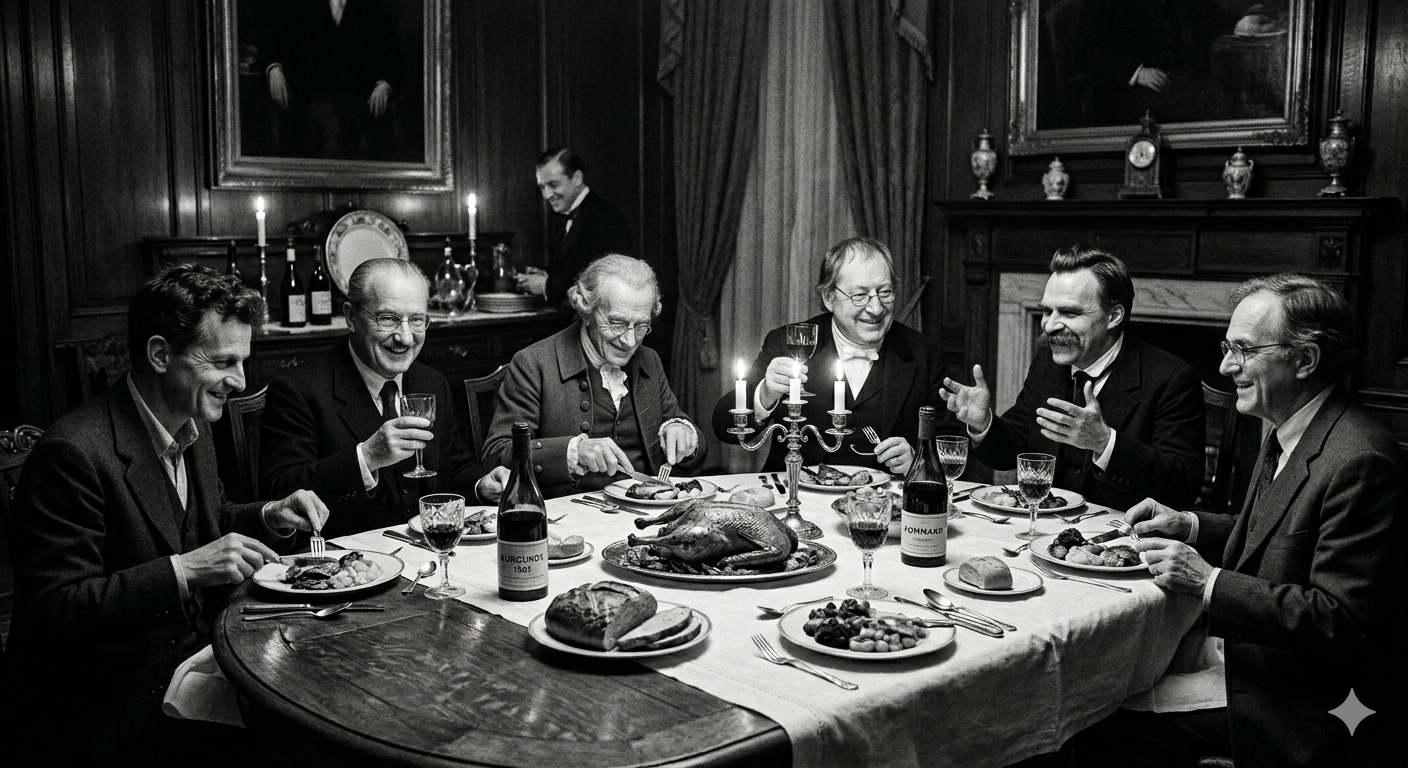
For Canard
I absolutely adore ducks; I’ve nibbled on their webs and sucked on their tongues in Chinese palaces. I’ve eaten their livers “with some fava beans and a nice Chianti” in Italian cucinas. I’ve chased Peking ducks to the four corners of the globe, legs, breasts, it doesn’t matter; just about any way that you want to slice, cook, and serve them to me, I’ll be back for seconds.
As wine-food goes, duck is just about the perfect protein from its skin, legs, breasts, liver; whether fat and juicy or lean and gamey, rich, or spicy, tender, or crispy. You can coat them in salt-cake and herbs, flay them and wrap their skin in little Chinese crepes, cover them with pastry in a terrine, you can stuff their innards into little pockets of Ravioli pasta, smoke them whole in tea leaves or, smear their breasts and thighs in sauces made from cepes, l’Orange, plums, figs, quinces, Gaeng Phed Yang (Thai Red Curry), Hoi Sin, Szechuan peppers even chocolate in one famous Belgium restaurant.
I love them all.
However, I suspect one of the reasons I love them so much is their astonishing ability of this Anatidae to pair brilliantly with Pinot Noir; indeed, the two seemed made for each other, a synergistic culinary symphony like no other. One is Giazotto to the other’s Albinoni, they complete each other like few pairings can hope to achieve. Part sorcery and part Saucery, the combination can elevate a degustation from a pasticcio, an intermezzo, to an opera eroica, an azione sacra, an unforgettable gastronomic masterpiece.
Pinot Noir, that most seductive and alluring of grapes, that siren of the dark arts, the enchantress in black. As Andre Tchelistcheff, Chief Winemaker at Beaulieu from 1938 – 1973 said, “God made Cabernet Sauvignon, whereas the devil made Pinot Noir.”
I can think of no greater joy in the art of aristology, than the pairing of this bird with this grape to dance and swirl and perform across a crowded table in six acts (courses), captivating their audience and sating their appetite for food, art and culinary adventure.
And so, I planned a dinner at the eponymously named Baldwin’s restaurant in Phnom Penh, and this got me thinking about ducks, and this got me thinking about Ludwig Wittgenstein, and this got me thinking…about thinking.
On perception, thought, and the thing that knowing leaves behind
The eye — it cannot see itself.
— Ludwig Wittgenstein, Tractatus Logico-Philosophicus, 5.633
The problem and why it will not stay solved
There is a philosophical problem so fundamental that solving it merely reinstates it at a higher level. The problem is this: every account of how we know the world is itself an act of knowing, and is therefore subject to whatever limitations it describes. This is not a paradox to be dissolved with a clever distinction. It is a structural feature of the inquiry, and any treatment of perception, thought, and being that does not acknowledge it from the outset is managing the difficulty rather than facing it.
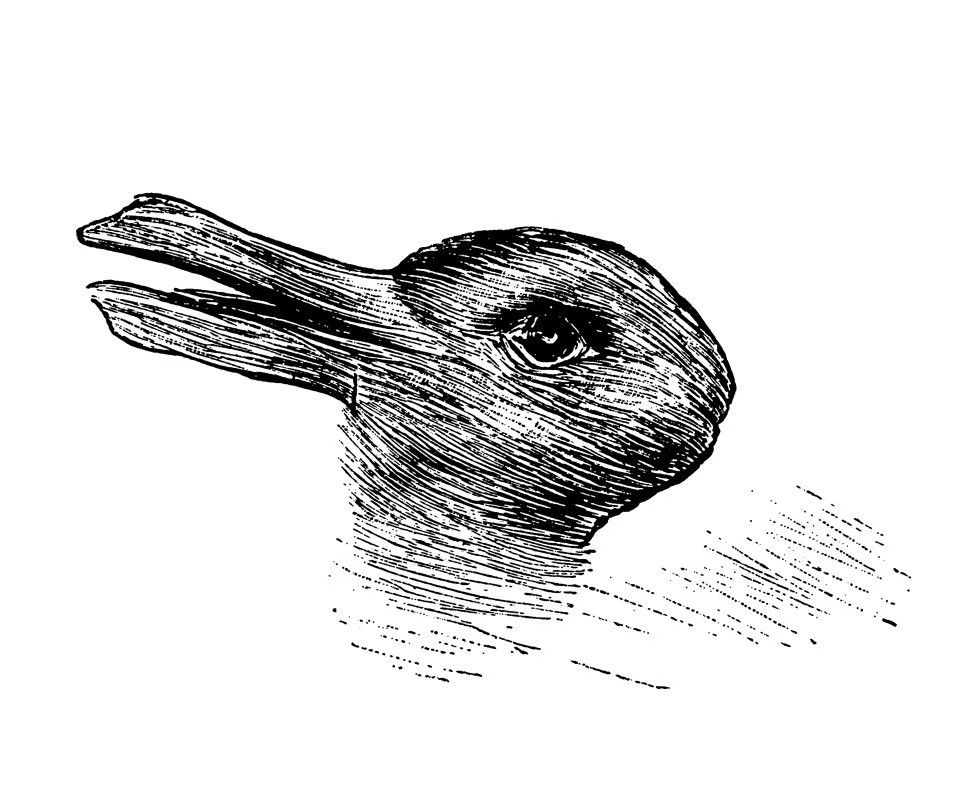
This essay takes the difficulty seriously. It begins, as any honest treatment of this territory must, with Wittgenstein’s Duck-Rabbit — not because it is the origin of the problem but because it is the problem at its most naked, compressed into a drawing anyone can hold in their hands. It moves from there through Heisenberg’s uncertainty principle, Kant’s transcendental idealism, Hegel’s dialectic, Heidegger’s question of Being, and Nagel’s hard problem of consciousness. At every stage, it attempts to hold the thinkers against each other rather than merely assembling them, and it takes seriously the objections that each would bring to the convergence being proposed.
The conclusion it reaches is not a comfortable synthesis. It is something stranger, more honest, and less easily dismissed: that the inquiry into the limits of knowing is itself one of the things those limits apply to — and that sitting with this fact, rather than resolving it, may be the most philosophically productive thing we can do.
Wittgenstein: seeing as, and its discontents
The Duck-Rabbit is not, in the first instance, an argument. It is a demonstration. Look at the image, and you see a duck. Look again, and the duck becomes a rabbit. Nothing about the image has changed. What has changed is the aspect under which it is organised — the conceptual framework that the mind brings to bear on the lines before it. Wittgenstein calls this seeing-as, and in Philosophical Investigations, he uses it to make a claim about the structure of perception in general: that seeing is never a neutral reception of raw data but always already an act of interpretation, shaped by concepts, habits, and what he calls forms of life — the shared practices and contexts that constitute a human world.
The philosophical weight of this claim is considerable, but it needs to be stated carefully, because Wittgenstein is frequently misread at this point. He is not arguing that we never see things as they are, or that our perceptions are systematically illusory. He is arguing something more subtle: that the concept of seeing-things-as-they-are, independent of any interpretive framework, is not a coherent concept. There is no such thing as pre-interpretive visual experience available to us for comparison with our interpreted experience. The neutral baseline against which the Duck-Rabbit’s ambiguity would be measured simply does not exist. This is not scepticism. It is a grammatical observation — a point about what it makes sense to say.
The distinction matters: Wittgenstein is not a sceptic who denies the reality of what we perceive. He is a philosopher of grammar who questions the coherence of a particular philosophical ideal — the ideal of perception entirely free from conceptual mediation. The duck is really seen. The rabbit is really seen. What is not available is the image-before-any-aspect, the visual datum that precedes both.
The constraint that emerges from the Duck-Rabbit is precise: the two aspects are mutually exclusive. You cannot see the duck and the rabbit simultaneously. This is not a limitation that more attention or better technique could overcome. It is structural — built into what seeing-as means. Each act of seeing is a total commitment to one interpretive framework, and that commitment forecloses the other for its duration.
What Wittgenstein does not fully develop — and this is the first tension the essay must acknowledge — is the social and historical dimension of the frameworks themselves. His concept of forms of life gestures at the embeddedness of conceptual frameworks in shared practices, but it remains, in the Investigations, relatively static. The question of how those forms of life themselves change, how one historical epoch’s way of organising perception gives way to another’s, and what this implies for the universality of the Duck-Rabbit’s lesson, is not answered. This is where Heidegger and Hegel will each press, from different directions.
Heisenberg: the physical proof, and the limits of the analogy
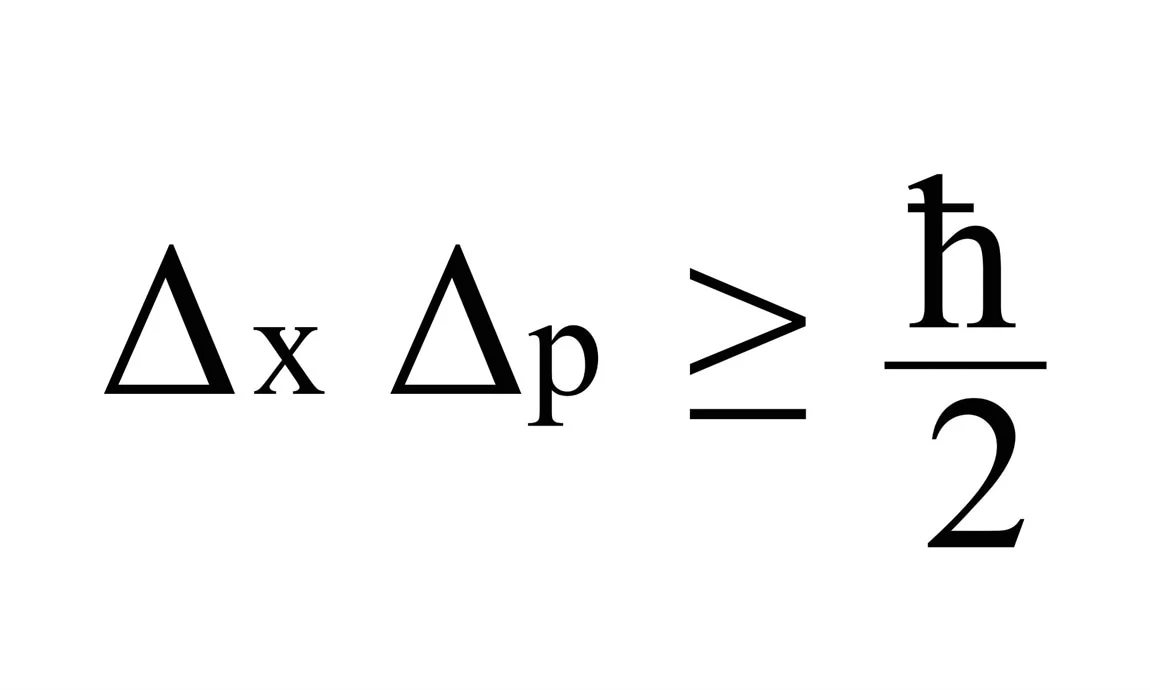
In 1927, Werner Heisenberg published the uncertainty principle: the product of the uncertainty in a particle’s position and the uncertainty in its momentum cannot fall below a fixed minimum determined by Planck’s constant. Position and momentum are conjugate variables — quantities so structurally entangled in the mathematics of quantum mechanics that they cannot simultaneously possess sharp values. This is not an instrumental limitation. It is not noise introduced by clumsy measurement. It is a fact about the physical world at its most fundamental level.
The temptation to read the uncertainty principle as a physical confirmation of Wittgenstein’s Duck-Rabbit is understandable and has been widely indulged. Both involve a system with two legitimate descriptions that cannot be simultaneously maximised. In both cases, the constraint is not a contingent limitation but a structural one. And in both cases, the observer is implicated in the determination of what is real: Wittgenstein’s aspect-seer brings the duck or the rabbit into being through the act of seeing, and Heisenberg’s measurement event participates in the determination of the particle’s state.
But the analogy, pursued past a certain point, breaks down — and being honest about where it breaks down is philosophically more valuable than maintaining it.
The deepest disanalogy is this. For Wittgenstein, the constraint is conceptual. The duck and the rabbit are both always present in the image as latent possibilities. The mind cannot hold both aspects simultaneously, but this is a fact about human cognitive architecture — about the structure of categorisation — not about the image itself. The image is, in some sense, neutral with respect to the aspects imposed upon it. For Heisenberg, the constraint is ontological. The particle does not possess simultaneous sharp values for position and momentum. There is no underlying fact of the matter being concealed from us. The uncertainty is written into the fabric of physical reality prior to any act of perception. These are very different claims.
The Copenhagen interpretation, associated primarily with Niels Bohr and developed in dialogue with Heisenberg, attempts to dissolve this disanalogy by denying that quantum mechanics describes a reality independent of measurement at all. On this view, asking what the particle is really doing between measurements is not merely unanswerable but meaningless — the question presupposes a kind of observer-independent fact that quantum mechanics gives us no reason to believe exists. This moves the uncertainty principle closer to Wittgenstein’s position: the constraint is not so much a fact about the world as a fact about the limits of what can be meaningfully described.
But here a different problem arises. The Copenhagen interpretation has never been universally accepted, and the arguments against it are serious. The many-worlds interpretation, objective collapse theories, and pilot wave theories all propose accounts in which something definite is happening at the quantum level prior to measurement—in which the indeterminacy of the Copenhagen picture is a feature of our description, not of the world. If any of these alternatives is correct, the analogy between the uncertainty principle and the Duck-Rabbit collapses entirely: Heisenberg’s constraint would be epistemological, not ontological, and the convergence with Wittgenstein would be at most a family resemblance between two different kinds of epistemic limitation.

This is not a settled debate. The interpretation of quantum mechanics remains one of the most contested questions in the philosophy of physics, and treating Copenhagen as definitive is to mistake a working assumption for an established conclusion.
The honest formulation is therefore more modest than the previous version allowed: the uncertainty principle and the Duck-Rabbit exhibit a structural resemblance that is philosophically striking and conceptually generative, but which cannot bear the weight of a claim that physics has proved what philosophy conjectured. What physics has done is provide an independent reason — a reason from a wholly different domain — to take seriously the general thesis that the act of knowing participates in the determination of what is known. That is significant. It is not the same as confirmation.
Kant: the transcendental move and its permanent difficulty
Immanuel Kant’s Critique of Pure Reason (1781) is the philosophical foundation of everything that follows, and it is a foundation with a crack running through it that every subsequent thinker in this inquiry has attempted to exploit.
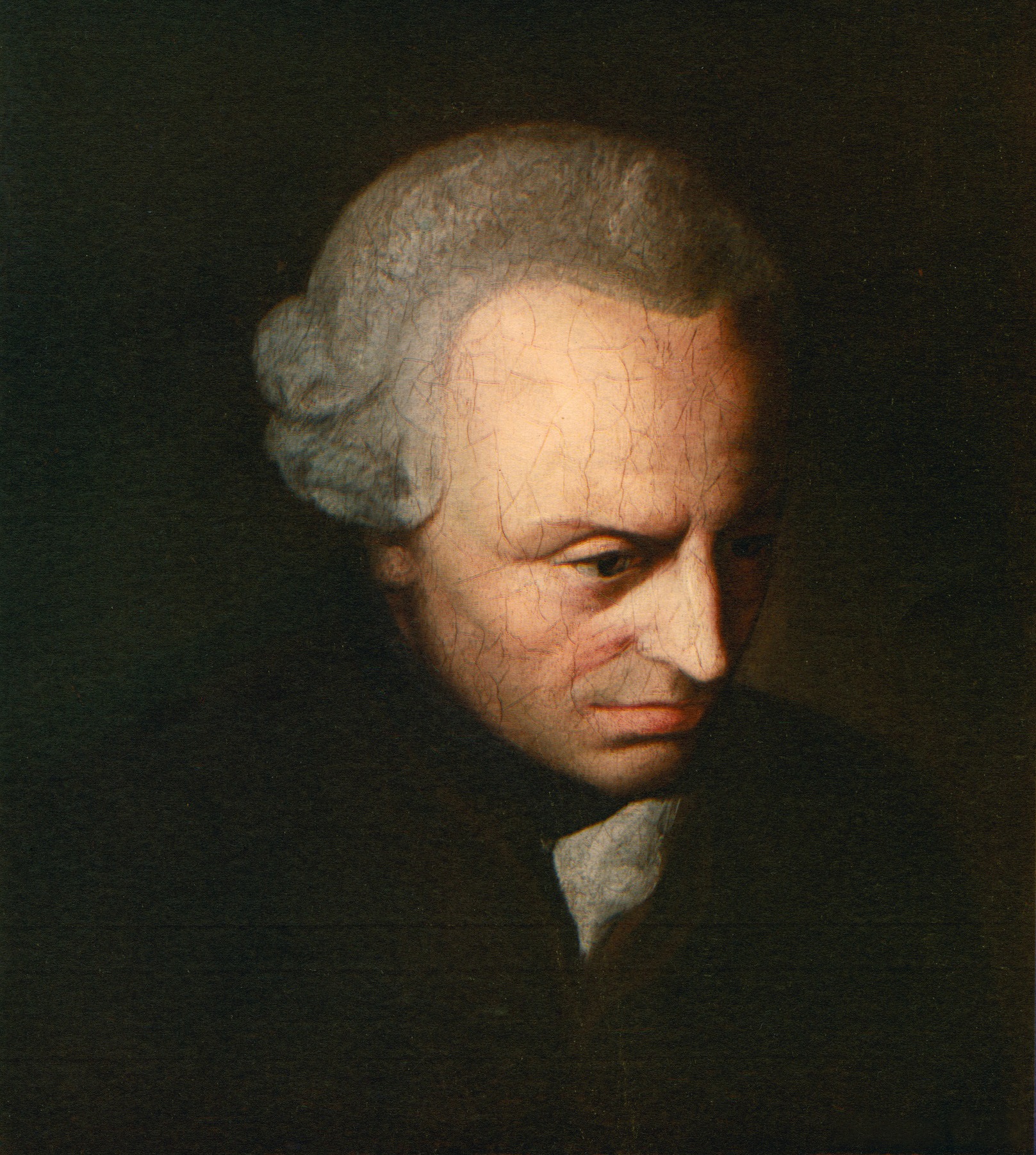
Kant’s central claim is that the mind does not passively receive experience. It constitutes it. Space, time, and the categories of the understanding — causation, substance, unity, necessity — are contributions of the subject, imposed upon the raw flux of sensation to render it intelligible. The world we experience is therefore never the world as it is in itself. It is the world as it must appear to beings with cognitive architectures like ours. Behind the appearances — the phenomenal world of space, time, and causally connected objects — lies the thing in itself, the Ding an sich: real, causally relevant to our experience, and permanently inaccessible to human knowledge.
The crack in the foundation is one that Kant’s immediate successors — Fichte, Schelling, and most devastatingly Hegel — identified with surgical precision. If the thing in itself is truly unknowable, if it lies entirely beyond the reach of human cognition, then we cannot coherently say anything about it — not that it exists, not that it causes our sensations, not that it stands in any relationship to the knowing mind whatsoever. But Kant says all of these things. He relies on the thing in itself to explain why experience has the character it does, even while insisting that it cannot be known. This is not a minor inconsistency. It is a fundamental instability in the system.
There is a further problem: Kant’s transcendental subject — the mind that imposes the forms of space, time, and the categories — is presented as universal and ahistorical. The same cognitive architecture applies to all human beings at all times. But this claim is itself a philosophical thesis, not a datum, and it sits uncomfortably with everything we know about the historical variability of human conceptual frameworks. The categories through which a medieval theologian organises experience are not the same as those available to a twenty-first century neuroscientist. If the forms of cognition are historically conditioned — if they change over time, vary across cultures, and are shaped by the practices and technologies of particular epochs — then Kant’s claim to have identified the universal, necessary conditions of human experience is more precarious than it appears.
This is not a fatal objection to the Kantian project. It is a prompt to radicalise it—and Hegel, in one direction, and Heidegger, in another, each accepted that prompt. But it means that the Kantian foundation on which this inquiry rests is itself contested ground, and conclusions drawn from it inherit that contestation. What I would posit is that we all think with ‘our own minds’, see the world through our own eyes, and perceive it through our own, independent senses. Therefore, the information I gather may and most probably is not the same as yours, no matter how similar, and how my brain interprets that information, the mental picture or memory I create of the world will be my own. The more we interact with the world, share it with others and discuss it, the more we will hone and even align our view of the world.
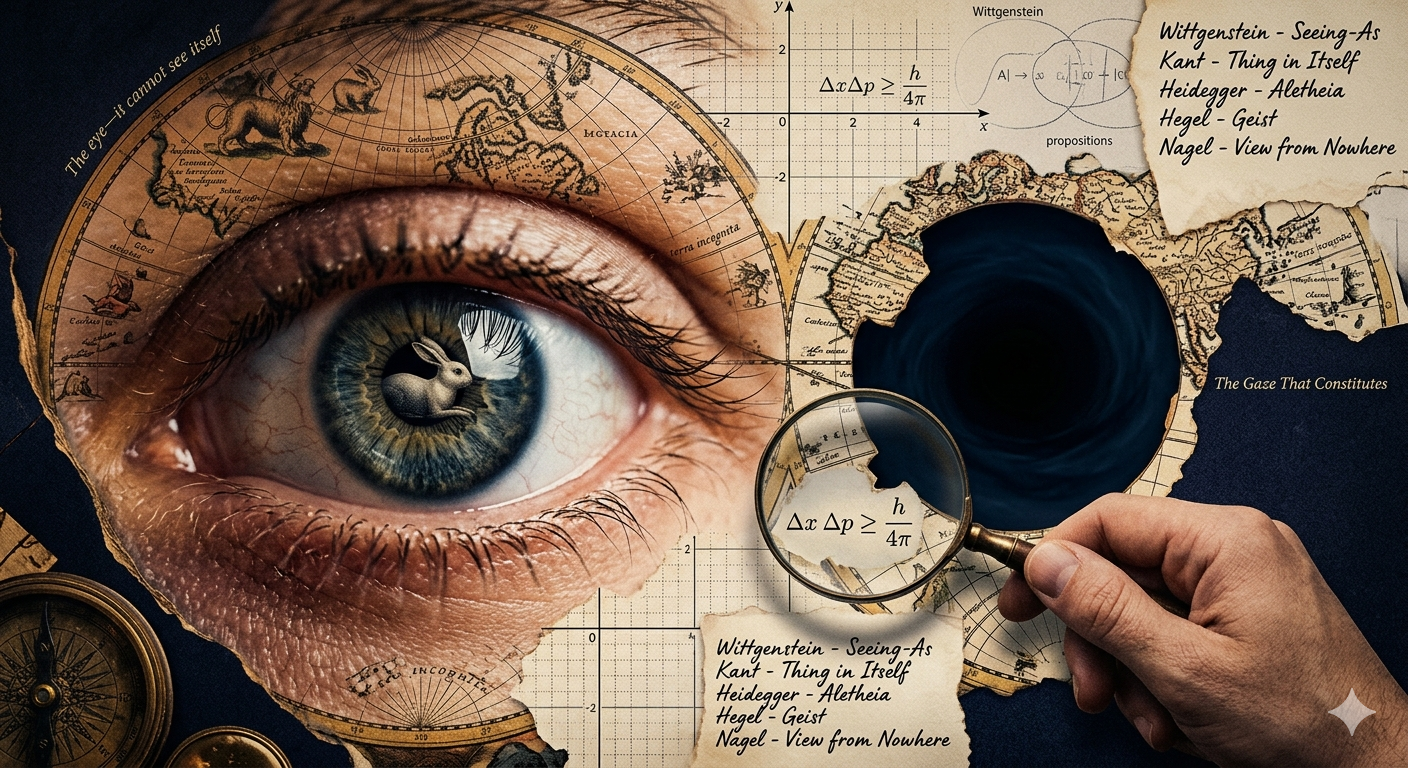
Hegel: the challenge that this inquiry cannot fully absorb
Georg Wilhelm Friedrich Hegel was Kant’s most penetrating critic, and his objection to the framework this inquiry has been constructing needs to be stated with some force.
Hegel’s argument begins with the crack in Kant’s foundation. To call the thing in itself unknowable is already to know something about it. To draw the limit of knowledge is to stand on both sides of it simultaneously — otherwise, you would not know where the limit falls. The concept of a boundary that cannot be crossed already assumes a position from which the boundary can be seen, which is to say, a position that has already, in some sense, crossed it. Kant’s limit is therefore not a stable terminus but a contradiction. And for Hegel, contradictions are not resting places. They are the engine of thought.
The dialectical movement Hegel proposes is not the simple optimism it is sometimes taken to be. It is not the claim that we will eventually know everything, or that the gap between appearance and reality will be closed by more careful thinking. It is the claim that the gap is itself a stage in the development of Geist — of mind or spirit — and that what looks from inside a given stage like a permanent limit is, from the perspective of a more developed stage, a superseded moment. The Absolute — Hegel’s term for the totality of reality as it is in and for itself — is not a thing we approach asymptotically from outside. It is the process of approach itself, the total movement of the mind through its own contradictions toward adequate self-understanding.
The implications for this inquiry are severe. Hegel would contest not merely the conclusion of the previous version — that the horizon is permanent — but the framework within which that conclusion was reached. The subject-object structure that organises Kant’s epistemology, that Wittgenstein presupposes in his analysis of aspect perception, and that Heisenberg’s physics inhabits — this structure is, for Hegel, not the neutral ground of all possible inquiry. It is a specific, historically located stage of Geist’s self-understanding, one that has already, in Hegel’s own philosophy, been shown to be inadequate and superseded.
This means that Hegel would read the convergence this inquiry proposes — the thesis that every act of knowing leaves an irreducible remainder — as a sophisticated but still-limited expression of what thinking looks like from within the subject-object framework. From the perspective of Absolute Knowing, the remainder is not irreducible. It is a sign that the framework has not yet been thought through to its conclusion.
The honest response to this challenge is not to refute it — that would require a full engagement with Hegel’s Logic that is beyond the scope of this essay — but to acknowledge what it implies for the inquiry’s own claims. The convergent propositions here are not stable conclusions. In light of Hegel’s challenge, they are better understood as stable conclusions within a particular philosophical framework — one that Hegel would regard as penultimate rather than final. Whether that framework is genuinely penultimate, or whether Hegel’s confidence in the eventual self-transparency of Geist is itself a kind of philosophical hubris, is a question that cannot be resolved here. What cannot be avoided is the acknowledgement that the question is live.
The intellectual honesty required here is uncomfortable. This essay is itself written within the subject-object framework that Hegel targets. Its arguments are framed as a subject — the author — making claims about an object — the limits of human knowing. Hegel would say that this framing is already the problem. There is no way to escape this without abandoning the essay form entirely, which would be a different kind of intellectual surrender.
Heidegger: the deepest challenge, and the cost of receiving it
Heidegger’s relationship to the tradition this inquiry has been tracing is not that of a contributor to a common project. It is that of a thinker who believes the common project is built on a concealment so deep that continuing to build within it is a form of philosophical evasion.
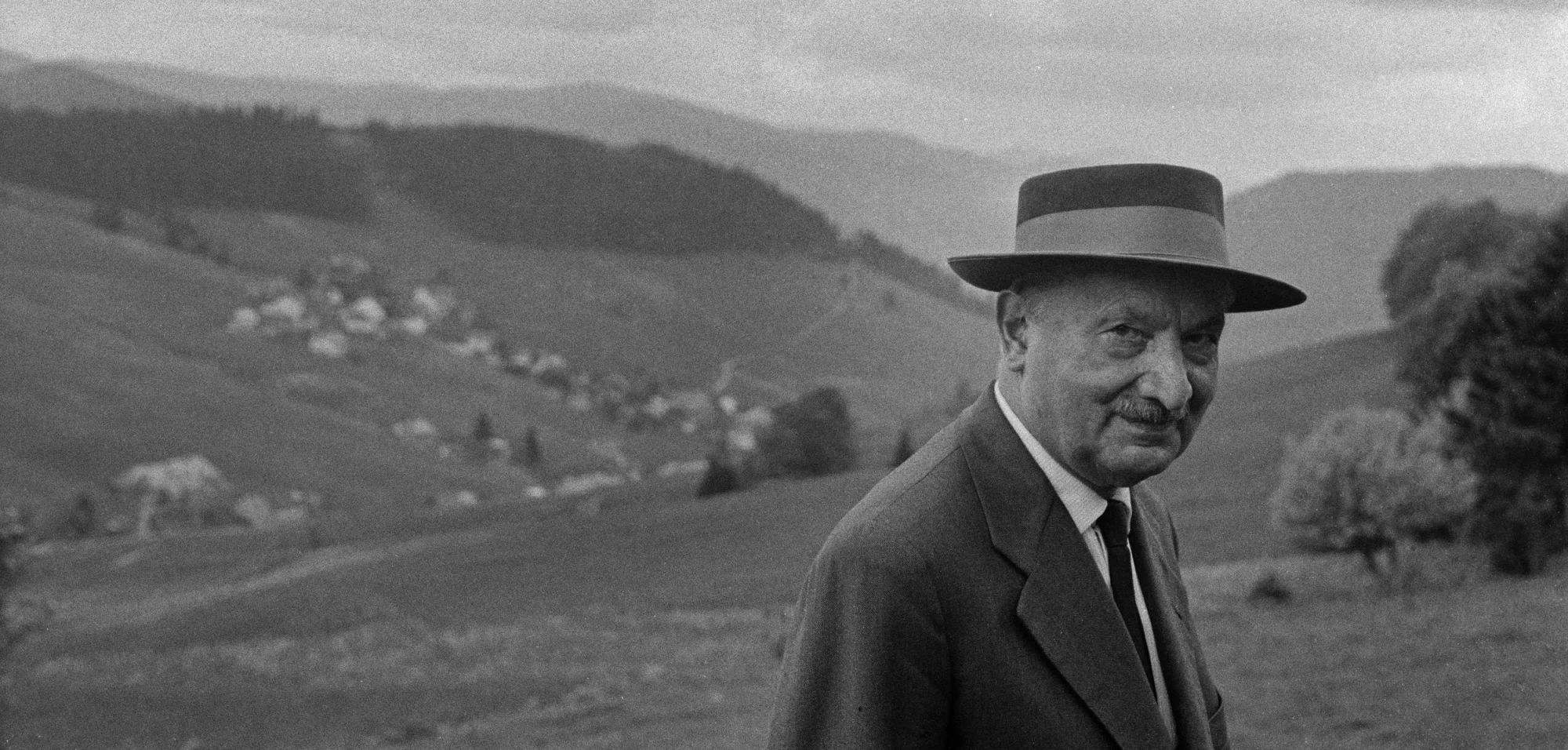
His central target is what he calls the forgetting of Being — the tendency of Western philosophy and science, since at least Plato, to concern itself exclusively with beings (the things that exist) while neglecting the question of Being itself (the condition of their existing at all). Kant’s transcendental idealism, Wittgenstein’s philosophy of language, Heisenberg’s physics — all of these operate within what Heidegger calls the metaphysics of presence: the assumption that reality is fundamentally a collection of objects with determinate properties, available in principle for complete and objective description. This assumption is not a conclusion that metaphysics has reached. It is the unexamined ground from which it starts.
Heidegger’s analysis of Dasein — his term for the kind of being that we are — dismantles this assumption. We are not minds confronting an external world across an epistemological gap. We are always already in the world, embedded in practices, relationships, and meanings that precede any act of theoretical reflection. The hammer in the craftsman’s hand is not first perceived as an object with properties and then used. It is encountered as ready-to-hand, as the hammer for this nail, in this workshop, toward this purpose. Its being is disclosed through involvement, not through detached inspection. The theoretical stance — the stance of the philosopher and the scientist — arises only when this practical involvement breaks down, when the hammer breaks and suddenly stands over against us as an object. Science is the systematic cultivation of this breakdown stance, the deliberate abstraction of things from their context into a domain of measurable, law-governed objects.
The implication for the concept of the unknowable remainder — the central preoccupation of this inquiry — is radical. The other thinkers we have examined identify a remainder left over after knowing: the thing in itself behind appearances, the unseen aspect, the dissolved conjugate variable. They frame this as a problem within the subject-object structure: a subject trying and failing to fully grasp an object. Heidegger’s point is that this framing is itself the problem. The remainder is not what the subject fails to grasp. It is what the subject-object structure covers over in the very act of constituting itself as a relationship between a knowing subject and a known object.
Truth, for Heidegger, is aletheia — unconcealment. It is not a property of propositions but an event: a happening in which Being discloses itself through beings. And this disclosure is always partial. Every act of unconcealment simultaneously conceals. What is brought into the light necessarily leaves something else in shadow. This is not a deficiency. It is the structure of disclosure itself.
The cost of receiving Heidegger’s challenge fully is high. It means acknowledging that the framework within which this entire inquiry has been conducted — the framework of a subject seeking to know the limits of its knowledge of an object-world — is itself a historically specific mode of concealment. The questions it asks are genuine, but they are not the most fundamental questions. Beneath them lies a question that the framework cannot formulate within its own terms: not how does a subject know an object, but how does anything show itself at all.
Here, Heidegger is not adding depth to the Kantian picture; he is questioning whether the Kantian picture is the right picture to be in at all.
Nagel: the self-referential trap, and why it matters
Thomas Nagel’s contribution to this inquiry is not an addition to the list of limits on human knowing. It is a challenge to the entire procedure by which such limits are identified and described.
His central claim, developed through the bat paper (1974) and The View from Nowhere (1986), is that consciousness — the subjective character of experience, the what-it-is-like — is precisely what the objective, third-person description of the world cannot capture. This is not merely an observation about the current state of neuroscience. It is a claim about the relationship between two fundamentally different kinds of description: the objective, view-from-nowhere description that science aspires to, and the subjective, first-person description that is the irreducible mode in which experience presents itself. No amount of progress in the former will yield the latter, because the gap between them is not a gap in knowledge. It is a gap in kind.
The self-referential implication of this claim must be confronted directly. This essay is itself an exercise in objective, third-person description. It describes the limits of knowing from a philosophical altitude, using the conceptual vocabulary of the Western philosophical tradition, making arguments that are designed to be valid regardless of who reads them. But if Nagel is right, then this procedure leaves out the most important fact about the knowing that is being limited: the fact that it is someone’s knowing. The subject who conducts this inquiry is not a transcendental subject in Kant’s sense — a universal, ahistorical locus of cognitive operations. It is a particular conscious being, with a specific phenomenal life, who happens to be thinking about perception and reality at this moment. And the character of that phenomenal life — what it is actually like to read Wittgenstein, to be struck by the Duck-Rabbit, to feel the vertigo of the Kantian system pressing against its own limits — is not captured anywhere in the philosophical description offered here.
This is not an argument that the philosophical description is wrong. It is an argument that it is incomplete in a way that the description itself cannot fully register. The knower is the blind spot at the centre of every map of knowledge — and a map that notes the existence of blind spots does not thereby cease to have them.
Nagel’s refusal of both reductionism and mysticism as responses to this problem is the correct refusal, but it leaves the inquiry in an uncomfortable place. We cannot explain consciousness in physical terms — the hard problem is genuine. We cannot declare it beyond rational inquiry — that is, intellectual surrender. We need better concepts, ones not yet available, that may require a reconceptualization of both mind and matter as radical as anything in the history of science.
The realist objection, and what it forces us to admit
The inquiry conducted so far has operated almost entirely within a tradition that might broadly be called the philosophy of finitude — a tradition, running from Kant through Hegel and Heidegger to Nagel, that takes as its central datum the fact that human knowing is perspectival, situated, and constitutively limited. This tradition is internally rich and generates impressive convergences. It is also a tradition, and like all traditions, it has its opponents.

The scientific realist tradition — associated with thinkers including J.J.C. Smart, David Armstrong, and in later work, Hilary Putnam — offers a sustained challenge to the central moves of this inquiry. The realist does not deny that human knowing is perspectival in many respects. But the realist argues that the inference from perspectival knowing to the permanent inaccessibility of mind-independent reality is invalid. The history of science, on this view, is precisely the history of thought progressively freeing itself from merely local and perspectival constraints — moving from the observer-relative properties of colour and heat to the observer-independent properties of electromagnetic radiation and molecular kinetic energy. The view from nowhere is not an illusion or an impossibility. It is an achievement, never perfect, always partial, but genuinely approached through the progressive refinement of scientific method.
Against the Duck-Rabbit, the realist would argue that Wittgenstein has established something about the psychology of perception, not about the metaphysics of reality. The fact that human perceptual experience is organised by conceptual frameworks does not entail that reality itself lacks determinate, observer-independent properties. The duck and the rabbit are both projections onto a set of lines that has its own determinate physical structure, independent of how any perceiver organises it. Wittgenstein’s lesson is about us, not about the lines.
Against Kant, the realist deploys something like the inference to the best explanation: the reason our cognitive frameworks track the world as successfully as they do — the reason science works, the reason bridges stand and aeroplanes fly — is most plausibly explained by supposing that those frameworks are genuinely tracking mind-independent features of reality, however imperfectly. Kant’s transcendental idealism, on this view, makes the success of science mysterious. Why should the categories of the understanding, if they are contributions of the subject rather than features of the object, so reliably generate predictions that allow us to intervene effectively in the world?
These are not knockdown objections. The tradition of finitude has responses to all of them. But they are serious objections, and the failure to engage them is a genuine weakness. The convergences identified in this inquiry are real, but they are convergences within a tradition, and a tradition is not a proof. The realist is entitled to read the entire argument of this essay as a demonstration that the philosophy of finitude generates internally consistent conclusions, which is rather less than a demonstration that those conclusions are true.
The honest position is this: the case for the permanent perspectival limitation of human knowing is strong, philosophically sophisticated, and supported by convergent testimony from multiple disciplines. It is not conclusive. The debate between the philosophy of finitude and scientific realism is live, and any treatment of this territory that does not acknowledge this is doing its readers a disservice.
What follows — and what cannot follow
The inquiry has now accumulated enough pressure to make a conclusion possible.
What can be said with confidence: every major tradition of philosophical reflection on the conditions of human knowing — from Kant’s transcendental idealism to Heidegger’s destruction of metaphysics, from Wittgenstein’s philosophy of language to Nagel’s philosophy of mind — arrives at a version of the same finding. The knowing subject is not outside the world looking in. The act of knowing participates in the constitution of what is known. The frameworks through which knowing proceeds are not neutral, transparent, or exhaustive. And there is, structurally, always a remainder — something that the act of knowing leaves behind or covers over in the very process of grasping what it grasps.
This finding is robust. It survives the internal disagreements between these thinkers — whether the limit is permanent or dialectically traversable, whether the subject-object framework is the right framework to be in, whether the remainder is epistemological or ontological. It also survives, as a finding, the realist objection, which concedes the perspectival character of human knowing even while contesting the inference to permanent limitation.
What cannot be said is that this finding constitutes a settled conclusion about the nature of reality. The five convergent propositions of the essay are, in effect, a philosophical doctrine: a stable account of our epistemic situation presented as the outcome of the inquiry. But the inquiry itself, if taken seriously, undermines the stability of any such outcome. Hegel showed that the framework producing the conclusion is itself a stage of thought that contains its own contradictions. Heidegger showed that the subject-object structure within which the inquiry operates is itself a historically specific concealment. Nagel showed that the consciousness conducting the inquiry is itself the most unexplained fact in the universe. These are not additions to a stable conclusion. They are challenges to the idea that any conclusion can be stable.
The inquiry into the limits of knowing is itself subject to the limits it describes. This is not a paradox to be resolved. It is the condition of the inquiry — the condition of any inquiry conducted by finite, thrown, conscious beings who cannot step outside their own perspective to check their work. This inquiry has tried to make it the condition under which the investigation is conducted—to feel its pressure from the inside rather than merely describe it from the outside.
The difference matters. Philosophy at its best is not the production of a more and more refined set of stable conclusions. It is the cultivation of a particular kind of attentiveness — to the ways our frameworks conceal what they reveal, to the remainders left by our best acts of knowing, to the question of Being that precedes every question about beings, to the consciousness that is doing the questioning and that no theory has yet explained. This attentiveness does not issue in a doctrine. It issues in a practice — the practice of holding the question open rather than closing it, of sitting with genuine difficulty rather than resolving it prematurely, of being willing, when the abyss gazes back, not to look away.
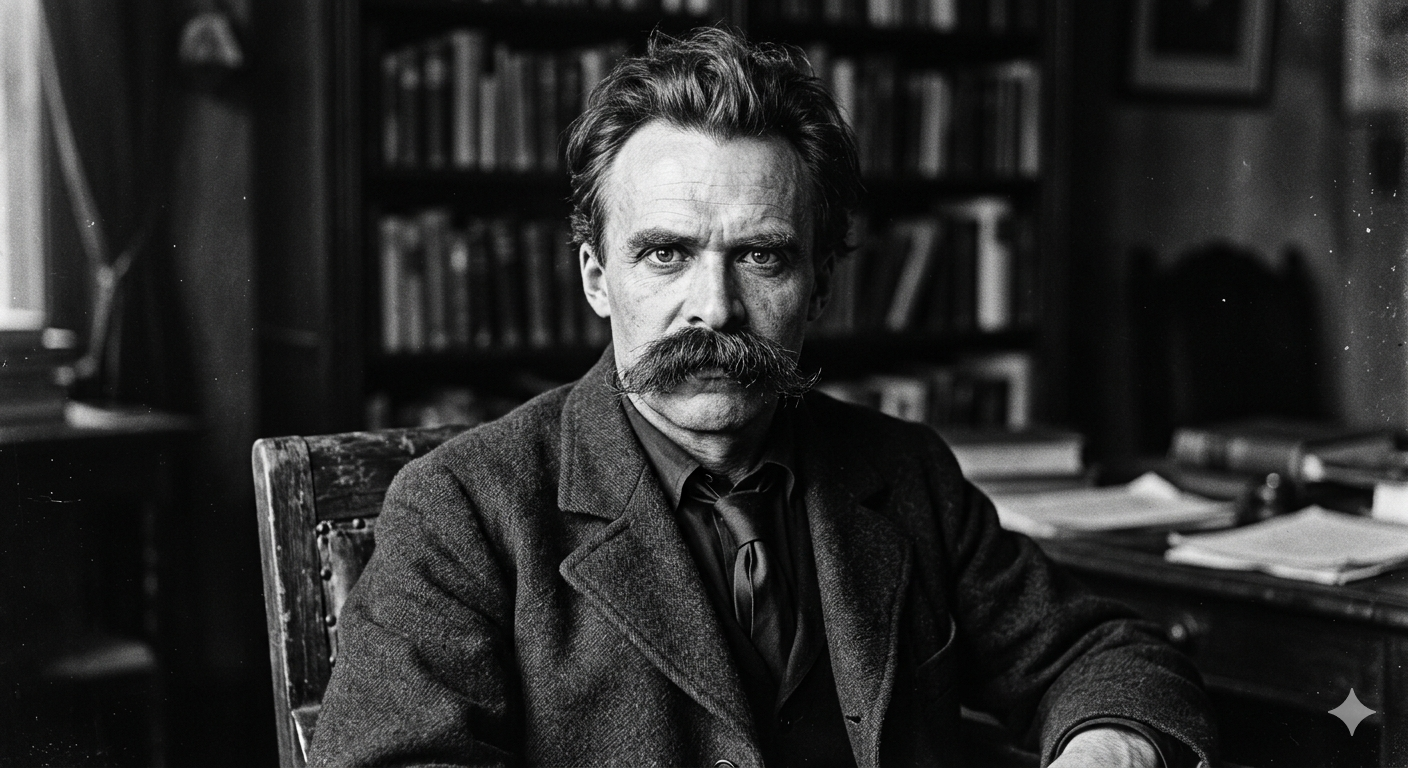
Nietzsche understood that this is not a comfortable practice. The thinkers assembled in this inquiry — Kant building his system against the pressure of the unknowable, Heidegger dismantling Western metaphysics and emerging speaking a language his contemporaries barely recognised, Wittgenstein tearing up his first philosophy and beginning again, Nagel absorbing professional contempt for refusing to pretend that consciousness is explained — each of them paid a version of the cost that genuine philosophical engagement with these questions exacts. The cost is not merely intellectual. It is existential. The frameworks we think within are not just cognitive tools. They are the structures within which we find orientation, meaning, and a liveable relationship with the world. To question them genuinely — not academically, not from a safe distance, but with the full pressure of the question bearing down — is to risk something that no philosophical conclusion can restore.
This essay cannot end by naming what is gained in exchange for that risk, because it does not know. What it can say is that the risk appears to be constitutive of genuine inquiry. That every thinker in this tradition who went far enough found themselves at the same threshold. That the threshold is real, and not the kind of thing that more reading or more argument will carry you past and yet, like Hegel, it might just be where the real thinking begins.
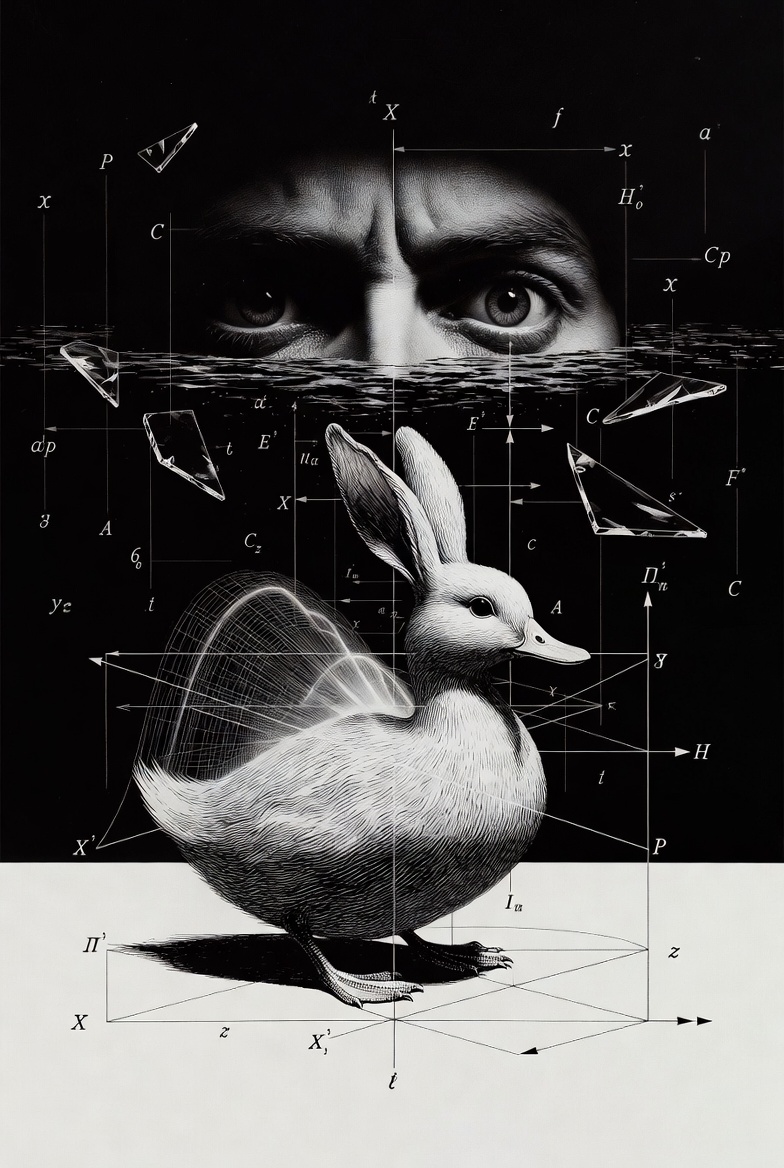
The duck and the rabbit are still there. The box is still sealed. The abyss is still looking.
And the only honest response to that — the only response that does not betray the inquiry — is to keep looking right back at it, asking questions.
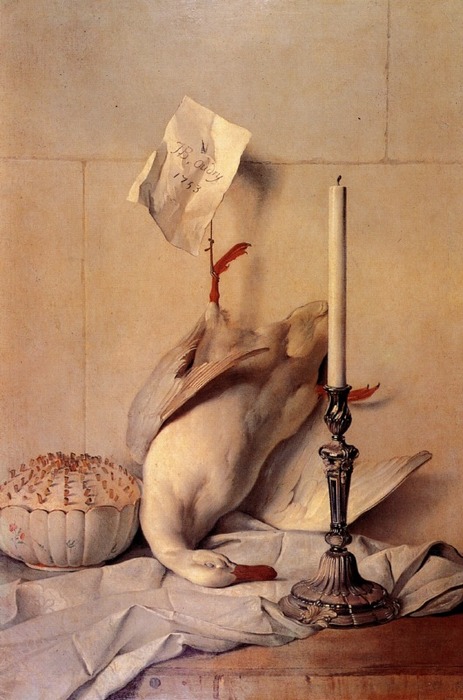
“I live in eternal hope that when I finally ascend to that great restaurant at the top of the universe, the waiter will smile, wink -and without even bothering to take my order- pop out to the kitchen and call for a dish of red curried duck; whilst over my shoulder, the sommelier is already decanting a brilliant Pinot Noir from an excellent vintage.”
Darren Gall
