
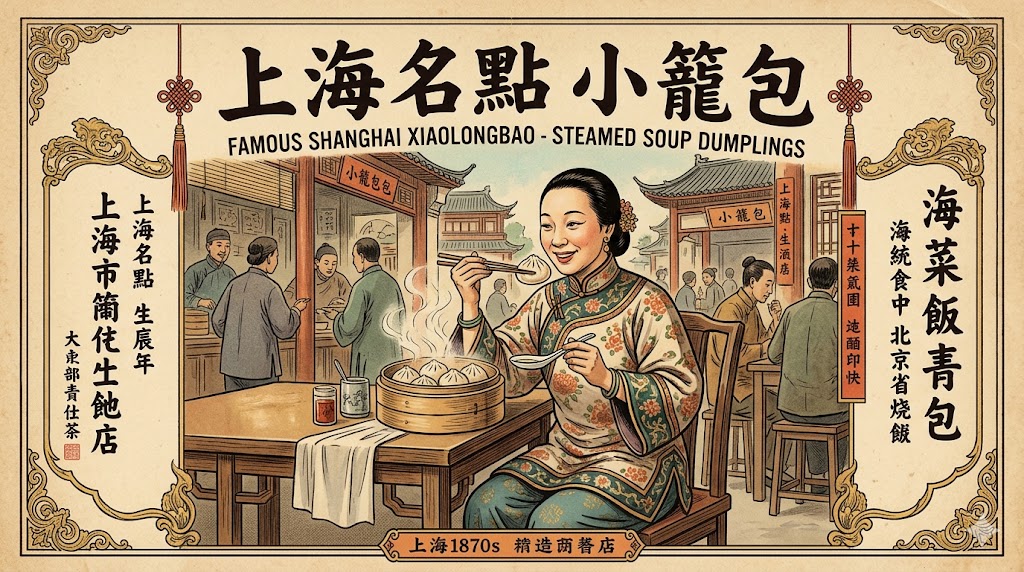
The Alchemy of Steam: The Story of Xiao Long Bao (小笼包)
You never forget your first taste of the little pleated dumpling filled with soup and pork, known as xiaolongbao. This is ostensibly because it is usually something of a messy, even painful, catastrophe—hot soup splashing about your fingers and onto your clothes, before burning a few layers off the roof of your mouth!
Yet, you will undoubtedly come back for more and eventually perfect the art of eating the magical little dumpling and savour it for the culinary treasure that it is.
In the pantheon of global comfort foods, few dishes command as much reverence or require as much surgical precision as xiaolongbao.
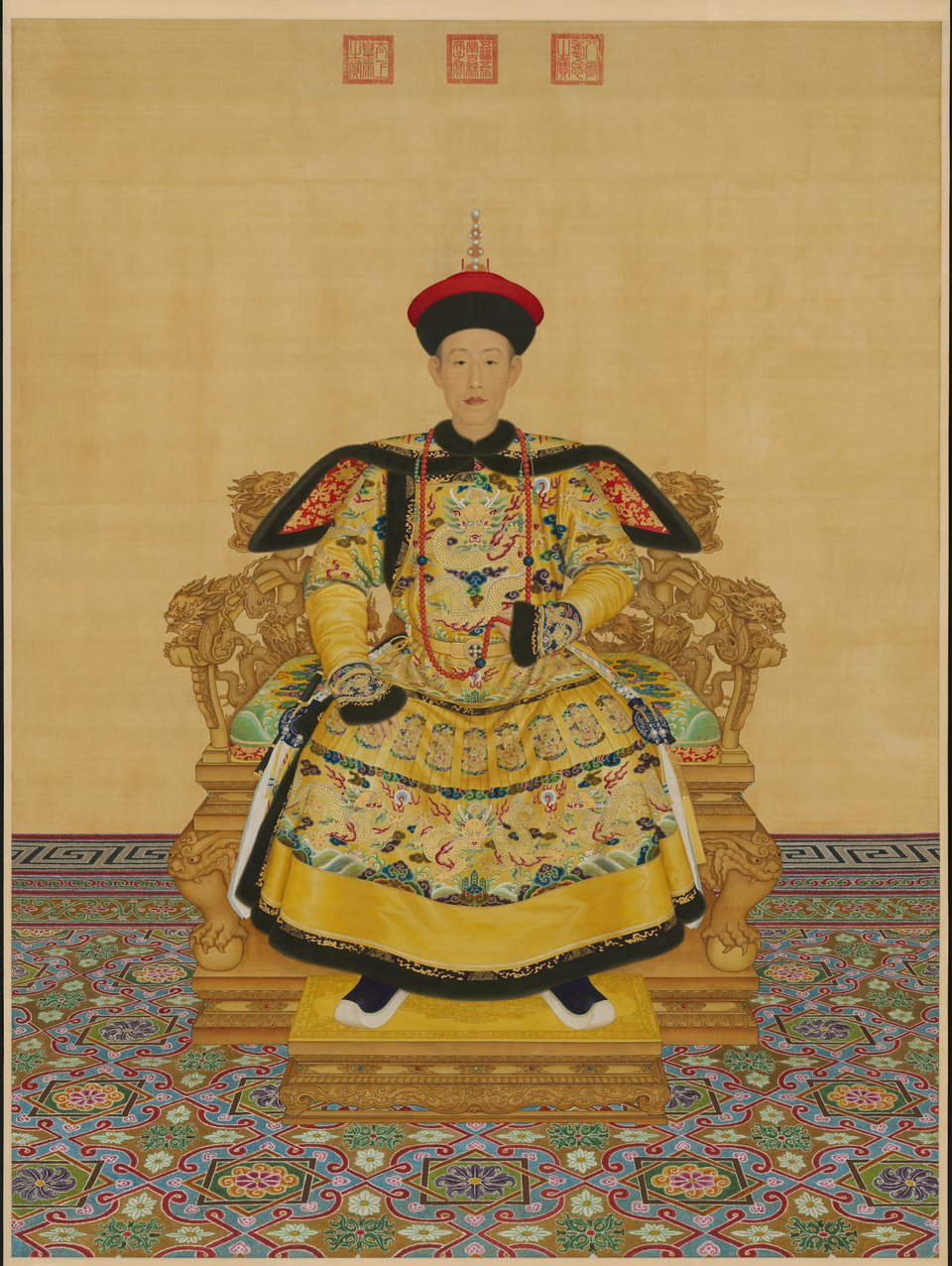
There is a fanciful legend that tells the story of the Emperor Qianlong (1711-1799), who is said to have tasted the dumpling in Wuxi during his travels through Jiangsu. Word of his enjoyment of the dish soon spread, making it famous. The name Long (which can mean both basket or dragon) was used to honour the emperor, making it ‘small-dragon-bun.’
The more accepted name, ‘little basket bun,’ and its accompanying history, suggest that xiaolongbao originated in Shanghai in the 1870s. It is said to have been created by a chef named Huang Mingxian, the owner of the eatery known as Ri Hua Xuan.
The restaurant was in Nanxiang, a historic town in the Jiading District of Shanghai—a village established in 505 AD during the Liang Dynasty. The town is known for its 1,500-year-old twin pagodas and its classical gardens, such as the Guyi Garden and the historically rich Tanyuan Garden.
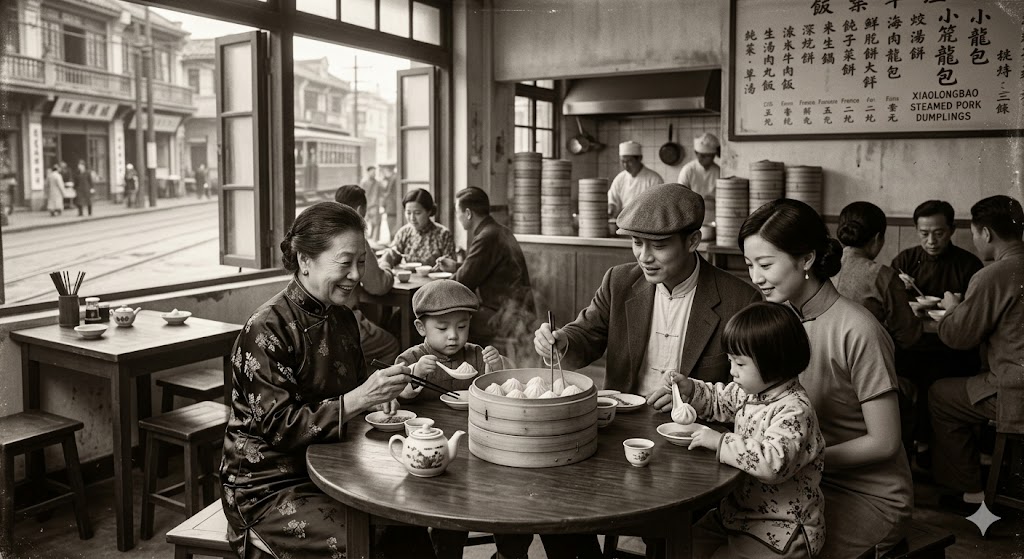
In 2010, Nanxiang Ancient Town was designated as a Chinese Historical and Cultural site by the National Cultural Heritage Administration of China. However, in the late 1800s, Nanxiang was a market town with a thriving trade in silk, bamboo, and rice. In this bustling, competitive centre of trade and commerce, Huang Mingxian’s genius was in incorporating aspic into the minced-pork filling of his dumplings. The aspic became liquefied in the steamer, filling the little dumpling with soup. They were an instant sensation and hungry diners were soon queuing up for a taste of these delicious little pouches of goodness. The new dish was also met with a certain degree of amazement, as diners tried to figure out just how Ri Hua Xuan managed to get his soup inside the dumpling!
The dumplings became an enormously popular dish in Shanghai, finding their spiritual home at the Nanxiang Mantou Dian, in the City God Temple 城隍庙 (Yu Garden), where queues still stretch around the block today.
Its fame has spread across the globe, and xiaolongbao is not only a signature of dim sum but also an icon of Chinese culinary culture.
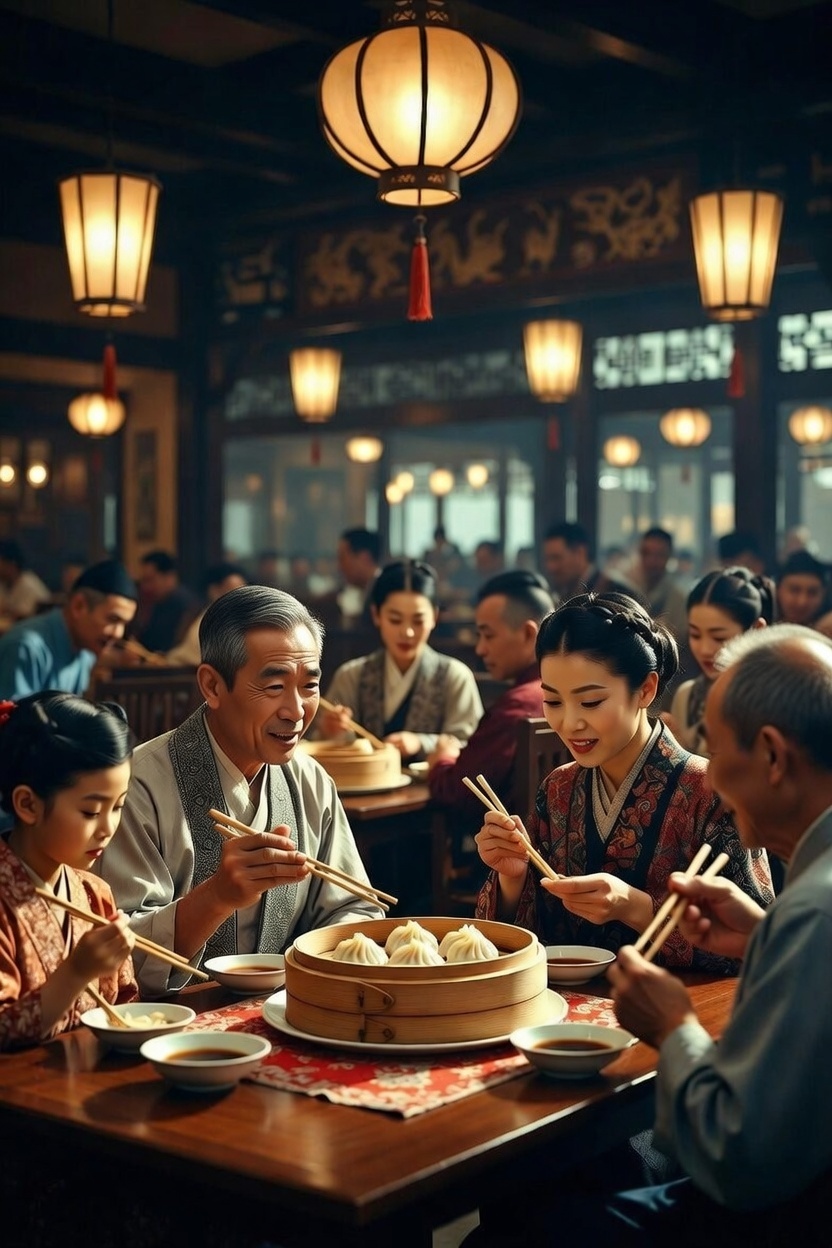
Making xiaolongbao dumplings is considered high craft, closer to pastry than to everyday dumpling work. The dough must be rolled thin enough to be translucent when steamed, yet strong enough to hold liquid without tearing. The pleating is especially demanding; traditional standards call for eighteen fine pleats, evenly spaced and twisted at the top like a tiny pouch to seal in the goodness. Speed, consistency, and delicacy are all required. In top kitchens, apprentices may spend months mastering dough texture and pleating technique before they are allowed to work independently.
The traditional filling is minced pork mixed with ginger, Shaoxing wine, soy sauce, and sesame oil. What makes xiaolongbao unique is the soup: a rich pork broth is cooked with skin and bones until full of collagen, then chilled until it sets into gelatin. This aspic is diced and mixed into the meat filling. When the dumplings are steamed, the gelatin melts back into liquid, creating this incredible signature soup inside the wrapper.
It is served steaming hot in bamboo baskets, traditionally with Zhenjiang black vinegar and slivered ginger as accompaniments. The proper way to eat one is to lift it gently with chopsticks, place it on a spoon, nibble or poke a small hole in the casing to release steam—which triggers an immediate Pavlovian response. You then sip the soup and eat the rest in one or two bites.
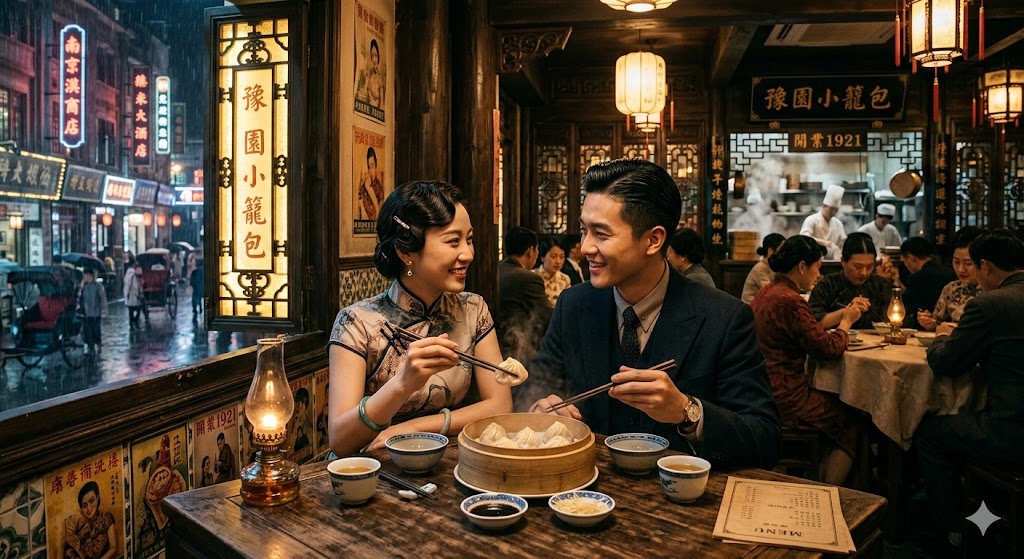
Whilst xiaolongbao is most strongly associated with Shanghai, where the dumplings are a breakfast staple and a point of local pride, regional variations have emerged. In Wuxi, the dumplings are slightly sweeter; Hangzhou styles are milder and more aromatic; Taiwanese versions—influenced by Jiangnan refugees after 1949—tend to be slightly smaller and more refined.
The most famous name internationally is Din Tai Fung, founded in Taiwan, which standardised xiaolongbao with remarkable precision and introduced them to a global audience.
Variations are now common, and there are many popular alternatives to the classic pork with soup bun. Modern versions include foie gras, truffle, wagyu beef, Sichuan peppers, and more. The other day, I had a superb chilli-crab-filled xiaolongbao. As enjoyable as these fusion buns can be, I will always return to the original; there is nothing quite like it, a timeless classic.
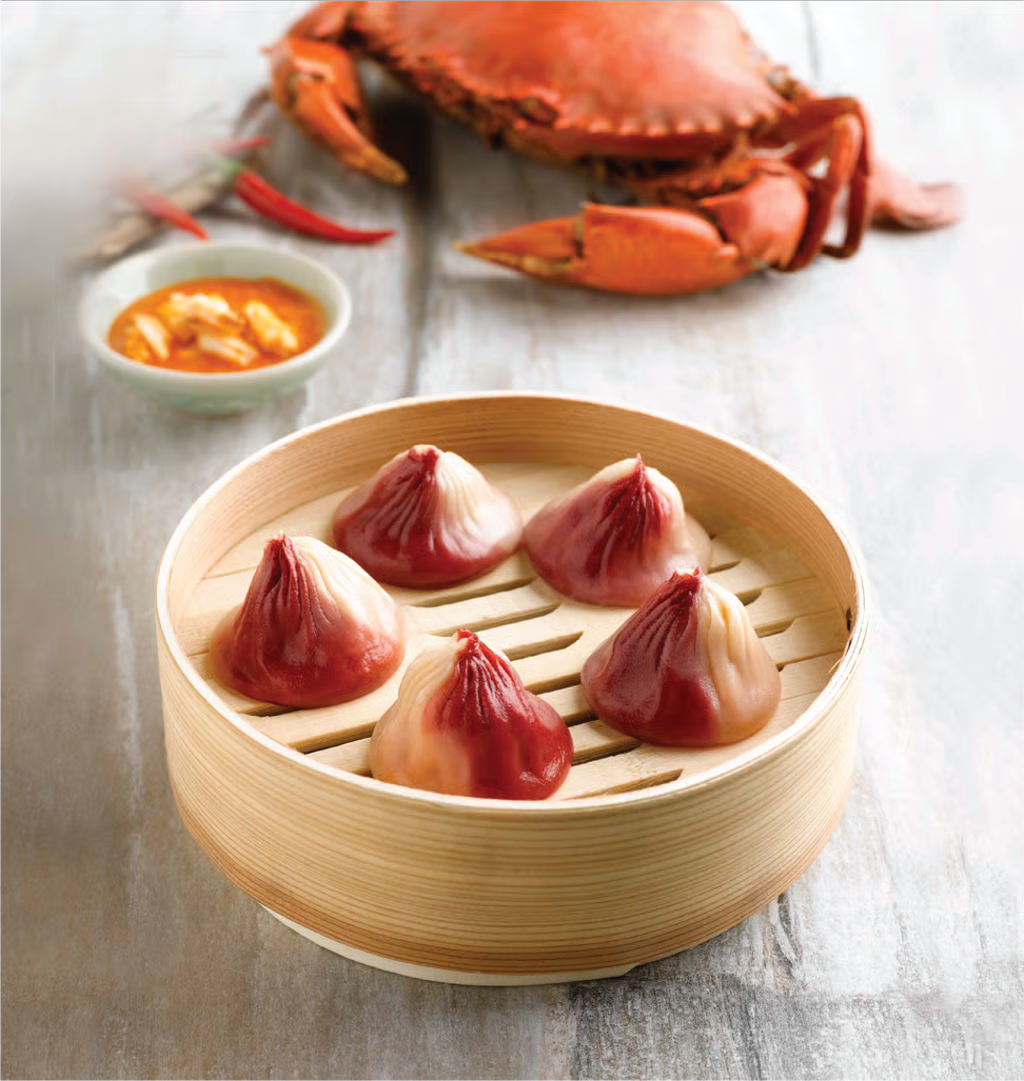
A well-made xiaolongbao offers multiple sensations at once: the tender resistance of the wrapper, the sudden gush of savoury broth, and the soft, juicy pork filling. The soup should be rich but clean, coating the mouth without greasiness. Ginger adds warmth, and vinegar provides brightness. The overall effect is balanced and comforting rather than heavy.
Eating xiaolongbao is both playful and intimate. There is anticipation in lifting the dumpling intact, a small thrill in piercing it, and satisfaction in drinking the broth. People often describe them as comforting and joyful, associated with family breakfasts, crowded teahouses, or late-night snacks.
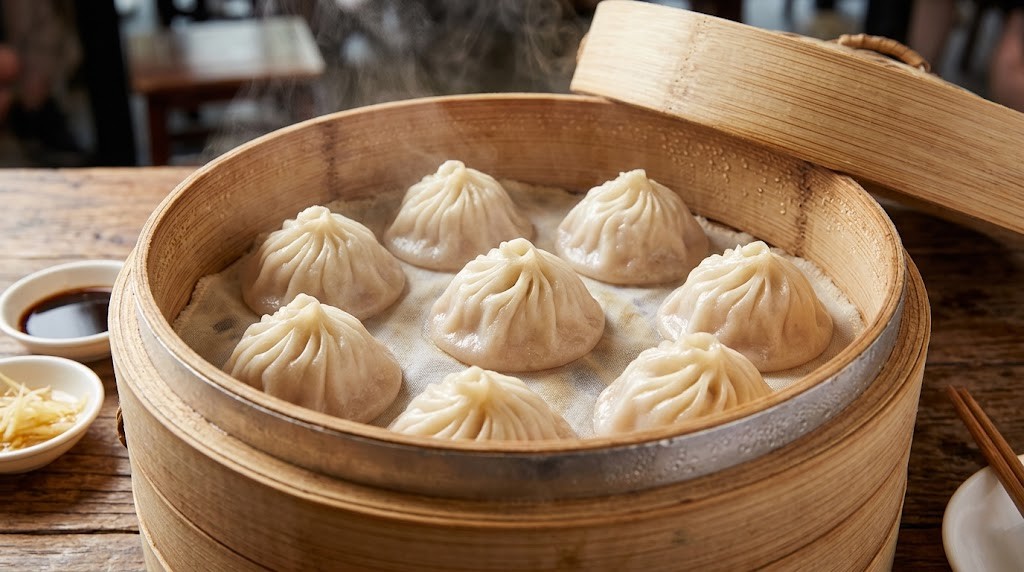
Culturally, xiaolongbao represents the “Golden Mean” of Chinese philosophy—a perfect balance of hot and cold, meat and grain, liquid, and solid. For many, it evokes a sense of home and shared community. It is a slow-motion meal that forces you to be present; you cannot rush a soup dumpling without risking a scalded tongue or a messy plate. To eat it is to appreciate the patience of the chef and the simple, profound joy of a perfect bite.
In Phnom Penh, head to Sevensea, Yi Sang or the Almond Hotel for exceptional xiaolongbao in Cambodia.
Darren Gall
