
Be Cos – Reflections on the Lake
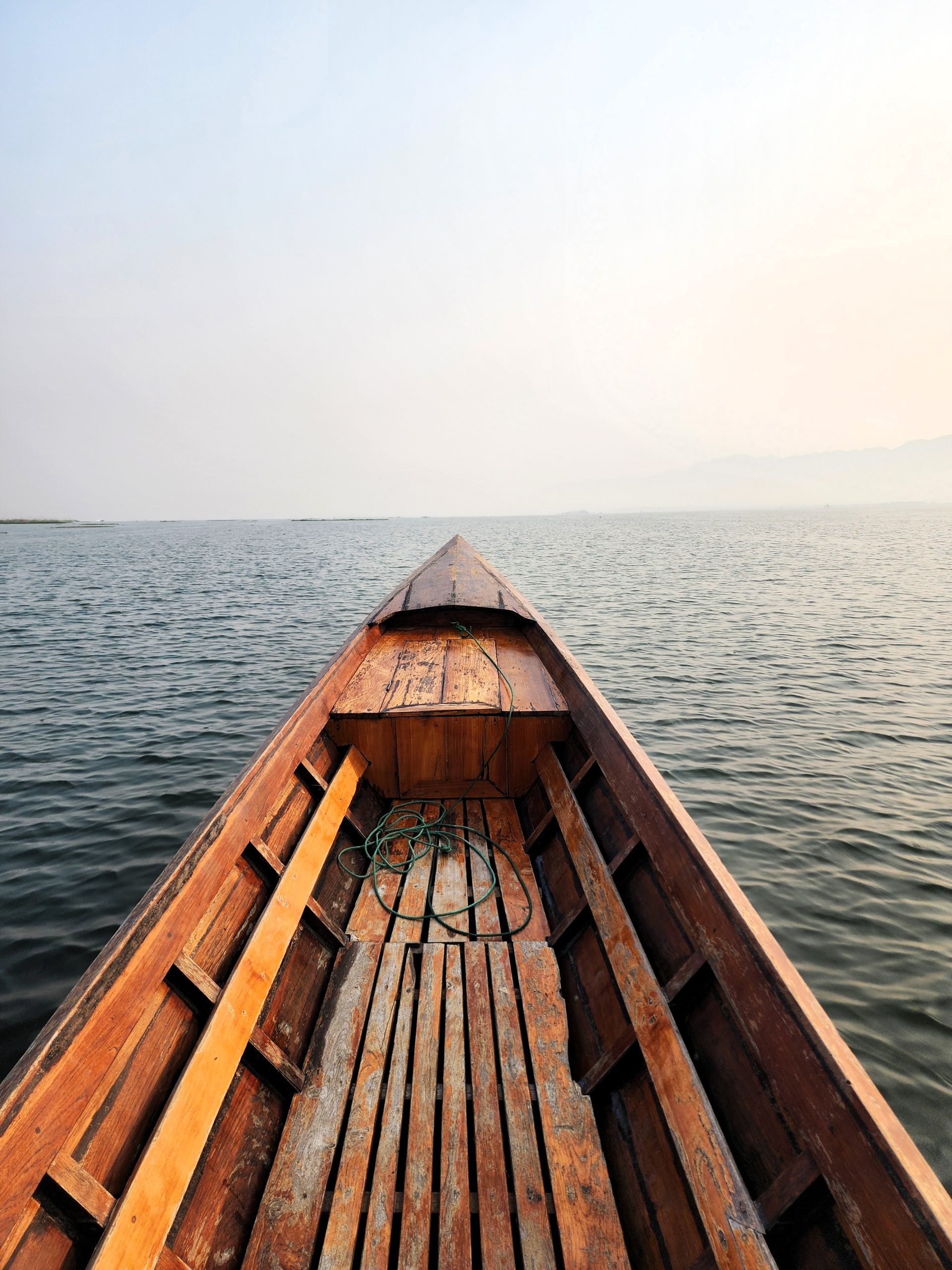
The expansive Inle Lake in southern Shan State, Myanmar, is calm, tranquil and alluring. Its beauty is seductive, but like the siren’s song it carries questions—questions not for the faint of heart.
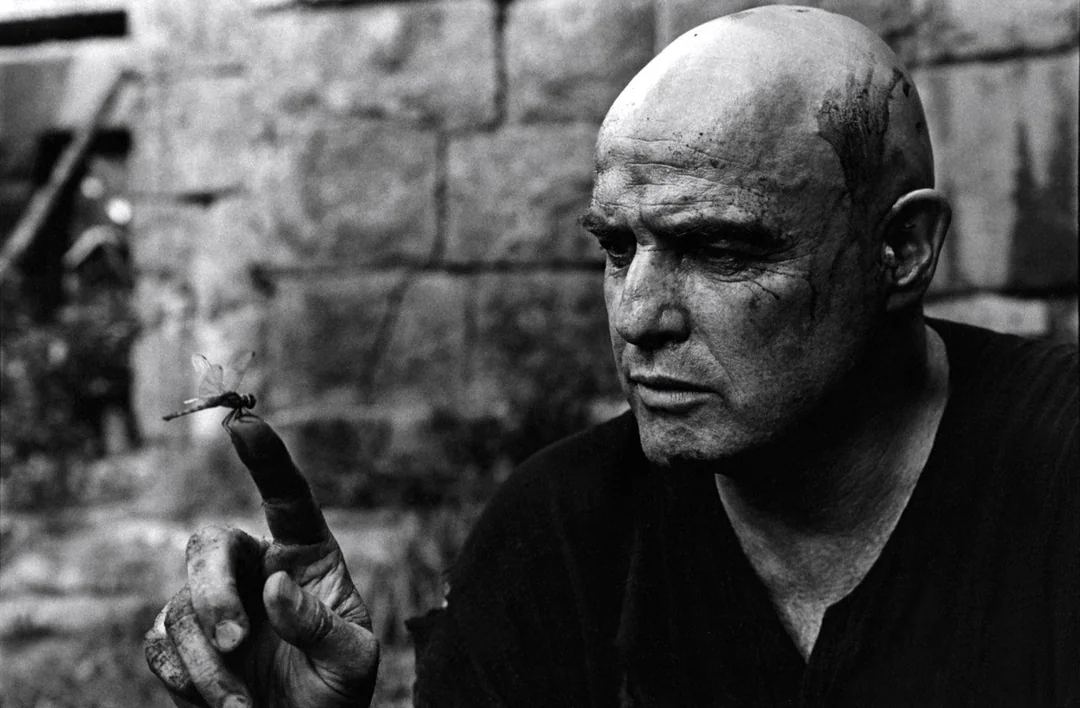
“I went down that river once when I was a kid. There’s a place in that river – I can’t remember – must have been a gardenia plantation at one time. It’s all wild and overgrown now, but for about five miles, you’d think that heaven just fell on the earth in the form of gardenias. Have you considered any real freedoms? Freedoms from the opinions of others. Even the opinions of yourself…”
― Colonel Kurtz (Marlon Brando)
The Heart of Darkness
In Francis Ford Coppola’s trauma-ridden, psychological war thriller, Apocalypse Now (1979), Captain Benjamin Willard travels up the Mekong Delta on a small patrol boat to meet the reclusive, rogue Colonel Walter E. Kurtz, played by the legendary actor Marlon Brando.
Now the stuff of cinematic legend, Brando–who had not been seen on screen for some time–commanded an epic fee, then arrived on set overweight and in bad shape. He had not read the script, nor learned any of his lines, and flatly refused to do so.
Coppola was way over budget, way behind schedule and on the verge of an epic nervous breakdown. Eleanor Coppola (Francis’s wife) filmed the making of the movie, giving it the title Hearts of Darkness: A Filmmaker’s Apocalypse.
Brando’s Kurtz was menacing, darkly philosophical, and dripping with malevolence. Formidable and unpredictable, Brando was mesmerizing in the role, hypnotic, enigmatic; you could not take your eyes off him, as his character drew you into his own strange and savage world.
Francis Ford Coppola’s film was itself loosely based on Joseph Conrad’s 1899 novella, Heart of Darkness. The film transposes the story from a journey up the Congo River in the Belgian colony to the late 19th century and a journey up the Mekong Delta during the Vietnam War.
Conrad’s Heart of Darkness explores the hypocrisy of European imperialism, the moral degradation caused by unrestrained power, and the darkness inherent in human nature.
“When a truth is not given complete freedom, freedom is not complete.”
― Vaclav Havel
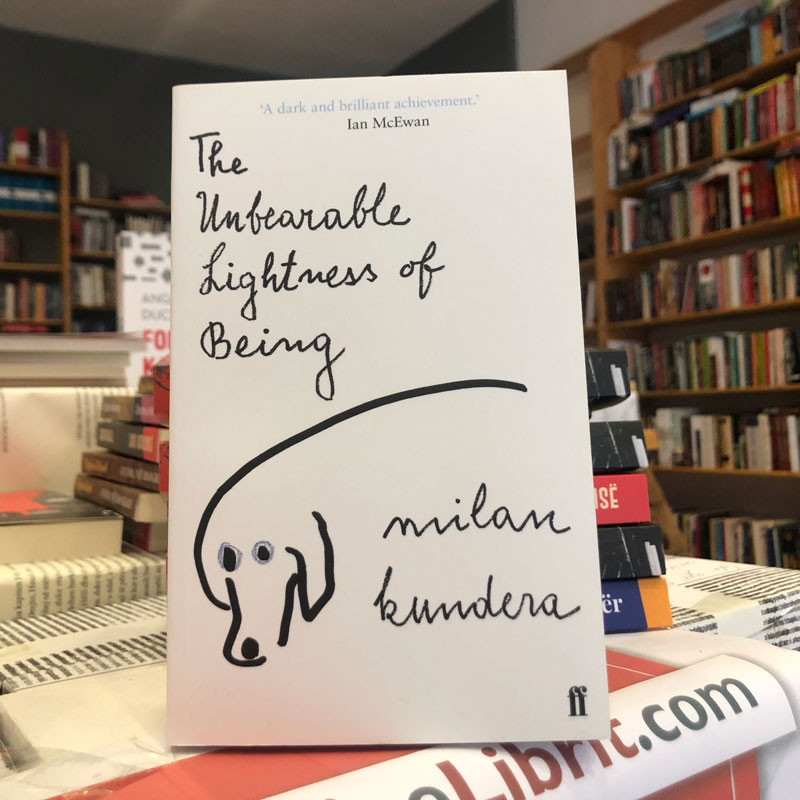
The Unbearable Lightness of Being
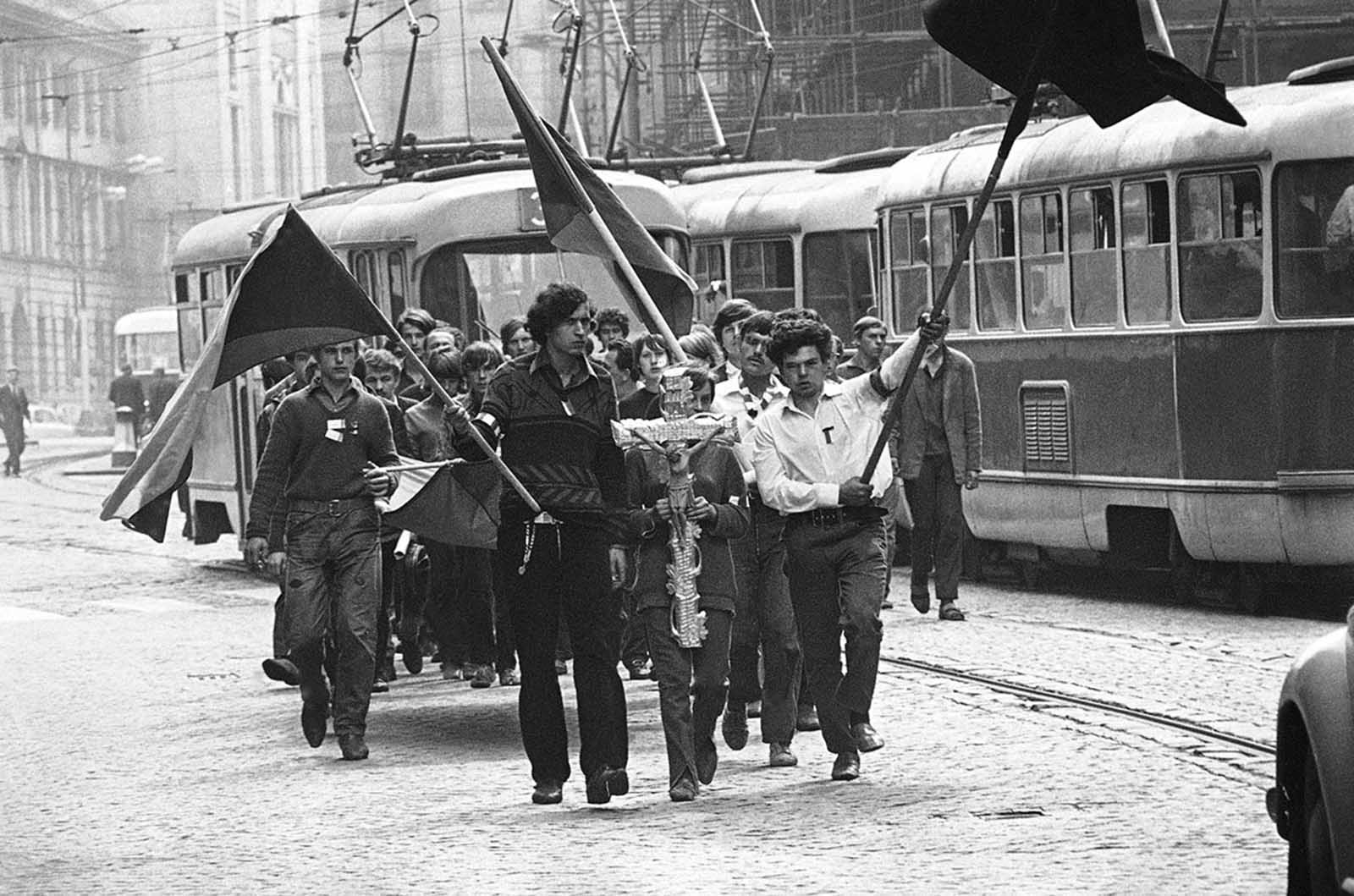
Milan Kundera’s exceptional novel, The Unbearable Lightness of Being begins during the Prague Spring of 1968, the people’s uprising and the subsequent Soviet invasion that put it down. This creates a dramatic backdrop in which to explore the themes of pursuing a life of lightness, freedom and transience, a life without a care in the world, or to face up to and accept the burdens of responsibility, of love and of commitment.
The book is a profound meditation on the existential weight of our choices, exploring the Nietzschean thought experiment of eternal return (The Gay Science, 1882): if the universe recurred infinitely, every action would carry the “heaviness” of eternal consequence. Conversely, if we only live once, our lives possess an “unbearable lightness”—a freedom so total it borders on insignificance. It asks us to evaluate how much we love our own lives, challenging individuals to embrace their existence so fully that they would crave its repetition. The concept is a tool to combat nihilism and encourage the affirmation of every moment—even the bad ones—as valuable.
Ultimately, these burdens give weight and meaning to our lives and are therefore worth the sacrifice—even the danger.
“Keep the company of those who seek the truth—run from those who have found it”
― Vaclav Havel
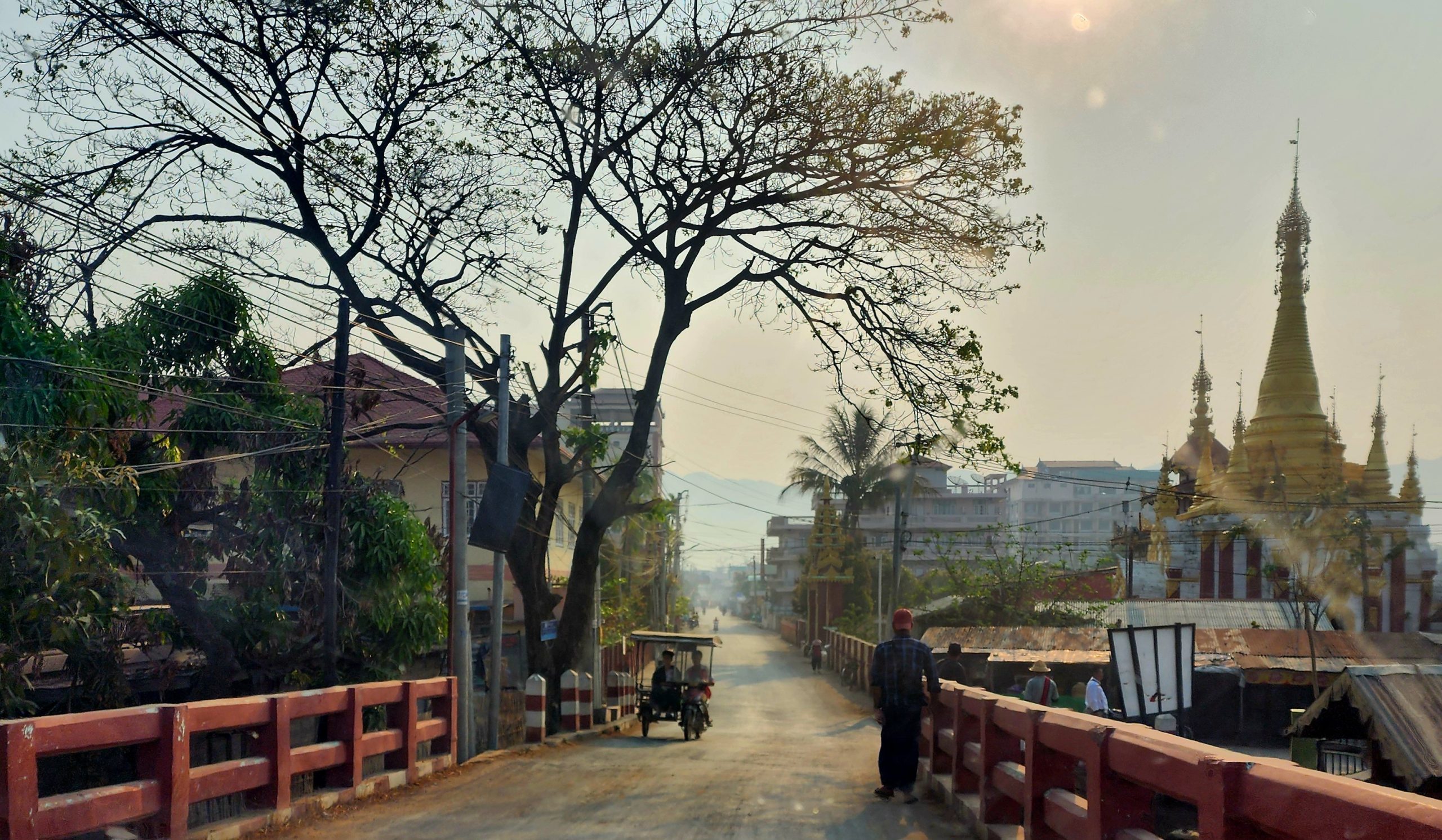
Paradise Lost
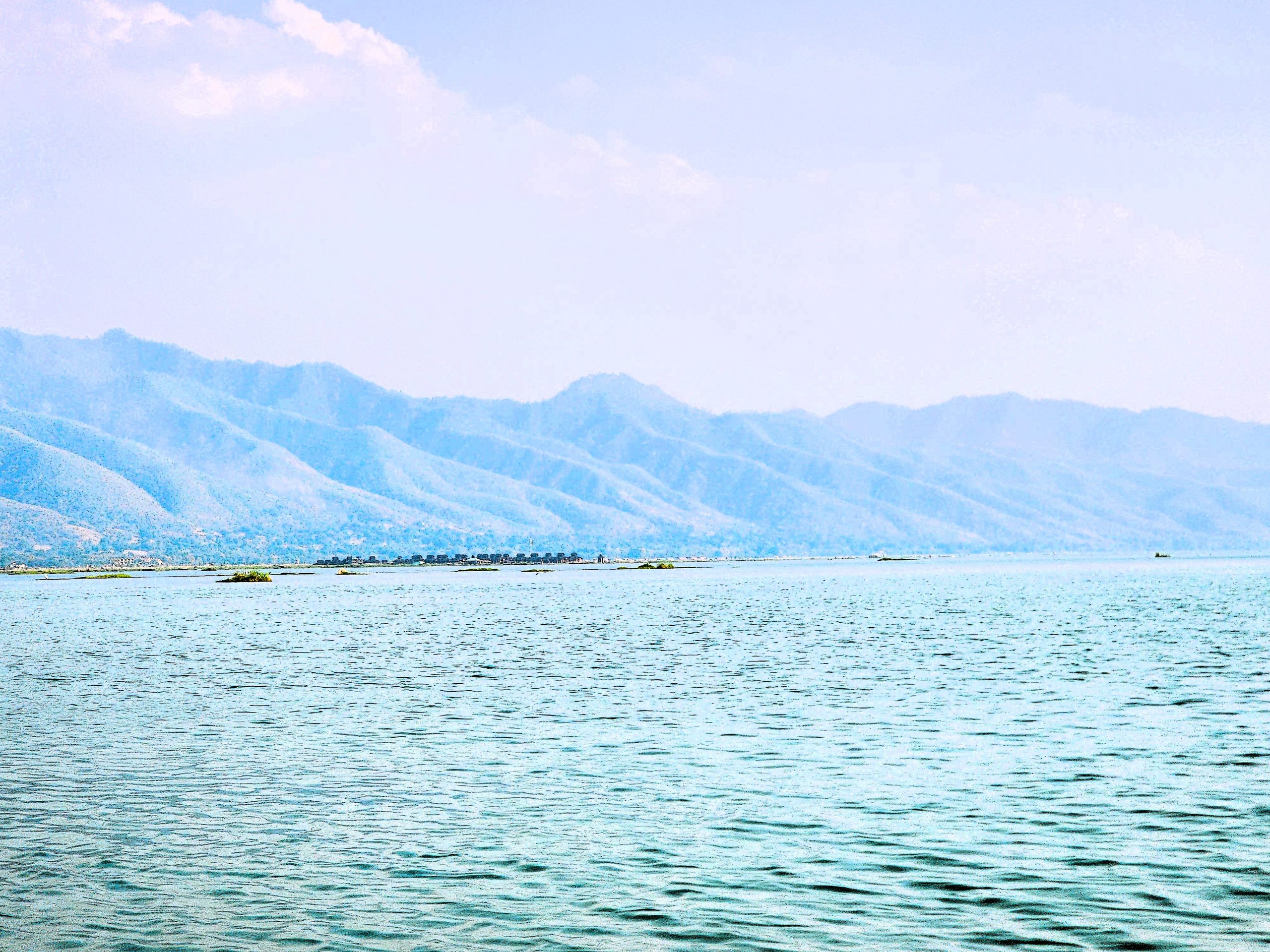
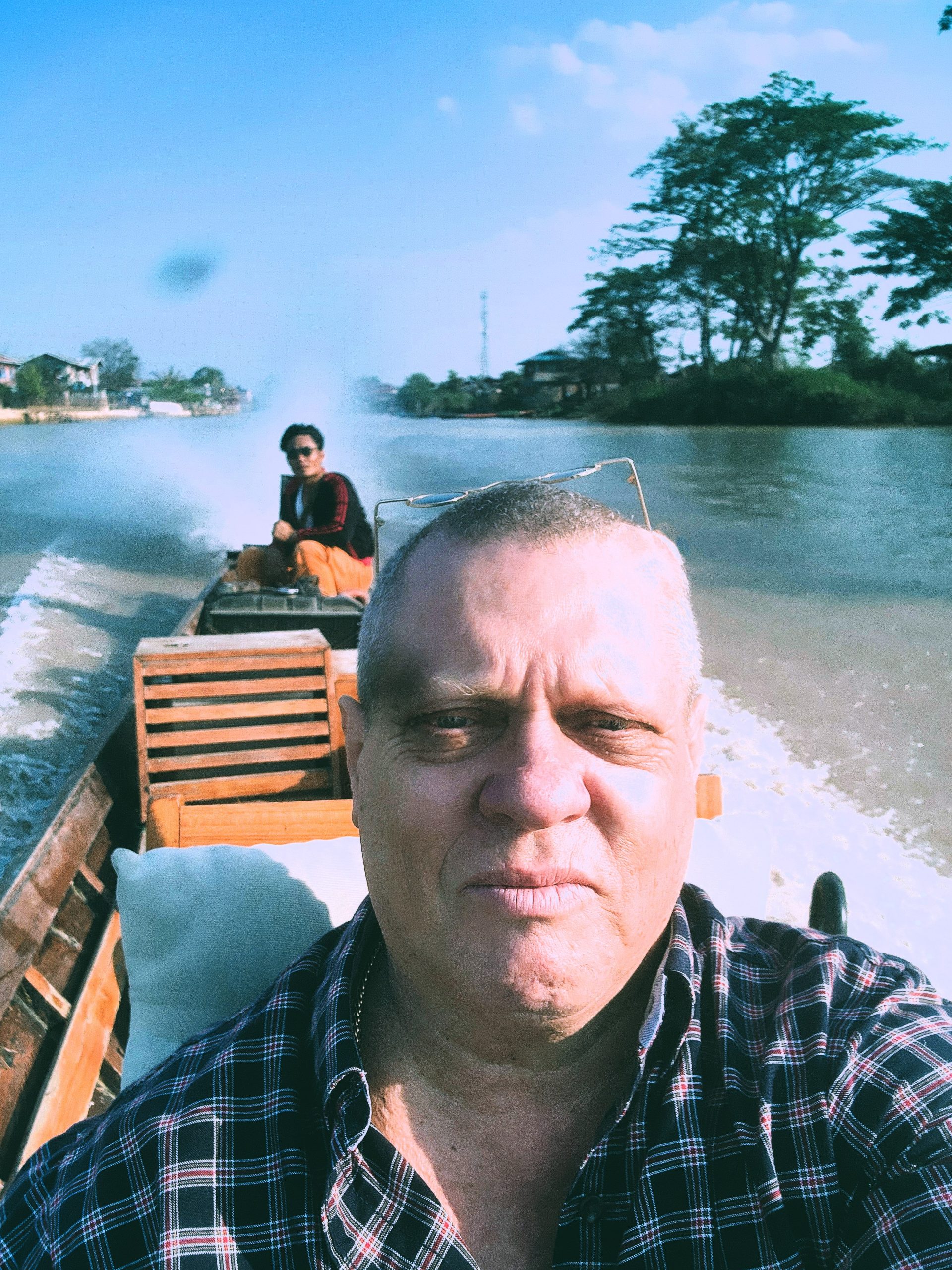
Such were my thoughts as our long and narrow boat sped across the surface of a vast, smooth lake, in the heartland of what I had always known as Burma, a former British colony and a land eternally on the brink, torn apart by its own endless wars.
This land was once a thriving biosphere of eco-tourism and engagement with the outside world; its strength lay in its diversity, its vast potential, and its resourcefulness. Now, there is only the struggle for survival, subsistence and worrying about safety.
These are resilient people; they have survived war, record floods and a devastating earthquake, all in the last few years. The fighting continues, with no real end in sight.
There is smoke hanging over the water, whilst flames climb up the mountains. It could be the fog of battle, but it is not; this is the debilitating haze of slash-and-burn agriculture, a cyclical miasma that gives the entire valley a dystopian aura.
This is a land that I have known and loved for its beauty, diversity, and its exotic, profound cultural depth. I have been travelling here for almost thirty years. I still come here every two to three weeks, and it is still a conundrum to me, an enigma. I do still love her dearly.
There was a brief time when Myanmar’s cup was filled with sunlight and hope, but those days are long gone. Today, whilst there are still brief, personal moments of clarity and illumination, these are overwhelmed by long, collective moments of opaque uncertainty, and the struggle to exist within its swirling, dense grey gloom.
I am in the land of the Shan, leaving the enclave of the Pa’O to enter the floating, water-world of the Intha. I watch my new Swiss friend as he sits comfortably upon the seat in front of me, the wind whipping through his hair. We were venturing out to his own private wonderland, and for me, deep into parts as yet unknown.
“Better to reign in Hell, than to serve in Heaven.”
― John Milton, Paradise Lost, 1674
The Castalian Order
My mind turned over to the Swabian/Swiss novelist Hermann Hesse (1877-1962), his friendship with Carl Jung, and his deeply spiritual and philosophical novels, such as Siddhartha and Steppenwolf, and especially to his final literary masterpiece, The Glass Bead Game (1943).
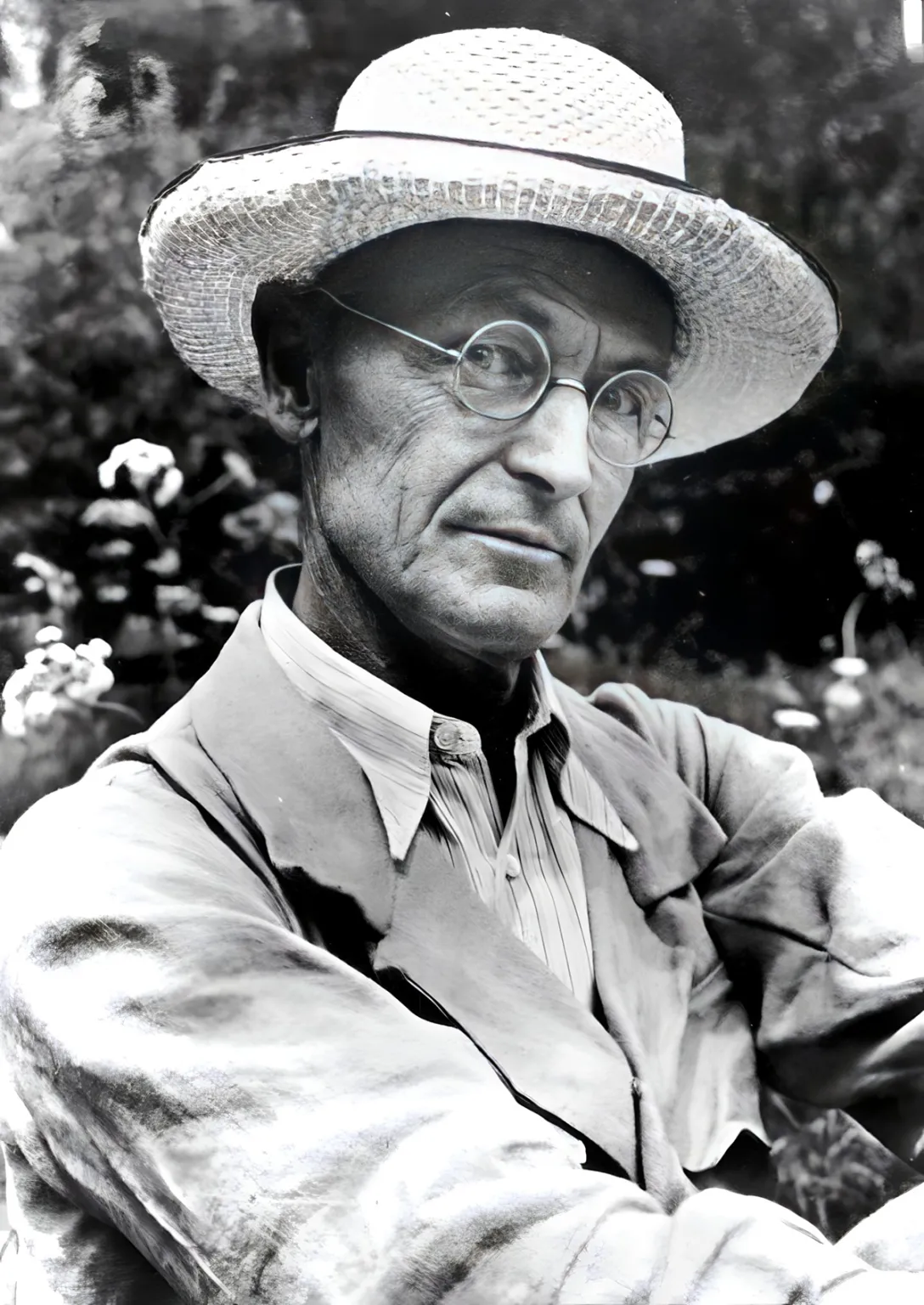
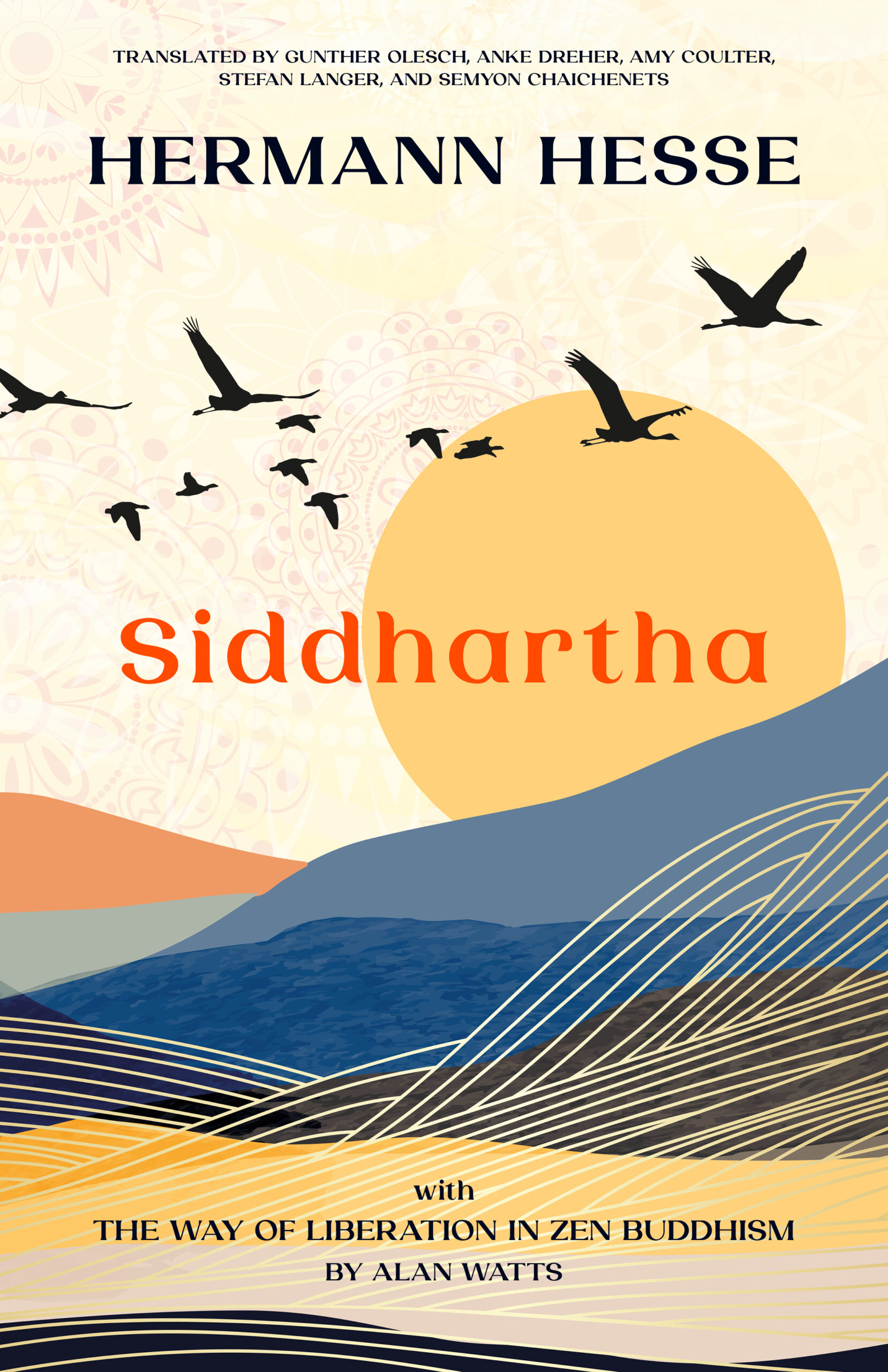
As I was being ferried across this enormous, silent lake, it was the tale of Siddhartha (1922) that first came to mind, an epic tale of one man’s spiritual journey in ancient India to find enlightenment. During his lifelong search, Siddhartha rejects the traditional teachings, insisting that wisdom must come from experience, embracing the material world. Along his path, Siddhartha experiences asceticism, sensual indulgence, and despair, falling into hedonism and emptiness. He goes down to the river intending to drown himself.
When he arrives, he meets Vasudeva, the ferryman, who teaches him to listen to the river’s interconnectedness and unity, and thus he achieves enlightenment. Enlightenment cannot come from staying home and observing orders and doctrine; one must engage with life and find harmony with the unity of existence.
Hermann Hesse’s Steppenwolf (1927) has always held for me parallels with Jean-Jacques Rousseau’s concept of the “Noble Savage” as both grapple with the psychic toll of civilization, though they approach the “primitive” from opposite ends of the chronological spectrum.
Harry Haller, the protagonist of Steppenwolf, views himself as a dual entity: a refined, intellectual man and a wild, predatory wolf. His philosophy is rooted in “the sickness of the soul” brought about by modern bourgeois society. To Haller, civilization is a gilded cage of politeness and mediocrity that stifles the raw, primordial instincts of the individual. He experiences a profound alienation, believing that his “wolf” side represents a lost, authentic vitality that cannot survive in a world of tea parties and radio music.

Jean-Jacques Rousseau’s “Noble Savage” posits that man is naturally good but corrupted by the institutions of society—property, law, and social hierarchy. The parallels with Haller’s struggle are striking:
Both philosophies suggest that “advancement” is a form of regression for the human spirit. Just as Rousseau’s savage loses his independence to social vanity, Haller loses his peace to the “clutter” of intellectualism. The “wolf” in Haller is a 20th-century manifestation of the Noble Savage. It is the unconditioned, pre-rational self that cries out against the artificiality of the “man” who has been tamed by education and social norms. Rousseau’s disdain for the bourgeoisie mirrors Hesse’s critique. Both see the middle-class lifestyle as a “compromise”—a safe, lukewarm existence that lacks the intensity of the wild.
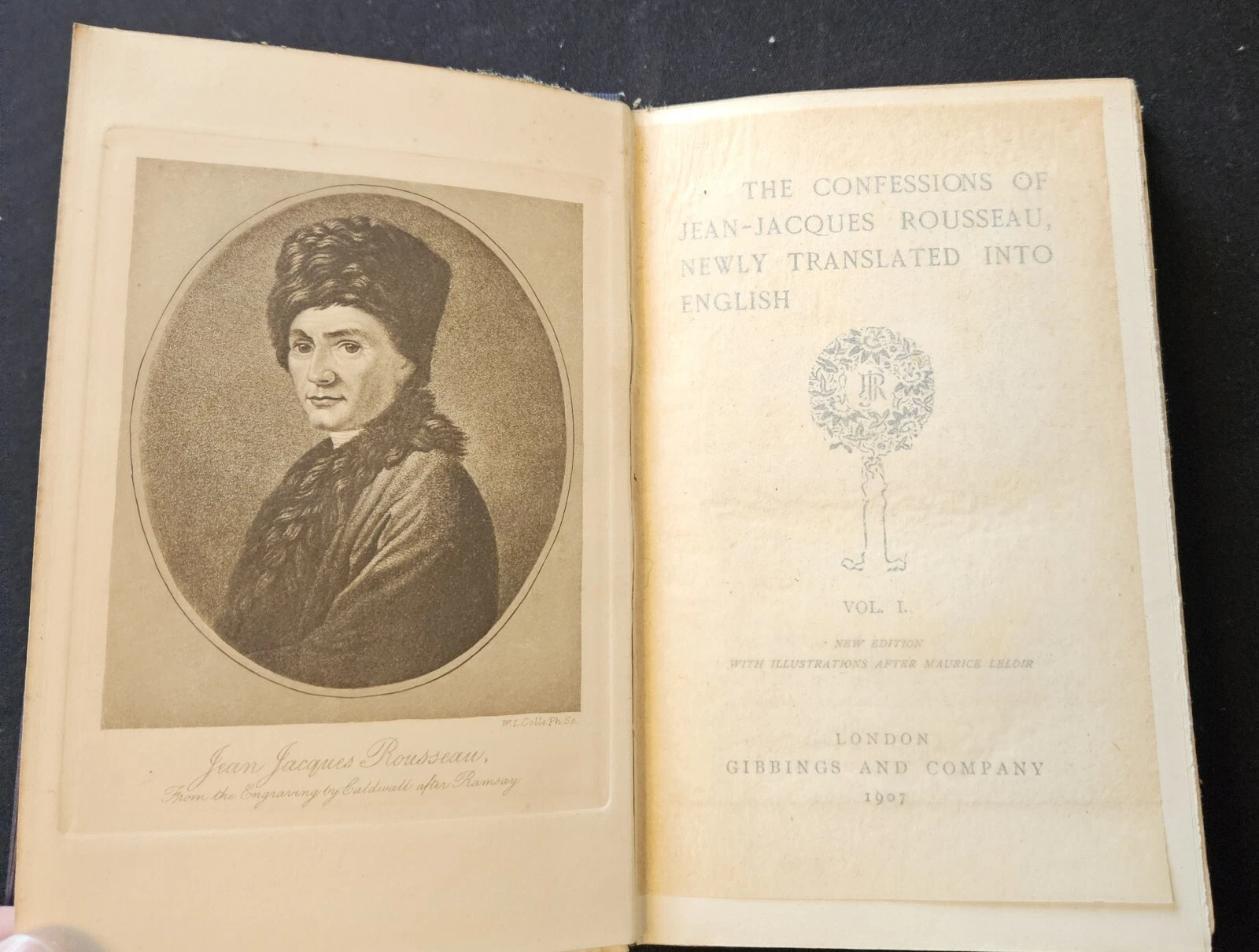
However, while Rousseau looked back toward a historical (or hypothetical) state of nature, Hesse’s philosophy is more fragmented. While the Noble Savage seeks a return to simplicity, the Steppenwolf must find a way to navigate complexity through the realisation that the “self” is an infinite mosaic.
Living and travelling throughout countries like Myanmar and Cambodia, I embrace the adventure of it, the differences, but part of me looks at the villages in the rural parts of these countries and sees people that are still connected to nature, living with it, not just living off it. At times, I feel like a visiting alien detached from the concrete, technology and constructs of my world that seem to only bring harm to it.
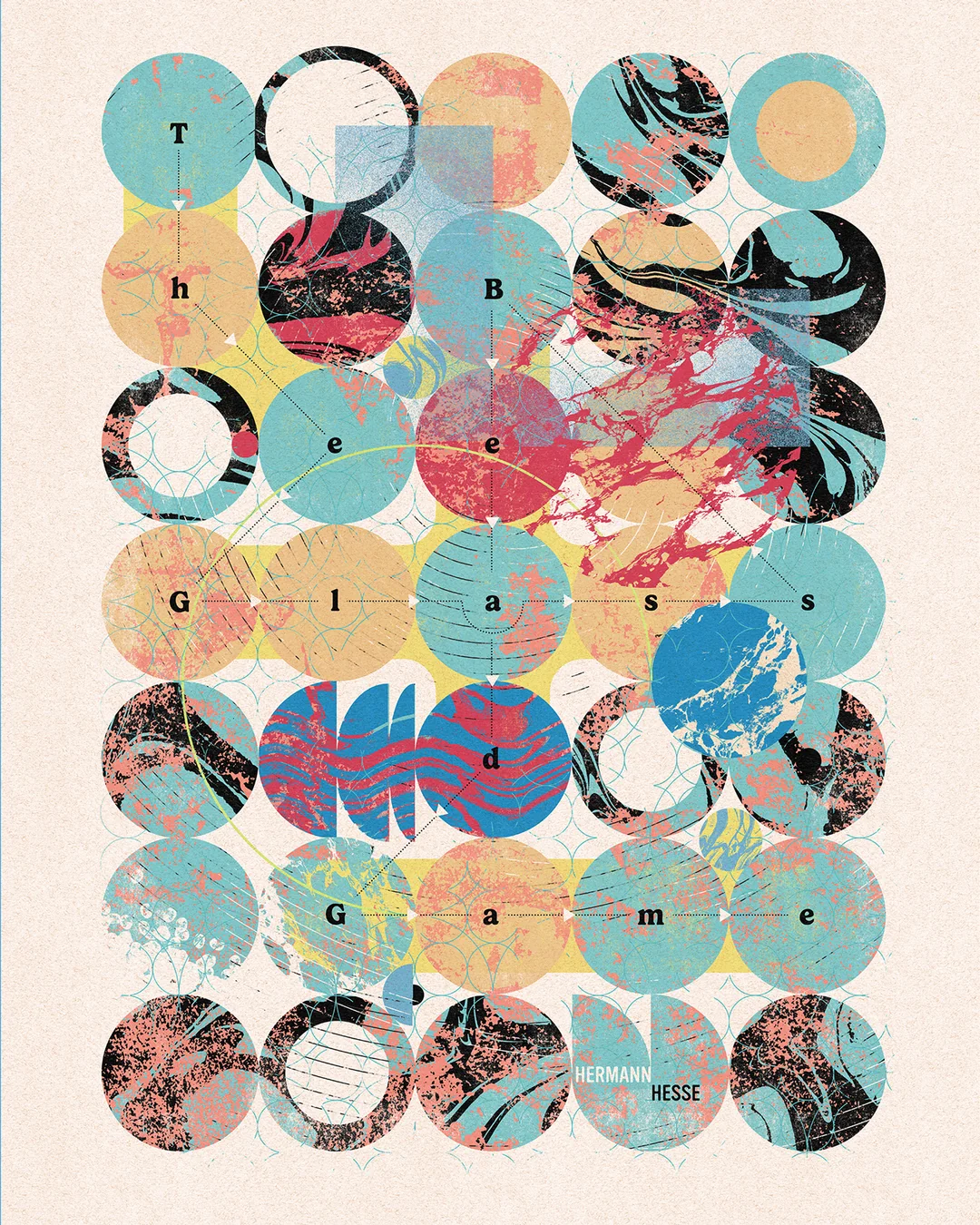
“No permanence is ours; we are a wave that flows to fit whatever form it finds”
― Hermann Hesse, The Glass Bead Game
Beads of Glass
The Glass Bead Game was written over eleven years beginning in 1931, and Hesse later remarked that the work helped him cope with the rise of Nazism in Germany. It would become his final novel, and in 1946 he was awarded the Nobel Prize in Literature.
Published under the original German title Das Glasperlenspiel, the book stands as one of twentieth-century literature’s most ambitious meditations on intellect, spirituality, and civilization. It explores the tension between the aesthetic pursuit of knowledge and the ethical demands of reality.
The story unfolds in the fictional future province of Castalia, a secluded scholarly utopia devoted to the cultivation of pure thought. At its centre lies the Glass Bead Game—an abstract synthesis of all arts and sciences, performed like a sublime musical-mathematical ritual. Through the life of Joseph Knecht, who rises from student to Magister Ludi (Master of the Game), Hesse constructs a philosophical allegory that interrogates the purpose of human knowledge.
The Game is the novel’s central symbol: an attempt to achieve what Hesse called “the unity of the spirit.” Drawing on influences as diverse as Bach’s fugues, Leibniz’s universal characteristic, the Chinese I Ching, and Pythagorean harmony, it translates music, mathematics, philosophy, and history into a single symbolic language of beads and patterns. Each move reveals hidden correspondences, allowing players to “play” the cosmos itself.
Philosophically, the Game represents Hesse’s vision of a universal language—mathesis universalis—suggesting that all knowledge is interconnected. Yet it is also sterile: it produces nothing new, merely rearranging the “beads” of cultural history. In this sense it becomes a symbol of intellectual narcissism, a beautiful closed system severed from the suffering of the living world.
Hesse deliberately refuses to describe the Game’s rules in detail, preserving its aura of mystery and mirroring the ineffable nature of ultimate truth. The Game reflects the perennial human search for coincidentia oppositorum—the coincidence of opposites—echoing both Nicholas of Cusa and Taoist thought. In a world fractured by specialization and ideology, it represents a contemplative practice that seeks unity and wholeness.
As I am propelled across the silent lake, without mobile signal or laptop, I reflect on how the novel has become a cult classic among mathematicians, physicists, and computer scientists drawn to the “Castalian Ideal”—the dream of a unified theory of everything. Some modern technologists even see the Internet as a vast Glass Bead Game linking all human knowledge. Yet Hesse’s warning remains clear: information is not wisdom.
At the heart of the novel lies the tension between contemplative isolation and engagement with the world. Castalia’s intellectual elite live in monastic detachment, insulated from politics and material struggle. Knecht eventually recognises the limits of this ascetic purity. The Game, for all its beauty, risks becoming sterile self-referentiality.
Influenced by encounters with the outside world—particularly the music master and the Benedictine Father Jacobus—Knecht resigns from his exalted office. He leaves Castalia to become a humble tutor to a single pupil, returning knowledge to the living world.
His death while attempting to rescue that pupil from an icy lake is often interpreted not as tragedy but fulfilment. Drawing on Nietzschean critique and Buddhist detachment, Hesse suggests that true wisdom requires both transcendence and compassionate return. Pure intellect without ethical action remains incomplete; spirit must ultimately incarnate in history.
Written during the rise of Nazism and the devastation of war, The Glass Bead Game also functions as a critique of modernity. Castalia represents a utopian counter-image to a Europe that had reduced culture to propaganda and utility. Yet its perfection breeds fragility: intellectuals who ignore history and politics risk becoming parasites on the society that sustains them.
Knecht’s resignation therefore becomes a radical philosophical statement. He rejects the safety of the ivory tower, arguing that knowledge must remain connected to life. Influenced by Hegelian ideas of historical synthesis as well as Taoist notions of balance and flow, Hesse portrays Knecht’s life as a process of becoming—a movement from worldly experience to intellectual isolation and finally to ethical integration.
The novel ultimately warns that the pursuit of truth is hollow without service. In an age fractured by specialization, digital distraction, and ideological silos, Hesse’s vision retains remarkable urgency. The Glass Bead Game endures not as escapist fantasy but as an invitation to rediscover the unity underlying human knowledge.
In this sense it functions almost as a secular scripture for intellectuals. Written in the shadow of World War II, its questions about the responsibility of the learned may be even more relevant today than when Hesse first conceived them.
Adrift on a lake of contemplation, I am no longer sure if I am diving into engagement or seeking isolation and sanctuary from the brutal realities of the world.
Sobhana
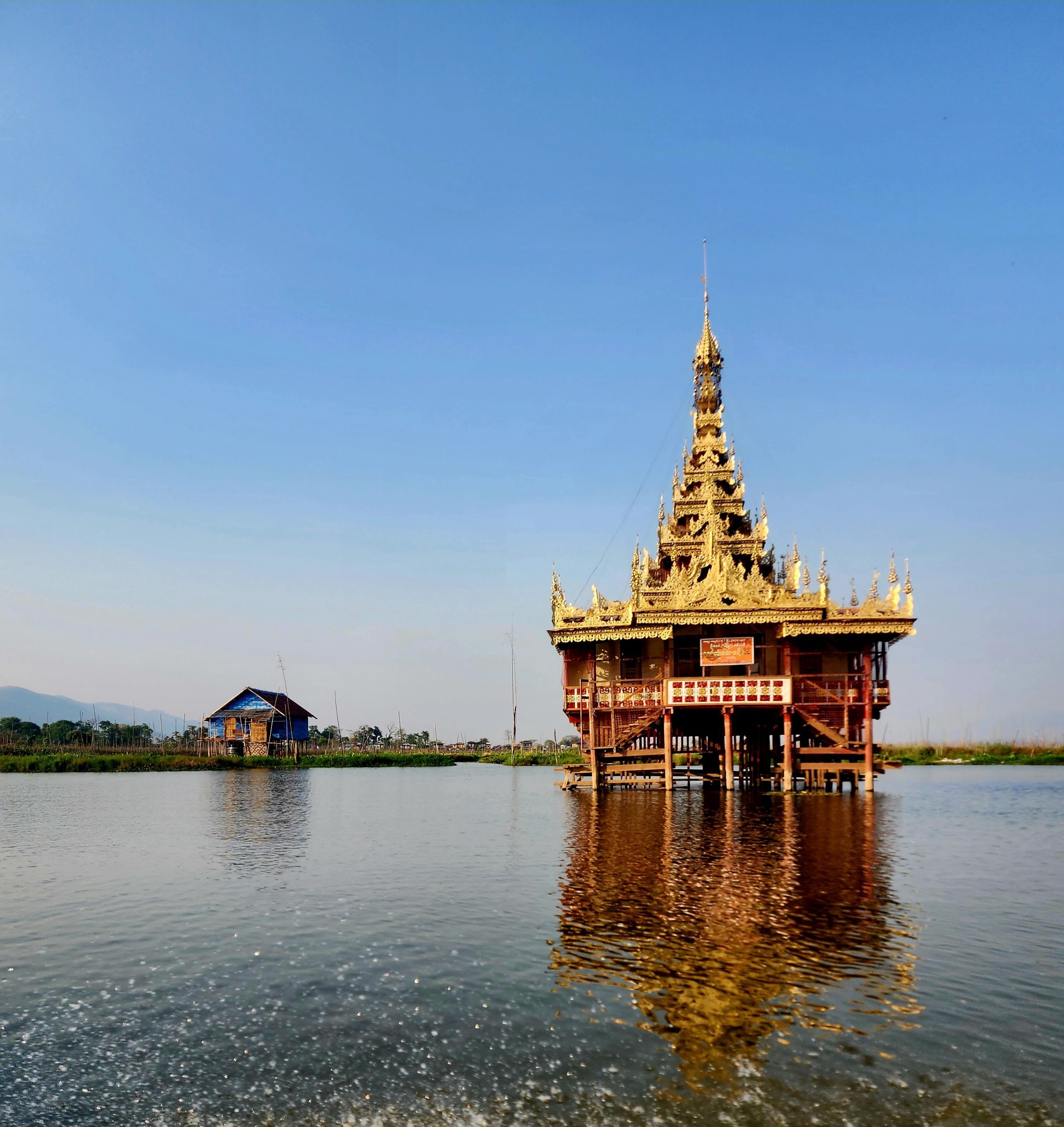
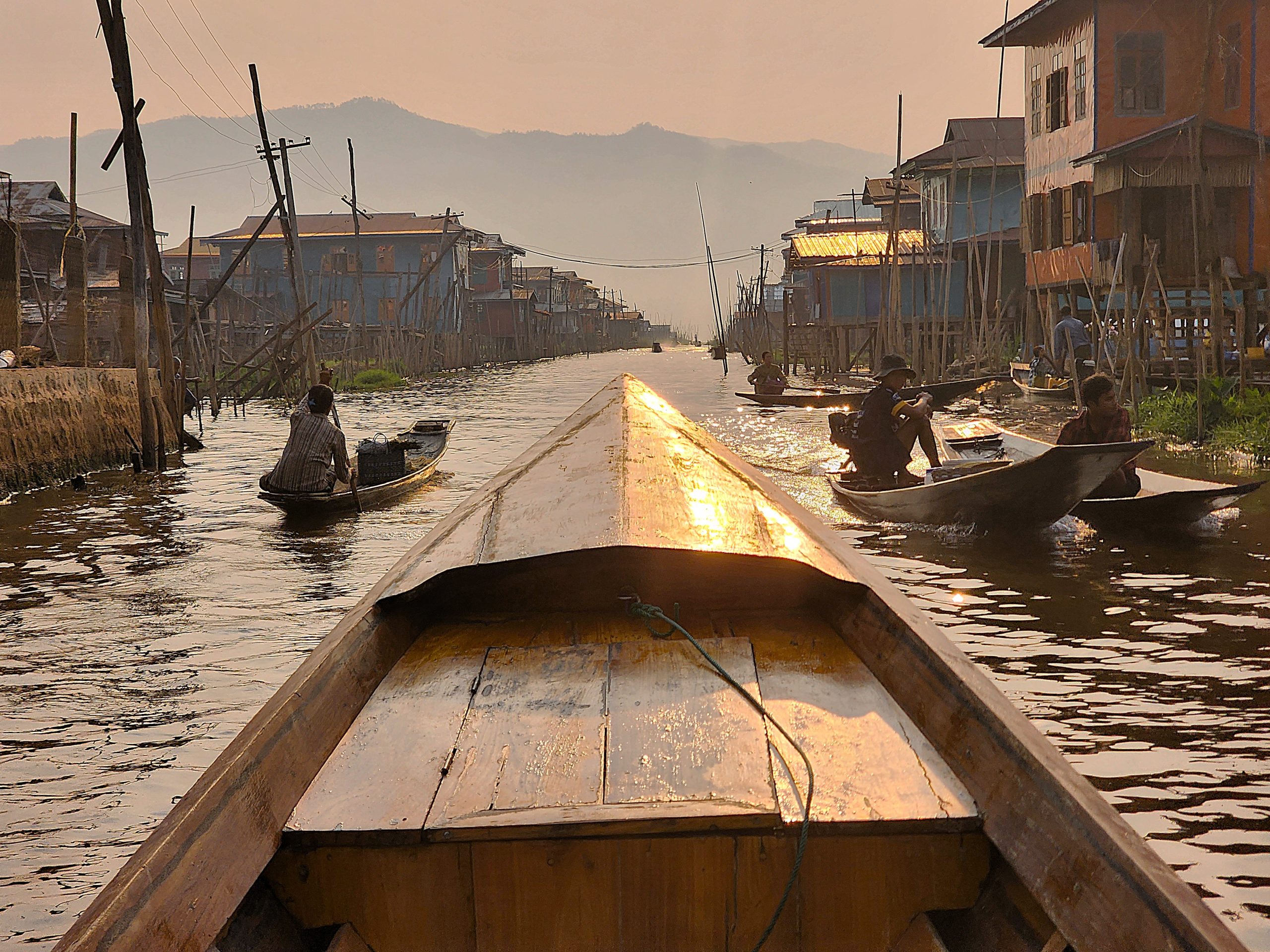
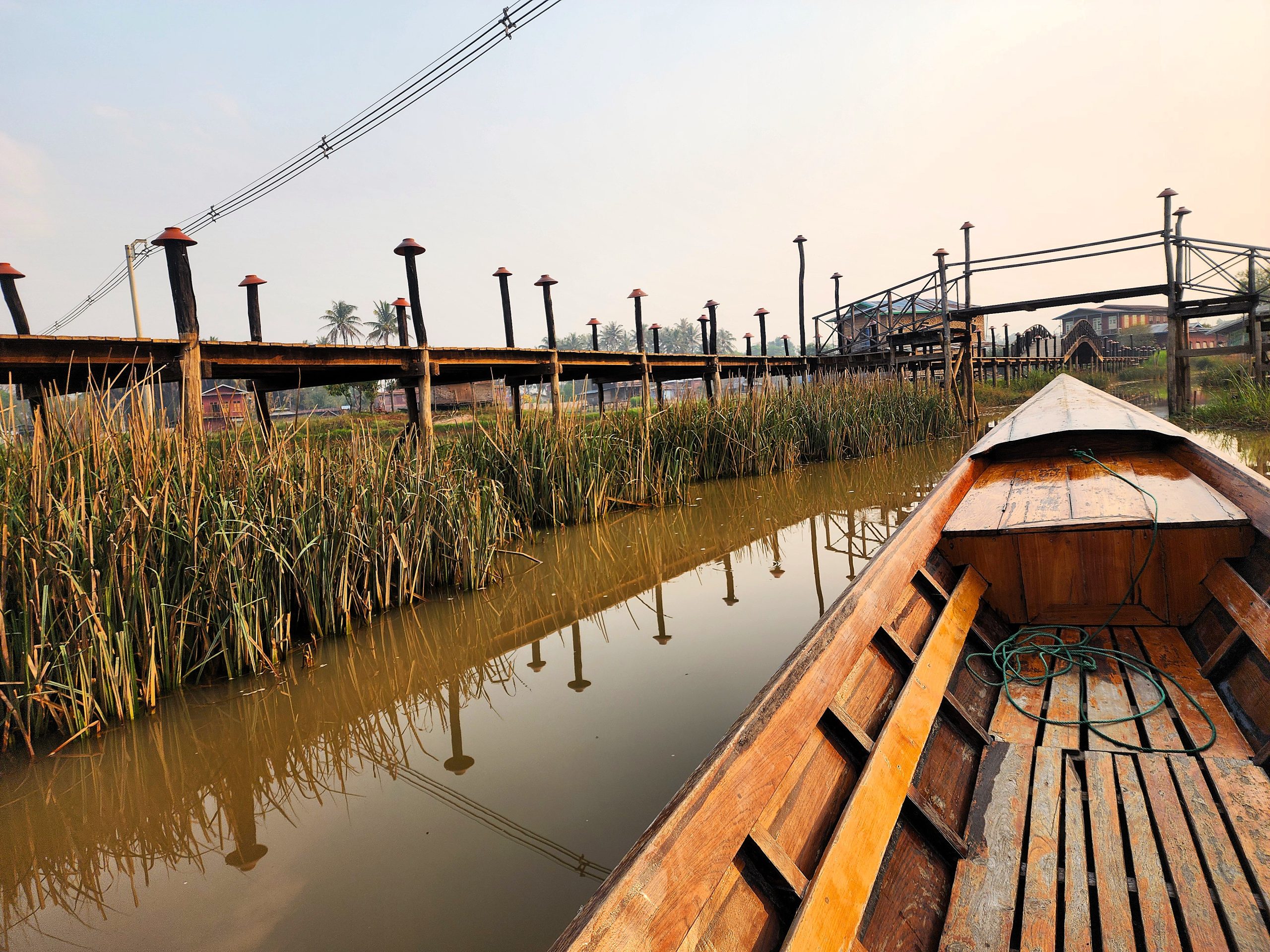
Time stops on the lake, but eventually our narrow little boat turns into a secluded cove, somewhere between Nwadama and Myani Gone villages. At first, we glide between floating gardens, no Babylonian myth, these are some of the most famous floating gardens in the world. The Intha people, “sons of the lake,” have lived on Inle for centuries, developing this unique agriculture to adapt to their water-based environment. The gardens are held in place with the weaving of water hyacinth mats and large bamboo poles; their produce is vital for survival.
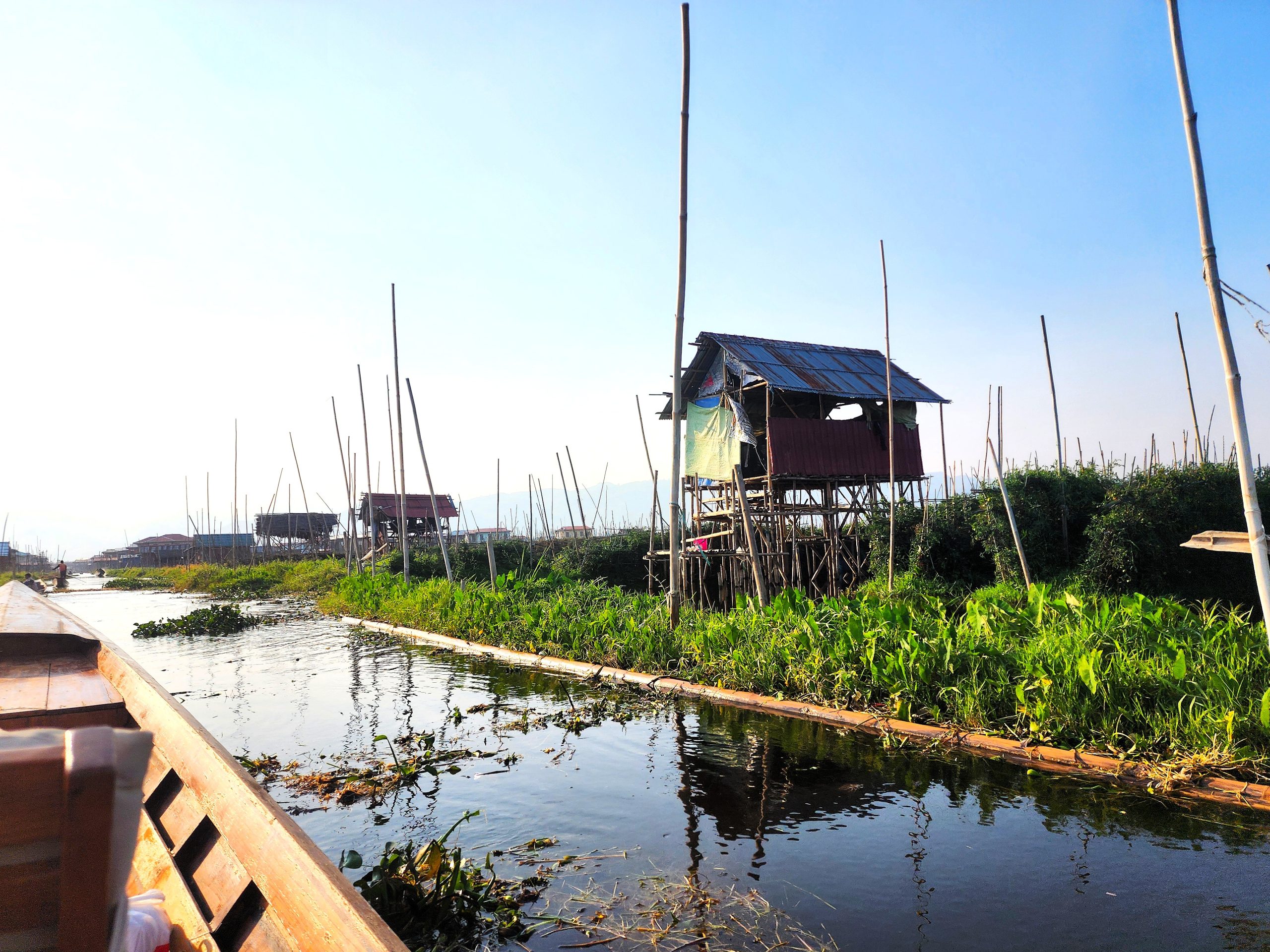
Soon, we find ourselves passing through a village of stilt houses, some small, some surprisingly large. The canal we are on becomes busy with boat traffic, men returning from tending their gardens or fishing for dinner, women returning from floating markets, and small children in little paddle boats. I think to myself that it is like an eastern version of a Venetian canal at peak hour!
Paradise Found
The Myanmar word Sobhana is rooted in Pāli and Sanskrit; it primarily means beautiful, shining, radiant, splendid, or auspicious. It is often used to describe things that are aesthetically pleasing, virtuous, or morally good. In Abhidhamma (Buddhist philosophy), the term Sobhana is used to categorize states of consciousness that are pure and wholesome, as opposed to noxious, rootless states.
“This is Burma, and it will be quite unlike any land you know about.”
― Rudyard Kipling
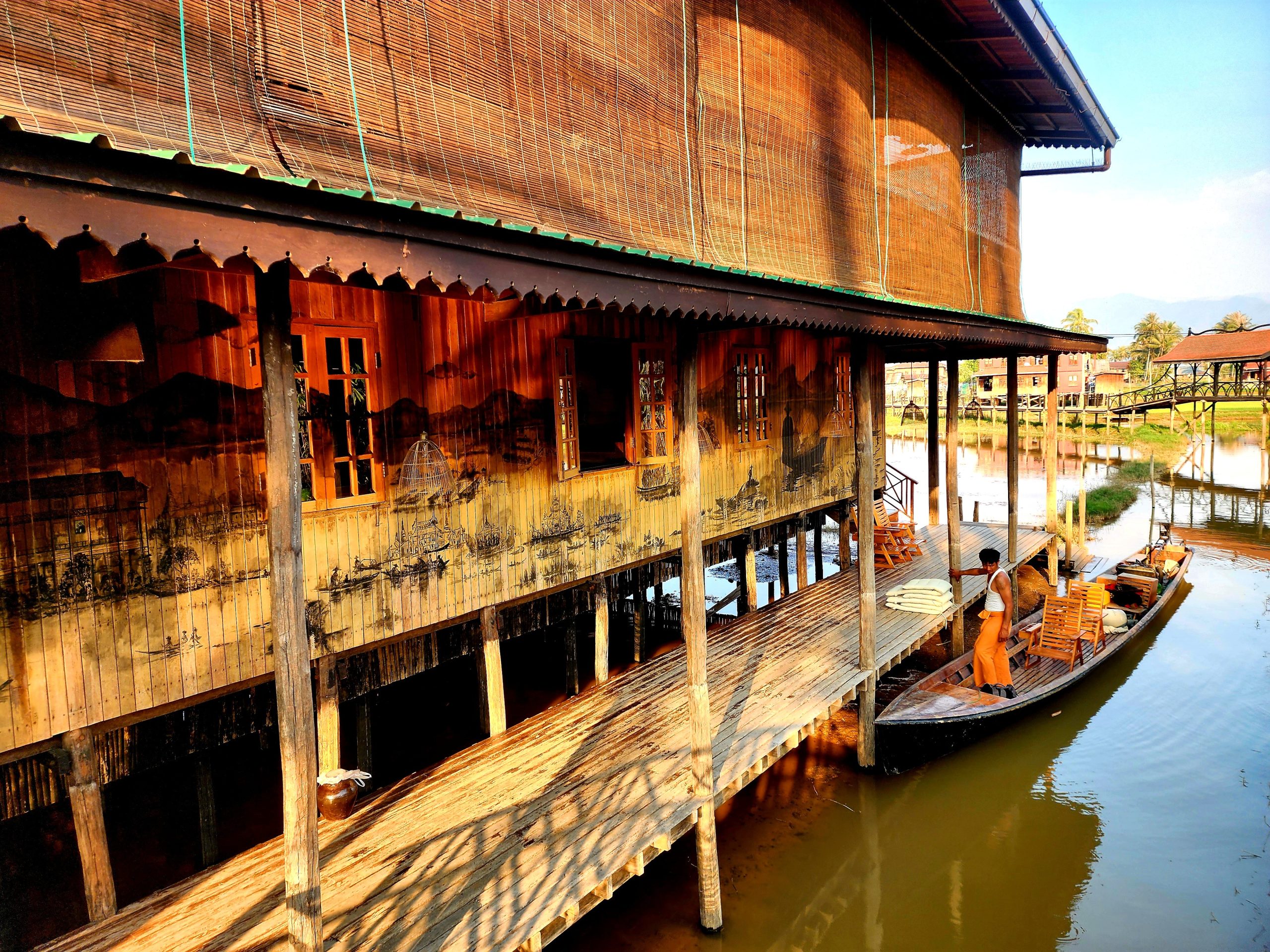 As we reach the far side of the village, it comes into view. Approached by water, it slowly looms larger. The place is breathtaking, an almost surreal, nirvana-like vision of beauty, serenity, and natural harmony. Perhaps the archangel Michael has rowed my boat ashore.
This is ‘The Sobhana Project’, and to paraphrase Kipling, it is quite unlike any place you have ever seen before.
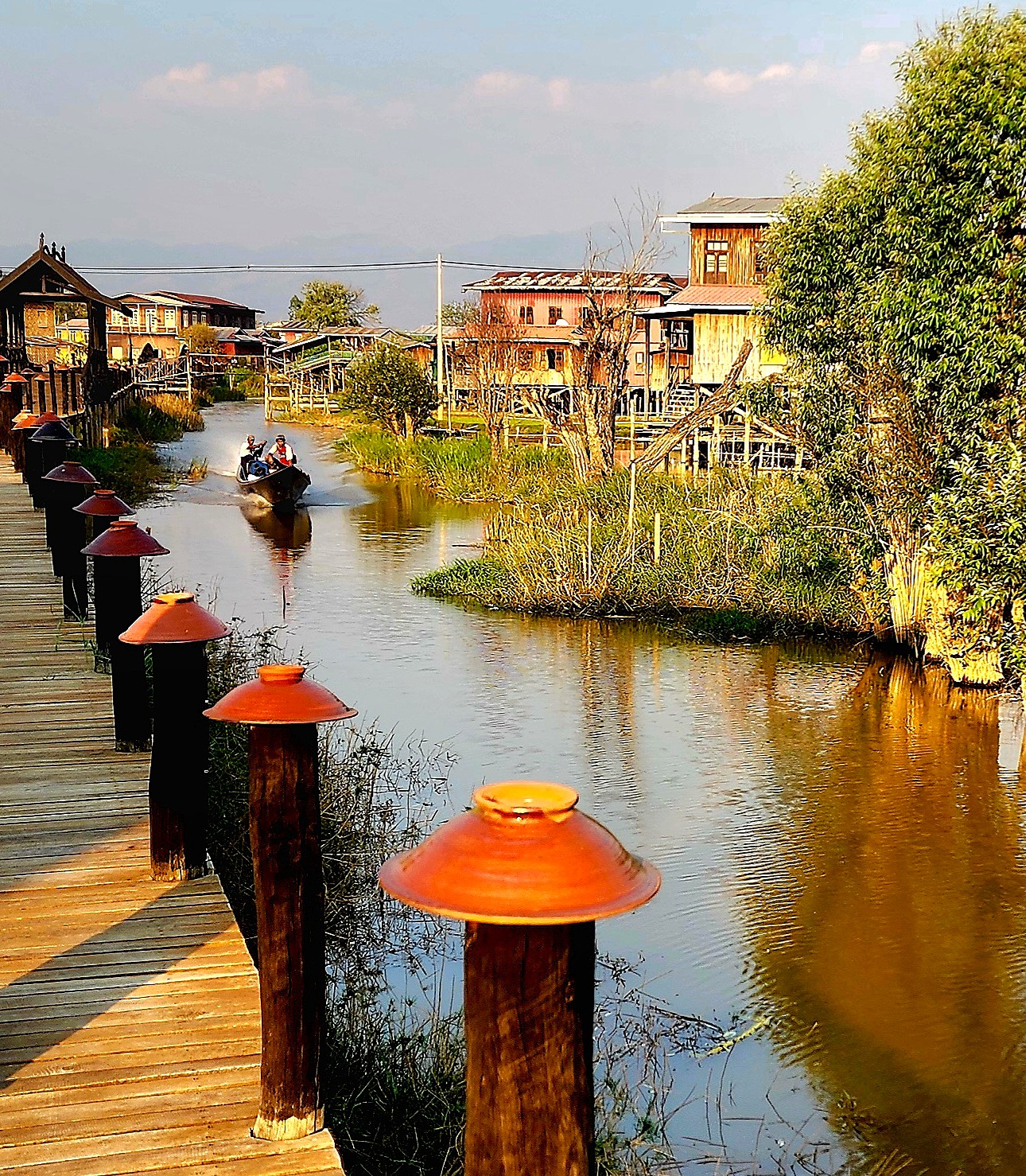
I am an old voyager, I have travelled the world for many decades, lived in Asia longer than this century is old. I have seen things, been amazed, had my mind blown and known the wonders of the world. And yet, I don’t think I have ever seen a place more beautiful, spiritually calm and inviting to one’s soul than this.
From the moment I arrived, I knew a part of my soul would never leave this place; its ghosts embraced me and will travel with me until the end of my days. From here, you can feel the harmonious vibrations of the universe all about you, an aura connecting to the very fabric of your being.
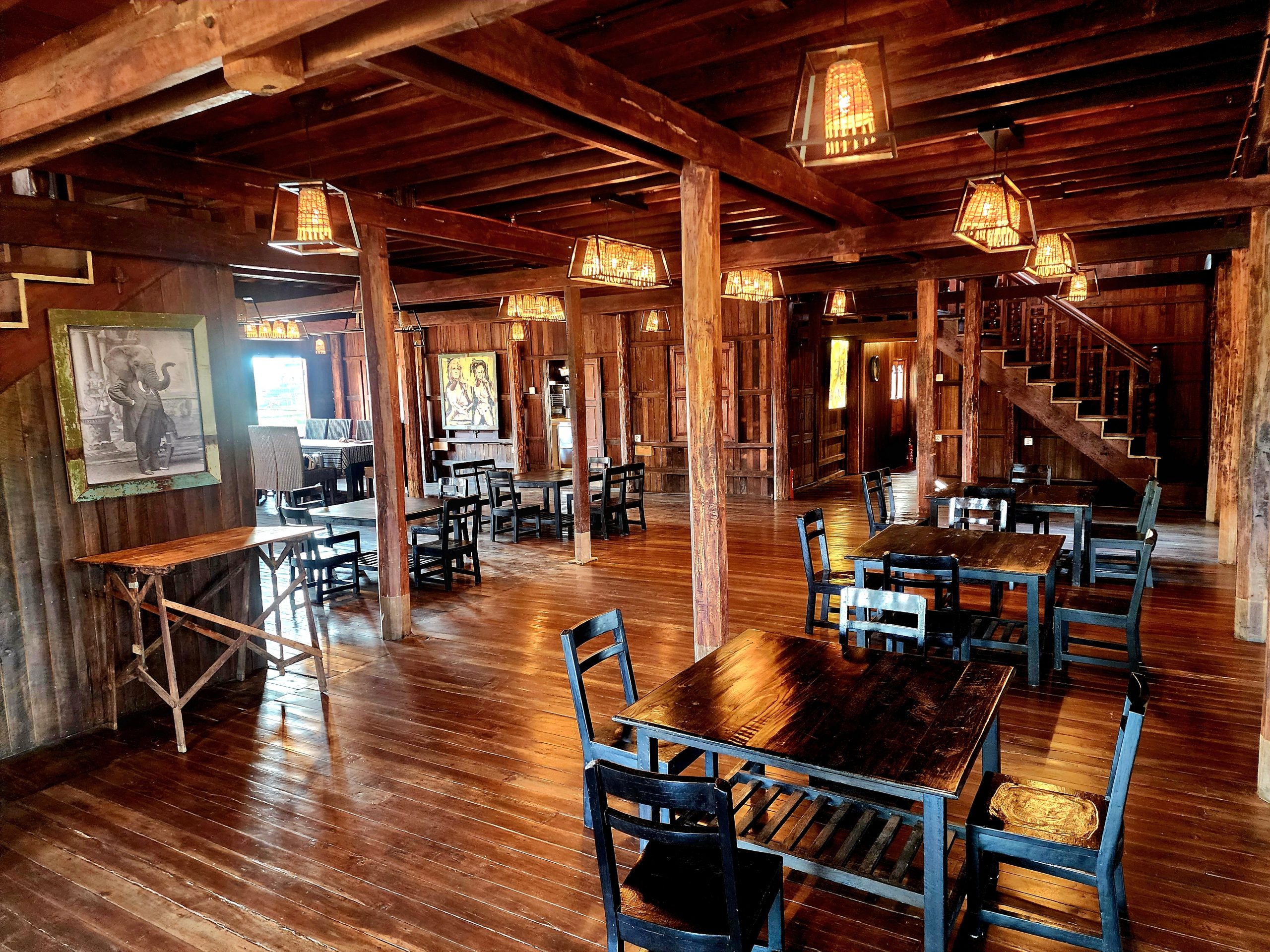
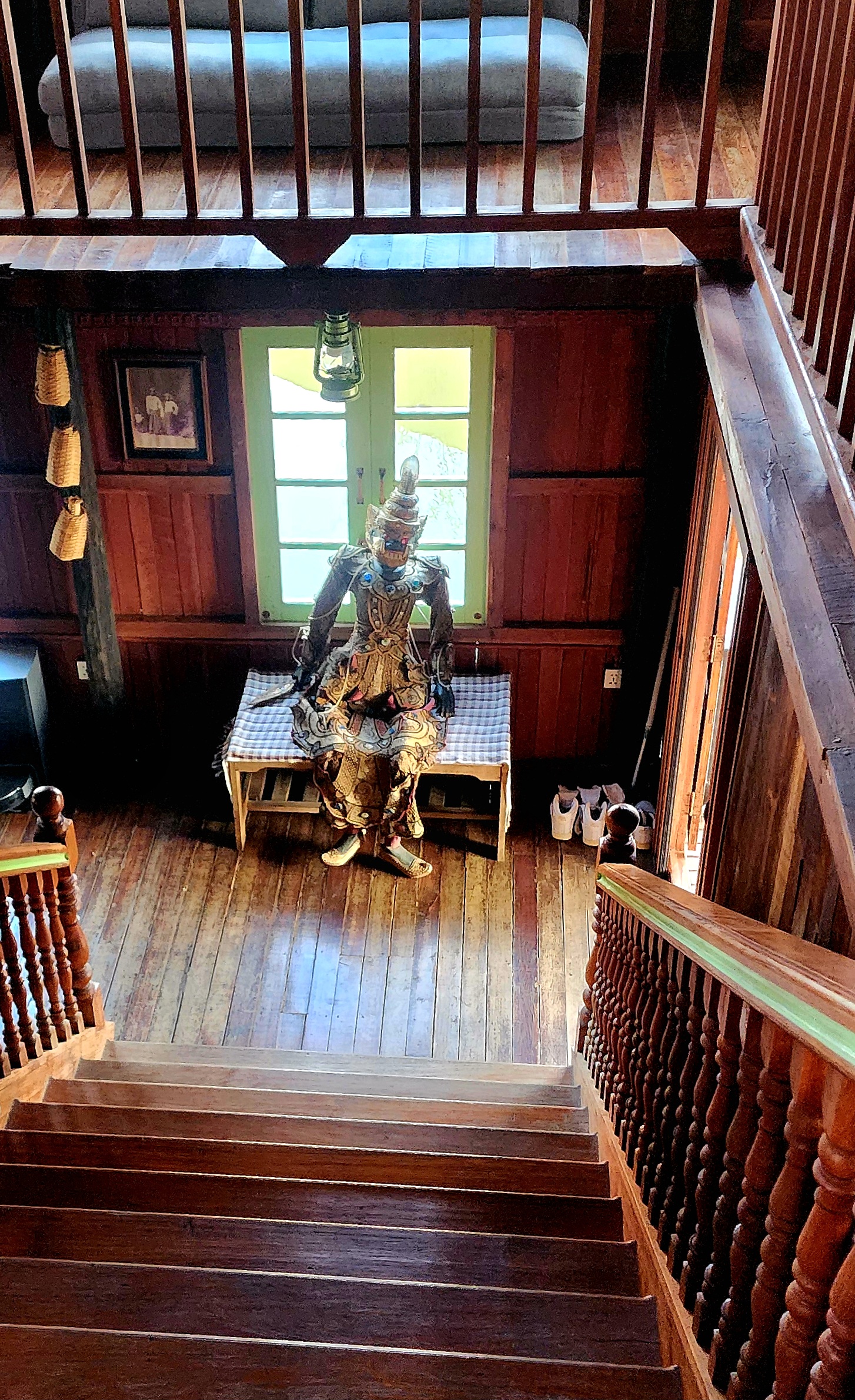
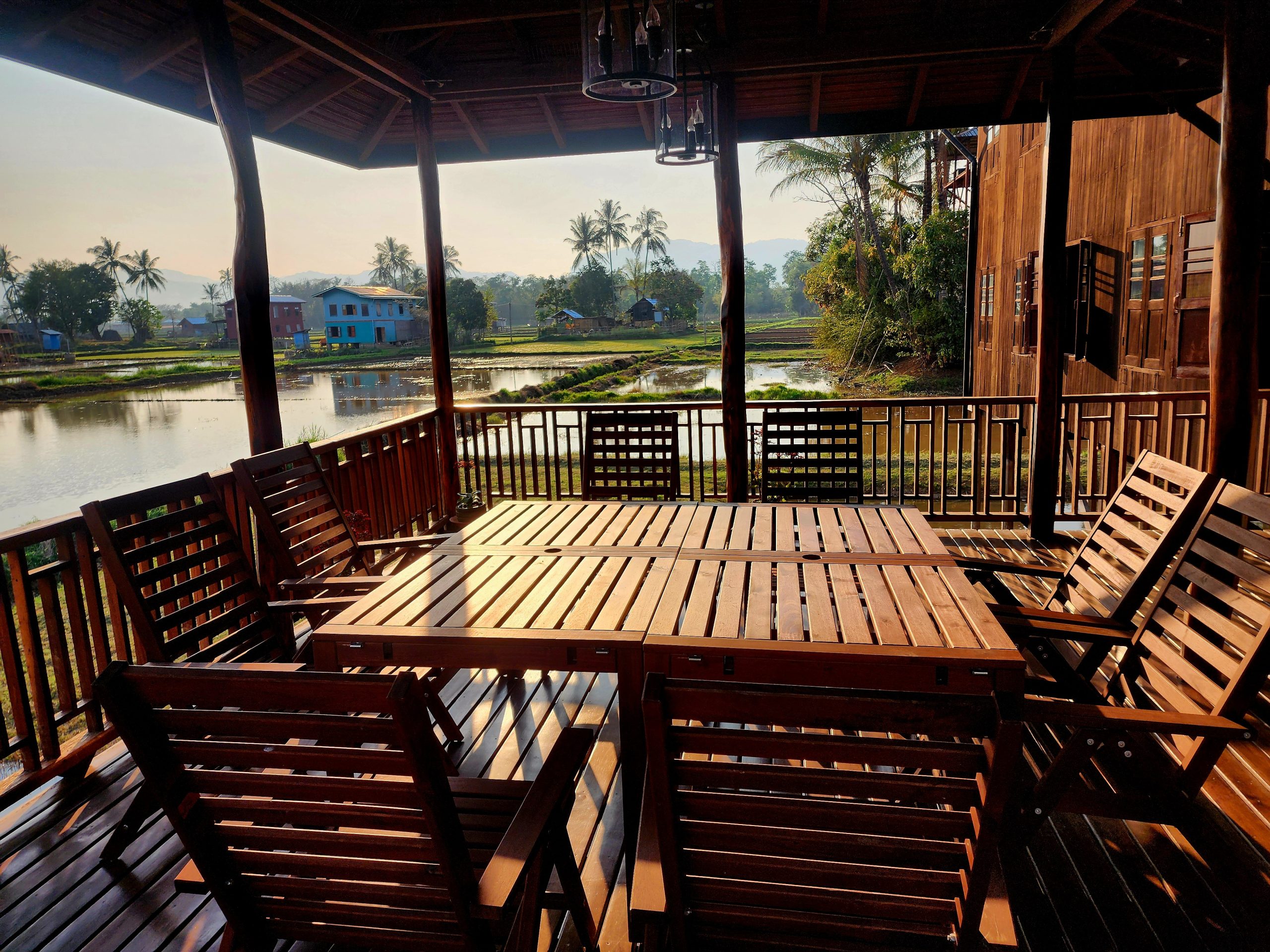
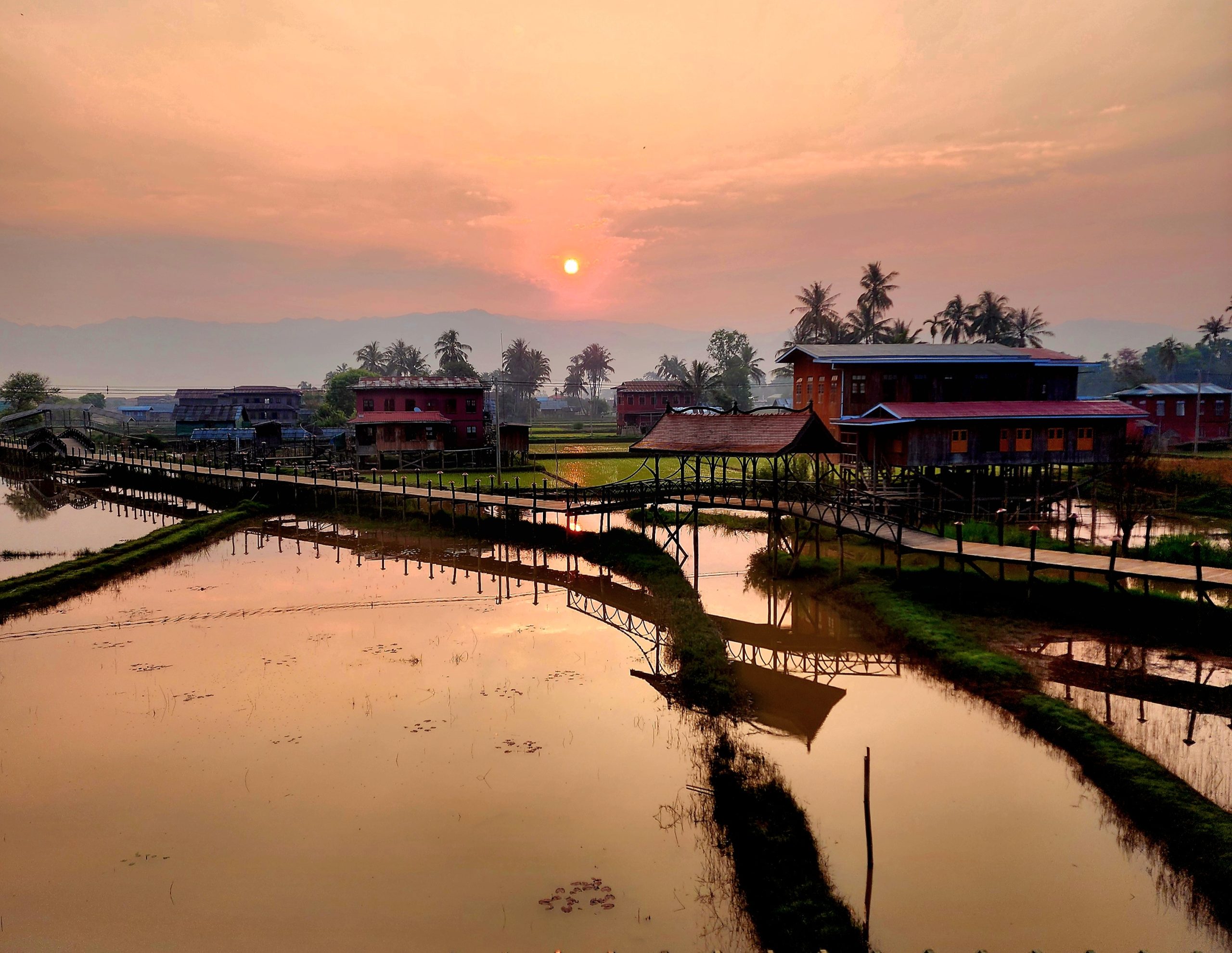
A boardwalk on stilts connects you to a series of large, renovated, immaculate wooden houses and buildings on stilts over the lake, some set aside for artists and writers, one an old hand-rolled cheroot factory, one now a large restaurant. Behind the property, large wet-rice fields are hand-tended with the aid of buffalo. Across the field is an impossibly large Buddhist temple on stilts. Beyond that, the lakeshore is lined with large palms and jungle greenery.
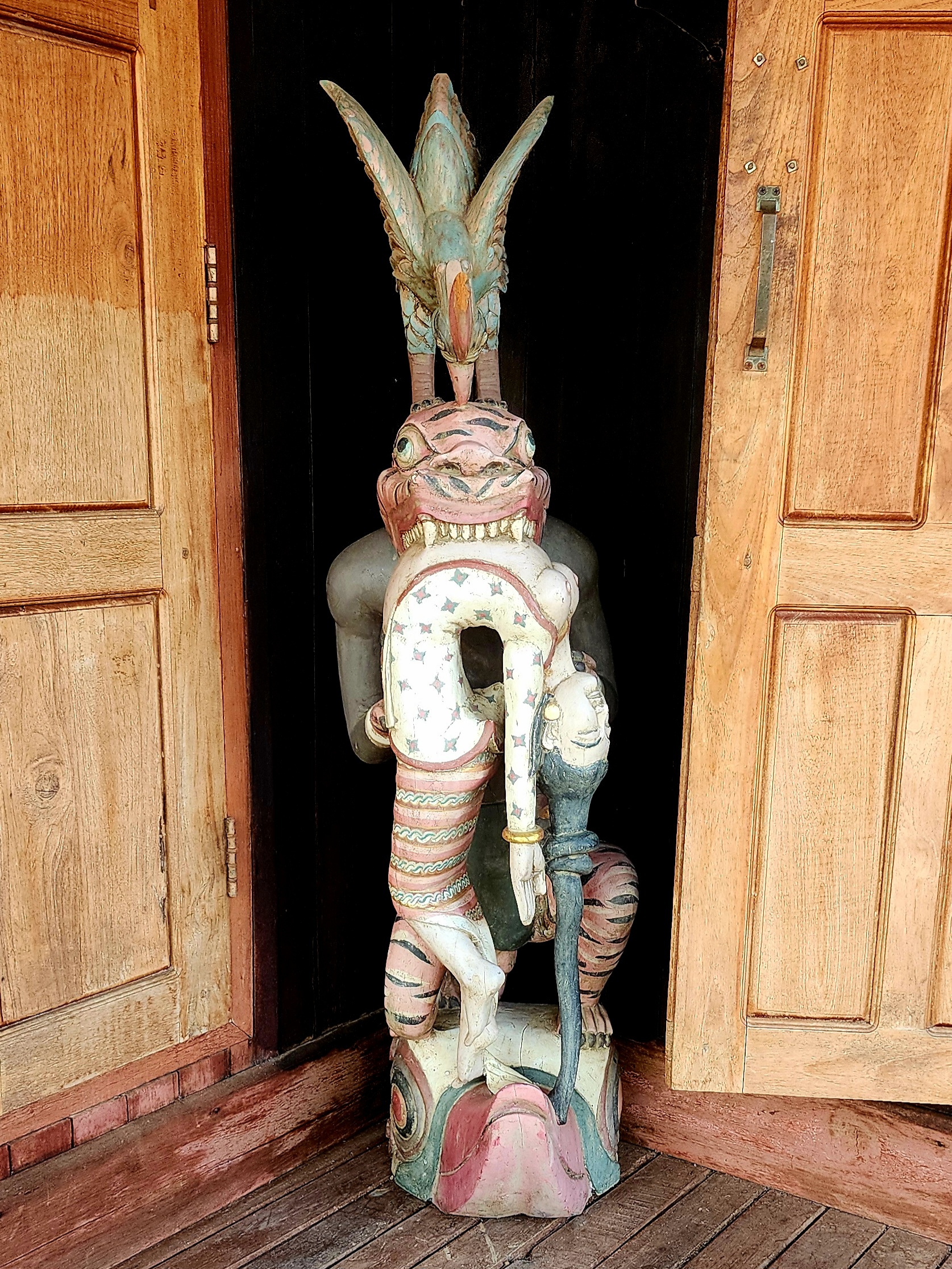
The structures are adorned with art and artifacts, impeccably selected and collected, giving an incredible aesthetic authenticity and intrinsic beauty to the whole property, and then there is the silence, no motors or machinery barking at you here, existence here seems pure, essential and something shared. I feel so incredibly fortunate to be here, to experience it; it is immersive, cleansing, redemptive and restorative all at once.
There is so much more to say, to share, to attempt to convey about this place, but they will never do it justice; they will flow in these pages in time, in another article, as will kind words for my host. All that can be said for now is get there, see it for yourself, and never let it go.
I have come here for nourishment, replenishment. I will leave inspired, impressed and deeply moved by a profound experience.
Madame Cho
I am greeted by Madame Cho, who is charming, confident, kind, and as I would soon learn, incredibly talented in the kitchen. She prepares dinner, freshly roasted vegetables, and juicy, tender chicken. It is divine. Even the food tastes more interesting and much better here! It could not be served with more kindness, warmth and generosity.

My kind host and I are men of vinous pursuits, and my spirit is ready to let go and fall into the softness of this unexpected world. However, I need a glass of something wonderful to prize the last vestiges of stress from the edge of the cliff and finally let me free-fall into the journey.
The Maharajah of Saint-Estèphe
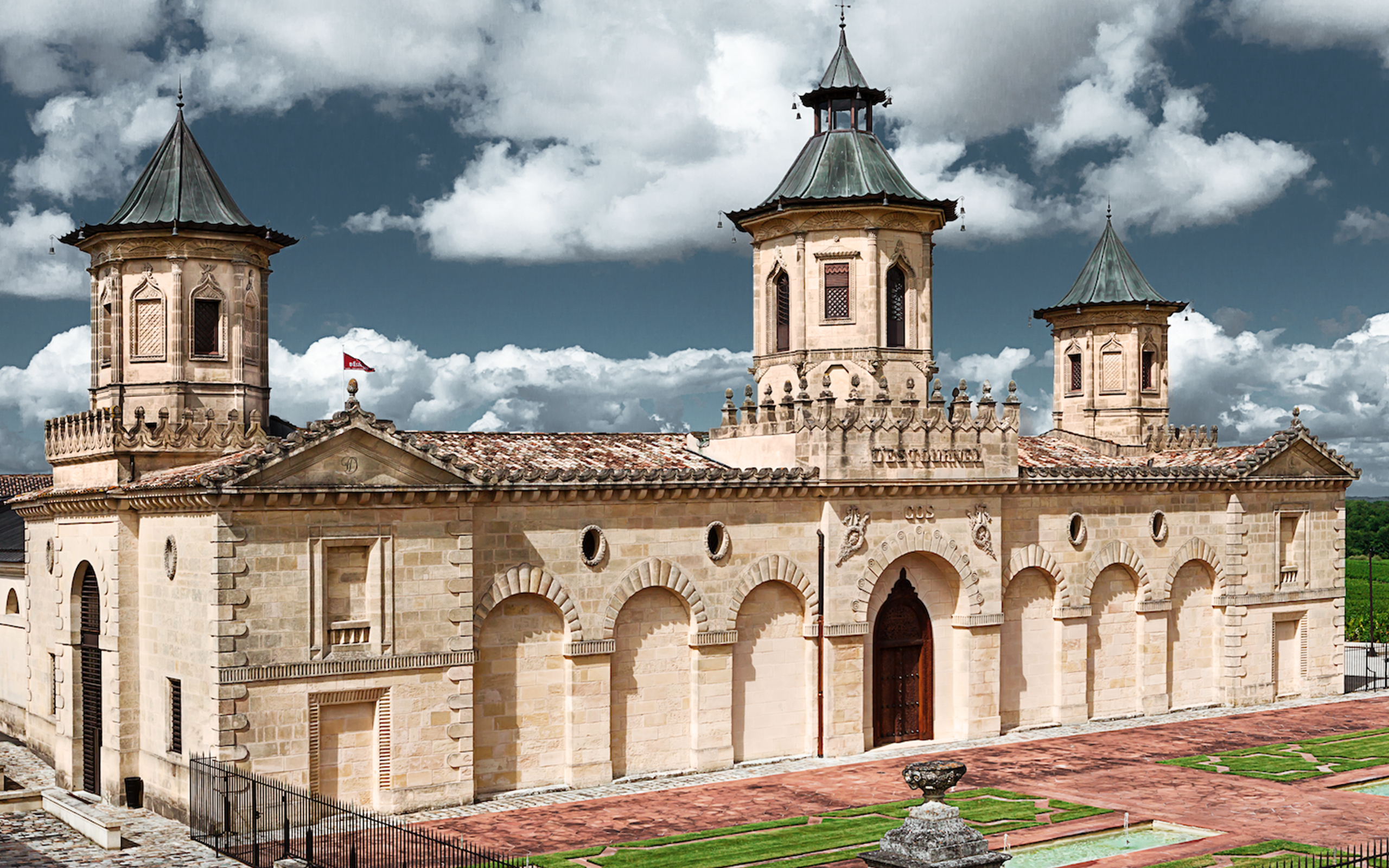
Château Cos d’Estournel owes its origins and name to the Marquis d’Estournel ‒ Louis Gaspard Lacoste de Maniban, a visionary Bordeaux winegrower with a passion for exploration and fine wine.
Louis-Gaspard was born during the glorious Age of Enlightenment, at a time when Rousseau, Montesquieu, Voltaire and others were championing the sovereignty of reason, openness to the world and individual liberty. An exploration of his lands and life’s work reveals his passion for nature as well as for Asian curiosities and beautiful things of all kinds.
The relics of the cultivated life of Louis-Gaspard d’Estournel tell the story of an erudite, curious man of excellent taste and great learning, an enlightened individual who remained true to his nature throughout his life.
Inspired by his travels to India, Louis Gaspard adorned his estate with oriental motifs and exotic architectural flourishes, making the chateau itself as distinctive and memorable as the wines it produced. The estate features majestic pagodas, a tasteful blend of Mudéjar, Chinese, classical and Indian styles. Along with the grand 17th-century wooden door sourced from Zanzibar, this all gives the façade an exotic and mysterious allure. His estate serves as a striking testimony of his love of the exotic and his open-minded spirit.
Gaspard was soon given the name ‘the Maharajah of Saint-Estèphe’ by bemused friends and neighbours, who would attend the huge festivities he would host in order to share and celebrate in the ‘curiosities ‘ he had brought back from his trips, including any unsold wine which he believed had been ‘improved’ by the travel.
I have always admired Cos d’Estournel and its mighty wines, considering them the great wines of the Saint-Estèphe region.

Be Cos
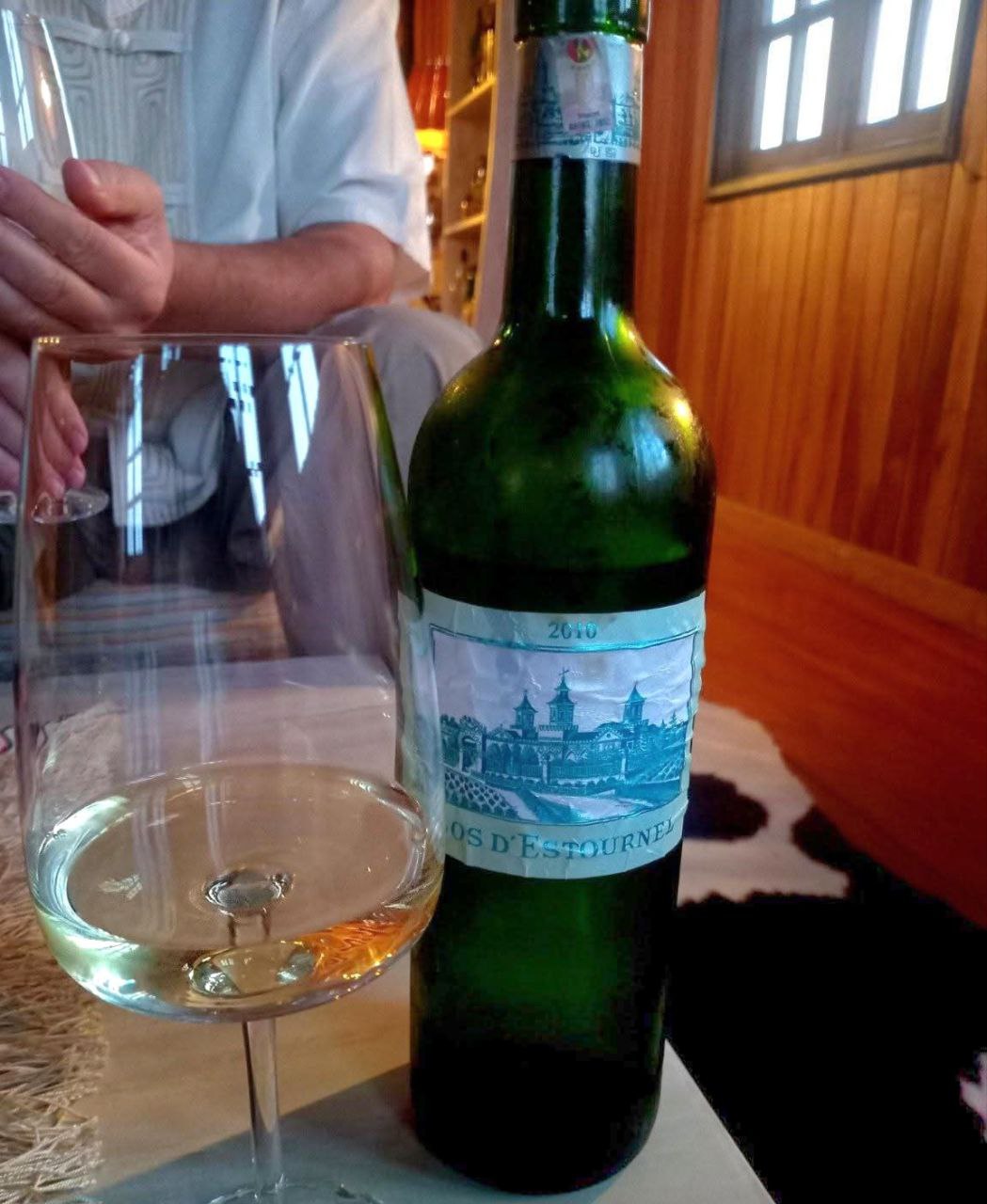
Cos d’Estournel Blanc 2020, Saint-Estèphe, Bordeaux, France
The first wine served at Sobhana was this superbly aged white from one of my favourite Bordeaux producers. The Cos d’Estournel Blanc is a blend of Sauvignon Blanc 66% and Semillon 34%, this bottle was in exceptional condition, showing some attractive tertiary characters whilst retaining a remarkable and attractive freshness and vitality.
The colour of pale straw with flecks of lemon; the appearance is still youthful. Aromas are of gooseberry, almond, cut hay and field flowers.
On the palate, the wine is clean with lovely precision, citrus, wild passionfruit, fresh herbs and a hint of oatmeal and pith on the back palate that gives way to flinty minerality and some talc-like acidity. The wine still has remarkable poise and structure on the palate, attractive fruit and impeccable length.
Myanmar can ask tough questions of the visitor here; it challenges your mind, body and soul, and as you embrace the physical adventure, you must also look deeply within your heart, understand your motivations and question your impact. Like ripples on the lake, you can bring peaceful replenishment, or you may stir up turbulence, awakening unsightly creatures from depths murkier than you could ever know.
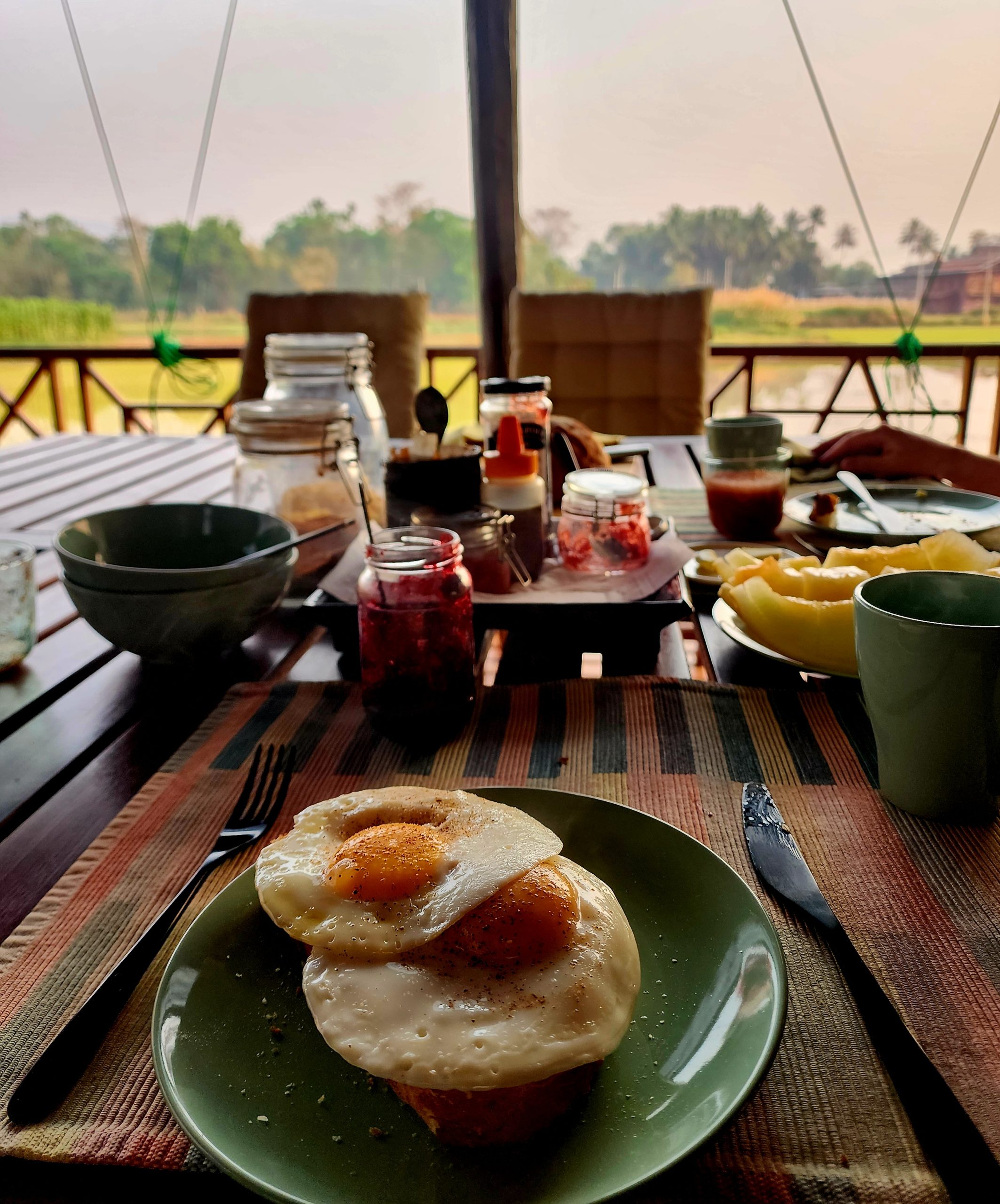
A wonderful meal from Madame Cho, a spectacular glass of wine from Boris Granges, and a wander around the Sobhana Project. These all might just help you find some answers. However, you may never want to leave again or be forced into engagement with the grit and reality in the rest of this world.
I still travel to Myanmar every month. I make wine here in the hills above Inle Lake. As long as I continue to return, the people who depend on the winery have work, income, and the small dignity of stability. Their lives are often tenuous and precarious, but for now, they are safe. Sometimes here, it is I who feels most vulnerable.
Darren Gall

www.vindochine.com
