
The Way of the Dumpling
“If you do not change direction, you may end up where you are heading.”
Lao Tzu
A Little Touch on the Heart
After queuing out on the sidewalk for an age, patiently day-dreaming about the magic going on inside, you enter a large, unremarkable room, the simplest of furnishings, functional only, no time for the fashionable or chic here. Perhaps a nod to good feng shui and the smiling Sanxing statues of Fu, Lu and Shou will be peering at you from a discreet, yet carefully chosen location. It is your good fortune to have come here; it is their good fortune that you came.
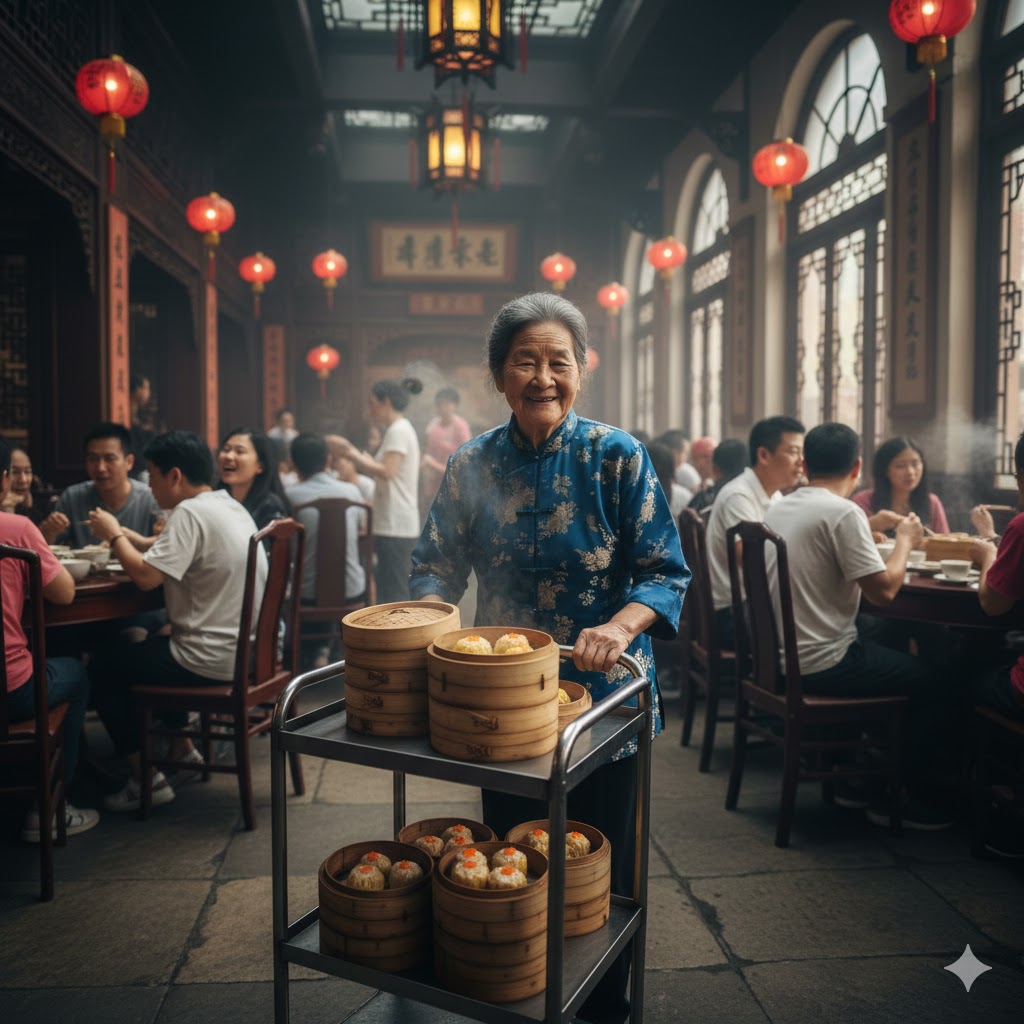
A crush of people, a cacophony of chatter and the cling-clang noises of busy eating. Shouts, squeals, slurps, laughter and burps. Old ladies in ill-fitting hair nets and grubby aprons, wheeling about trolleys that are piled high with bamboo steamers. Quickly and deftly, they stack them onto diners’ tables, ticking boxes on little, red-lettered chits, before moving on, ever moving. Stay ever alert, for it is better to weave out of the way, lest you incur the wrath of their personal version of road rage.
Finally seated, you survey a table landscape of little white porcelain bowls, with deep blue patterns, chipped and marked by the history of a thousand meals. A table with a large, rotating ‘Lazy Susan’, piles of worn plastic chopsticks, little ceramic cups, constantly refilled with oolong or chrysanthemum tea, there to wash down all those delicious little mouthfuls of steamy, greasy, juicy goodness.
You have entered a culinary Shangri-La, somewhere amidst the seven levels of heaven, where friends, family and loved ones all come together and graze on delicacies as wondrous as they are delicious, morsels of magnificence, mouthfuls of the marvellous. This is special, it is noisy, it is fun, and it is food. This is life lived large, loud, and lovingly, and it might just be something close to perfect harmony.
A Chinese family is a remarkable thing; it is all who are here in the present, all that have gone before and all who are yet to arrive. It stretches beyond time and space and is something spiritual, eternal. Watching a room full of Chinese families gathered together noisily and lovingly enjoying yum cha is transcendental, and it is the joy of life.
‘Supreme excellence consists in breaking the enemy’s resistance without fighting.’
Sun Tzu
Yum Cha
Yum Cha, (drinking tea) also known as Tam Cha, (tasting tea) is a traditional southern Chinese event for the morning or afternoon. It involves the drinking of tea accompanied by small parcels of food known collectively as dim sum.
The tradition is believed to have started along the Silk Road, where weary travellers would stop at roadside tea houses. Once people worked out that drinking tea aided digestion, teahouses started offering small morsels of food to accompany the tea. The little morsels became increasingly elaborate as each house attempted to attract more customers away from their competition.
Dim Sum
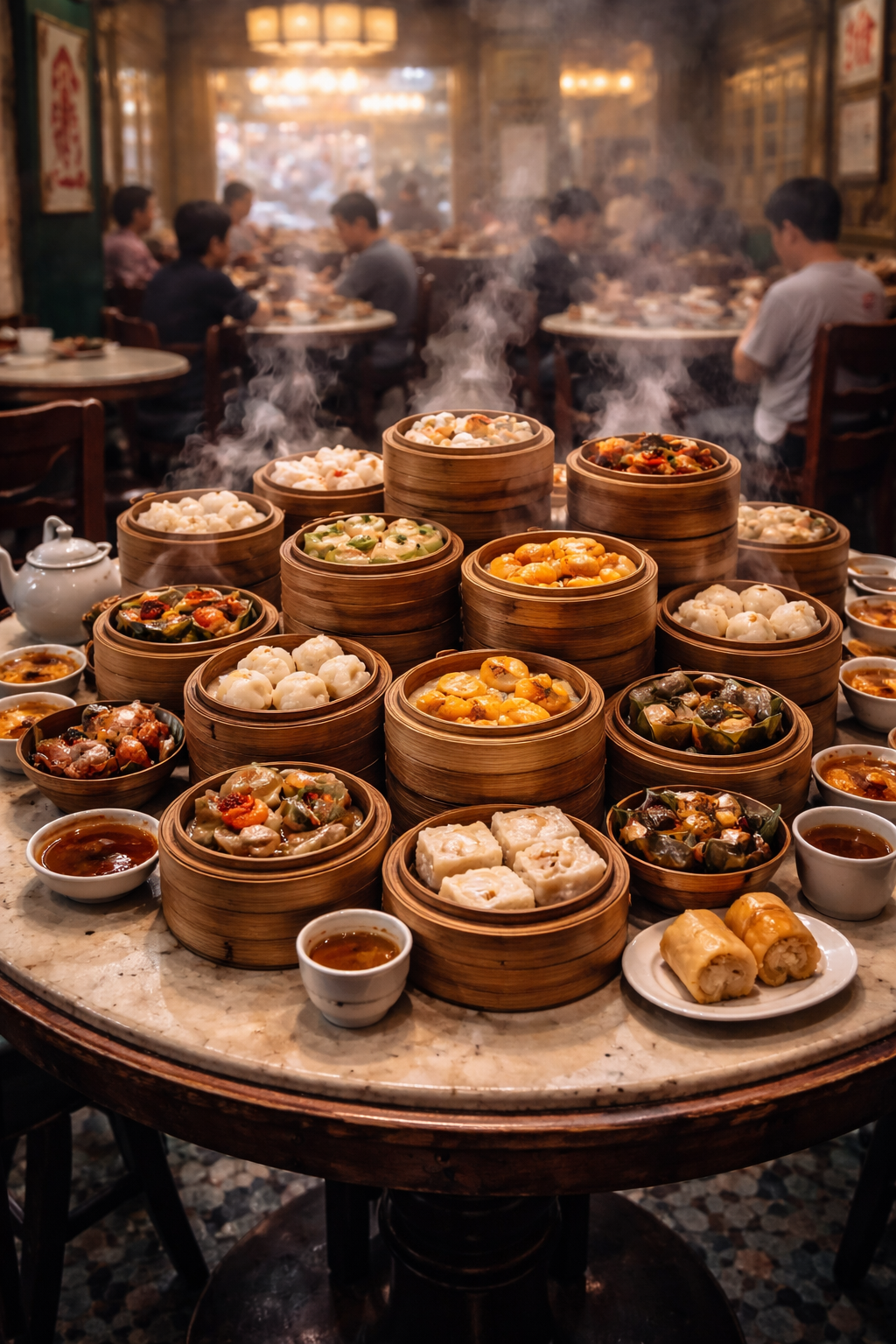
It is a selection of small parcels of food specifically prepared to be served with tea during Yum Cha. The highly specialized and crafted cuisine has its origins in Southern China, specifically amongst the Cantonese and Guangdong teahouse culture. Dim Sum master chefs are revered in much of China, and it is said to take decades to truly master the art of making the very finest dumplings. In Cantonese, dim sum (點心) translates to ‘touch the heart’, which beautifully captures the essence of dim sum and the sharing nature of its eating. It is literally a meal that brings people, families, everyone together.
“Everything has beauty, but not everyone sees it.”
Confucius
Dumplings
In Chinese legend, Zhang Zhongjing, a physician of the Han Dynasty, is attributed with founding the very first Chinese dumplings. He is said to have created them to treat frostbitten ears in the harsh winter, wrapping lamb, chillies, and warming herbs in dough shaped like ears, which he is supposed to have then boiled and distributed to the poor. This is also said to have given rise to the tradition of eating dumplings for health and prosperity, especially during the Chinese New Year
Much of the art of creating Dim Sum centres around the making of superbly balanced and crafted dumplings filled with meats like pork and shrimp or with vegetables. Dumplings are often steamed but can be fried or served in a soup.
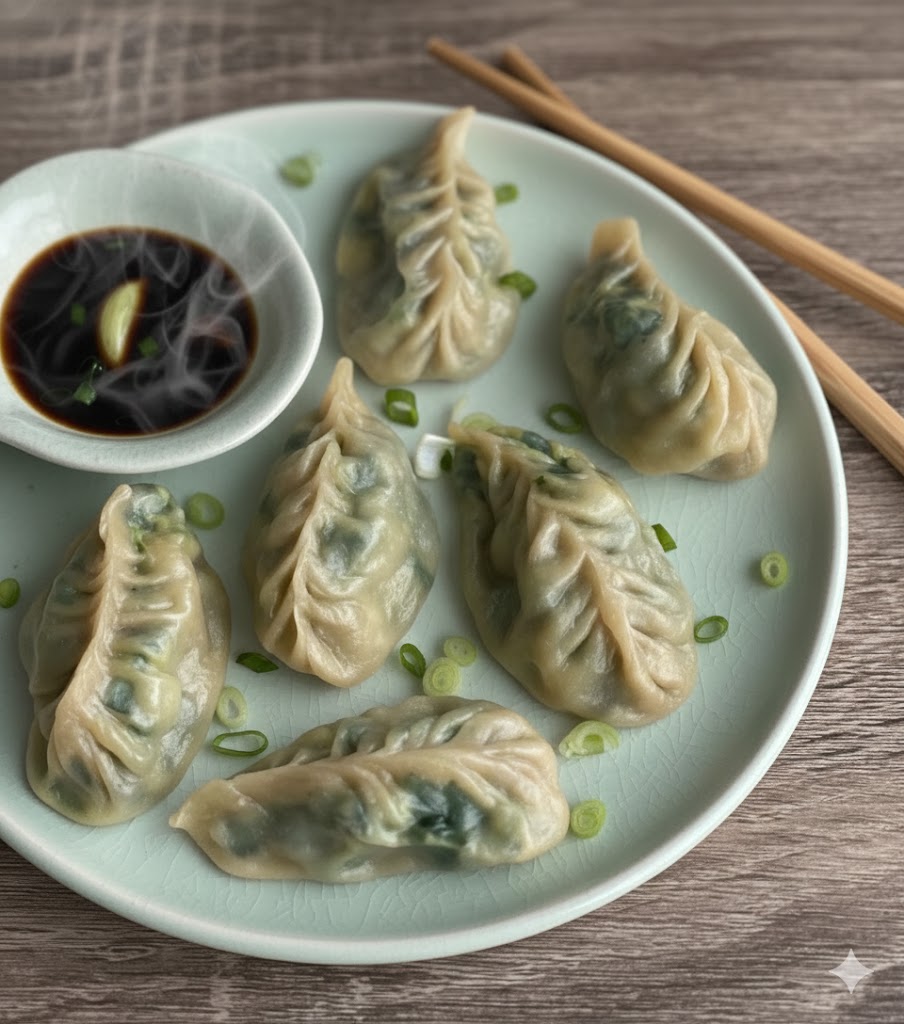
Jiaozi
A more ubiquitous dumpling across China and made in a wide variety of styles and fillings, known as Gao in Cantonese. Jiaozi may be boiled, steamed, or fried. Families will often come together to make them at home, and each family will have their own ‘secret’ recipe and favourite Jiaozi.
Restaurants will often prepare Jiaozi for breakfast and then leave them on steamers to be enjoyed throughout the day.
Jiaozi are eaten all year round but are more eagerly devoured during the Chinese New Year. They look like the golden ingots (yuan bao) used during the Ming Dynasty for money and the name sounds like the word for the earliest paper currency. Serving Jiaozi is believed to bring prosperity, and many families eat them at midnight on Chinese New Year’s Eve.
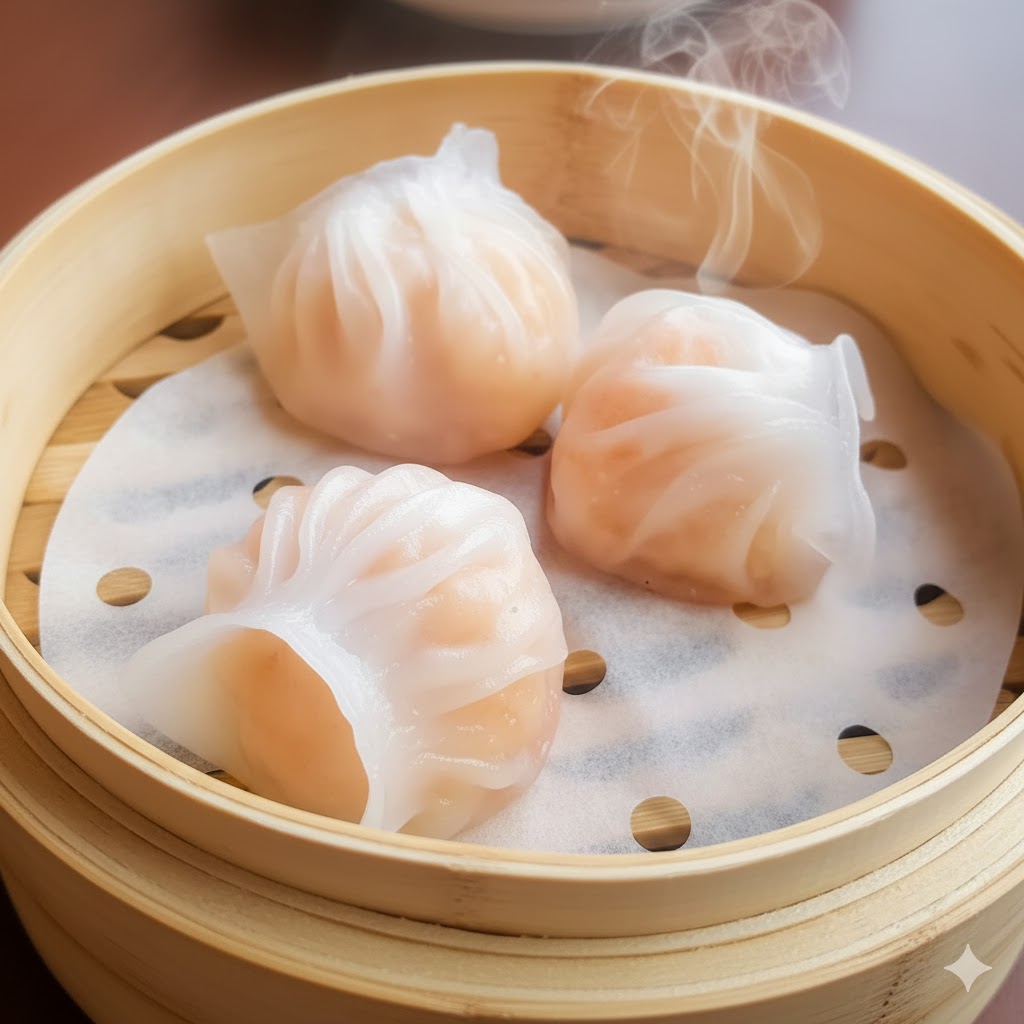
Har Gow
Har Gow is made from a combination of wheat and tapioca starches that give it its semi-translucent, almost shiny appearance.
These consistently perfect dumpling skins are considered difficult to make. Sometimes called crystal dumplings, the translucent dumpling skins are considered a high form of culinary artistry and achievement.
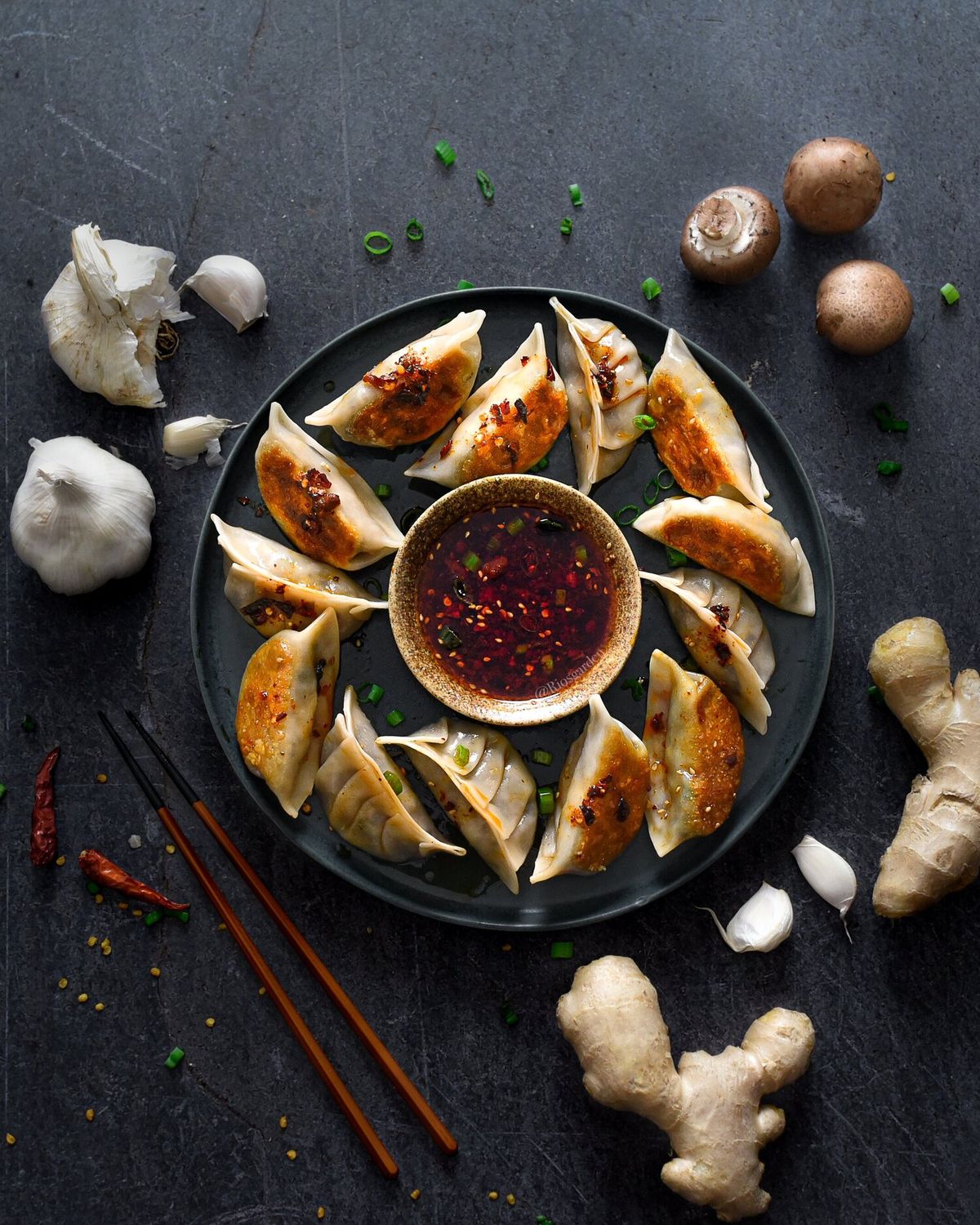
Guotie
In Cantonese, these dumplings are called wor tip; in much of the West, they are known as ‘Pot Stickers’ and as Yaki-Gyoza in Japan.
Guotie is simply Jiaozi shallow-fried in a pan or wok, and is a common street food across China. Often filled with shrimp, pork, scallions, and ginger, it is not classically considered Dim Sum, although today, it will often be offered as part of a Yum Cha.
Guotie is said to date back over four millennia according to local folklore. However, the first mention in literature dates to the Song Dynasty (960–1280 AD) in ancient China, recording guotie as being exceptionally good for the human soul.
Won Ton
This is a dumpling wrapper made with flour, egg, water, and salt and is often deep-fried but may also be steamed or boiled. It is popular in soups and often filled with ground pork.
Wonton is most popular in Cantonese, Sichuan, Shanghai, and Ningbo cuisines in China.
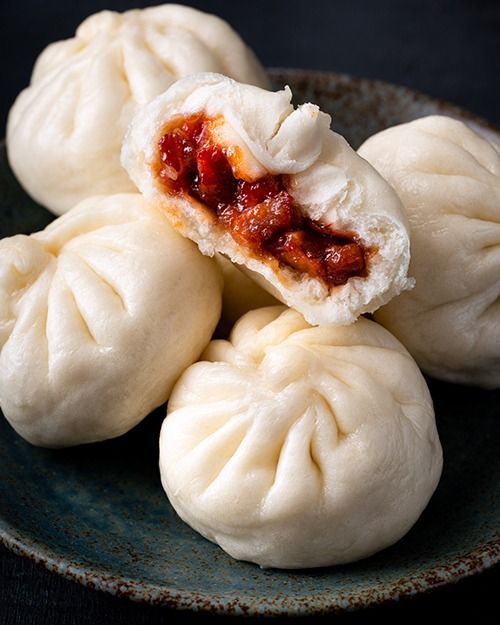
Baozi
This is a white, fluffy Chinese bun that can come with a variety of fillings from char siu pork to semi-sweet bean paste, or an egg custard filling. This is an incredibly famous and celebrated dish, and each city and town will often have its own special style and filling.
A popular story attributes the invention of filled mantou (later baozi) to Zhuge Liang (181-234 AD), who supposedly made meat-filled buns shaped like human heads to appease river gods during a military campaign, ending a plague.
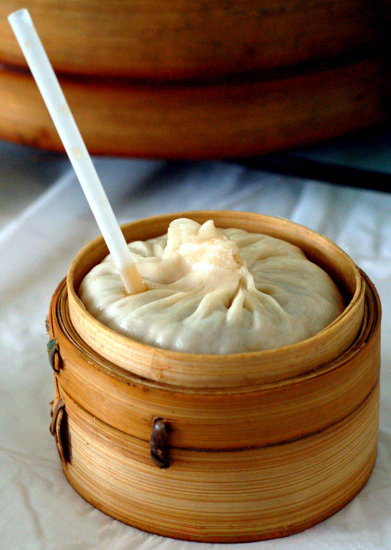
Tang Bao
These are soup Baozi, various varieties are found across China, and they are made by wrapping a gelatinous filling in dough. When steamed, the filling melts to become a delicious soup locked inside the bun. Tang bao seem to have varied origins, with early forms appearing in Song Dynasty in Kaifeng, but the most famous ‘soupy’ version evolved in the Yangtze Delta, particularly Shanghai, during the late Qing Dynasty (19th century).
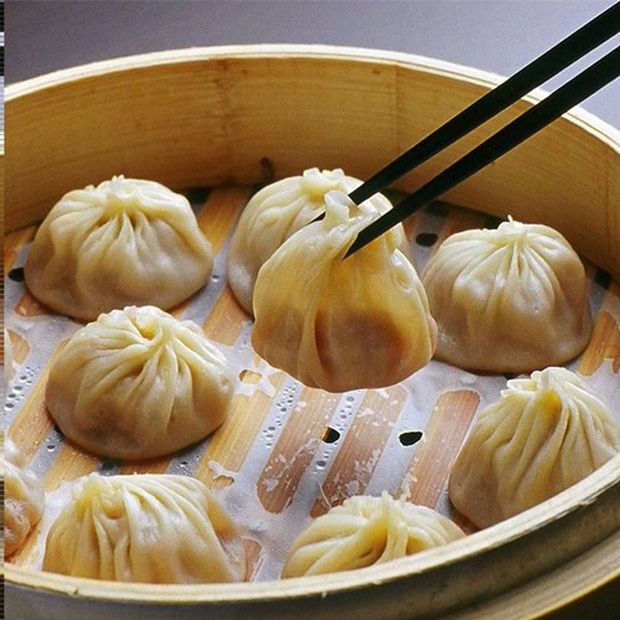
Xiaolongbao
Only true Dim Sum masters are said to have the skill to properly prepare the legendary Xiaolongbao, which is a steamed baozi from Jiangnan in China.
Xiaolongbao are often referred to as a kind of “dumpling” but should not be confused with Chinese jiaozi. Similarly, they are considered a kind of “soup dumpling” but should not be confused with other larger varieties of tang bao.
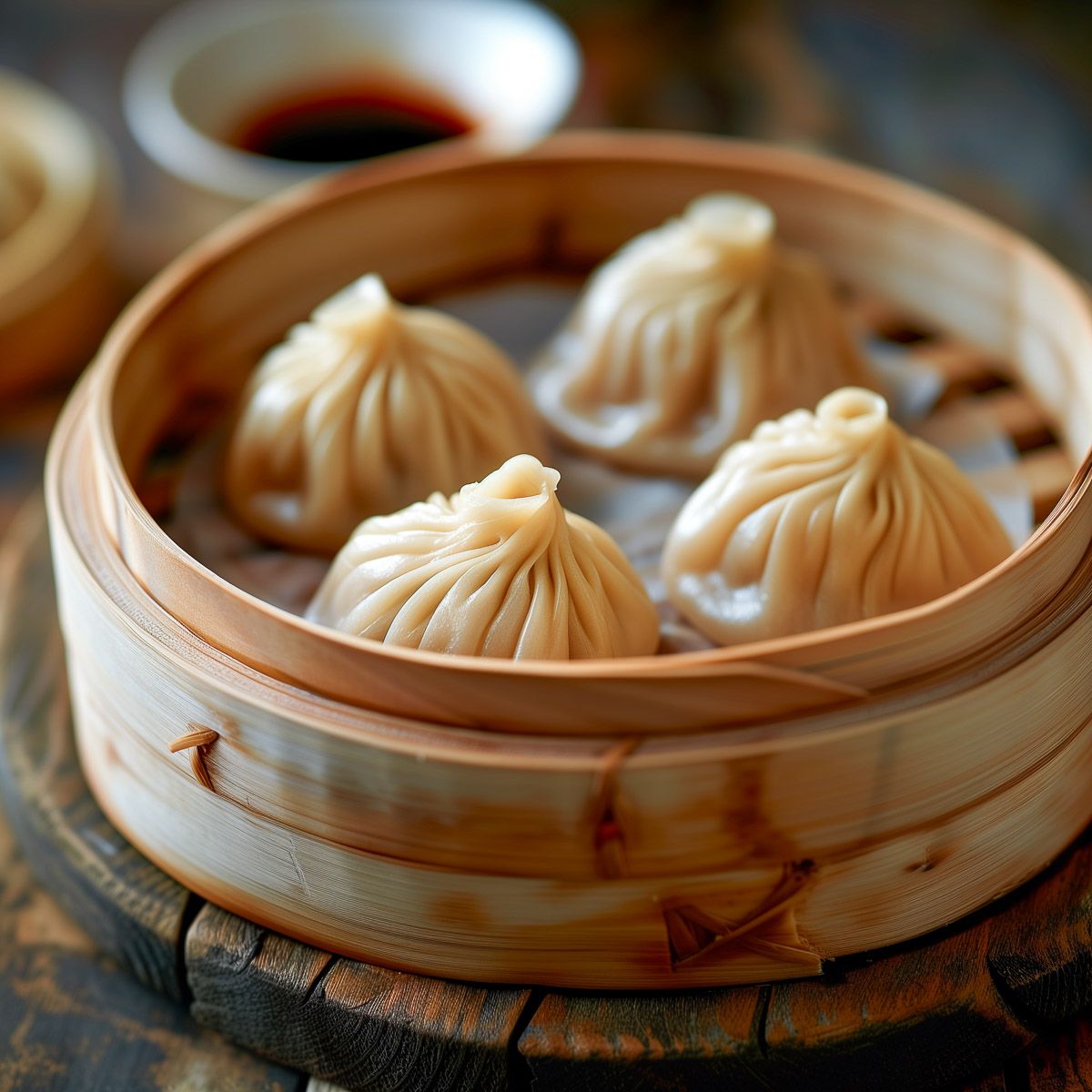
Xiaolongbao originated in Nanxiang, a suburb of Shanghai in the Jiading District. The inventor of Xiaolongbao sold them in his first store in Nanxiang, next to the town’s notable park, Guyi Garden. From there, the xiaolongbao expanded into downtown Shanghai and outward.
Two specialist xiaolongbao restaurants have a particularly long history. One is Nanxiang Mantou Dian (Nanxiang Bun Shop), which started around 1900 and derives from the original store in Nanxiang. The other is Gulong Restaurant, at the original site next to Guyi Garden in Nanxiang.
Once Xiaolongbao spread to Taiwan, they began to find international fame, and the Chinese delicacy soon spread across the globe.
As you may have already imagined, xiaolongbao can be tricky to eat; novices run the risk of scalding the roof of their mouth or burning their throat. The best way to eat Xiaolongbao is to pick it up from the top with your chopsticks, then place it in your spoon, prick the skin till it is breached and allow the dumpling to sit for half a minute or so to let the steam and some of the heat out. Then pop the entire creation in your mouth and enjoy.
Eating xiaolongbao, with its silky fine texture and its filling of pork and soup, is an amazing gastronomic experience; many consider xiaolongbao to be the finest culinary expression and art form of the dumpling or tang bao.
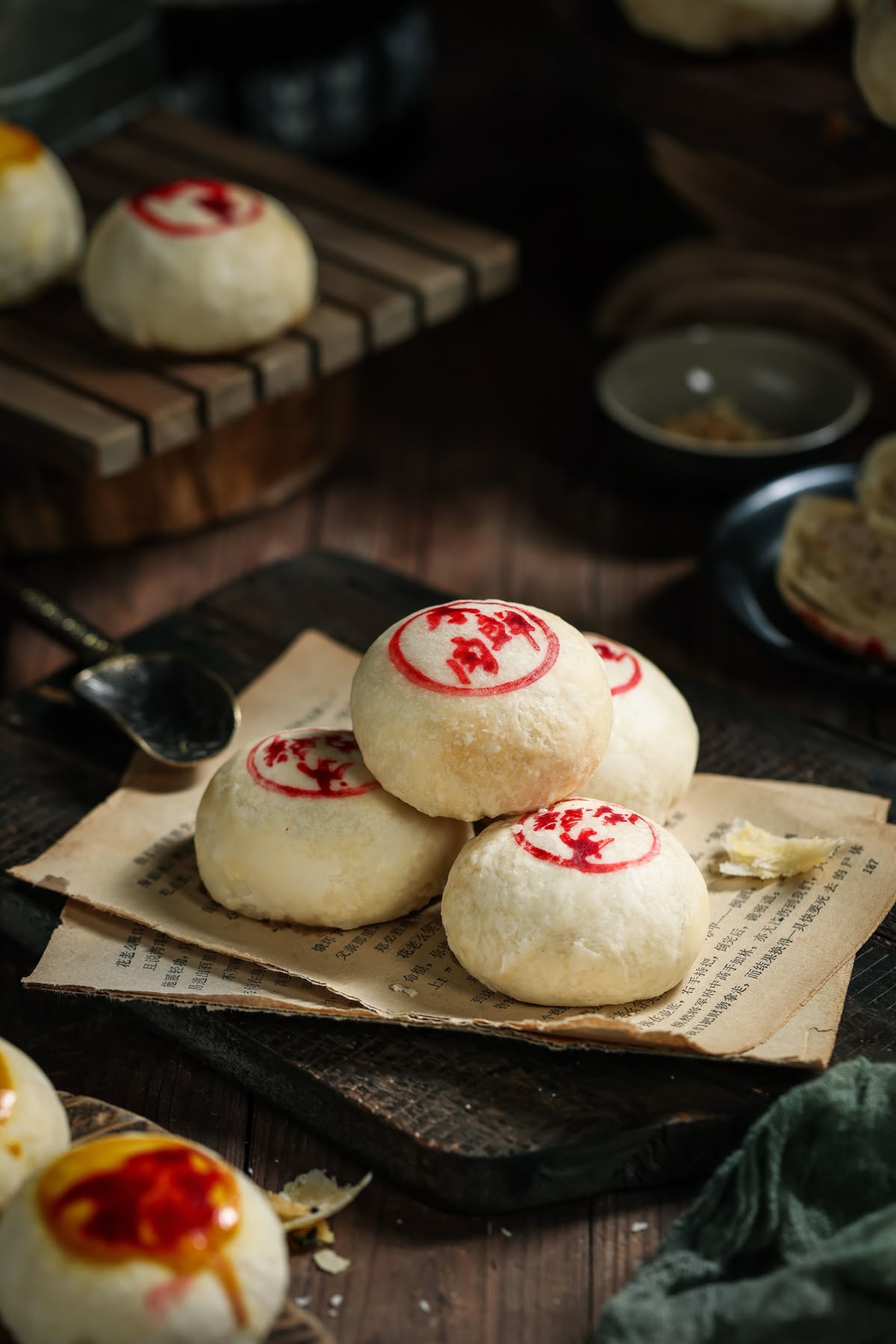
Other Dim Sum Classics
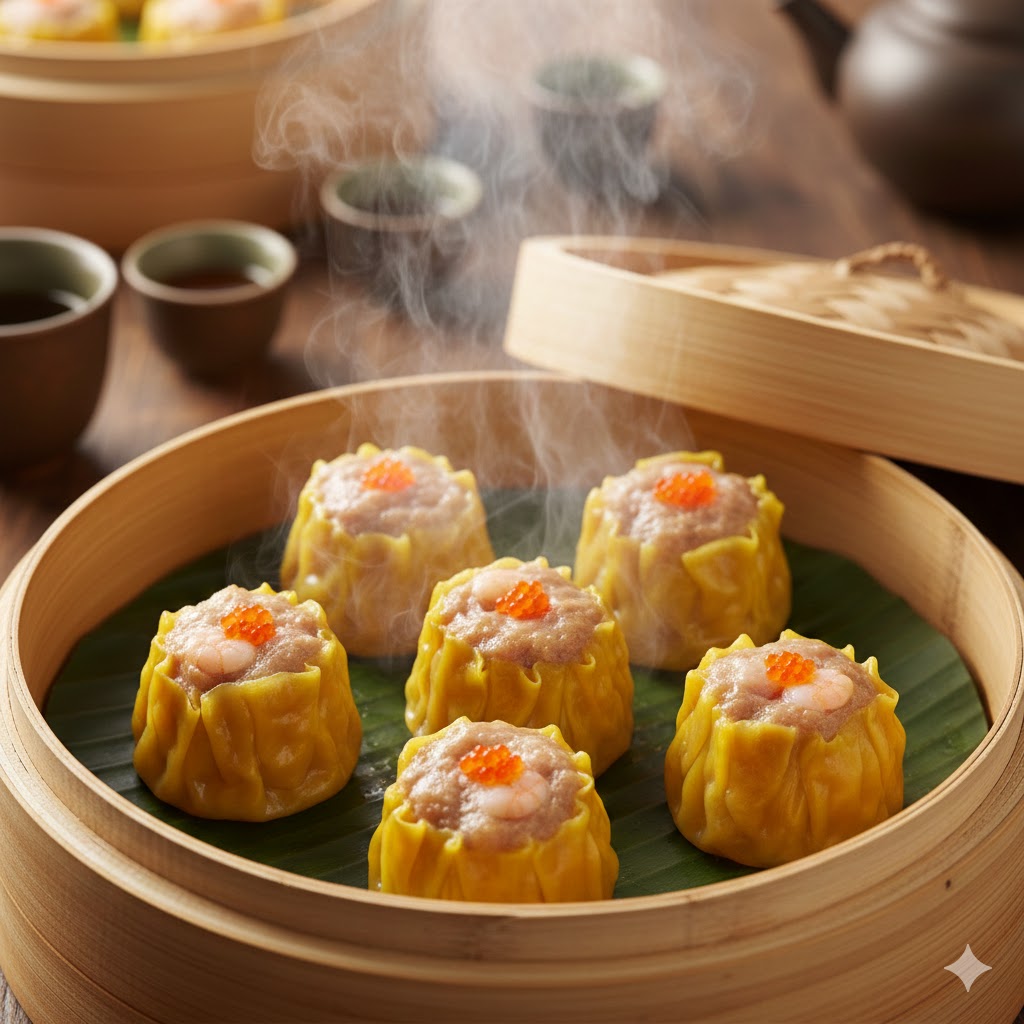
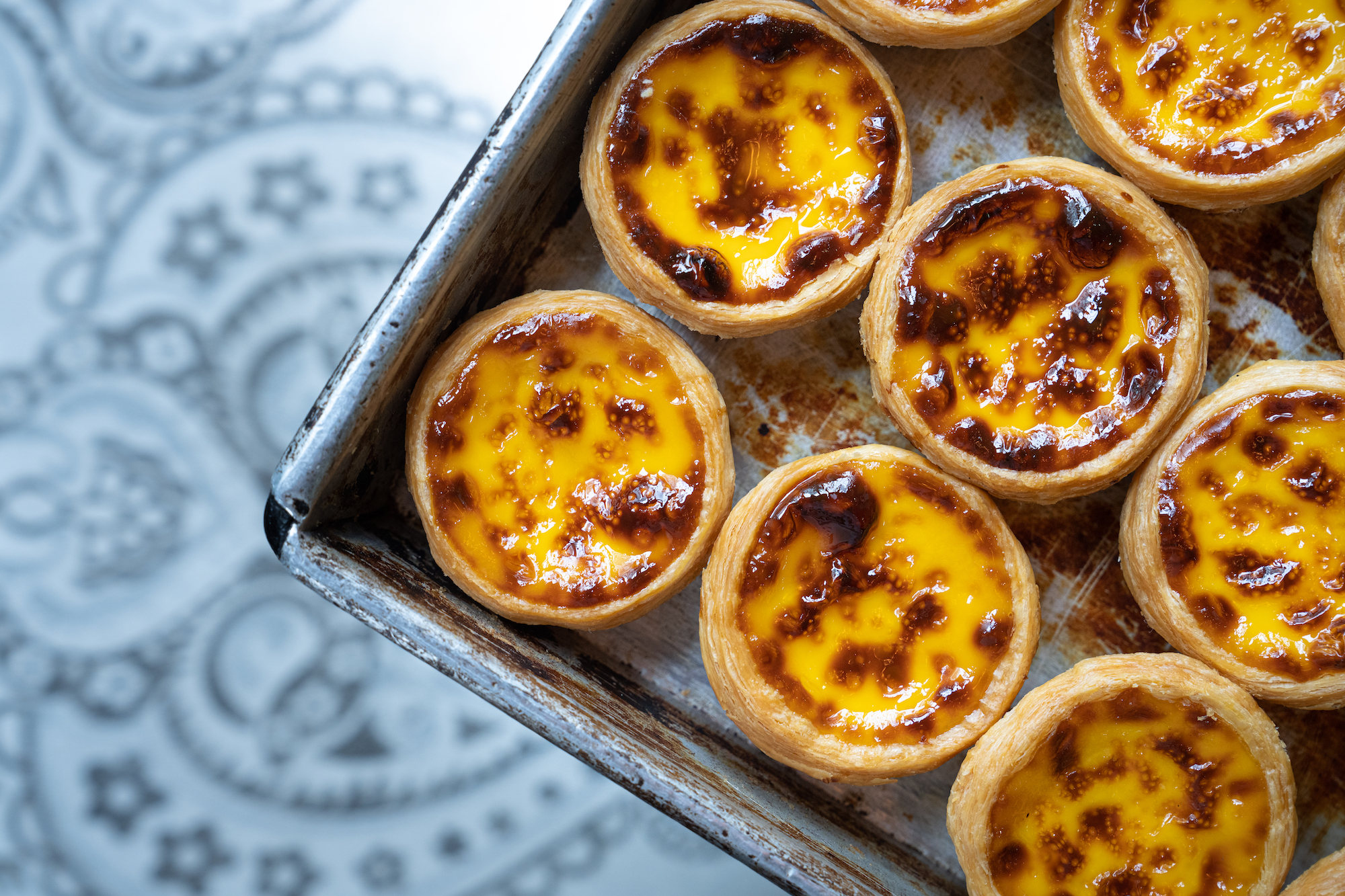
Classics of the dim sum menu are dishes like Siu Mai, small, open dumplings filled with pork, shrimp and mushrooms, crowned with a dollop of roe. Then there is Cheong Fun, the famous rice paper rolls, filled with char siu pork or shrimp. There are radish cakes, phoenix claws (chicken feet), duck’s tongues, and I always like to finish with a Portuguese tart if its on the menu.
Modern interpretations and attempts to elevate the cuisine further sees luxury ingredients like foie gras, caviar, wagyu beef, langoustines and even truffles finding their way into dumplings, usually riffs on the classics; they may not have the soul of the originals, but they are exciting and add a new, at times thrilling dimension to dim sum dining.
Sauces
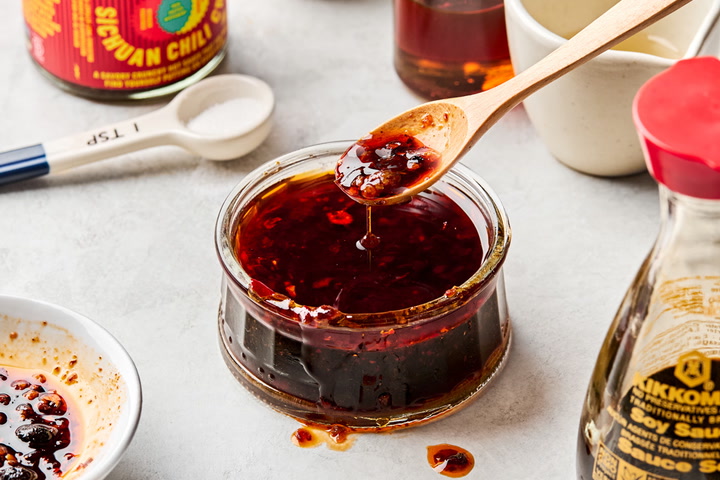
Dipping sauces for Dim Sum will traditionally include red wine vinegar, soy, and chilli sauces.
Non-classical sauces that may be involved include plum sauce, hoisin sauce, oyster sauce, sweet and sour sauce, a hot mustard sauce, and even a spicy Sichuan salt and pepper mix.
Tea
The tasting of tea is an integral part of eating Dim Sum. Settling on which tea to drink is often the first and most important decision of the meal. The tea aids digestion and is favoured for its other health and medicinal properties.
Chrysanthemum tea – Chrysanthemum tea does not actually have any tea leaves. This is a flower-based tisane made from chrysanthemum, which has a delightful perfume and is light and easy to drink.
Green tea – Because this tea does not undergo any fermentation, it retains its green colour and, more importantly, it retains its polyphenols and chlorophyll, which are renowned for their medicinal, anti-ageing, anti-oxidizing, and detoxification properties.
Oolong tea – The tea leaves are partially fermented, imparting the characteristics of both green and black teas. Its taste is similar to green tea but has less “grassy” flavour. I love the flavours and digestive powers of oolong tea and find I can drink it all the way through the meal.
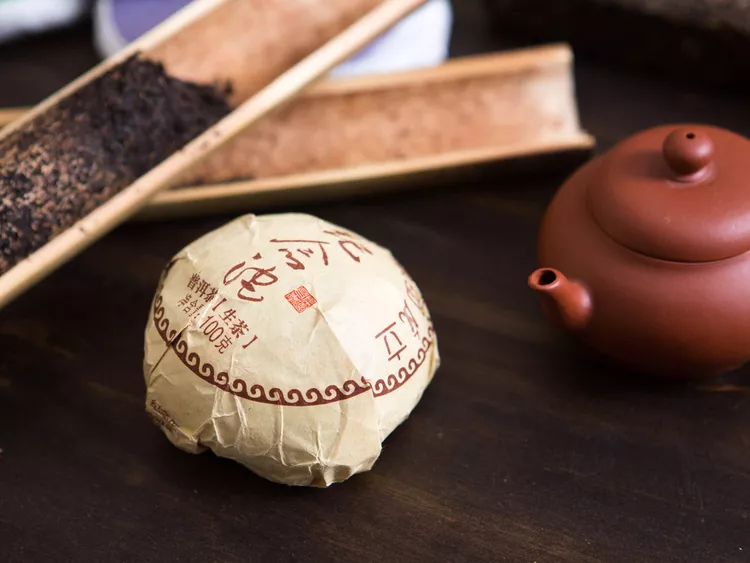
Pu-erh tea – This is a legendary tea in China, usually served in small clay teapots made from Pu-erh (Yixing) clay and seasoned with the tea for many years until they reach perfection.
The tea has undergone years of fermentation, giving it a unique, earthy flavour. A favourite of Chinese tea collectors and investors, the variety is usually compressed into different shapes like bricks, discs, bowls, or bells and kept for many, many years. Some ‘vintage’ teas are sold on the market at well over one hundred years old, fetching extremely high prices, much like old wines are auctioned in the West.
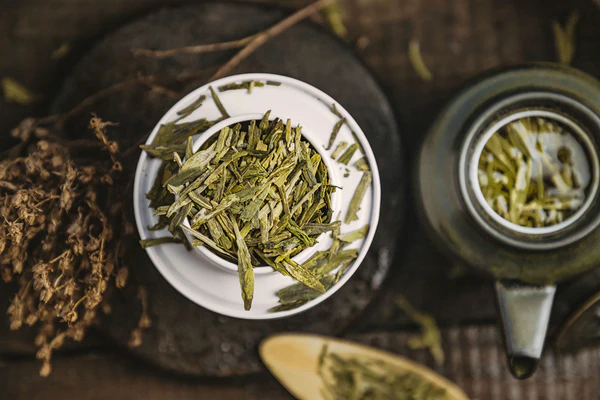
Longjing (Dragon’s Well) tea- My favourite Chinese tea from one of my favourite parts of China, Hangzhou, in Zhejiang Province, particularly from the villages around the picturesque West Lake. Longjing Tea is a green tea made from pan-fried young tender buds of the Camellia Sinensis plant. Known as one of China’s most prestigious specialty teas, with many health benefits, it is renowned for its high quality.
The Two-Fingered Tea Tap
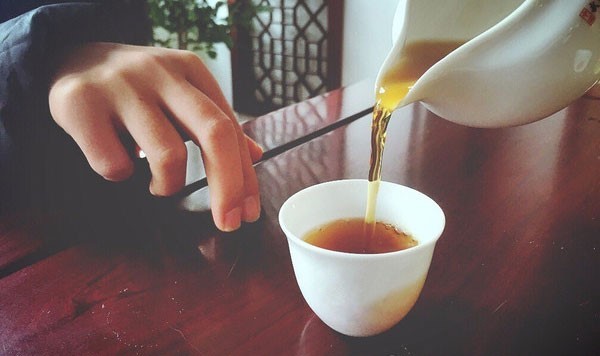
It is customary to pour tea for others before filling one’s own teacup. It is most gracious to be the first to pour the tea.
When tea drinkers tap the table with two fingers, it is an action known as the ‘finger kowtow’, and it means thank you.
According to legend, this gesture comes from a tale that can be traced back to Emperor Qianlong, a Qing Chinese emperor. While secretly visiting South China, he once went into a teahouse with his companions.
In order to maintain his anonymity, he took his turn at pouring tea. His stunned companions wanted to kowtow for the great honour, but to do so would have revealed the identity of the emperor. Finally, one of them tapped three fingers on the table (one finger representing their bowed head and the other two representing their prostrate arms), and the clever emperor understood what he meant. From then on, this has been the practice, a practice I have witnessed myself many times at Yum Cha in China.
‘When the way ends, then change. Having changed, you pass through.’
I Ching – The Book of Change
Modern Day Dim Sum Pairing
Tea is all well and good in aiding digestion, but for me, there is a perfect pairing with the elegant, delicate flavours of dim sum, and its varied and mixed assortment that fluctuates from fried, spicy, steamed, subtle, rich, earthy, sweet and savoury textures and flavours.
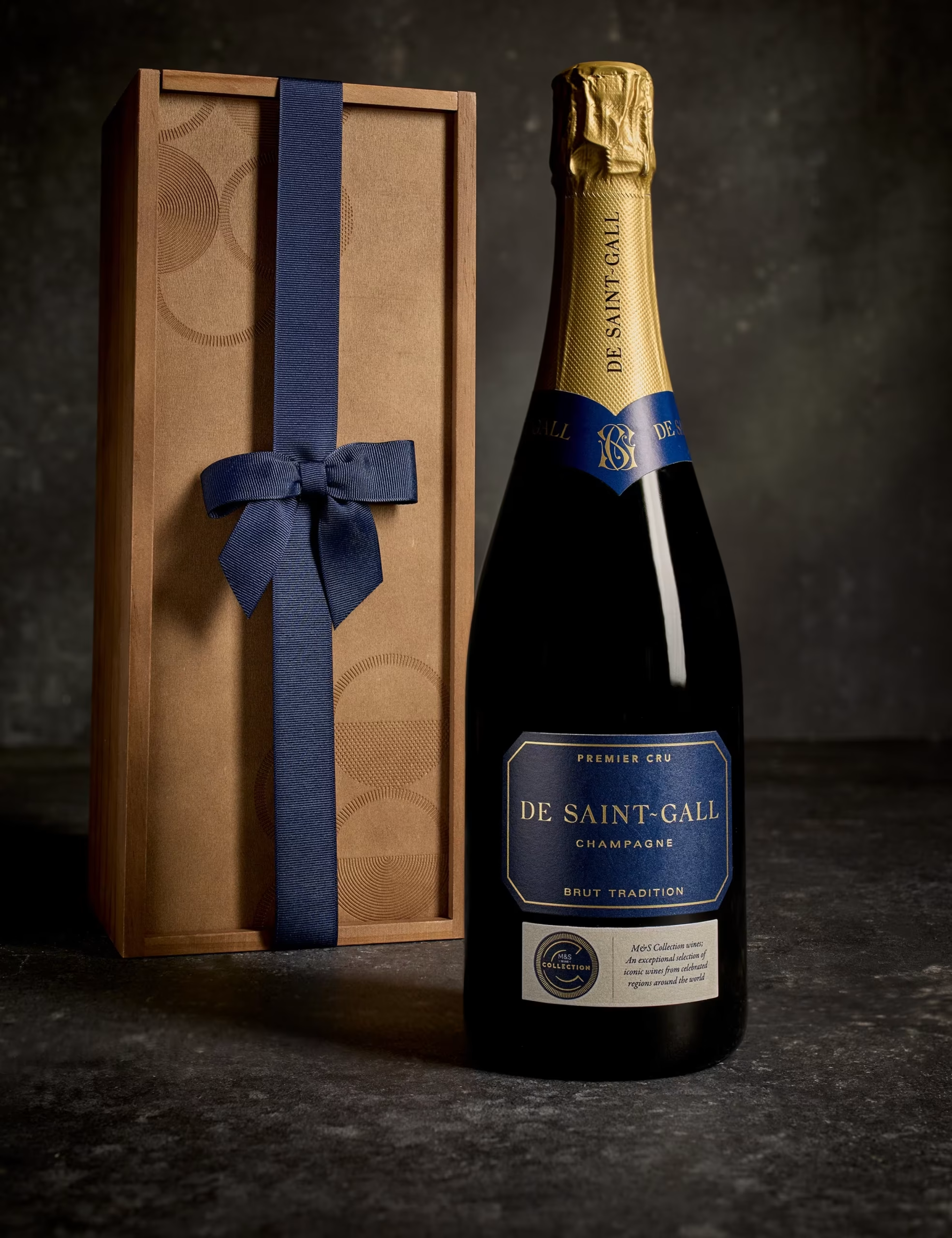
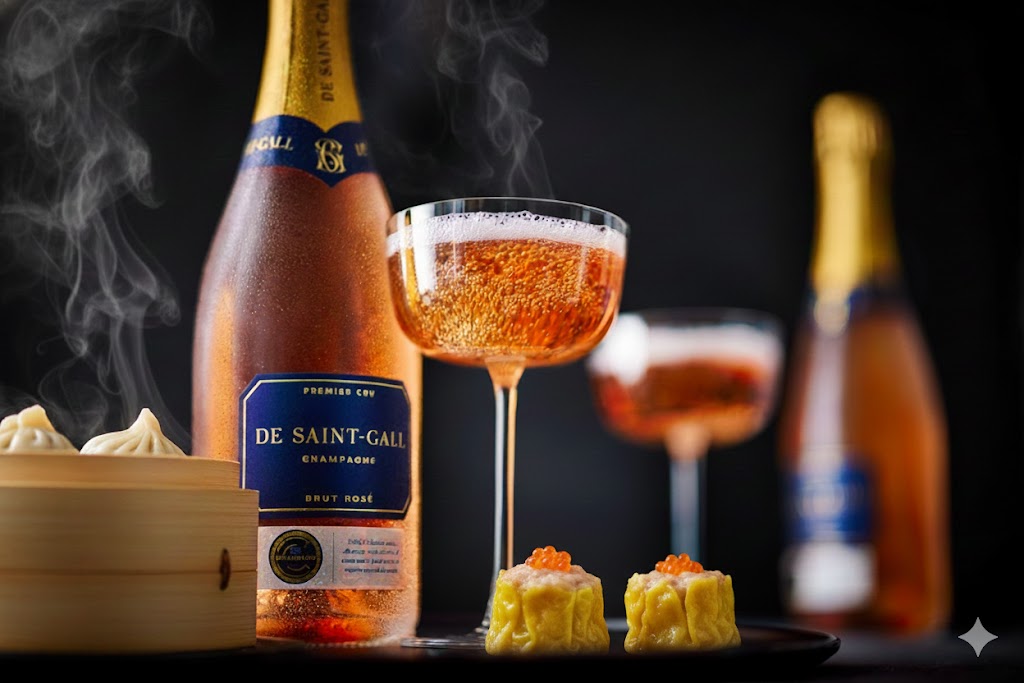
Champagne, with its elegance, finesse, mousse, acidity, and subtle flavour profile, is the perfect accompaniment, cleansing and refreshing the palate after each morsel of food. It is one of life’s great pleasures, especially with a dim sum banquet that stretches long into the afternoon.
I would consider dim sum and Champagne to be the perfect last meal, seated at a huge round table with my closest friends, infuriating the trolly ladies as I order an endless stream of baskets. Dumpling cases as smooth and silky as angel’s wings, chilli sauces as hot as the flames of Hades. A slow, grazing degustation that drags on and on and on, Rachel Portman’s insistent, yearning theme from ‘Never Let Me Go’ playing in the background. Sounds like I might have already arrived in heaven.
Darren Gall
The Dim Sum Cheat Sheet
| Variety | Description & Preparation | Cultural Context
|
| Har Gow | Thin, silky skins that are often semi-translucent. | Considered a high form of culinary artistry. |
| Jiaozi | Versatile dumplings that can be boiled, steamed, or fried. | Shaped like ancient gold ingots (yuan bao); eaten for prosperity at New Year. |
| Guotie | Also known as “Pot Stickers” ; these are Jiaozi that are shallow-fried in a pan or wok. | Mentioned in Song Dynasty literature as being “good for the human soul”. |
| Baozi | White, fluffy steamed buns with various sweet or savory fillings. | A celebrated dish where every city often has its own unique style. |
| Xiaolongbao | A delicate “soup dumpling” from Jiangnan containing a gelatinous filling that melts when steamed. | Requires a specific technique to eat: pick up by the top, place in a spoon, and prick the skin to release steam. |
| Won Ton | Flour and egg wrappers are often served in soups or deep-fried. | Most popular in Cantonese, Sichuan, and Shanghai cuisines. |
Tea Selection & Pairing
Choosing the tea is often considered the first and most important decision of the meal.
- Chrysanthemum: A flower-based tisane (no tea leaves) that is light, perfumed, and easy to drink.
- Green Tea: Unfermented tea that retains a green color and high levels of antioxidants and chlorophyll.
- Oolong: Partially fermented, offering a balance between green and black tea flavors with less “grassy” notes.
- Pu-erh: A legendary, earthy fermented tea often compressed into bricks or discs; vintage varieties can be over 100 years old.
Yum Cha Etiquette: The Essentials
- Serve Others First: It is customary and gracious to pour tea for your companions before filling your own cup.
- The “Finger Kowtow”: When someone pours tea for you, tap the table with two fingers to say, “thank you”. This tradition honors a legend where an emperor’s companions used the gesture to bow discreetly while maintaining his anonymity.
- Stay Alert: In traditional busy dining rooms, be ready to weave out of the way of trolley-wheeling staff to avoid their “personal version of road rage”.
In Cambodia, look for Yi Sang restaurants, or Sevensea, for some of the best and most authentic dim sum in the country.
